No Picture
News Briefs

Terror cannot be the seed of peace, Bogota cardinal says after car bomb

January 19, 2019 CNA Daily News 0

Bogotá, Colombia, Jan 19, 2019 / 06:01 am (ACI Prensa).- Cardinal Ruben Salazar Gomez of Bogota said that terror can never be the seed of justice and peace, following Thursday’s car bomb attack at a police academy in the Colombian capital.

The Jan. 17 attack which killed 21 has been attributed to the National Liberation Army (ELN), a left-wing guerilla group. Dozens more were injured, but most have been released from hospital.

“Death, violence and terror can never be the seed of justice and peace,” Cardinal Salazar said in a message posted on the Archdiocese of Bogota’s Twitter account.

“We reject this and every attack that violates the dignity of persons and society,” he added. Cardinal Salazar also expressed his “solidarity with the nation, the police, the victims and their families, and we implore the Lord for forgiveness and peace.”

A vehicle carrying 175 pounds of pentolite, a military-grade explosive, accelerated into the General Santander police academy after being stopped at a checkpoint. The pentolite detonated when the SUV struck a wall. The academy was holding a promotion ceremony for cadets.

Attorney General Néstor Humberto Martínez reported that the vehicle’s driver was José Aldemar Rojas Rodríguez, the ELN’s top explosives expert, and that an accomplice had been arrested in Bogota.

Miguel Ceballos, High Commissioner for Peace, said the government will not dialogue with the ELN “until they hand over all the kidnapped people and completely renounce their criminal acts.”

Archbishop Oscar Urbina Ortega of Villavicencio, president of the Colombian bishops’ conference, stated that “every act of violence engenders more violence, which is why we reiterate the call to continue to work for reconciliation in the country. We pray for the victims. We stand in solidarity with their families and the national police.”

“I ask you to not lose heart in working to overcome enmities and creating bridges that lead us to fraternity in the family and in the various social environments,” he added.

The Military diocese also offered prayers for the victims, their families, and the officer training school.

In a telegram to Cardinal Salazar from Vatican Secretary of State, Cardinal Pietro Parolin, Pope Francis expressed his “deep sorrow for the victims who lost their lives in such an inhuman act.”

On the scene of the blast, the president of Colombia, Ivan Duque, said that the attack was “not just against young people, or the police, but against all of society.”

He said that what happened “was a demented terrorist attack which will not go unpunished,” and that
“we will act with unbending determination.”

Car bombings were once not uncommon in the Colombian conflict, which has been ongoing among the government, right-wing paramilitaries, and left-wing guerillas since 1964.

The conflict has abated since a 2016 peace deal between the government and the largest guerrilla group, the Revolutionary Armed Forces of Colombia (FARC).

Duque has not taken up peace talks with the ELN.


This article was originally published by our sister agency, ACI Prensa. It has been translated and adapted by CNA.

[…]

No Picture
News Briefs

Sister resigns from Detroit seminary after sex abuse allegations

January 18, 2019 CNA Daily News 7

Detroit, Mich., Jan 18, 2019 / 05:47 pm (CNA).- Sacred Heart Seminary in Detroit announced this week the resignation of Sr. Mary Finn, 84, a long-time faculty member and assistant professor of theology, after allegations surfaced that she had sexual contact with young adult novices under her charge in the 1970s.

“In recent days, information came to my attention regarding inappropriate conduct over fifty years ago by Sr. Mary Finn,” Msgr. Todd J. Lajiness, the rector and president of Sacred Heart Major Seminary in Detroit, said in a statement published Wednesday.

“After a series of conversations with her, her superior, Archbishop Vigneron and members of the Archbishop’s team, I have accepted her resignation from the faculty of Sacred Heart Major Seminary, effective today.”

In a story reported by Deadline Detroit, Theresa Camden, a former novice with the Home Visitors of Mary, recalled “confusing” experiences with Finn, then the novice director for the order, such as being made to lie very close to her on exclusive retreats.

Camden told Deadline Detroit that in hindsight, she knew something felt wrong. After Camden and another novice, who has remained anonymous, were suddenly kicked out of the order in 1972, they sought therapy for their experiences with Finn. The anonymous novice confirmed to Camden that she had had a sexual relationship with Finn.

Michael Betzold with Deadline Detroit reported that Finn’s resignation was announced by the seminary as his story on the allegations was being prepared.

In her resignation letter, posted to the seminary’s website, Finn admits to having “misused my position of authority as a director of novices in the Home Visitors of Mary (HVM) Order, engaging in inappropriate conduct with two adult novices. I regret that behavior, have repented of my actions, and sincerely apologize for the harm I have caused.”

The Home Visitors of Mary hung up the phone when CNA attempted to contact the order about Finn. Subsequent attempts to contact the order went unanswered.

Archbishop Allen Vigneron of Detroit, chairman of the board of trustees at Sacred Heart, was quoted in the seminary statement supporting Finn’s resignation, citing “additional information and what we have come to learn about how best to respond to these situations.”

He said that “While serving as rector of Sacred Heart in the late 1990s, I was given partial details about Sr. Mary’s inappropriate conduct that had occurred in the early 1970s. At the time, I thought the matter had been resolved. I regret this was not the case.”

In a Jan. 18 statement, Archbishop Vigneron went on to say: “It is only in recent days that I have come to know new and additional details and context regarding Sr. Mary’s misconduct. Based on this information, the current rector, Msgr. Lajiness, accepted Sister Finn’s resignation and I endorse this action.”

In 1969, three years before Camden and the other novice were expelled from Finn’s order, Finn began working at Sacred Heart Seminary, where she has served in various positions ever since.

Most recently, Finn was an assistant professor of theology and served on the Priestly Formation Team for the College of Liberal Arts, among other roles, according to a cached website of her seminary page, which had been removed from the school’s website by Friday, Jan. 18.

Edward Mischel, director of community psychiatry at Wayne State University in Detroit, was in the seminary at Sacred Heart about 10 years after Finn started there, in the late 1970s.

Mischel, who completed four years of college at the seminary before discerning that he was not called to the priesthood, told CNA that he chose Finn for his spiritual director and remembers her fondly. They still maintain contact to this day.

“She’s been this quiet, spiritual, loving, easy-going person,” Mischel told CNA. “The guys in the seminary, they adore her.”

News of the allegations of sexual misconduct in the early 1970s was “disheartening,” Mischel said, but he rejected any insinuations that Finn “was dominant or in this old boy’s club, that’s like the antithesis of her. I’ve never seen that in the 30, 40 years I’ve known her, nothing like that at all.”

Mischel said he knows Finn to be a staunch advocate for the people of Detroit, and a very kind and forgiving person.

When asked if he had any concerns that she was placed in charge of young seminarians, after having been accused of sexual misconduct with young women, Mischel said he was not concerned, because he had seen “nothing like that at all” by Finn against the seminarians.

But not all former seminarians of Sacred Heart remember Finn as fondly, and the news of her resignation and the allegations against her as a novice master have also raised serious questions and concerns about her conduct at the seminary.

Two former seminarians at Sacred Heart seminary have told CNA that Finn had a reputation for being overly “handsy” with seminarians – extended hugs, smooches, squeezes and generally unwanted contact were to be expected from Finn.

“In legal terms, it was unwelcomed touching. But if a seminarian reported it, they became a problem,” one former seminarian, who asked for anonymity, told CNA.

Another former seminarian, who also asked for anonymity, told CNA that Finn had become such a “fixture” of the seminary and was so well-liked and considered so holy that she became “untouchable” – any complaints against her were promptly dismissed.

This same seminarian told CNA that Finn was always “touching people”, and while he doesn’t know of any explicitly sexual touching, he said her behavior was “grossly inappropriate.” He recalled on instance where Finn almost pushed a seminarian over a balcony, only to pull him back at the last second, as a joke. When the seminarian turned to throw a punch, assuming it had been one of the guys, he instead saw Sr. Mary.

“She had no sense of boundaries,” the former seminarian said. Her meetings would often run late, and seminarians were expected to listen to her for hours, in what felt like “indoctrination lectures,” he said.

In another example of boundary violation, both former seminarians told CNA separately that Finn was known for wandering the residence wing of the seminary late at night unannounced, and would often walk past seminarians who were in their towels or boxers, coming to and from the communal showers.

One time, Finn wandered in on a priest in the shower, but that issue was “promptly addressed,” one of the former seminarians said.

At some point after the late 1970s, Finn had been moved from her community to live at the seminary. While she would wander the wing belonging to the seminarians, her room was in the faculty wing.

Mischel told CNA that Finn was still living with her community during his time at Sacred Heart. He said he suspects she may have been moved to the seminary due to health problems – she eventually developed Parkinson’s disease, which may have made it difficult for her to drive.

Mischel said he had never had any experience of Finn intentionally walking past half-dressed seminarians, and said he wondered whether it could have been a sign that Finn was entering stages of dementia.

One of the former seminarians who spoke to CNA also said Finn seemed to be “detached from reality” at times, and had difficulty remembering dates. Both of the anonymous former seminarians included in this article were at Sacred Heart in the early and mid-2000s.

When asked why Finn had been moved from her community to live at the seminary, Mary Henige, Strategic Communications Director for Sacred Heart Major Seminary, told CNA that “We do not know when and why Sr. Mary Finn moved to the seminary.”

Both former seminarians also told CNA that Finn’s theology was “unsound.” Part of her theology classes, they said, included “feelings lists” where seminarians were asked to recall an experience from their lives and describe their feelings. The lists, provided by Finn, included “feeling words” such as “sexy”, “hot,” or “horny”, they recalled.

One of the former seminarians told CNA that multiple men had attempted to register complaints against Finn’s conduct, but they were ignored because of the reputation she enjoyed. Many of the faculty at Sacred Heart had been formed by Finn during their time in seminary, and believed her to be saintly. He said at one point, he had heard a faculty member refer to Finn as the “Holy Spirit Incarnate.”

He said on the one hand, she did seem to have a genuine love and concern for people. She saw Christ in people in a way that was “beautiful,” he said.

But she acted like she “was everyone’s mom, but she wasn’t and she’s not,” he said. “There were clear boundary issues. She was very emotionally manipulative of people, very passive aggressive.”

“She had a cult-following, so this is devastating to a lot of people,” he added.

When CNA asked the archdiocese about these claims about Finn’s conduct at Sacred Heart seminary, the archdiocese referred all questions to Sacred Heart.

When asked whether the faculty at Sacred Heart were aware of Finn’s alleged reputation for unwanted touching, inappropriate contact or for allegedly wandering by seminarians in towels, Henige told CNA that “We’re not going to respond to character allegations, nor would that be our role. Sr. Mary’s resignation letter outlines the reasons why she resigned.”


[…]

No Picture
News Briefs

Knights on parade: With the Knights of Columbus at the March for Life

January 18, 2019 CNA Daily News 0

Washington D.C., Jan 18, 2019 / 05:30 pm (CNA).- Their activism has sparked controversy in recent months, after a U.S. senator called the Knights of Columbus and their pro-life work “extreme.” But the Knights of Columbus say their work in the pro-life movement is a part of their Catholic identity, and that they’re proud of their long-standing involvement in the annual March for Life  

In fact, according to Supreme Knight and CEO Carl A. Anderson, when the March for Life began in the early 1970s, the Knights of Columbus was one of the first groups to lend a hand.

Anderson told CNA that the Knights now play a part in “just about everything that needs to be done” on the days leading up to, and during, the march.

CNA spent the 2019 March for Life getting a behind-the-scenes look at the work of the Knights of Columbus during the nation’s largest annual pro-life gathering.

Standing guard

The Basilica of the National Shrine of the Immaculate Conception is the largest Catholic Church in North America; it was designed to hold about 10,000 faithful. The night before the March for Life there were at least that number present for the National Prayer Vigil for Life. People filled the pews, and nearly ever space around them in the aisles.

At 5:30 p.m., a procession of priests, bishops, and cardinals entered the basilica. When they did, Knights of Columbus from 19 different local councils were among the volunteers serving as ushers to help keep the heaving crowd in order.

One of those ushers was Alec McGuire, a sophomore at the Catholic University of America.

McGuire told CNA that joined the Knights of Columbus because his grandfather was a Knight. At Catholic University, the Knights of Columbus is one of the largest student groups on campus. On Thursday, it was his job to “make sure people are where they’re supposed to be.”

Patrick McAleer is a field agent for the Knights of Columbus, selling the insurance policies the organization offers to its membership. He is also the chairman of the Shrine’s usher ministry. He’s been a Knight for 25 years.

For McAleer, volunteering at the Vigil Mass and other events is “a way to serve and be around so many young people who travel long distances to take part in the Mass and March.”

As an usher, McAleer said it is his job to “welcome to all our visitors to the Basilica, handle the congregation with care when we have to move people for the processional and recessional, as well as the most important duty: protecting the Blessed Sacrament, at communion time.”

‘An amazing group’

The day of the March for Life began bright and early at 7:30 a.m. for Tyler Lomnitzer, the Knights of Columbus’ program manager for pro-life activities. He spent the morning unloading signs for marchers from a U-Haul, and organizing the volunteers who would help disperse those signs.

“We successfully distributed 10,000 ‘Love Life, Choose Life’ Knights of Columbus signs,” Lomnitzer told CNA. In addition to signs, the Knights of Columbus distributed drawstring bags, fleece headbands, and beanies emblazoned with their logo.

Lomnitzer said he got involved in the Knights of Columbus when he was a freshman at CUA. When he was in school, he thought the Knights were “an amazing group of faithful and dedicated young men, helping one another grow in holiness.” Like McGuire, he too served as a volunteer at the Vigil Mass when he was in school.

“It left such an impression on me that I now oversee the pro-life activities of the Knights of Columbus on a global level,” said Lomnitzer.

On the March

Making sure that throngs of marchers begin and end the march in a safe and orderly way is a tough job, but one the Knights of Columbus have handled for years. Members of councils from around Virginia served as marshalls, and were present on street corners, around the front of the stage, and near the media and speaker areas.

Santiago Garcia, a Knight from Manassas, VA, has been in the Knights of Columbus for about two and a half years. He told CNA that he prayed to the Blessed Mother for her to “find something for me to do in the Church,” and then inquired about the Knights of Columbus. This is the second March for Life at which he has volunteered.

Garcia, along with Chris Sozio, an eight-year Knight but a first-time March for Life volunteer, was posted at the street corner by the Natural History Museum. The two worked to make sure that the sidewalks would stay open and free from loiterers before the march began, and then would walk ahead of the crowd of marchers to make sure nobody jumps ahead.

A long road

It is not unheard of for March for Life pilgrims to endure a several-hour bus journey to Washington for the march. John Moore, a Knight from Gallup, New Mexico, had by far the longest trip of all: he walked to Washington, DC from San Francisco, carrying a 20-pound wooden cross the entire way.

Moore, and his 26-year-old daughter Laura, stepped off from San Francisco on Divine Mercy Sunday in 2018. Laura drove ahead each day and provided assistance as needed, and they spent each night at hotels. She told CNA that her father spent years saving and planning the trip and was inspired by his first March for Life six years ago.

At 11:43 a.m. the morning of the March, their journey came to an end as they finally arrived at the National Mall, just in time for the start of the March for Life Rally.

Leading from the front

Carl A. Anderson, CEO and Supreme Knight of the Knights of Columbus, has the most public role of any member of the Knights of Columbus at the March, including an address to the massive crowd during the March for Life rally.

Anderson pumped up the crowd, and announced that his organization had recently donated its thousandth ultrasound machine to a pregnancy clinic.

“Science is on your side, and so is the American public,” said Anderson. He told the crowd that an end to abortion is “not far off” and that one day the March for Life will become a “victory parade.”

“Together we will celebrate the victory of both faith and science–both compassion and common sense.”

Keeping the momentum going

The Knights’ work does not end with the March. Local Washington-area and Virginia councils clean up the mess left behind by marchers, while out-of-town Knights board busses, planes, and cars and travel back to their homes. Once home, they continue the pro-life and other charitable work that the Knights of Columbus have done for decades.

Last year, the Knights of Columbus made $187 million in charitable donations and served over 85 million hours of volunteer time.  

Anderson explained to CNA that in addition to the ultrasound initiative, the Knights of Columbus are also involved in the distribution of educational materials each October for the USCCB’s Respect Life Month. Local councils work with area pro-life groups and do fundraisers and volunteer hours.

“I would say just about everywhere the pro-life movement is active, Knights are involved,” said Anderson.

The Knights of Columbus’ core principles are charity, fraternity, and unity.

Over two days, between taking care of marchers and worshipers, distributing warm clothes and cleaning up after the crowds, all while raising thousands of dollars to help women in crisis pregnancy situations, the Knights of Columbus offered a clear picture of their notion of a commitment to charity.

It may not be “extreme,” but it is extraordinary.


Photo credits, in order: Knights of Columbus, Knights of Columbus, Christine Rousselle / CNA, Knights of Columbus, Knights of Columbus, Knights of Columbus.

[…]

No Picture
News Briefs

Pope Francis tells Christians to share their gifts with each other

January 18, 2019 CNA Daily News 1

Rome, Italy, Jan 18, 2019 / 12:19 pm (CNA/EWTN News).- The path to Christian unity takes a willingness to acknowledge and share in the gifts other Christian communities have also received, Pope Francis said at an ecumenical Vespers service Friday.

To take the first step toward unity requires humble recognition of the fact that the blessings Catholics and other Christians have received do not belong to them by “right,” but are a gift meant to be shared with others, he said Jan. 18.

“Then, we must acknowledge the value of the grace granted to other Christian communities,” he continued. “As a result, we will want to partake of the gifts of others. A Christian people renewed and enriched by this exchange of gifts will be a people capable of journeying firmly and confidently on the path that leads to unity.”

Held at Rome’s Basilica of St. Paul Outside the Walls, the service marked the beginning of the Octave of Prayer for Christian Unity.

In his homily, Pope Francis reflected on the week’s theme, “Seek to be truly just,” inspired by the line from Deuteronomy which says: “Justice, justice alone shall you pursue, so that you may live and possess the land the Lord, your God, is giving you.”

One of the grave injustices of today, he said, is the vast disparity in wealth which exists in many countries around the world.

“When society is no longer based on the principle of solidarity and the common good, we witness the scandal of people living in utter destitution amid skyscrapers, grand hotels and luxurious shopping centers,” he said. “We have forgotten the wisdom of the Mosaic law: if wealth is not shared, society is divided.”

He pointed out that in St. Paul’s Letter to the Romans, the same idea is applied to the Christian community: “those who are strong must bear with the weak.”

“Following Christ’s example, we are to make every effort to build up those who are weak. Solidarity and shared responsibility must be the laws that govern the Christian family,” Francis urged.

He also reminded Christians that it is a “grave sin to belittle or despise the gifts that the Lord has given our brothers and sisters, and to think that God somehow holds them in less esteem.”

“When we entertain such thoughts, we allow the very grace we have received to become a source of pride, injustice and division. And how can we then enter the promised kingdom?” he asked.

“It is easy to forget the fundamental equality existing among us,” he said, “that once we were all slaves to sin, that the Lord saved us in baptism and called us his children. It is easy to think that the spiritual grace granted us is our property, something to which we are due.”

“The gifts we have received from God can also blind us to the gifts given to other Christians,” he noted.

The Vespers was attended by representatives of various Churches and ecclesial communities, including the Eastern Orthodox, Oriental Orthodox, Anglicans, and students from the Ecumenical Institute of Bossey in Finland. Members of the Pontifical Council for Promoting Christian Unity were also present.

[…]

No Picture
News Briefs

At pro-life Mass, Naumann calls for mercy

January 17, 2019 CNA Daily News 2

Washington D.C., Jan 17, 2019 / 09:00 pm (CNA).- The pro-life movement must be one of mercy, said Archbishop Joseph Naumann of Kansas City Thursday night, at the opening Mass of the National Prayer Vigil for Life at the Basilica of the National Shrine … […]

No Picture
News Briefs

New birth control patch would administer contraception via self-injecting needles

January 17, 2019 CNA Daily News 0

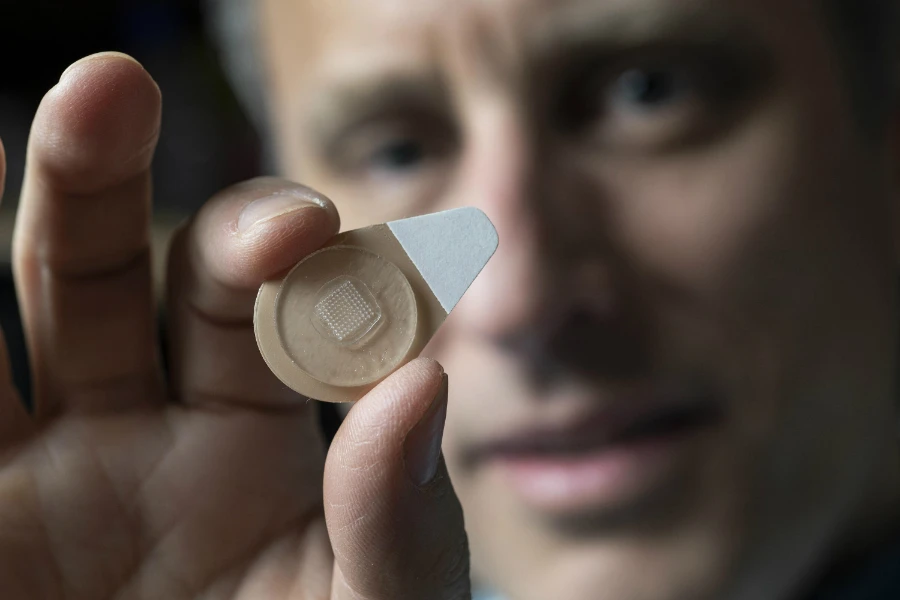
Atlanta, Ga., Jan 17, 2019 / 05:01 pm (CNA/EWTN News).- Scientists and researchers from the Georgia Institute of Technology in Atlanta are working on a birth control patch that would inject a contraceptive drug into women’s skin through biodegradable microneedles.

The quarter-sized patch would be applied to the skin for five seconds, allowing the needles “painlessly” to pierce the skin and break away, remaining in the body to slowly administer the contraceptive hormone levonorgestrel.

Currently, the needles are designed slowly to release the contraceptive hormone over the course of one month, though the team of scientists has said that the goal would be to develop a six-month patch.

In an article on the patch recently published in Nature Biomedical Engineering, the authors said it could eventually be used instead of the birth control pill, or other forms of long-term birth control such as hormone shots or implantable devices such as IUDs.

“Non-hormonal contraceptive methods, such as condoms and diaphragms, provide physical barriers for pregnancy protection, but these barrier methods, even when accompanied by spermicide, usually have high failure rates due in part to poor patient acceptance and compliance with correct use,” the study, authored by Dr. Mark Prausnitz and team, states.

“Hormonal contraceptives, such as oral pills, vaginal rings, intrauterine devices, subdermal injections and implants, generally provide a better level of effectiveness, but either require frequent dosing, which has significant compliance problems, or delivery by healthcare professionals, which can be especially problematic in low-income countries,” it adds.

“Hence, there has been tremendous interest in a contraceptive that is safe and effective, enables long-term contraception, facilitates good patient access and compliance through self-administration, and has low cost suitable for use globally.”

In the study, the scientists expressed hope that the patch could make long-term contraceptives more widely available, especially in developing countries, since women will be able to apply the patch themselves.

“To provide greater access to contraception, we developed a delivery system for contraception based on a microneedle patch designed to enable self-administration of a long-acting contraceptive that is safe, effective and low cost,” they said.

The study, which was received by Nature Biomedical Engineering in March 2018, was made possible through funding from the United States Agency for International Development.

The Western push to increase access to contraceptives and abortion has been denounced by critics as ideological colonization.

“By what moral right do Westerners send the message that the world would be a better place with fewer Africans in it?” Mary Eberstadt, senior research fellow at the Faith and Reason Institute, told CNA in 2018. She was responding to a report from the Guttmacher-Lancet Commission, which declared a need for universal access to contraception and birth control within the next 12 years, particularly in the developing world.

“Such campaigns are going to look as ugly in history’s rearview mirror as the twentieth-century eugenics movement does today,” she said at the time.

Nigerian Catholic Obianuju Ekeocha, the author of “Target Africa,” has also been an outspoken pro-life advocate who has opposed bringing contraceptives to Africa and other developing places.

“Unlike what we see in the developed Western world, there is actually very high compliance with Pope Paul VI’s Humanae vitae. For these African women, in all humility have heard, understood, and accepted the precious words of the prophetic pope,” Ekeocha wrote in a 2012 open letter to Melinda Gates.

The patch is still in development, and has only been tested on rats thus far. Scientists cited concerns about skin irritation at the site of the patch and the need for more clinical trials before the patch could be released to the general public.

The microneedle patch technology could also potentially be used to deliver vaccines throughout remote and underdeveloped areas as well, the study noted.

[…]