No Picture
News Briefs

Fla. bishops laud parental consent for abortion bill as it goes to governor

February 21, 2020 CNA Daily News 0

Tallahassee, Fla., Feb 21, 2020 / 03:21 pm (CNA).- The Florida bishops applauded Thursday the passage through both houses of the state legislature of a bill requiring parental consent for minors seeking to procure abortion. The governor has said he intends to sign the bill.

The Florida House of Representatives passed SB 404 by a 75-43 vote Feb. 20. It had cleared the Senate by a 23-17 vote earlier this month.

“We praise our state’s legislative leaders for advancing this pro-life legislation, especially bill sponsors, Senator Kelli Stargel (R-Lakeland) and Representative Erin Grall (R-Vero Beach), who took on the difficult task of guiding it through the committee process and onto the floor of the Senate and House,” the Florida bishops’ conference said Feb. 20.

“We also commend the Democratic lawmakers who courageously crossed party lines and voted to ensure vital protections for parents and their children.”

The bill would require minors to received notarized approval from a parent or guardian, or to get consent from a judge after a hearing, before procuring an abortion.

Under the bill, minors seeking an abortion will be required to receive notarized approval from at least one parent, guardian, or from a judge. Doctors who perform abortions without the parental consent of a girl under 18 would face up to five years in prison for a third-degree felony.

The permission requirement would not apply in cases of “medical emergencies” when there is not sufficient time to obtain written permission from a parent.

The bishops noted that “Parental consent is required prior to a minor’s medical treatment in most every instance, this includes simple medical interventions such as taking an aspirin or getting one’s ears pierced. This legislation is a common-sense measure that holds abortion to the same consent requirements as most every other medical decision involving a child.”

Ingrid Delgado, associate director for social concerns and respect life for the Florida bishops’ conference, commented that “standards that relate to children’s health care should apply especially in the context of abortion, which critically affects the lives of two children.”

Rep. James Bush, D-Miami, voted for the measure, calling it “a good bill for our children,” the Tallahassee Democrat reported.

Rep. Erin Grall, R-Vero Beach, a sponsor of the measure, said: “It is indisputable that abortion ends a life, and the decision to end a life is permanent and life-altering not only for the baby, but for the girl, the father and the family.”

Those opposed to the bill said it will create more difficulties for young girls who are already in a desperate situation, the Tallahassee Democrat reported.

Rep. Heather Fitzenhagen, R-Fort Myers, said that “we don’t live in a Utopia where parents always love and advise their children and young girls never get pregnant.”

The Florida legislature first enacted a parental consent law in 1979, but the state Supreme Court struck it down a decade later, saying it violated privacy rights.

Governor Ron DeSantis has said he thinks parental consent “deserves to be reconsidered” at the court, adding that parents “want to be involved with what’s going on with their kids.”

The Florida House passed a similar bill last year, but it failed to make it out of Senate committees for full debate.

Existing Florida law requires a minor seeking to procure abortion to give notice to their parent, or a judge.

According to the Tallahassee Democrat, 1,398 minors, 193 of whom notified a judge rather than her parents, procured abortion in the state in 2018.

Twenty-six states require parental consent for a minor’s abortion.

[…]

No Picture
News Briefs

Pope Francis: Canon law revision project is concluding

February 21, 2020 CNA Daily News 1

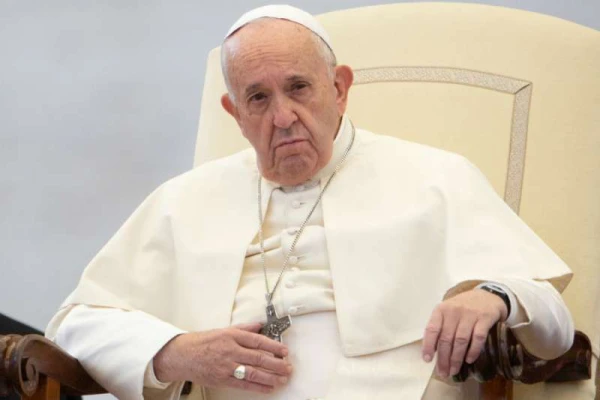
Vatican City, Feb 21, 2020 / 11:36 am (CNA).- Pope Francis said on Friday that canon law can be like medicine, because justice is healing for the entire Church. The pope also said that a long-running process of revising canon law’s penal norms has come to an end, suggesting that major revisions to the Code of Canon Law could soon be issued.

“Making known and applying the laws of the Church is not a hindrance to the presumed pastoral ‘efficacy’ of those who want to solve problems without the law, but a guarantee of the search for solutions that are not arbitrary, but truly just and, therefore, truly pastoral,” Pope Francis said Feb. 21.

“By avoiding arbitrary solutions, the law becomes a valid bulwark in defense of the least and the poor, the protective shield of those who risk falling victim to the powerful in turn,” the pope added.

Pope Francis met with the Pontifical Council for Legislative Texts at the end of their plenary assembly. The pontifical council is not itself a lawmaker, but assists the pope, who is the Church’s supreme legislator, in drafting, and interpreting canon law.

For more than a decade, the Pontifical Council for Legislative Texts has been at work on a set of major revisions to Book VI of the Code of Canon Law, which covers penal law in the Church.

The revision was commissioned by Benedict XVI.

“The work of revision of Book VI of the Latin Code, that has occupied you for several years and with this Plenary arrives at [its] conclusion,” Pope Francis said. 

“I urge you to continue tenaciously in this task,” the pope added.

The pope said that the pontifical council’s revision is moving “in the right direction” with its update to the canonical legislation to “make it more organic and in accordance with the new situations and problems of the current socio-cultural context” and “together offer suitable tools to facilitate its application.”

The Church’s law is a pastoral tool, and as such must be considered and accepted, Francis said.

“Contrary to that provided for by the state legislator, the canonical penalty always has a pastoral meaning and pursues not only a function of respect for the order, but also the reparation and above all the good of the guilty party,” the pope said. “The reparative aim is designed to restore, as far as possible, the conditions preceding the violation that disturbed the communion.”

“Every crime affects the whole Church, whose communion has been violated by those who deliberately attacked it with their own behavior,” Pope Francis stressed.

“The aim of the recovery of the individual underlines that the canonical penalty is not a merely coercive tool, but has a distinctly medicinal character. Ultimately, it represents a positive means for the realization of the Kingdom, for rebuilding justice in the community of the faithful, called to personal and common sanctification,” he said.

Pope Benedict XV established the pontifical council following his promulgation of the first Code of Canon Law in 1917. The Pontifical Council for Legislative Texts has since played a role in interpreting the decrees of the Second Vatican Council and revising the code of canon law. A new code for the Latin Catholic Church was promulgated in 1983, and a code of canons for Eastern Catholic Churches was promulgated in 1990.

In his address to the pontifical council, Pope Francis quoted Benedict XVI’s “Letter to Seminarians” and said it can be an invitation to all Catholics to learn to “understand and — I dare say – to love canon law in its intrinsic necessity and in the forms of its practical application.”

“Dictatorships are born and grow without rights. In the Church this cannot happen,” Pope Francis said.


[…]

No Picture
News Briefs

More than 207,000 sign petition to shutter porn website after trafficking violations

February 21, 2020 CNA Daily News 1

Sacramento, Calif., Feb 21, 2020 / 11:26 am (CNA).- Underage pornography and trafficking videos have been found on the online pornography platform PornHub.

By Feb. 21, a petition on change.org calling on the site to be shut down and its executive held accountable for aiding trafficking had more than 207,000 signatures.

The petition points to several instances of child rape pornography found on PornHub in the past year.

Laila Mickelwait, Exodus Cry’s Director of Abolition and the author of the petition, said there may be more instances of this illegal material on this site as well.

“We already have evidence, and it is just the tip of the iceberg,” the petition states. “It’s time to shut down super-predator site Pornhub and hold the executives behind it accountable.”

The petition will be sent to the US Department of Justice, the FBI, US President Donald Trump, Canadian Prime Minister Justin Trudeau, and several US Congressmen.

Mickelwait’s organization was established to abolish commercial sex abuse, sexual exploitation, and global sex trafficking. Exodus Cry is based on two principles: altering mindsets and changing laws.

Dr. Melissa Farley, executive director of Prostitution Research & Education, said the petition is proposing a fair and moderate position. She said the actions which occurred on PornHub’s watch are already illegal.

“Laila and her organization are taking a very reasonable stance. They’re only talking about children and they’re only talking about children that are being advertised for sale. Any prostitution of a child according to U.S. federal law is trafficking,” she told CNA.

“This is pictures of the trafficking of kids, in other words, pictures of the prostitution of children. To prosecute PornHub for profiting from photographs of the sexual assault of children for money…I’m delighted that her organization is taking this on.”

While Mickelwait did not originally plan to make a petition, she told CNA the initiative came about after she received feedback from people who were angry at the news regarding PornHub’s negligence regarding illegal material on its site.

“Everybody’s in agreement that children should not be trafficked and raped. Women should not be trafficked and raped for profit, for the sexual pleasure of billions of people who visit that website. There’s just no arguing with that,” she said.

During last year, 58 videos of sexual abuse and rape of a 15-year-old girl appeared on PornHub. The girl had been missing for a year when her mother found her on the adult website, leading to the arrest of her captor, Christopher Johnson, a 30-year-old Florida man.

Mickelwait said the 15-year-old girl had been approved by the supposed “verification system” of Pornhub, despite the girl being underage. She said that to upload a video, all that is needed is a valid email address.

“They had verified that 15 year-old-girl who was raped and assaulted on 58 videos on their platform … that was part of kind of what’s been called an explosive revelation of what’s happening on this website,” she said.

Michael James Pratt, head of GirlsDoPorn, was sued for over $12.7 million by 22 women who had been led to believe they were applying for “modeling jobs.” As it was actually a pornography shoot, the women who agreed to participate were told they would only appear on physical DVDs published in other countries and not online. The women were aged between 17 and 22.

Pratt is now facing charges in the US for trafficking and producing child pornography. He is reportedly on the run in New Zealand.

According to BBC, Rose Kalemba was abducted, beaten, and raped at age 14. Later a video of her sexual abuse appeared on PornHub. She found out about the videos through her classmates, who sent her links and bullied her for it.

After she discovered the videos, she would email PornHub over the next few months pleading for the content to be taken down and emphasizing her status as a minor, BBC reported. The website only obliged once she posed as her own lawyer.

Mickelwait said that because of the massive amount of content on Pornhub, she believes there are more instances of the sexual exploitation and child pornography than has been reported.

“If you go on my Twitter and you just scroll through, you could see case after case, after case, after case of instances where real rape, real trafficking is being uploaded to PornHub and PornHub is profiting off of that exploitation. It’s a huge problem,” she said.

“If we know that there’s 10, 12, 15, 20[cases], [then] there’s probably hundreds, thousands [of cases of sexual exploitation]… We have no idea how huge this could be based on the amount of content they have on their site.”

Mickelwait said the company that owns PornHub has a monopoly on the pornographic industry, having consolidated nternet porn.

“When people do things that are not okay, they need to be held accountable for that. But it also sets a precedent and example for anybody else who would try to do something like this and allow it, promote it, profit off of it. The public in the world is not going to put up with that,” she said.

“If it can happen to the world’s largest, richest, most powerful internet porn company, it could happen to anyone. I think that that’s why this is particularly important.”

She said that viewers of pornography are also harmed: “Experimental exposure to porn leads men and women to have a diminished view of women’s competence, morality, and humanity,” she said.

“Studies have been done that show that and demonstrate that when you watch hardcore violent pornography, it creates what’s called permission-giving beliefs about rape. It makes people believe what’s called the rape myths: that women want rape, that they deserve rape.”

Farley told CNA that all violent pornography is a problem, which may lead to extreme and violent fetishes or cases of prostitution. She said that all people harmed by sexual assaults in pornography should be compensated.

“My concern as somebody who’s been studying the sex trade for 20 years is that pornography is filmed documentation of sexual assault, humiliation, degradation, threats, and things like that. So any photograph of sexual assault is a problem,” she said.

“I would go much further. I would say that any pornography that harms anyone, whether they’re six, 16 or 60 years old, whether they’re male, female, trans, anyone who’s prostitution is filmed, who’s abuse is film, if they can show harm, they should sue PornHub for just everything it’s worth,” she added.

[…]

No Picture
News Briefs

Doctors, bishops oppose decriminalization of euthanasia in Portugal

February 20, 2020 CNA Daily News 0

Lisbon, Portugal, Feb 20, 2020 / 06:29 pm (CNA).- Lawmakers in Portugal debated five pieces of legislation Thursday to decriminalize euthanasia and assisted suicide, and doctors in the country are joining with the Catholic Church in opposing the potential change.

Each of the bills, which are not substantially different, were approved by the unicameral parliament Feb. 20.

“The most dignified option against euthanasia is in palliative care as a commitment to proximity, respect and care for human life until its natural end,” the Portugese bishops’ conference said Feb. 11, urging support for a referendum on the topic rather than a legislative change.

The Portuguese Doctors’ Association says the legislation violates key principles of the medical profession, MailOnline reports.

“Doctors learn to treat patients and save lives. They are not prepared to take part in procedures leading to death,” PDA president Miguel Guimaraes said after meeting with Portugese President Marcelo Rebelo de Sousa, who has expressed reluctance to signing the legislation.

Euthanasia and assisted suicide are currently legal in Belgium, Luxembourg, Colombia, Canada, the Netherlands, and the Australian state of Victoria, while Switzerland and some U.S. states allow assisted suicide.

The Socialist Party, one of the left-of-center parties leading the charge to push the legislation in Portugal, also led proposals to permit same-sex marriages and abortion in Portugal, the AP reports.

Hundreds of protestors gathered Thursday outside the parliament building in Lisbon to oppose the changes.

The bill would apply to patients over 18 who are “in a situation of extreme suffering, with an untreatable injury or a fatal and incurable disease.” According to the AP, two doctors, at least one of them a specialist in the relevant illness, and a psychiatrist would need to sign off on the patient’s request to die. The case would then go to a Verification and Evaluation Committee, which could approve or turn down the procedure.

The bills also stipulate that those seeking euthanasia or assisted suicide must be Portuguese citizens or legal residents.

Pope Francis speaks out frequently against the practice of euthanasia; in September 2019 he called it “a utilitarian view of the person, who becomes useless or can be equated to a cost, if from the medical point of view, he has no hope of improvement or can no longer avoid pain.”

This is not the first time Portugal has considered decriminalizing euthaniasia and assisted suicide.

After heated debate, the Portuguese Parliament voted during May 2018 to reject multiple proposed laws that would legalize euthanasia in the country, drawing praise from local bishops.

Pro-life groups had been protesting the euthanasia bills in the weeks leading up to the vote in the nation’s capital of Lisbon, where they held signs saying, “We demand palliative care for ALL,” and “Euthanasia is a recipe for elder abuse.”

[…]

No Picture
News Briefs

Mass formally opens beatification cause of Eileen O’Connor, laywoman and mystic

February 20, 2020 CNA Daily News 1

Sydney, Australia, Feb 20, 2020 / 05:15 pm (CNA).- Archbishop Anthony Fisher, O.P., of Sydney said Mass Thursday to open formally the cause of beatification of Eileen O’Connor, the foundress of Our Lady’s Nurses of the Poor, who died at a young age.

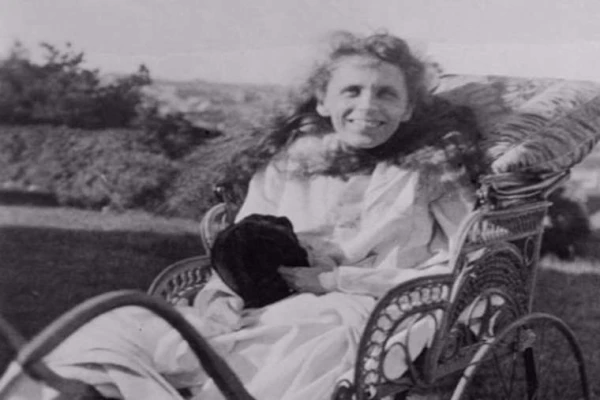
Born in Melbourne in 1892, Eileen suffered an injury at the age of three that would leave her paralyzed for some years and then confined to a wheelchair and in pain for the rest of her life. Together with Fr. Edward McGrath, she founded a ministry to serve the poor in their own homes in honor of the Blessed Virgin Mary. She died at the age of 28, in 1921.

“I think the youth of Eileen focuses attention far more on the brief period of her activity,” Fr. Anthony Robbie, a priest of the Archdiocese of Sydney and postulator of O’Connor’s cause, told CNA Feb. 20.

“We’re focused much more intently on the particular luminosity of the character that the Servant of God shows under stressful circumstances, perhaps brought on above all by the physical frailties that she suffered during her life. And she’s a hidden soul in many ways, again imposed by her illness.”

O’Connor “was a humble soul deeply in love with God, and so her writings, which take the form mostly of letters and spiritual conferences she gave to her companions in the little work of Our Lady’s Nurses of the Poor, are very uplifting and beautiful expressions of affection and attachment to God, and the motivation of charity, which inspired all of the great works that she accomplished,” the priest reflected.

Her witness of sanctity comes “above all from the effect she had on the people around her,” he said.

“They were absolutely devoted to her, they called her ‘the little mother’, and they loved her … And that degree of affection in which she was held never diminished over the years, not just by women who joined the community, but others who saw her example were just amazed and delighted.”

O’Connor and McGrath founded Our Lady’s Nurses of the Poor in 1913 to care for the poor and sick.

Today, Our Lady’s Nurses for the Poor continue their ministry in Sydney, Newcastle, and Macquarie Fields.

“In Eileen’s day they were laywomen; later on, they formed themselves into a religious community of sisters under vows, and they’re still religious sisters today,” Fr. Robbie explained.

“It’s always been small; it was never above 30 people, it now hovers around 10 members. It’s a very small but very good group of devoted women,” he added.

More than 1,000 people assisted at a Feb. 20 Votive Mass of Our Lady at St Mary’s Cathedral in Sydney formally to launch the cause for O’Connor’s beatification.

During his homily, Archbishop Fisher called O’Connor a “faithful lay-woman, mystic and foundress, renowned for works of mercy, whom we hope one day to call Australia’s second saint!”

“An unwavering devotee of the Blessed Virgin, she experienced a visitation from her and agreed to offer up her suffering for Our Lady’s work,” the archbishop stated.

He added that when O’Connor’s body was translated to a convent in Coogee 16 years after her death, it was found to be incorrupt, and pilgrims continue to visit her tomb.

Because of the continual devotion to O’Connor, in 1962 the then-Archbishop of Sydney approved a prayer for her beatification, and in 1990 a preliminary investigation of her merits was permitted.

In 2018, the bishops of the province unanimously voted to initiate her cause, and the Holy See granted her the title Servant of God in confirmation of the work thus far.

“The time is now ripe for a more thorough examination of her cause, to pray that there may be many miracles to credit to that cause, and to hope that the Church may eventually raise her to the altars,” Archbishop Fisher said.

He noted that “for a century now the Catholic faithful have kept alive the memory of the Little Mother, cherishing the woman, her character and wisdom, her foundation and apostolates … And for a century now believers have received many answers to prayers to and through Eileen.”

“Popular devotion to her even in her life-time has not diminished since her death, even in a culture increasingly deaf to the supernatural and disrespectful to the handicapped.”

Fr. Robbie explained that at this point in the cause, “the process involves a forensic examination of her life, to find the presence of what we call heroic virtue in the Servant of God. If the panel of historians produce sufficient information in that regard, and the Roman authorities are satisfied by it all, then they accept this cause, [and] declare her venerable.”

Archbishop Fisher preached that “She certainly seems to have done ordinary things in an extraordinary way and extraordinary things ordinarily, like so many saints. Frail, crippled and in pain, she reached out to others and was tireless in their service. She gave her all to God, her sisters, the sick poor. Amidst all her troubles, she was united to Christ and Mary, drawing strength and inspiration from them.”

Fr. Robbie emphasized that should she be declared venerable, “at that point we will start investigating the existence of miracles” worked through her intercession, “and the nature of the miracles.”

“The main focus of this investigation is into the virtues of her life,” he added. “The saints are there both to provide example and intercession.”

Michelle Climpson is a young Sydney woman devoted to O’Connor, who credits that devotion to helping her through a grave illness.

She told CNA that in June 2016, when going to donate blood she discovered that her hemoglobin was “very low.”

Sent to the hospital to have the matter examined, it was found she had a form of leukemia and would need a bone marrow transplant.

“Hearing that news … was very scary. And my mum is actually the one who introduced me to Eileen O’Connor. We started to go see her in Coogee and went to a few Masses where she lays,” Climpson said.

“Pretty much just from the first time I was there I wrote … for her to help me be cured, and every time I had a massive treatment … I just took all of my prayers to her, and I continually prayed to her every time it got a bit rough.”

Climpson said, “I just put all of my attention into praying to her. And so now I am in remission, and in June it will be four years since I was diagnosed.”

She added that “I’ve always prayed, and I have always gone to Church, but I think this has definitely heightened it … I always ask for Eileen’s help all the time now, it really has increased my faith.”

“It definitely helped me to get through to the other side, now I’m living a normal life, I got married, and I think my faith really helped me get to this point, and I’m very, very, very grateful.”

[…]