No Picture
News Briefs

Two churches in Washington state burn in apparent arson attacks

November 18, 2020 CNA Daily News 0

Denver Newsroom, Nov 18, 2020 / 03:40 pm (CNA).- Two church buildings— one Baptist, one Catholic— were damaged by fires in apparent arson attacks Sunday morning in Brewster, a town in central Washington.

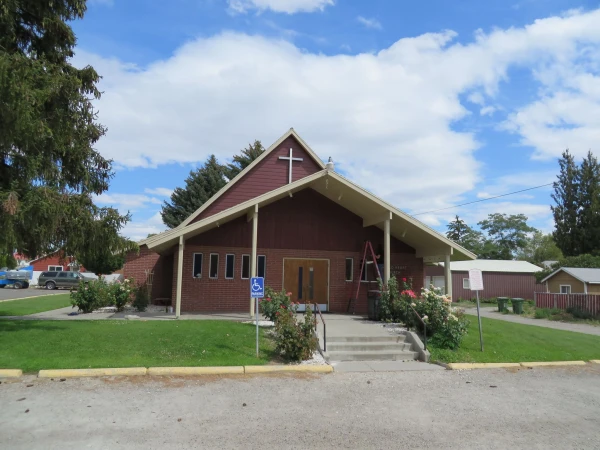
Sacred Heart Catholic Church suffered some fire damage near the sanctuary from an incendiary device dropped through a broken window early Nov. 15. New Testament Baptist Church, located a block away, suffered more serious fire damage to its interior the same morning.

Investigators have deemed the fire at Sacred Heart to be intentional, police say. The police have not yet made the same pronouncement about the fire at the Baptist church, but the investigation is ongoing.

Father Pedro Bautista, Sacred Heart’s pastor, told CNA that most of Sacred Heart’s parishioners are Hispanic, and that the community is “fearful” after the incident.

“This is just adding more stress to the lives of the people,” he said.

Father Bautista said he noticed the fire when he came to open the church on Sunday morning. At that point, the local fire department was already battling the fire at the nearby Baptist church, which appears to have been set around 2 am, and was discovered around 5 am.

The fire damaged a chair and some carpet near the sanctuary at Sacred Heart. Father Bautista said the fire department and the police were surprised that the fire did not do more damage.

The fire at the Baptist church did not entirely destroy the building, but the damage to the interior was significant enough that the building may be beyond salvage, local media reported.

Father Bautista said he left his card with the fire chief— who attends the Baptist church that burned— asking him to tell the church’s pastor that they are welcome to use Sacred Heart’s parish hall as a gathering space until their church is repaired.

“Honestly, that was my first thought. I wanted to talk to them and offer them [our] building. I didn’t realize [someone] had burned our church too,” he laughed.

The priest said he does not know who could have set the fires, and chose not to speculate. The investigation is still in its early stages, he noted, and he said he does not want to feed rumors in the community.

He said he considers his parish to be blessed that their insurance will likely cover the incident, and that he was still able to celebrate 2pm Sunday Mass the day of the fire.

“People were comforted that we were still able to have the Eucharist, that is a big statement for the community,” he said.

The Brewster Police Department said in a Nov. 16 statement that the two fires remain under investigation. The police have not announced any suspects.

Brewster PD Chief Marcos Ruiz declined to comment further to CNA, adding that the department does not have plans to release additional information on the active investigation.

The Diocese of Spokane requested prayers for the Sacred Heart community in a tweet on Sunday. The diocese did not comment further by press time.

Numerous attacks on Catholic churches and art in the U.S. have been documented throughout 2020— including three separate desecrations of Marian statues in the same weekend in July.
At least three vandalism attacks have happened against images of Mary this year in New York City alone.

The Cathedral Basilica of the Immaculate Conception in Denver was defaced with graffiti during a protest June 1, with rioters spray-painting slogans such as “GOD IS DEAD” and “PEDOFILES” [sic] on the church’s exterior.

A statue of the Virgin Mary was beheaded in Gary the evening of July 2 or morning of July 3.

On July 11, a man was arrested after he reportedly admitted to crashing a minivan into Queen of Peace Catholic Church in Ocala, Florida, and then setting it on fire while parishioners were inside. No one was injured.

Also on July 11, a 249-year-old California mission founded by St. Junipero Serra burned in a fire being investigated as arson.

The same day, a statue of the Blessed Virgin Mary was attacked and beheaded at a parish in Chattanooga, Tennessee. Three days later, vandals beheaded a statue of Christ outside Good Shepherd Catholic Church in Southwest Miami-Dade County, the same day that a statue of the Blessed Virgin at St. Mary’s Cathedral in Colorado Springs was tagged with red paint in an act of vandalism.

At Our Lady of the Assumption Church in Bloomingburg, New York, a monument to unborn children killed by abortion was knocked over the weekend of July 18.

In late August, vandals beheaded a statue of the Blessed Virgin Mary at Holy Family Parish in Citrus Heights, California. A statue of the Ten Commandments, placed at the parish “in dedication to all those who have lost their life through abortion” was grafittied with a swastika.

In September, a man went on an hours-long vandalism spree at Immaculate Heart of Mary Catholic Church in Tioga, Louisiana, breaking at least six windows, beating several metal doors, and breaking numerous statues around the parish grounds. He was later arrested and charged.
The same month, vandals toppled a statue of St. Therese outside St. Therese of the Child Jesus Catholic Parish in Midvale, Utah.

Later in September, a man was charged for smashing a 90-year-old statue of Christ inside St. Patrick Cathedral in El Paso.

Also in September, a man wielded a baseball bat on the grounds of a Catholic seminary in Texas and damaged a crucifix and several doors, but caused no harm to seminary students.

St. Peter Chaldean Catholic Cathedral in El Cajon on Sept. 25 was defaced with graffiti depicting “pentagrams, upside down crosses, white power, swastikas,” as well as slogans such as “Biden 2020,” and “BLM”.

The same evening, Our Mother of Perpetual Help Catholic Church, also in El Cajon, was similarly attacked, with the pastor discovering spray-painted swastikas on an exterior wall of the church the next day.

In mid-October, vandals knocked down a statue of Mary and a statue of Christ outside St. Germaine Catholic Church in Prescott Valley, Arizona, about 90 miles north of Phoenix.
Throughout the summer, numerous depictions of St. Junipero Serra, mostly in California, have been forcibly pulled down by mobs of protestors.

A crowd of about 100 people tore down another St. Junípero Serra statue in San Francisco’s Golden Gate Park the evening of June 19. Rioters pulled down a statue of St. Junipero Serra in Sacramento July 4.

A Oct. 12 protest at Mission San Rafael Arcangel began peacefully but then turned violent, as participants defaced another St. Junipero Serra statue with red paint before dragging it to the ground with nylon straps and ropes. The local district attorney ultimately charged five individuals with felony vandalism in connection with the incident.

Abroad, a recent report chronicled more than 500 hate crimes against Christians in Europe in 2019, included attacks against Catholic priests, arson attacks on Catholic churches, the destruction of images of the Virgin Mary, vandalism of a pregnancy counseling center, and the theft of consecrated Eucharistic hosts from tabernacles.


[…]

No Picture
News Briefs

After another major hurricane, Central America needs ‘a helping hand’

November 18, 2020 CNA Daily News 1

Tegucigalpa, Honduras, Nov 18, 2020 / 12:33 pm (CNA).- With Hurricane Iota becoming the second major hurricane to hit Central America this November, relief agencies have tried to prepare for even more destruction and have appealed for donations and support from around the world.

“Right now the world’s attention is focused elsewhere,” Conor Walsh, Catholic Relief Services’ manager in Honduras, told CNA’s Spanish-language sister agency ACI Prensa Nov. 16 before Iota made landfall.

“It’s been a little hard to get resources together to be able to respond effectively considering the scale of this emergency, but we’re doing what we can and we’re reaching out to all people of good will.”

“We are fully aware that there are other emergencies the world is dealing with right now. Let us not overlook Central America,” he said. “Let us not forget our brothers and sisters here in Honduras because they are suffering, and they are very very close to the United States. We should extend a helping hand.”

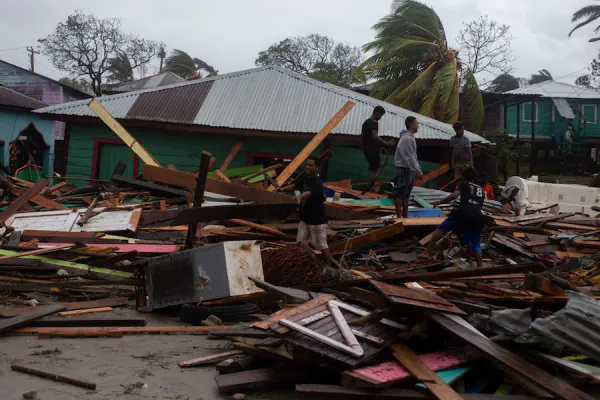
Hurricane Iota briefly reached Category 5 hurricane strength, then made landfall in Nicaragua Monday night with sustained winds of 155 mph, a Category 4 hurricane. It weakened to a Category 2 strength storm, with 105 mph winds, before becoming a tropical storm, National Public Radio reports.

The storm brought “catastrophic winds, life-threatening storm surge, and torrential rainfall,” the National Hurricane Center said. At least four adults and two minors were killed in Nicaragua, which lost electrical power along almost its entire coast. Tens of thousands of people took refuge in government shelters.

At least two people died on the Colombian island of Providencia, where 112 people were evacuated on Tuesday, CNN reports. The infrastructure on the island was completely wiped out. It is the first recorded Category 5 storm to hit the island and its neighbor San Andres.

Iota is the 30th named storm this season, and the strongest storm of the season. It follows soon after the Nov. 4 landfall of Hurricane Eta, which hit Nicaragua, Guatemala, and southern Belize.

“The situation in Honduras is already critical,” Walsh said before Iota’s landfall. “After Eta came through, thousands of people were displaced from their homes in the north. They’re living in shelters now. They’ve lost everything.”

“In more vulnerable rural communities, farmers lost their crops. This was just before they were going to harvest their bean crops and their corn, two basic staples,” said Walsh.

“Iota is expected to be worse. It is going right through the center of the country,” he said. “We’re bracing for the worst.”

Timothy Hansell, manager of Catholic Relief Services in Nicaragua, told National Public Radio that the relief agency aims to provide cleaning supplies and toilet paper to local residents, rebuild homes, and help farmers recover.

Caribbean coastal indigenous communities were among the hardest hit by Eta’s strong winds and floodwaters, he said. Many of their homes were destroyed. Nicaraguan farmers in the northern and central parts of the country lost as much as 50% of their bean crops, with heavy damage to rice, corn and vegetables.

Likewise, the immediate situation in Honduras is “a very, very critical situation,” Walsh said.

Catholic Relief Services is the U.S. bishops’ foreign relief agency. There are about 60 CRS staff based in Nicaragua’s national capital of Tegucigalpa, the city of San Pedro, and La Esperanza in the west of the country. They normally focus on improving agriculture, water supply and education. Aiding youth vulnerable to exploitation and unemployment is another area of their work.

“All of these programs are being interrupted now because of the emergency,” Walsh said. “We’re using whatever funding we can to provide immediate assistance for the families that have been so badly affected.”

There is great need for drinking water, food supplies, and biosafety equipment like masks, antiseptic gel and soap. There are fears that crowding at hurricane shelters will lead to the spread of coronavirus infections.

“People who are in shelters, for the most part, had to leave their homes without anything, much less a mask,” Walsh explained. “The conditions for propagation of COVID are rife in those shelters.”

According to Walsh, Honduras “is suffering the effects of climate change, and it is not responsible for this.”

“It is our duty as human beings to respond to that in a way that recognizes our common humanity,” he said.

Scientists say a changing climate and hotter oceans have contributed to stronger hurricanes. The water in the Caribbean and the Gulf of Mexico is consistently 2 degrees hotter than a century ago, according to National Public Radio.

“Honduras is starting from a very vulnerable point to begin with,” Walsh continued. “Even without the hurricanes, even without COVID, Honduras was teetering on the edge because it’s such a poor country and it’s been so hard hit by climate change.”

The country is suffering an “acute food insecurity situation” with low food supplies after several seasons of drought.

“And add to that COVID. COVID locked down the economy. It closed markets. It made it even harder for people to make a living or an income,” said Walsh. “Now, what little is left, Eta damaged, and hurricane Iota is going to finish off.”

“What is going to be the result? In all likelihood, people who have lost everything are going to feel they have no option but to migrate. It’s going to translate into stronger migration pressures once again,” he added.

Walsh encouraged better ways of thinking about Honduras and its people.

“We have to get past this notion that Honduras is a source of problems or a source of migrants that we don’t want. It’s a neighbor of ours. It’s a place of great suffering, where poverty and exclusion explain why so many choose to leave the country,” he said. “The more that we can help Hondurans in Honduras, the better.”

Catholic Relief Services is accepting donations for hurricane relief through its website, www.crs.org.


[…]

No Picture
News Briefs

Catholic bishop urges UK officials to protect prisoners from coronavirus

November 18, 2020 CNA Daily News 0

CNA Staff, Nov 18, 2020 / 11:10 am (CNA).- As Covid-19 cases have been on the rise among the incarcerated, Bishop Richard Moth of Arundel and Brighton has called on the British government to reinstate an early release program to help prevent the spread of the coronavirus.

Bishop Moth, the English and Welsh bishops’ representative on prisons, sent a letter last week to British Justice Secretary Robert Buckland. The statement was a follow-up to a letter earlier this year, which highlighted the release of vulnerable people in prison, such as pregnant women and new mothers.

“As we face a second wave, I hope that you will consider measures to counter the growing number of Covid-19 outbreaks among prisoners and staff by extending the Early Conditional Temporary Release Scheme,” he wrote.

“Through releasing some prisoners who pose a low risk of harm and who are nearing the end of their sentences, it may be possible to ease pressure on the prison estate. This can also help to protect vital family support networks, which have come under increasing strain throughout the pandemic.”

Bishop Moth expressed gratitude for the efforts of government officials and prison staff to minimize coronavirus-related deaths but said there are still threats to the inmates’ emotional and physical health.

“We also recognise the very significant cost that has been paid in terms of prisoners’ mental and physical health, restrictions to rehabilitation activity, and reduced family contact. I am sure you will agree that this situation needs further attention.”

The Early Conditional Temporary Release Scheme was begun in April during the first spike of coronavirus cases in the UK. The program sought to release low-risk prisoners nearing the end of their sentence to reduce the risk of COVID-19 outbreaks in prisons.

The scheme was first suspended after errors occurred in April when six men were released mistakenly by prisons in Sudbury and Leyhill as well as an Isis young offenders institution in south-east London. Once the mistake was recognized, the men were notified and they returned to prison willingly, the BBC reported.

A recent report from the British prisons office noted an increase in coronavirus cases, up to 620 in September compared to 550 in August.

Since the coronavirus outbreak, Pope Francis has encouraged authorities to be sensitive to vulnerable prisoners.

“The joint commitment against the pandemic can lead everyone to recognize our need to strengthen fraternal bonds as members of a single family,” Pope Francis said

“I read an official memo from the Human Rights Commission that talks about the problem of overcrowded prisons, which could become a tragedy.”


[…]