

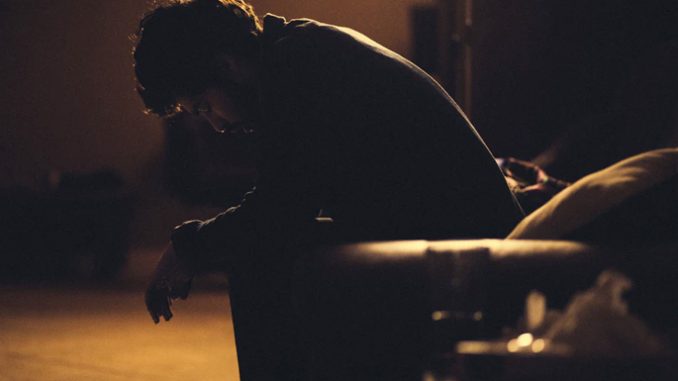
I teach moral theology at a Catholic seminary, which includes a course on medical ethics. When I do so, I try to relate the academic aspect of medical ethics to real-life issues. My seminary students are not merely learning the doctrines of the Church, but also how to apply them in pastoral settings. Sometimes, this involves walking a fine line, where sensitivity to personal illness or injury meets non-negotiable principles of Catholic moral theology.
Thus, I incorporate hypothetical scenarios or case studies to challenge my students to think through the issues that arise in challenging circumstances. This includes problems related to infertility, problem pregnancies, traumatic injury, medical triage, and the difference between keeping alive and prolonging death, as a few examples.
Even so, however, the exercises have always been merely academic in the years I have taught the course. I have taken a dispassionate and objective position, without any immediate emotional or spiritual investment either in the doctrines or their hypothetical applications.
Until now.
A few weeks ago, a very close family member was diagnosed with a potentially deadly disease. Lest I cause undue alarm, the condition was detected in the earliest possible stage. Treatment, though traumatic and life-changing, was as successful as we could hope. And the long-term prognosis is very good. We have every expectation that my relative will live a long and happy life, albeit a different kind of life from one in which this disease had not been contracted. Life will most likely continue to be fulfilling and hopeful.
But not the same.
For my relative and close relations to that person, the measure of those terms—happy, fulfilling, and hopeful—has changed. Thus, the professor has become the student, learning not from a textbook or classroom lecture, but rather from the experience of a frightening encounter with disease.
And the lessons I am—we are—learning center around two principal aspects of the problem of illness—the problem of suffering and the problem of suffering the sufferer.
Learning to suffer
It is nothing other than a tautology to say that disease, illness, and injury cause suffering. Indeed, all these things are suffering to some degree or other. Suffering is embedded in the definition of disease, illness, and injury. It is both unwise and futile to try to define suffering out of these things, as though we can pray or endure away the suffering that accompanies any kind of health crisis. And for some of these crises, suffering remains a permanent condition, accompanying a person throughout his or her life.
Of course, Catholic spiritual and moral theology has a long and deep history of dealing with the problem of suffering. It is a staple of Catholic spirituality that none of us is promised that we will not suffer, but only that we may join our suffering to Christ’s own. As we can participate in Christ’s resurrection, we are also called to participate in his suffering. And just as the resurrection is redemptive to those who embrace it in faith, so too can be our suffering when it is intentionally joined with Christ’s. Suffering can be redemptive, but not if it is isolated from Him whose suffering redeems it and us.
In Phil Klay’s remarkable short story, “Prayer in the Furnace” from the collection Redeployment, a Marine Corps Catholic chaplain must work through the suffering of the men in his company. The story is told in the first person by Fr. Jeffrey, in the context of an ongoing conversation with a Marine named Rodriguez. Rodriguez wrestles with the horrifying injuries and deaths of his comrades in and around Fallujah at the height of the war in Afghanistan. But he is reluctant to share his suffering with others. Rodriguez is a Catholic, but he has become jaded by the ugliness of war, including ugliness inflicted by his own unit. He has suffered the deaths and injuries of men he has loved. And he continues to suffer from a sense of his own guilt caused from inflicting suffering on others.
And, though Rodriguez is surrounded by those who also have suffered, Fr. Jeffrey senses that he is trying to suffer alone. This is, perhaps, a futile attempt to “cure” the suffering. But, of course, it does not work.
Suffering with the sufferer
In a pivotal homily, Fr. Jeffrey says, “We are part of a long tradition of suffering. We can let it isolate us if we want, but we must realize that isolation is a lie.” Fr. Jeffrey did not try to “make sense” of suffering or to rationalize it away. Rather, his purpose was to situate suffering in the context of the suffering Savior and the community of those He came to redeem. “Do not suffer alone,” he told his company. “Offer suffering up to God, respect your fellow man, and perhaps the sheer awfulness of this place will become a bit more tolerable.”
Of course, what my family has recently experienced is very different from the gruesome injuries and deaths in a violent war zone. But the principle is the same. Suffering is a part of the human condition. Some suffer more than others. But at some point, we are all called to participate. Whether we suffer illness, disease, or injury in our own persons or we see those sufferings in someone we love, none of us is immune.
Theologians and philosophers can and should debate the causes of suffering and what suffering suggests about the problem of theodicy. And I do not gainsay the importance of those academic conversations. But neither the debates nor their resolutions really matter that much to the person who is suffering. Nor do they usually yield hopeful or helpful answers.
In her “Introduction to a Memoir of Mary Ann” (reprinted in Mystery and Manners), Flannery O’Connor observed, “One of the tendencies of our age is to use the suffering of children to discredit the goodness of God, and once you have discredited his goodness, you are done with him.” Ivan Karmazov, she continues, “cannot believe, as long as one child is in torment.” “If other ages felt less,” she argues, “they saw more, even though they saw with the blind, prophetical, unsentimental eye of acceptance, which is to say, of faith.”
But having lost that faith, O’Connor contends, “we govern by tenderness. It is a tenderness which, long since cut off from the person of Christ, is wrapped in theory.”
Theodicy, what O’Connor calls “theory,” may have a place. But that place is not the examination room, the operating table, the hospice center, or the funeral home. The proper question in those places is not “why do we suffer?” Nor is it, “how do we make the suffering go away?” Rather, the question is “how do we understand the place of suffering both in our lives and the lives of those around us?” And, I fear, the further we move from the cross that gives meaning to suffering, the further we move from a hopeful answer to that question.
Having forgotten how to suffer, we simply want to make it go away—to end the suffering. And the only way to make the suffering go away is to be rid of the sufferer. “When tenderness is detached from the source of tenderness,” O’Connor warns us, “its logical outcome is terror. It ends in forced-labor camps and in the fumes of the gas chamber.”
Until very recently, such observations were familiar to me in theory, but remote in practice. Now, they have become both real and proximate for my family and me. We are learning how to suffer and how to suffer with the suffering. It is a hard lesson, but a salvific one. And my family, already very close, has become even closer. As Fr. Jeffrey concludes in “Prayer in the Furnace,” “Twenty centuries of Christianity. You’d think we’d learn.”
Then, fingering his crucifix, he concludes, “In this world, He only promises we don’t suffer alone.” Rodriguez had difficulty accepting that conclusion. May family are learning how to embrace it.
If you value the news and views Catholic World Report provides, please consider donating to support our efforts. Your contribution will help us continue to make CWR available to all readers worldwide for free, without a subscription. Thank you for your generosity!
Click here for more information on donating to CWR. Click here to sign up for our newsletter.


Leave a Reply