

 By
By The Neocatechumenal Way is present in 138 countries, has more than 115 seminaries, and comprises some 25,000 communities, totaling over 1 million members.

In the mid-1960s, the Neocatechumenal Way began in an impoverished area of Madrid, where its initiators — Kiko Argüello and Carmen Hernández —proclaimed Christ among those most in need. Today, it is a reality of the Catholic Church that is present today on all five continents.
On the occasion of the apostolateʼs 60th anniversary — originally scheduled for 2025 but postponed due to the death of Pope Francis — Pope Leo XIV sent a special message to those who attended a Mass marking the occasion that was celebrated by Cardinal José Cobo, archbishop of Madrid, at the Almudena Cathedral.
“It is essential to remember that the evangelizing mission is a fundamental task of the entire Church — which, with joy and humility, seeking the unity of all its members (cf. Lumen Gentium, 7) and docile to the action of the Holy Spirit, strives to bring the gift of salvation to all,” the pope noted in a message signed by Vatican Secretary of State Cardinal Pietro Parolin.
“May this conviction serve as an inspiration to undertake this missionary work on behalf of God’s beloved children,” the Holy Father emphasized, concluding with his apostolic blessing for the members of the Neocatechumenal Way.
In January, Pope Leo XIV received the leaders of the Neocatechumenal Way at the Vatican and highlighted that their charism, as well as their works of evangelization and catechesis, constitute “a valuable contribution to the life of the Church.”
Kiko Argüello: ‘Christian initiation inspired by the Holy Spirit’
“History is important — calling to mind how the Lord has acted throughout all these years,” said Argüello before the start of the Eucharist, beneath the icons he himself painted in the apse of the Madrid cathedral.
In the presence of several bishops and cardinals, and after asking for a round of applause for the 130 priests attending the Mass, Argüello expressed his joy at the conclusion of the diocesan phase of the canonization process for Hernández — the formal closing of which is scheduled to take place on June 2 in the Spanish capital.
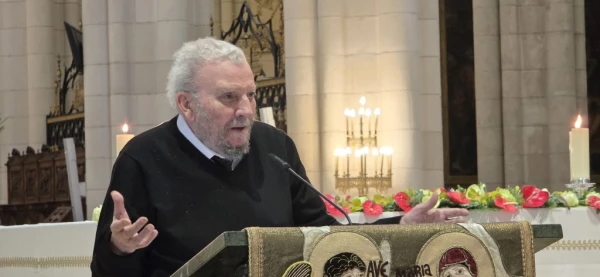
“In the Way, we do nothing without the pope and without the bishops. If the Way has spread so remarkably, it is due to the support of all the popes, who have regarded it as a gift of the Holy Spirit for the good of the Church,” he affirmed.
Argüello — as noted on the Neocatechumenal Way’s website — explained that this apostolate “is a Christian initiation raised up by the Holy Spirit as one of the fruits of the council. What was being drafted in writing at Vatican II, Carmen and I were putting into practice in the shantytowns of Palomeras Altas.”
‘God tends to sow his most fruitful works in places that the world barely notices’
In his homily, Cobo referred to the place of origin of the Neocatechumenal Way, emphasizing that “it is no coincidence that it emerged there: God tends to sow his most fruitful works in places that the world barely notices, and through specific individuals such as Kiko, Carmen, and so many others who have followed in their footsteps.”
The cardinal expressed his gratitude for the evangelizing work of the Neocatechumenal Way over these past 60 years, highlighting that it “continues to inspire new paths for proclaiming the Gospel and calls upon the Church to confront the challenges of every era through the word of God, liturgical life, and community.”
‘Filial obedience to the Church’s pastors’
Cardinal Kevin Farrell, prefect of the Dicastery for the Laity, the Family, and Life, also sent a message in which he noted that “Spain has gifted the Church with luminous examples of Christian life and spiritual renewal — through saints, martyrs, evangelization initiatives, schools of prayer, ecclesial movements, and spiritual currents. Among these fruits, the Neocatechumenal Way can undoubtedly be included.”
After highlighting the “innumerable conversions” and the many vocations that the Neocatechumenal Way has given to the Church, the cardinal invited its members to “live out their charism with renewed impetus and creativity, interpreting the spiritual needs of the men and women of today, and bringing them the ever-relevant treasure of the faith and of ecclesial tradition.”
“Emulate their example of creativity, courage, and candor, of filial obedience to the pastors of the Church, and of tireless zeal for the good and salvation of souls,” he encouraged.
The Neocatechumenal Way
Argüello and Hernández met in the mid-1960s in the Palomeras Altas neighborhood of Madrid, where the former — despite a promising career as a painter — gave it all up to live in a shack and proclaim the resurrection of Jesus Christ among the poorest of the poor.
This Christian initiation for adults soon spread to numerous parishes, driven by the encouragement of the then-archbishop of Madrid, Casimiro Morcillo.
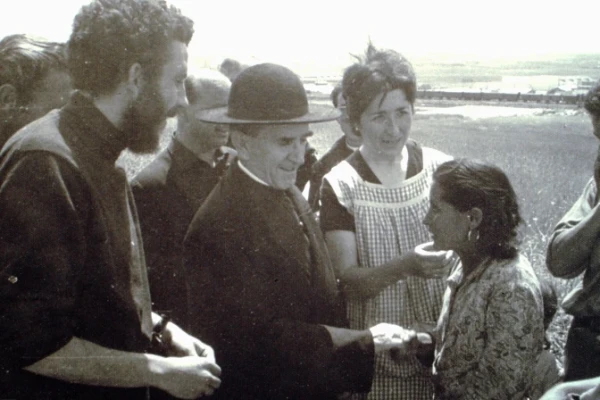
The Neocatechumenal Way was officially approved by the Holy See in 2008 — “not as an association or movement but as a post-baptismal catechumenate, as an instrument to assist parishes and dioceses in the work of evangelization” — according to the organization.
The Neocatechumenal Way is present in 138 countries, has more than 115 seminaries, and comprises some 25,000 communities, totaling over 1 million members.
This story was first published by ACI Prensa, the Spanish-language sister service of EWTN News. It has been translated and adapted by EWTN News English.
If you value the news and views Catholic World Report provides, please consider donating to support our efforts. Your contribution will help us continue to make CWR available to all readers worldwide for free, without a subscription. Thank you for your generosity!
Click here for more information on donating to CWR. Click here to sign up for our newsletter.

Leave a Reply