Pope Francis lays his hands on Renato Tarantelli Baccari — a gesture signifying the conferral of episcopal authority that traces back to apostolic times — at the Basilica of St. John Lateran, Jan. 4, 2025. / Credit: Daniel Ibáñez/CNA
Rome Newsroom, Jan 4, 2025 / 16:33 pm (CNA).
Pope Francis attended the episcopal ordination of Rome’s new auxiliary bishop and vicegerent at the Basilica of St. John Lateran Thursday afternoon.
Monsignor Renato Tarantelli Baccari, 48, who was appointed auxiliary bishop of Rome and vicegerent of the Diocese of Rome by the pontiff on November 21, 2024, received his episcopal ordination from Cardinal Baldassare Reina, the pope’s vicar for Rome.
Cardinal Christoph Schönborn, Archbishop of Vienna, and Bishop Michele Di Tolve, auxiliary bishop of Rome, served as co-consecrators.
Cardinal Reina addresses the congregation during the episcopal ordination Mass of Msgr. Renato Tarantelli Baccari at the Basilica of St. John Lateran in Rome, Jan. 4, 2025. Credit: Daniel Ibáñez/CNA
In his homily, Cardinal Reina emphasized three fundamental actions that define a bishop’s vocation: “to indicate, to follow, and to remain.” The cardinal explained that these actions outline both “the vocation of pastors” and “the mission entrusted to Don Renato.”
Tarantelli Baccari, who was ordained a priest by Pope Francis in 2018, will serve as auxiliary bishop for the southern sector of the Diocese of Rome. A canon lawyer by training, he joins four other auxiliary bishops currently serving the Diocese of Rome under Pope Francis, who serves as the diocese’s bishop.
Bishop Renato Tarantelli Baccari, newly appointed auxiliary bishop of Rome and vicegerent of the Diocese of Rome, during his episcopal ordination at the Basilica of St. John Lateran, Jan/ 4, 2025. Credit: Daniel Ibáñez/CNA
Before the celebration’s conclusion, the newly ordained bishop thanked Pope Francis for “coming here today to your cathedral, among the people of your beloved diocese, this beautiful Church of Rome.”
Tarantelli Baccari recalled the pope’s recommendations for every pastor and “pilgrim of hope”: “Pray always, never tire, always forgive, move forward with courage and don’t lose your smile, and above all, never lose your sense of humor.”
The interior of the Archbasilica of St. John Lateran during the episcopal ordination ceremony, with its ornate Renaissance ceiling and marble statuary providing a majestic setting for the sacred celebration. Credit: Daniel Ibáñez/CNA
The Diocese of Rome may soon see another episcopal appointment. The diocese’s northern sector remains vacant following Bishop Daniele Salera’s transfer to lead the Diocese of Ivrea. The other sectors are currently assigned: the eastern sector to Bishop Paolo Ricciardi, the western sector to Cardinal Baldassare Reina, and the southern sector to the newly ordained Bishop Tarantelli Baccari.
Vatican sources indicate that the northern sector could be assigned to one of two auxiliary bishops who currently do not oversee a sector: Bishop Michele Di Tolve or Bishop Benoni Ambarus.
This article was first publishedby ACI Stampa, CNA’s Italian-language news partner, and has been translated and adapted by CNA.
If you value the news and views Catholic World Report provides, please consider donating to support our efforts. Your contribution will help us continue to make CWR available to all readers worldwide for free, without a subscription. Thank you for your generosity!
Click here for more information on donating to CWR. Click here to sign up for our newsletter.
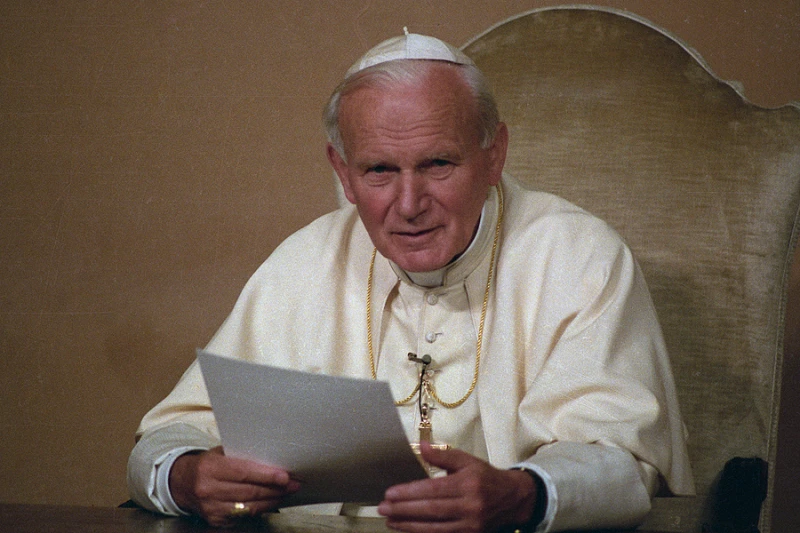
St. John Paul II, circa 1992. / L’Osservatore Romano.
CNA Newsroom, Dec 7, 2022 / 08:00 am (CNA).
Journalists investigating secular and Catholic Church sources in Poland have called into question allegations by a Dutch writer that St. John Paul II “covered up” sexual abuse while still a bishop in Poland.
On Dec. 2, Ekke Overbeek, a journalist from the Netherlands living in Poland, said he had found “concrete cases of priests abusing children in the Archdiocese of Krakow, where the future pope was archbishop. The future pope knew about it and transferred them anyway, which led to new victims.”
Overbeek referred to the case of the priest Eugeniusz Surgent and “many others” whom Karol Wojtyla allegedly “covered up.”
The Dutch publication NOS, in which Overbeek’s statements appeared, reported the journalist spent three years combing “Polish archives.”
“Almost all documents collected directly about Wojtyla have been destroyed. However, in other surviving documents, he is mentioned very often. And if you put them all together, they are pieces of a puzzle that give a picture of how he dealt with it,” the writer stated, without saying which archives he was referring to.
Polish journalists Tomasz Krzyżak and Piotr Litka of Rzeczpospolita published an investigation that countered Overbeek’s accusations, stating St. John Paul II did not cover up any abuse and consistently acted against such cases during his time as archbishop of Krakow from 1964 to 1978.
The reporters point out that the priest in question, Surgent, was not from the Archdiocese of Krakow but from the Diocese of Lubaczów.
As archbishop of Krakow, the then Cardinal Karol Wojtyla made several decisions concerning Surgent, they explained, “within his competencies, leaving the final word on possible sanctioning of the priest to his ordinary, the bishop of Lubaczów.”
The journalists added that “the then archbishop of Krakow could not do anything about the fact that Surgent was working in two other dioceses.”
The Polish reporters also referred to another incident that illustrated how Cardinal Wojtyla at the time dealt with abuse, namely the case of priest Józef Loranc, who was accused of sexually abusing young girls.
“The absence of punitive measures by the ecclesiastical court does not cancel the crime and does not undo the guilt,” Cardinal Wojtyla wrote in a 1971 letter to Loranc after he was released from prison.
For Krzyżak and Litka, “this behavior” of the later Pope John Paul II “differs considerably from the practice of leniency toward those who had committed such crimes, which was common at the time.”
In the case of Loranc, a priest of the Archdiocese of Krakow until his death in 1992, “Cardinal Wojtyla made immediate decisions in accordance with canon law. And while he gradually lifted canonical penalties and showed great mercy, he remained ever vigilant,” the journalists wrote.
When Cardinal Wojtyla learned of the case in 1970, his decision came just days after learning of the accusations against Loranc.
In a letter, the future Pope John Paul II stated that the accused priest was “suspended” and “could not exercise any priestly function” and would have to “live in the monastery for a certain period of time and make a retreat and receive help.”
The journalists said that Wojtyla “made all the necessary decisions at that moment: the quick removal of the priest from the parish, the suspension until the matter was resolved, and the obligation to live in a monastery,” where civil authorities then arrested him.
The case did not reach the Vatican, they said, because the provision directing what is now the Dicastery for the Doctrine of the Faith — then the Congregation for the Doctrine of the Faith — to deal with abuse cases was not issued until 2001.
Although he was eventually allowed to celebrate Mass again, Loran could not return to the “canonical mission of catechesis of children and youth” or to the ministry of the confessional.
The Polish Bishops’ Conference, in a statement published Nov. 14, spoke of “increasingly hearing questions about John Paul II’s attitude toward the tragedy of sexual abuse of minors and vulnerable people by the clergy and about his response to such crimes during his pontificate.”
“It has been increasingly alleged that the pope did not deal adequately with such acts and did little to address the problem, or even covered it up,” the statement continued.
The bishops decried these as a “media assault” on St. John Paul II and his pontificate. The target of such criticisms was “his teaching expressed, for example, in encyclicals such as Redemptor hominis or Veritatis splendor, as well as in his theology of the body, which does not correspond to contemporary ideologies promoting hedonism, relativism, and moral nihilism.”
The statement was not the first time Polish Catholic leaders responded to allegations against St. John Paul II.
In December 2020, following criticism of the Polish pope in the wake of the McCarrick report, 1,700 professors at Polish universities and research institutes signed an appeal defending St. John Paul II.
The signatories included Hanna Suchocka, Poland’s first female prime minister; former foreign minister Adam Daniel Rotfeld; physicists Andrzej Staruszkiewicz and Krzysztof Meissner; and film director Krzysztof Zanussi.
The professors’ appeal followed an intervention by Archbishop Stanisław Gądecki, president of the Polish Bishops’ Conference. In a Dec. 7, 2020, statement, Gądecki deplored what he called “unprecedented attacks” on St. John Paul II. He insisted that the pope’s “highest priority” was combating clerical abuse and protecting young people.
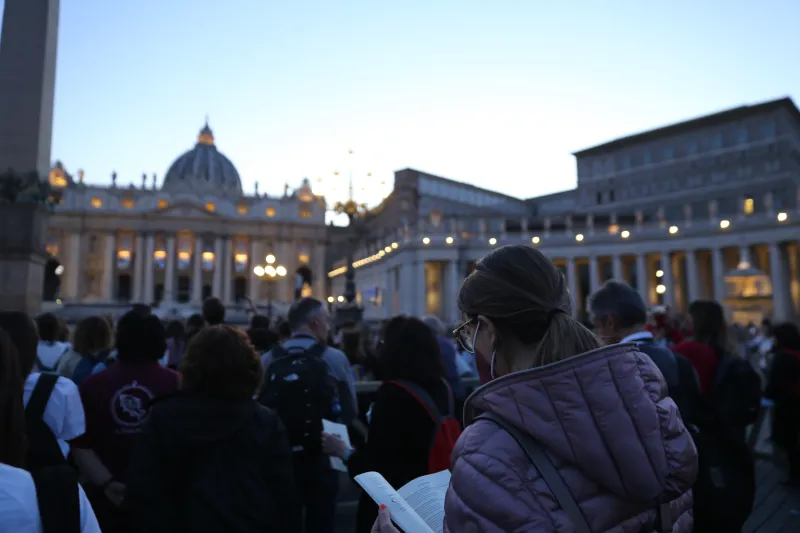
Pilgrims pray in front of St. Peter’s Basilica / Hannah Brockhaus/CNA
Rome, Italy, May 26, 2022 / 08:37 am (CNA).
When St. Philip Neri came to Rome from Florence in 1533, he encountered a city in upheaval. The Sack of Rome six years prior had left famine and plague in its wake. The Protestant Reformation was in full swing and the Church was rife with corruption.
The young Philip, who would spend around 16 years in Rome as a layman before becoming a priest, soon dedicated himself to caring for the city’s sick and poor.
The saint, whose feast day falls on May 26, also realized that Rome’s people were suffering from a spiritual sickness and tiredness as well, and so he set out to reinvigorate Catholics with the joy of the faith through song and dance — and jokes.
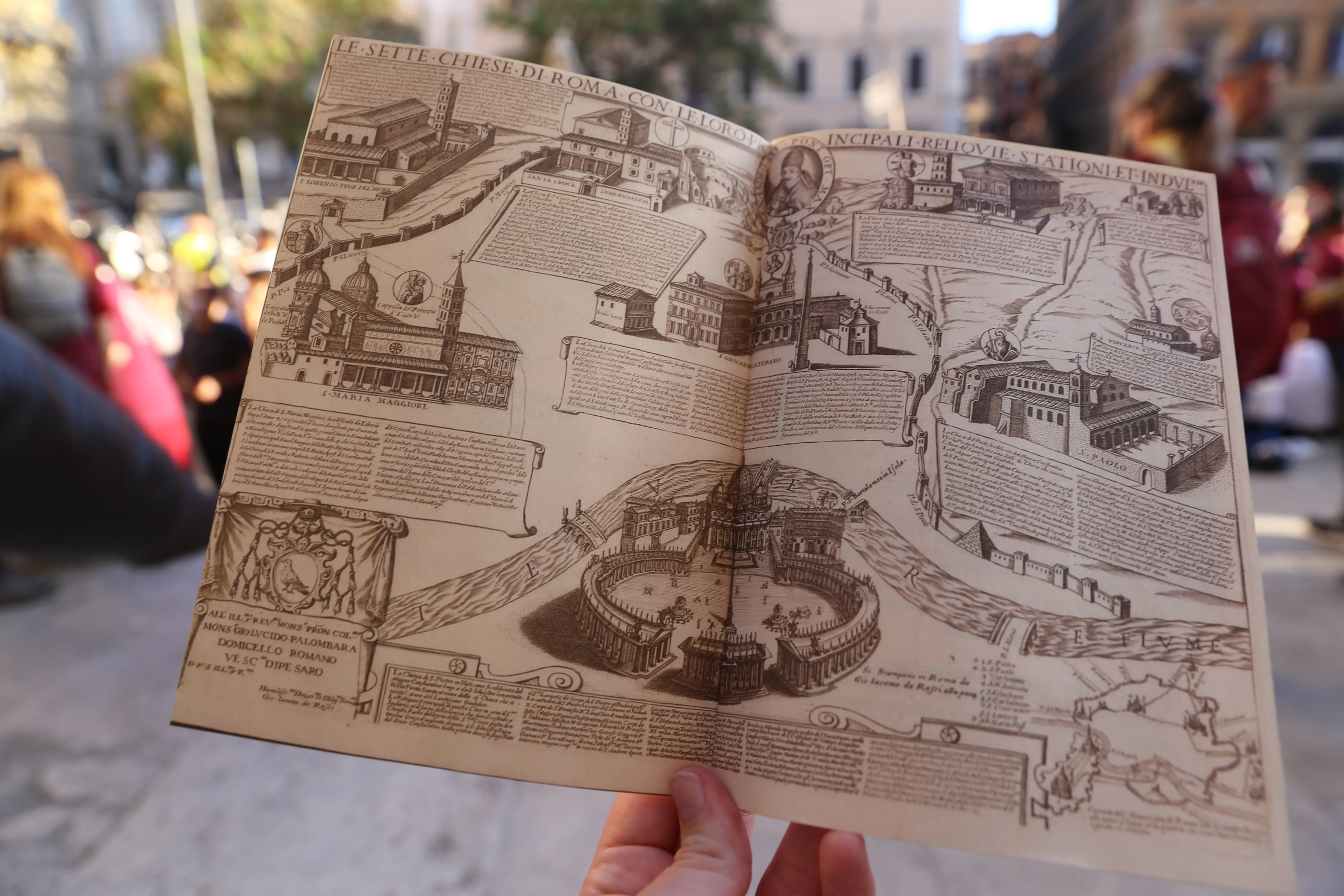
A historic illustration of the seven churches. Hannah Brockhaus/CNA
Part of St. Philip’s outreach was the revival of the Seven Churches visit. He may not be the originator of the idea of the pilgrimage to some of Rome’s most important churches, but he is credited with renewing its popularity.
After it fell out of use once again, St. Philip’s congregation of secular priests, the Oratory, revived it in the 1960s, including holding the walk one night each year, as close as possible to the way the saint would have done it.
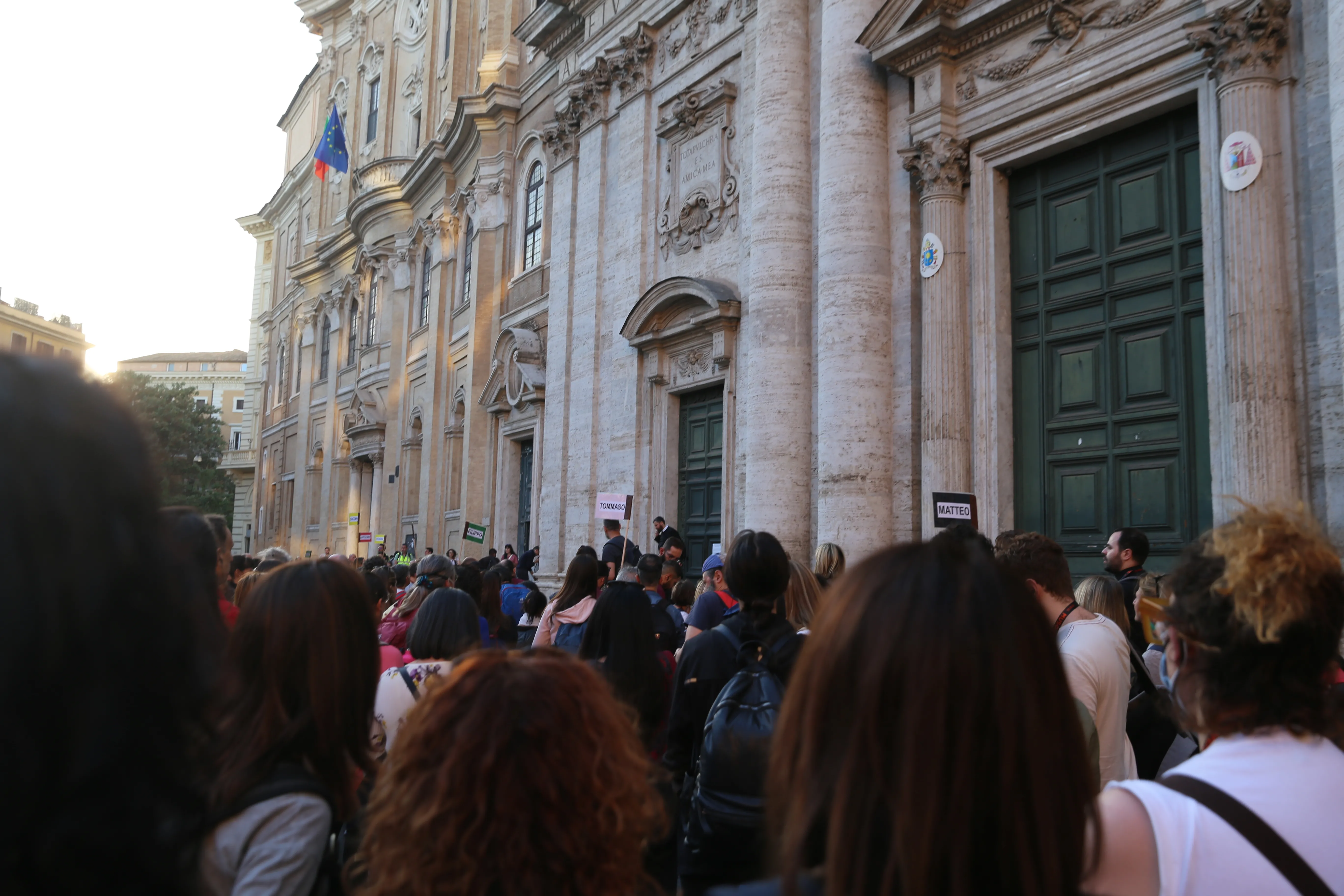
Fr. Maurizio Botta, who led the pilgrimage, speaks at the start in front of Chiesa Nuova. Hannah Brockhaus/CNA
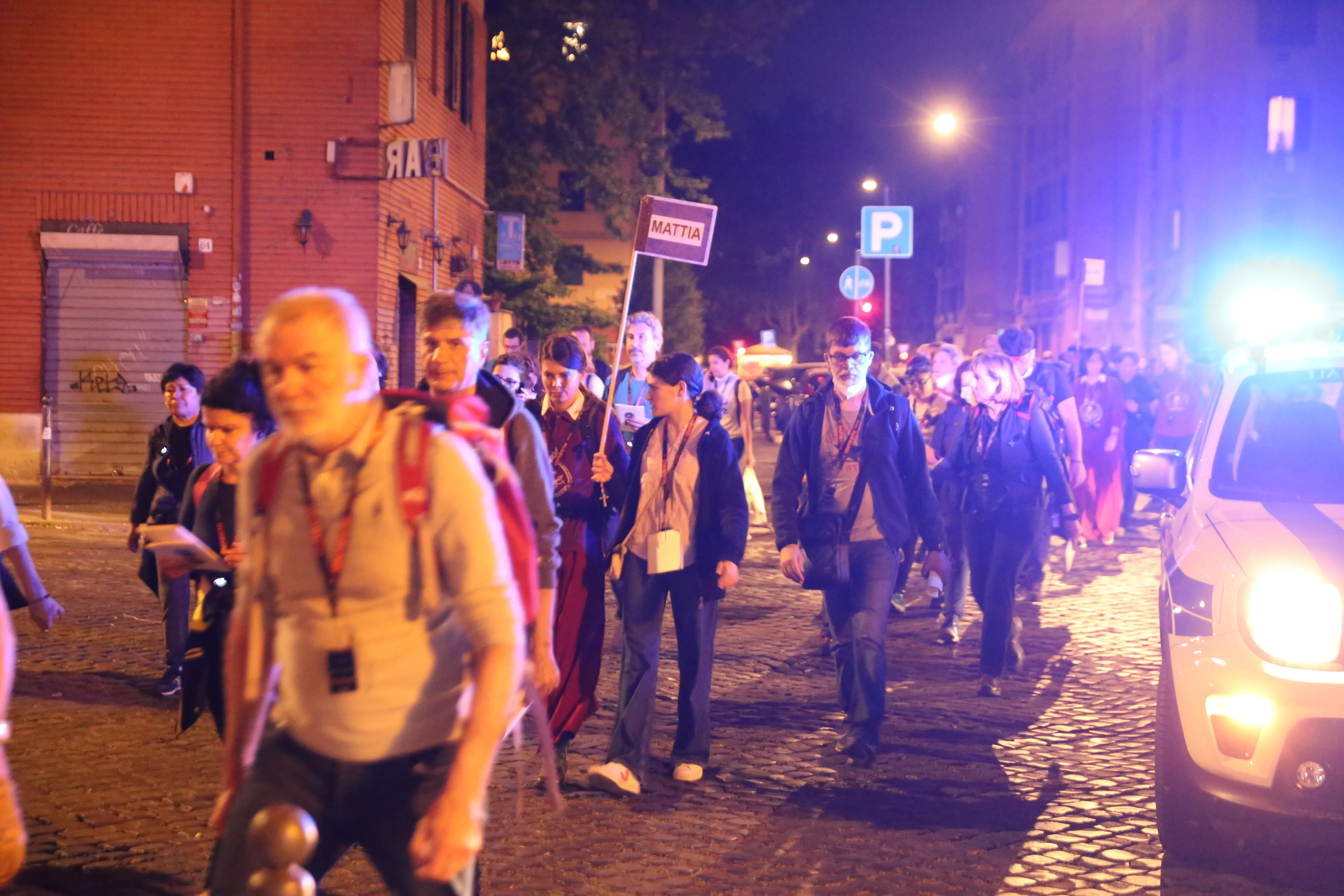
After a two-year pause, on the evening of May 13 into the morning of May 14, around 800 people walked 15 and a half miles in the footsteps of the saint and his followers.
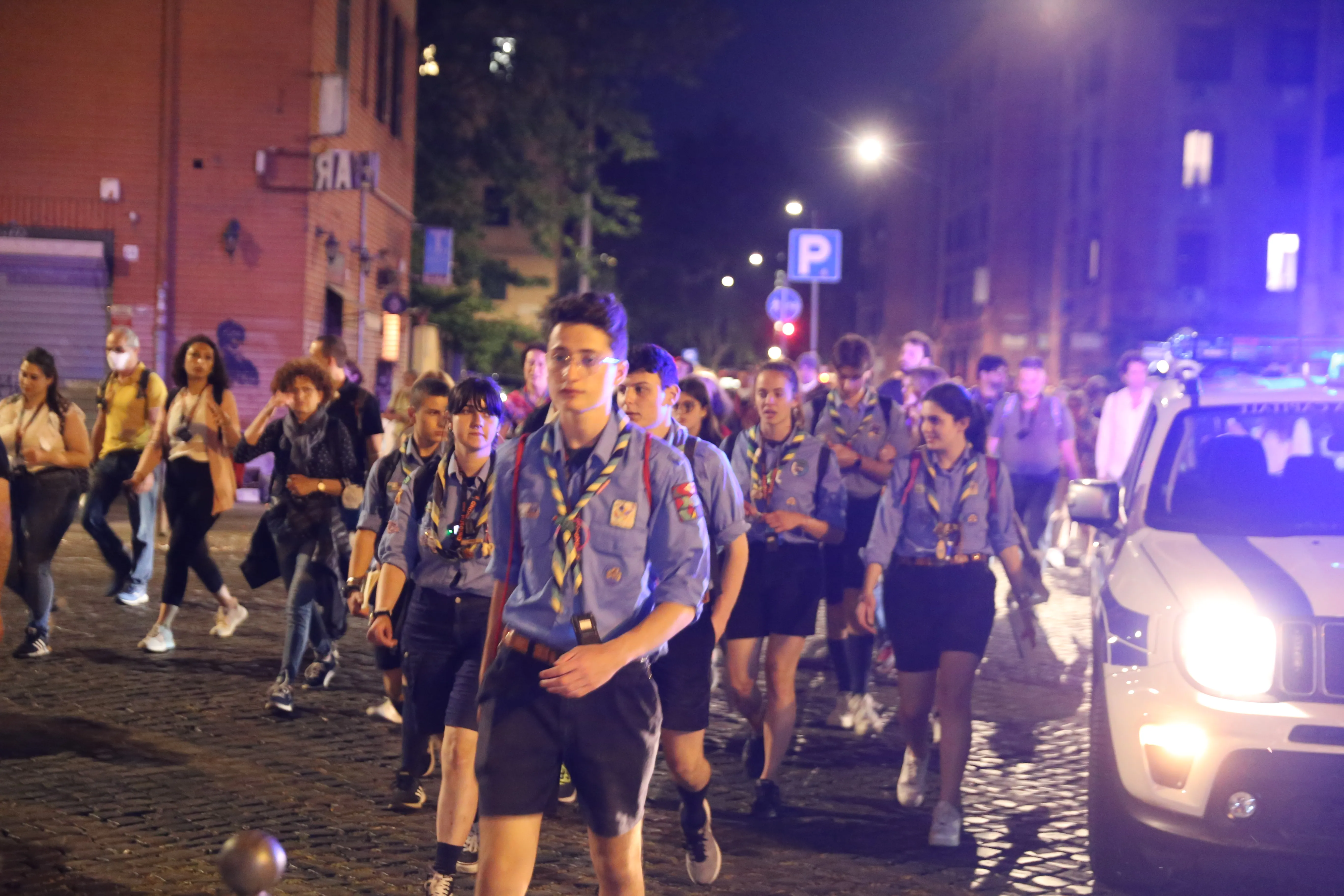
Police officers in cruisers drove ahead of the urban pilgrimage to block traffic as a sea of Catholics from around Italy crossed busy intersections and passed Friday night diners while praying the rosary in unison and singing the Taizé chant “Laudate Dominum,” whose words say in Latin, “Praise the Lord, all people, Alleluia.”
Pilgrims, including scouts, walk through Rome’s Ostiense neighborhood. Hannah Brockhaus/CNA
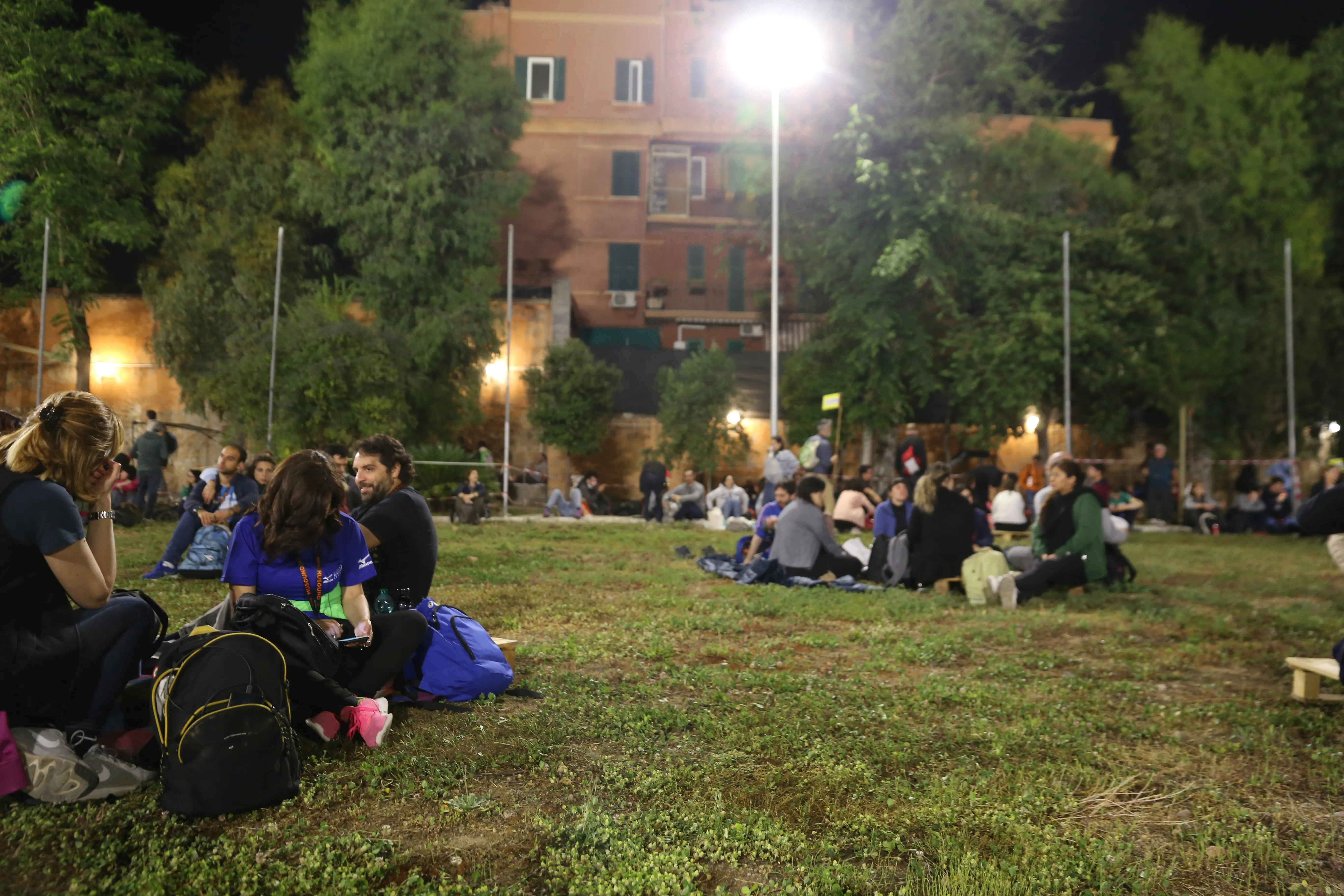
The rosary was prayed four times during the pilgrimage, which took almost 10 hours to complete, including stops for a sack dinner at midnight and short lessons on the virtues led by priests of the Oratory.
Pilgrims, including scouts, walk through Rome’s Ostiense neighborhood. Hannah Brockhaus
The seven basilicas were chosen by the saint for their importance to Christianity, and the walk on May 13-14 followed the path laid out in a 16th-century document almost certainly seen and used by St. Philip — and likely even written by him.
This document, recreated and printed into a booklet for use on the annual pilgrimage today, gives St. Philip’s guidance for those making the Seven Churches visit.
Eating a sack dinner in the courtyard of a church. Hannah Brockhaus/CNA
“Before setting out to make this holy Pilgrimage, each of the Brethren must lift up his mind to God, offering him the sincerity of his heart, with the purpose of desiring the sole glory of his divine Majesty in all actions, and especially in this one,” it says.
Those participating can also earn an indulgence under the usual conditions, and are asked to pray for specific intentions. These include praying for the penance of sins, the amendment of lukewarmness and negligence in the service of God, in thanksgiving for the forgiveness of sins, for the pope and the Church, for sinners still in the darkness of an evil life, for the conversion of heretics, schismatics, and infidels, and for the holy souls in purgatory.
Pilgrims stop to pray on the way to St. Peter’s Basilica. Hannah Brockhaus/CNA
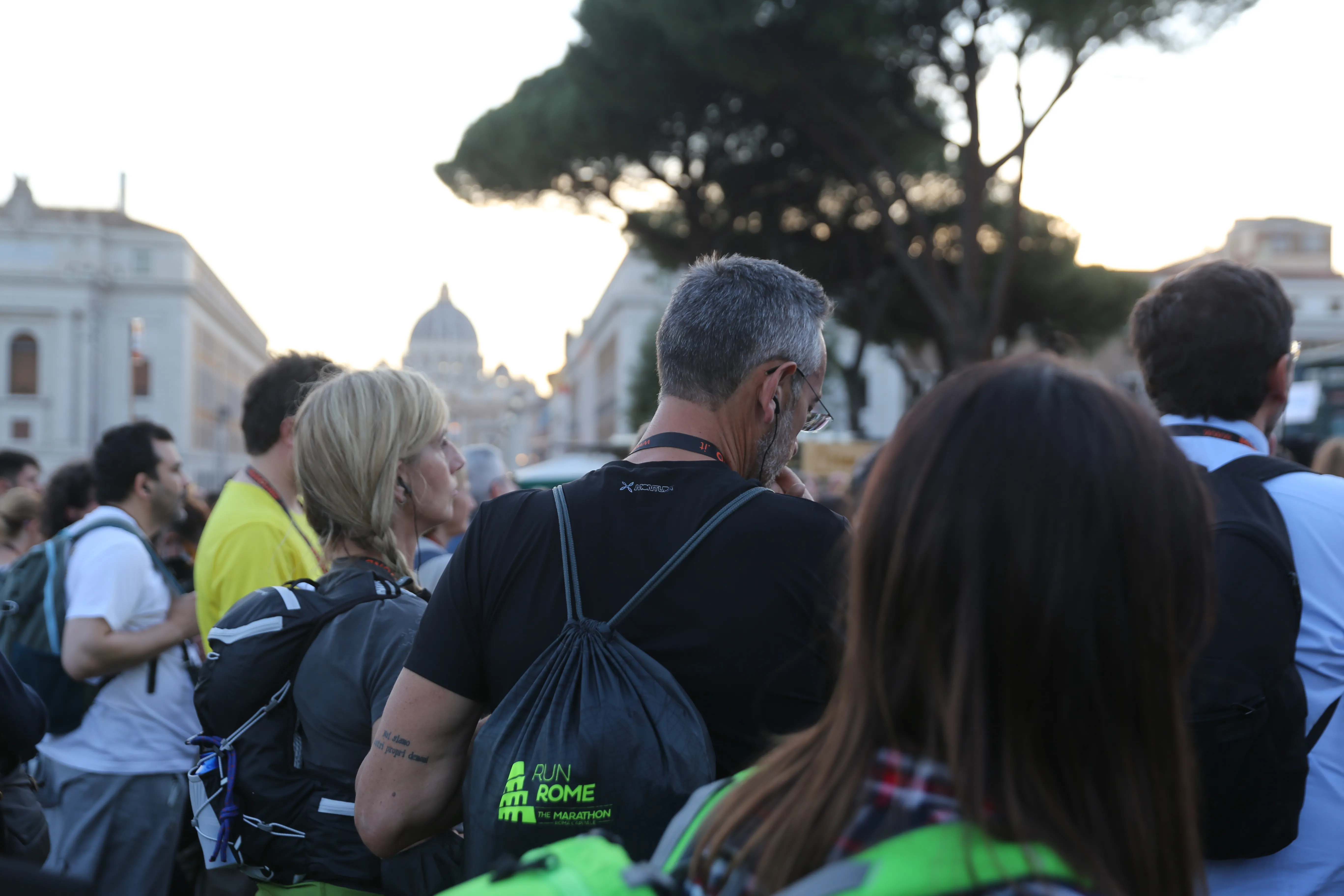
The pilgrimage began at Chiesa Nuova, the church built by St. Philip for the Oratory, and proceeded to St. Peter’s Basilica, reaching the site of St. Peter’s martyrdom at sunset.
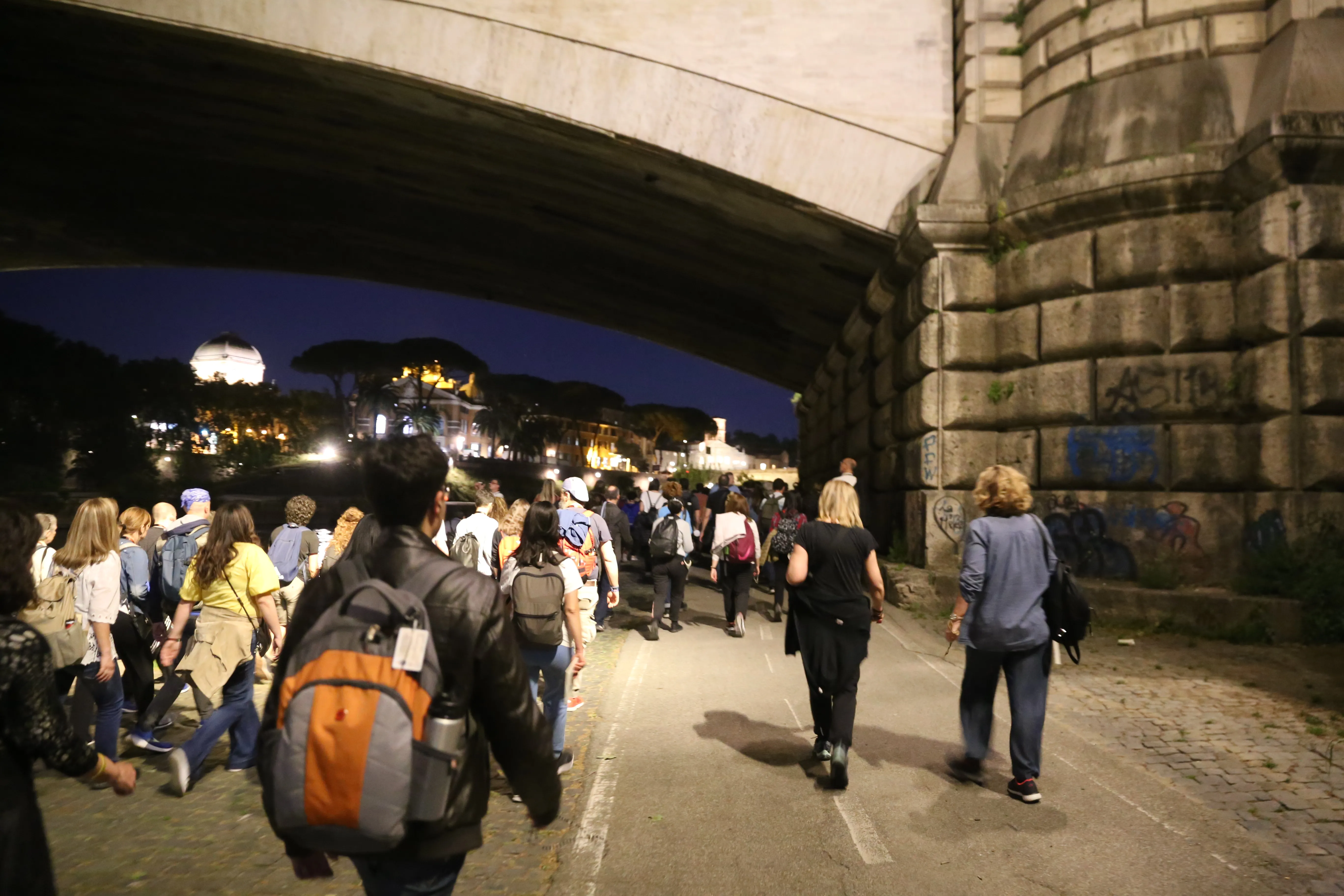
Pilgrims walk on a path next to the Tiber River. Hannah Brockhaus/CNA
Each of the seven churches is associated with a moment of Christ’s Passion and Crucifixion. At each stop, an Oratory priest preached on a virtue and its opposing vice, before everyone joined in a prayer for an increase in that virtue and for the gifts of the Holy Spirit.
The virtues and vices were abstinence against gluttony, patience against ire, chastity against lust, generosity against avarice, fervor of spirit against acedia, charity against envy, and humility against pride.
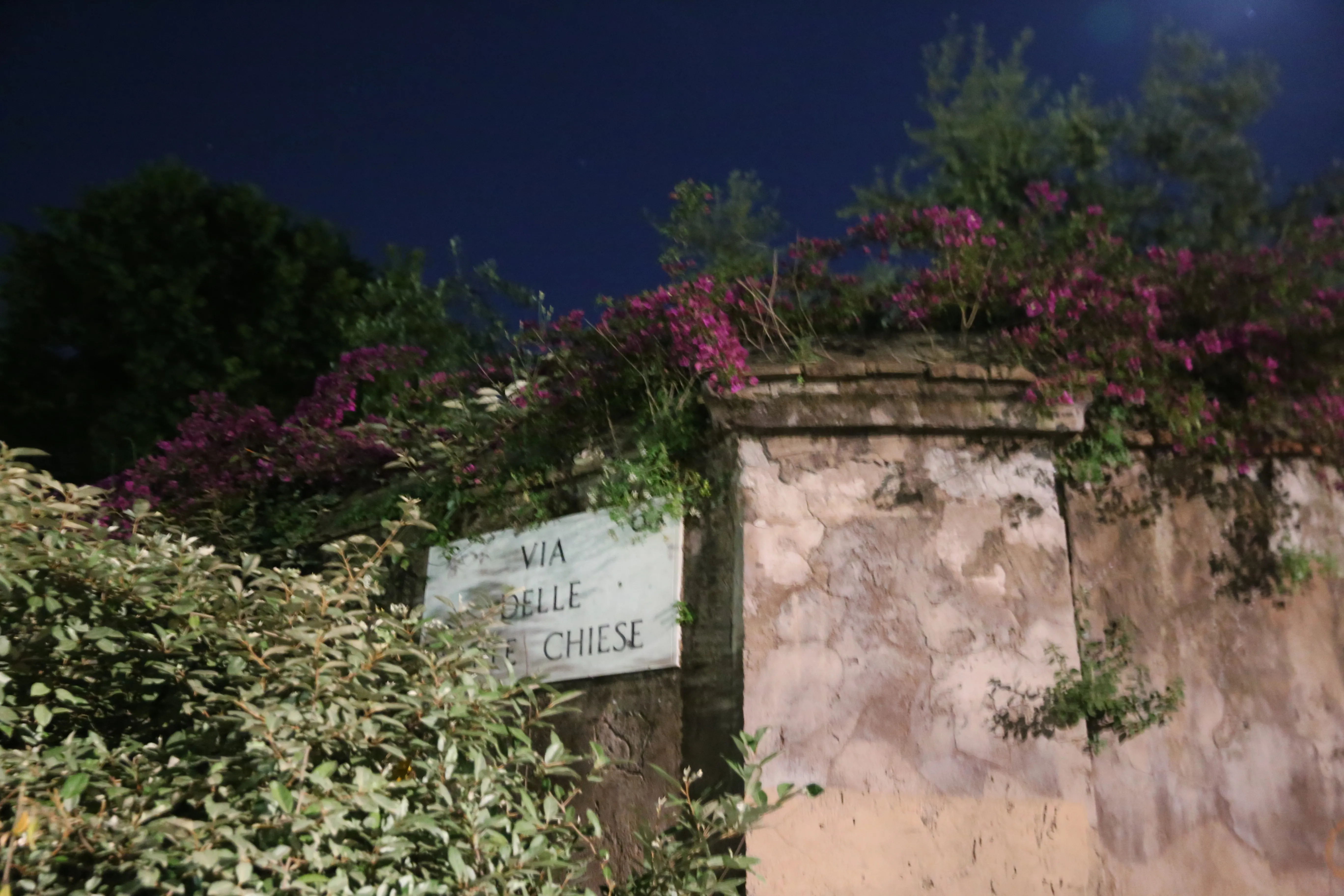
A street sign marking Seven Churches Way. Hannah Brockhaus/CNA
After the Basilica of St. Paul, the pilgrimage followed an ancient street still called Seven Churches Way to arrive at the catacombs and the Basilica of St. Sebastian, a third-century Christian martyr.
As a layman in Rome, St. Philip Neri used to visit the catacombs of St. Sebastian to pray. One night in the catacombs, about 10 years after moving to Rome, as he prayed, a mystical ball of fire entered his mouth and went down into his chest, exploding his ribs and doubling the size of his heart with love of God.
St. Philip was changed, both physically and spiritually, by this event, which he only revealed shortly before his death.
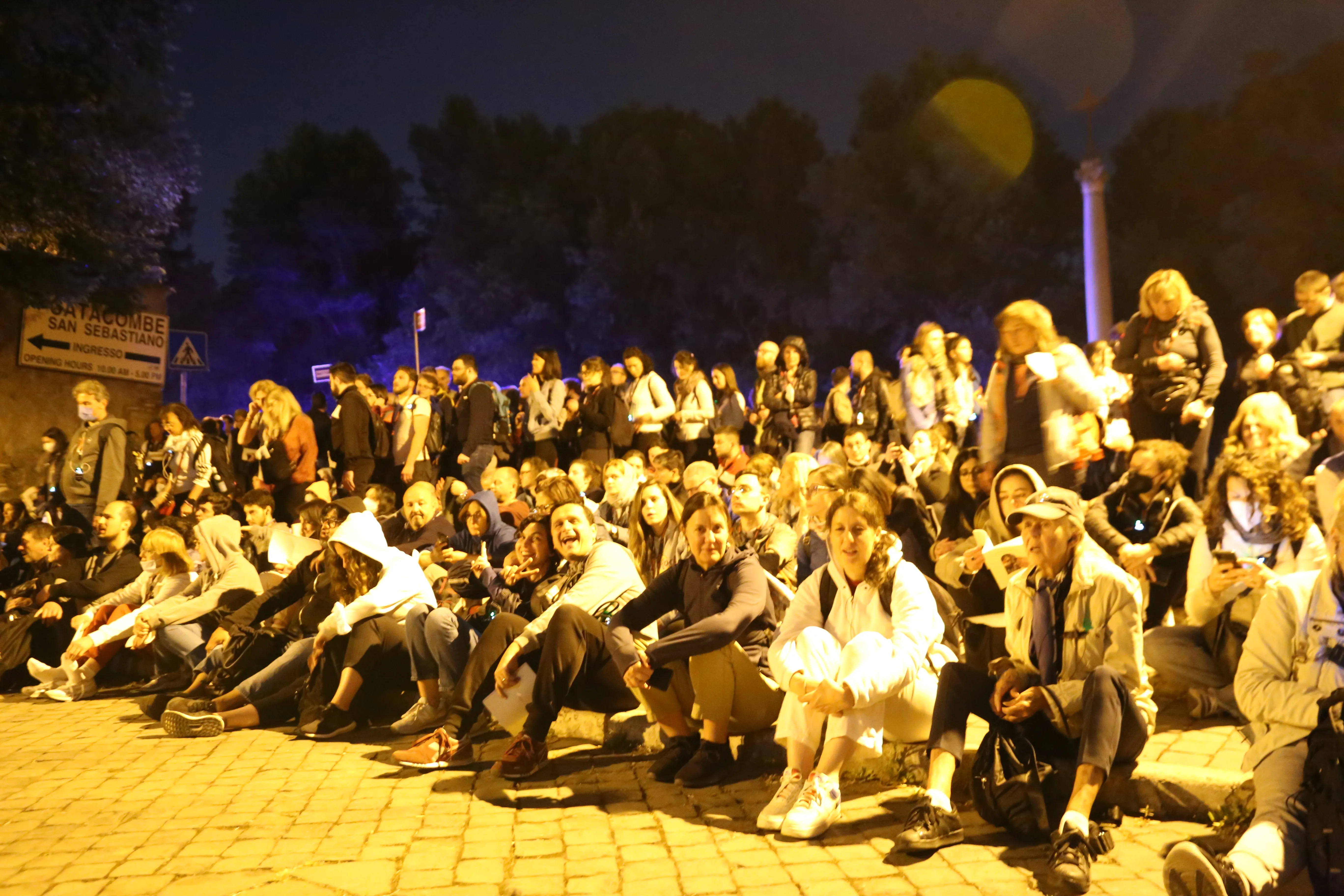
Pilgrims outside the catacombs of St. Sebastian. Hannah Brockhaus/CNA
Pilgrims next arrived at the Domine Quo Vadis Church after a silent, moonlit walk through the ancient Appian Way Park, flanked by the silhouettes of Italian cypress trees.
The small church of medieval origin marks the spot where, according to tradition, Jesus appeared to St. Peter as he was fleeing Rome to avoid martyrdom.
Peter asked Jesus, “Domine quo vadis?” (“Lord, where are you going?”), to which Christ said, “Venio Romam iterum crucifigi,” (“I am coming to Rome to be crucified again.”) This rebuke caused Peter to turn around and face his own martyrdom.
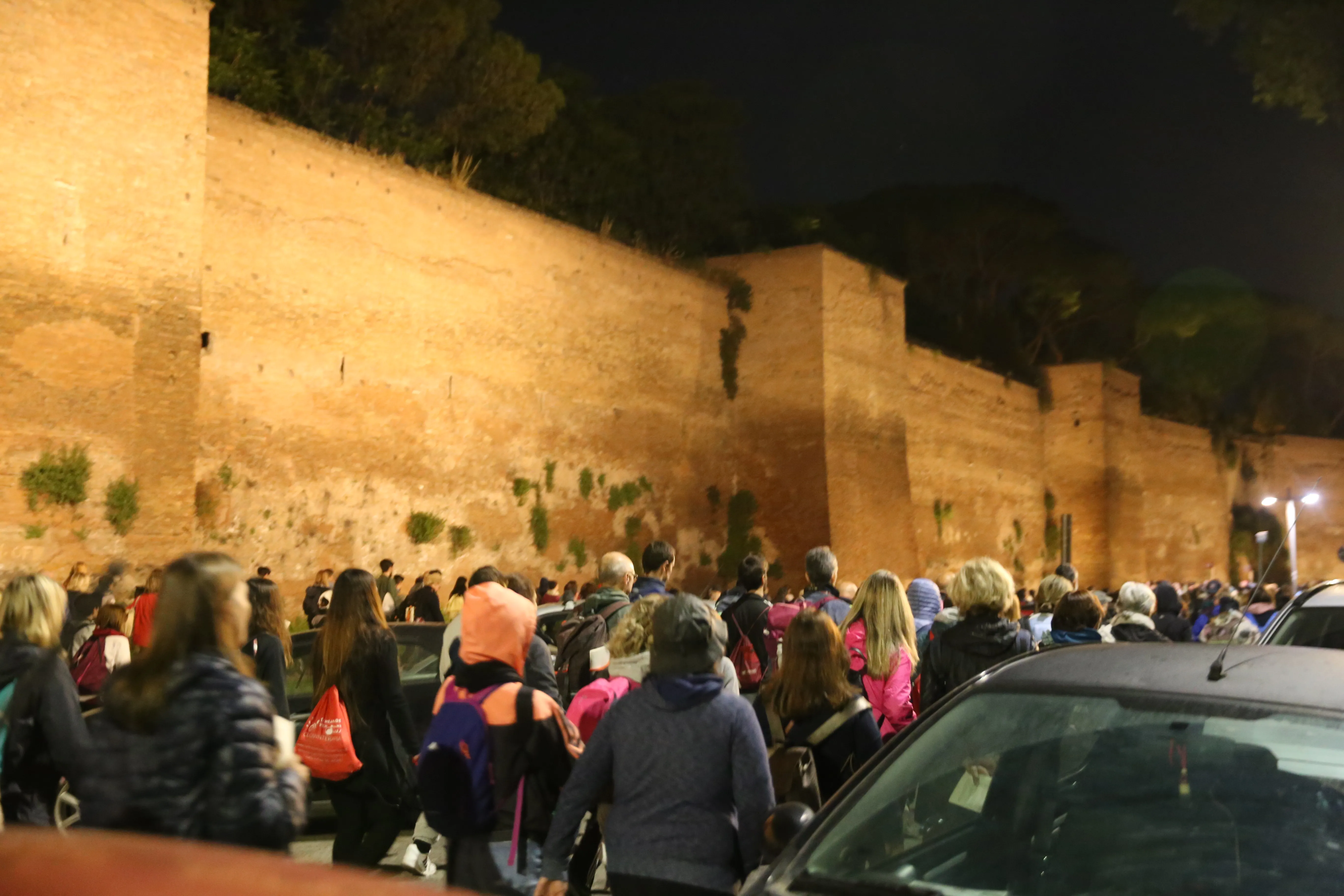
Pilgrims walk along the ancient Aurelian Wall on their way to the Basilica of St. John Lateran. Hannah Brockhaus/CNA
The Basilica of St. Lawrence Outside the Walls was the penultimate stop. The church, which has the tomb of St. Lawrence, is located next to Rome’s Verano Monumental Cemetery, and was included among the Seven Churches by St. Philip Neri, Father Botta said, as a reminder of mortality.
Almost 2 weeks ago I went on St. Philip Neri’s 7 Churches Walk in Rome.
800 people walked over 15 miles during the 10-hour night pilgrimage.
During the last stretch, at 5:15am, we passed through Termini train station, and Francesco caught this video of the moment. pic.twitter.com/C2SPHn5yoR
— Hannah Brockhaus (@HannahBrockhaus) May 26, 2022
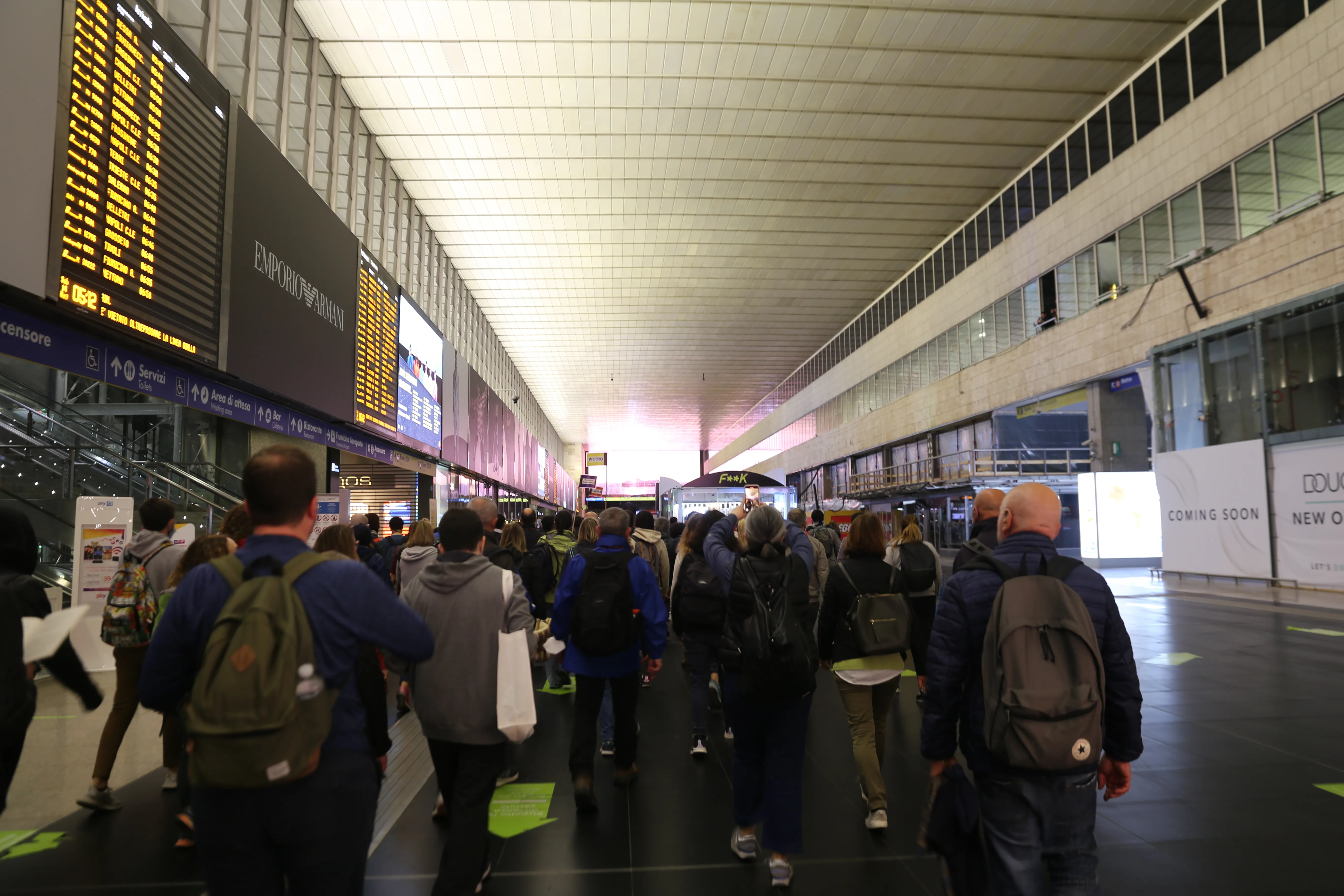
The final stretch of the walk passed through Rome’s main train station, Termini, where pilgrims sang the Marian antiphon “Salve Regina.”
Pilgrims walk through Termini train station singing the “Salve Regina”. Hannah Brockhaus/CNA
The pilgrimage finished shortly before 6:00 a.m. at the Basilica of St. Mary Major, the traditional end of the walk, where the “Salve Regina” hymn was sung again in honor of the Virgin Mary.
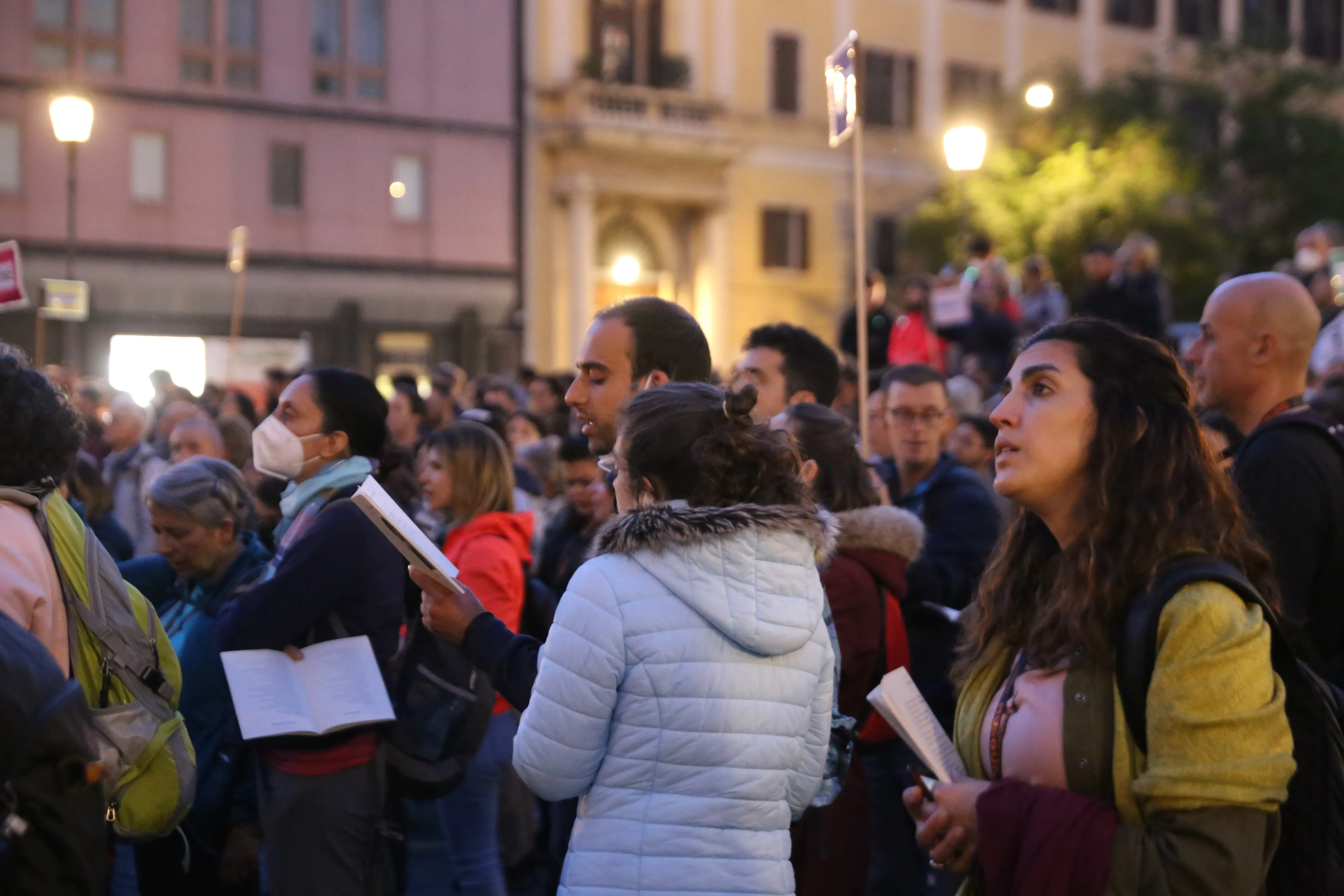
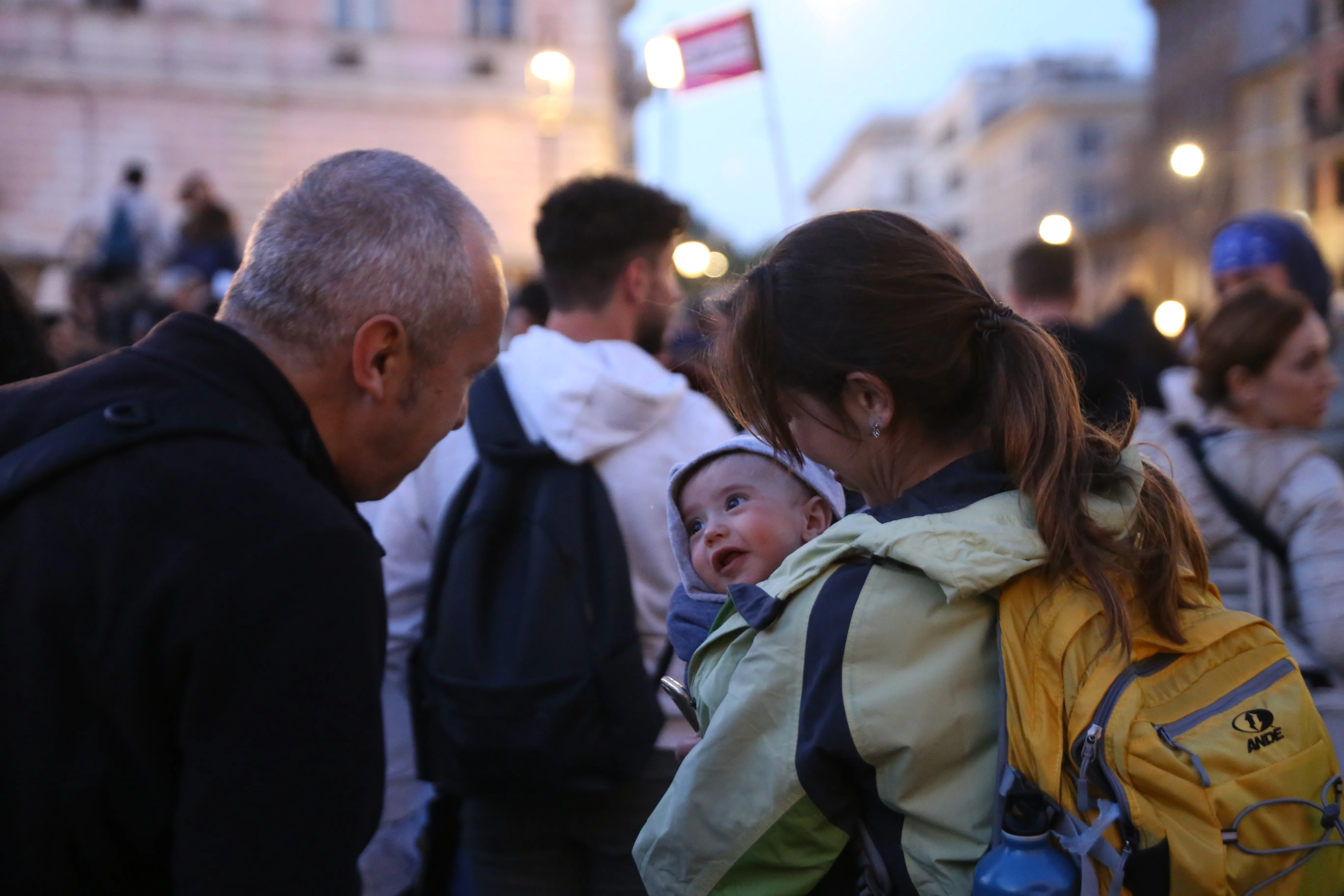
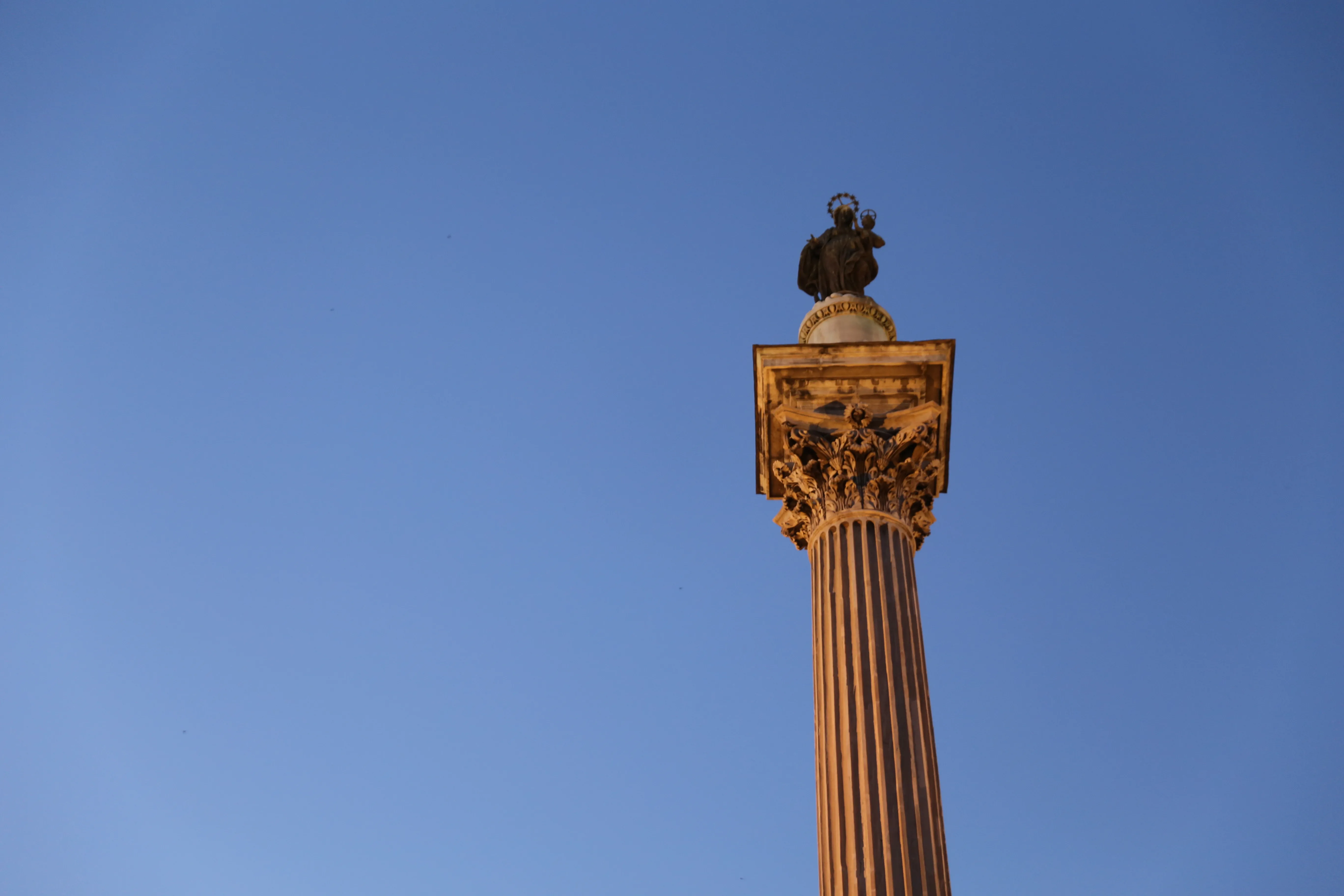
Pilgrims sing the “Salve Regina” outside the Basilica of St. Mary Major. Hannah Brockhaus/CNAA baby and his mom enjoy a moment with a new friend at the end of the pilgrimage. Hannah Brockhaus/CNAA statue of Mary on a column outside the Basilica of St. Mary Major. Hannah Brockhaus
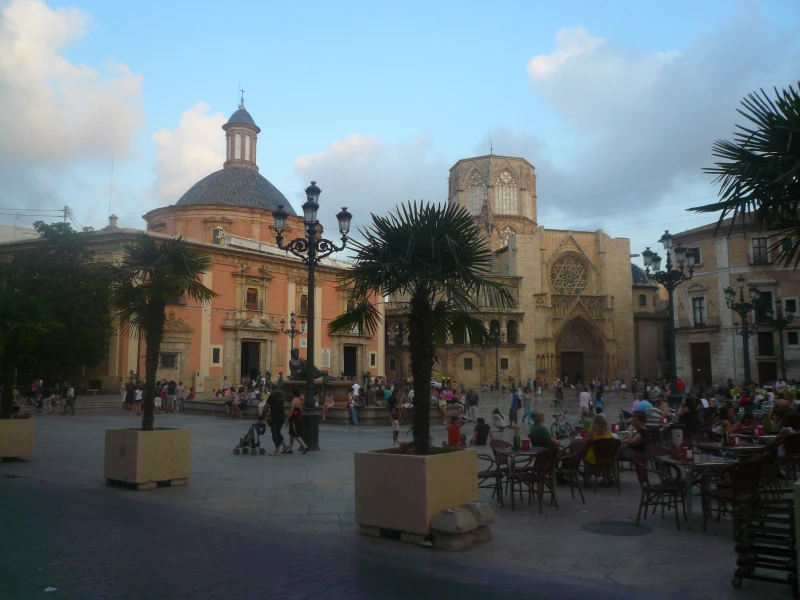
St. Mary’s Cathedral in Valencia, Spain. / Credit: Pere López, CC BY-SA 3.0, via Wikimedia Commons
Madrid, Spain, Sep 3, 2025 / 05:15 am (CNA).
The Observatory for Religious Freedom and Conscience (OLRC by its Spanish acronym) in Spain decried that it was “a black August” with seven cases of vandalism and desecration against Catholic churches reported in recent weeks.
On Aug. 11, black paint was spilled on a set of steps at St. Catherine parish in the town of Rute in Cordoba province, just days before the patron saint’s feast day.
The following day, the perpetual adoration chapel at St. Martin parish in Valencia was desecrated when a person who identifies as “trans” burst in the chapel shouting in front of the altar and then “broke the monstrance, while insulting the faithful,” according to the OLRC.
On Aug 13, Our Lady of Mount Carmel parish in Palma de Mallorca was desecrated with offensive graffiti accusing the Catholic Church of corruption.
A day later, a sacristan and several parishioners were attacked in the Valencia cathedral by an apparently intoxicated man during the celebration of the Eucharist.
On Aug. 17, a man broke into St. James the Apostle parish in Albuñol in Granada province, where he attacked several statues before starting a fire that took firefighters two hours to extinguish.
On Aug. 24, the Assumption of Our Lady in Yeles in Toledo province was vandalized by a woman apparently suffering from psychiatric problems who attacked several statues such as the Child of Remedies and the Virgin of Solitude, causing extensive damage.
Last Sunday, Aug. 31, two activists from the environmental group Futuro Vegetal (Plant Future) threw dye at the façade of the Sagrada Familia Basilica in Barcelona in an attempt to protest the large number of forest fires in Spain in recent weeks that the group blamed on ranching activities.
For the OLRC, these events “confirm the rise of Christianophobia and the vulnerability of religious freedom in our country” and warned against such events becoming normalized.
The organization’s president, María García, demanded “a firm response” from the authorities “and resources for the protection of the religious heritage” of the country.
“August has been a dark month for religious freedom in our country. The succession of attacks on churches and places of worship demonstrates that violence and hatred against Christians are far from isolated cases,” García pointed out in a statement, emphasizing that “according to data from the Reports on Attacks on Religious Freedom in Spain, Christians are always the most attacked religion.”
Greater protection for churches
The OLRC warned that many parish priests are reporting that they are “having to install cameras or close churches due to the increase in vandalism and anti-Christian hatred” and called on the authorities “for greater protection for churches.”
“These events represent a worrying trend of religious intolerance. We demand that agencies of the central government and municipalities develop specific prevention plans against attacks on churches and rigorous application of the penal code against hate crimes and crimes that deride religious sentiments,” García emphasized.
The Observatory for Religious Freedom urged civil society and institutions not to look the other way and to report any act of religious hatred. “Only by bringing these attacks out in the open and reacting firmly can we guarantee coexistence and respect for the freedom of all,” García emphasized.
This story was first published by ACI Prensa, CNA’s Spanish-language news partner. It has been translated and adapted by CNA.
He was actually ordained in 2018 at 42 and appointed bishop after being a priest for just six years…
See him with the syrupy smile and hands folded on the far right of the photo:



From priest to bishop in EIGHT YEARS!!!!! What’s next, a cardinal’s hat for his 50th birthday????
He was actually ordained in 2018 at 42 and appointed bishop after being a priest for just six years…
See him with the syrupy smile and hands folded on the far right of the photo:
https://www.vaticannews.va/en/pope/news/2018-04/pope-francis-mass-ordination-prayer-vocations.html#:~:text=Pope%20Francis%20ordains%2016%20deacons,the%20Basilica%20of%20St%20Peter.&text=On%20the%20World%20Day%20of,Jesus%20as%20the%20Good%20Shepherd.
And no worries about this Bishop being a Francis Cardinal. He is a bit old and Roman to achieve shock value.