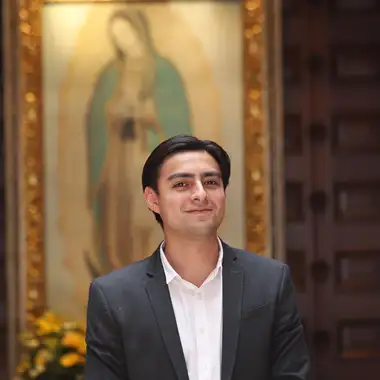
Cardinal José Luis Lacunza Maestrojuán. / Credit: Panamanian Episcopal Conference
ACI Prensa Staff, Feb 1, 2024 / 16:30 pm (CNA).
The Diocese of David in the province of Chiriquí, Panama, reported that Cardinal José Luis Lacunza Maestrojuán “has officially been missing since Tuesday, Jan. 30, of this year, in the afternoon.”
In a Feb. 1 statement, the diocese said that a report has been “filed with the authorities of the public prosecutor’s office, who immediately began investigations concerning the case.”
“At this time we ask the holy people of God to join together in constant prayer, so that with the same heart, like the heart of Jesus, we can soon find our diocesan pastor,” the communiqué stated.
The Panamanian Bishops’ Conference also expressed its concern, urging “all the people of God to join in constant prayer so that we can soon know his whereabouts.”
The Archdiocese of Panama also called for prayers and expressed its concern over Lacunza’s disappearance.
In a Feb. 1 post on X, Metropolitan Archbishop José Domingo Ulloa Mendieta urged “the people of God to join together in prayer at this time, praying for his prompt appearance.”
Regarding the investigation, the nation’s attorney general, Javier Caraballo, informed local media Feb. 1 that “an ongoing investigation” is being carried out. He stressed that a “group of prosecutors from Panama City will travel to Chiriquí to assist in this investigation to see how we can determine the facts.”
The prelate is a prominent figure in the Catholic Church in Panama.
Ordained a priest in 1969 in Pamplona, Spain, for the Order of the Augustinian Recollects, he was named auxiliary bishop of the Archdiocese of Panama in 1985, and St. John Paul II subsequently appointed him bishop of Chitré on Oct. 29, 1994.
On Aug. 28, 1999, he was appointed bishop of the Diocese of David, where he currently serves.
In 2015, Pope Francis made him the first cardinal of the Catholic Church in Panama and of the Order of the Augustinian Recollects.
This story was first published by ACI Prensa, CNA’s Spanish-language news partner. It has been translated and adapted by CNA.
If you value the news and views Catholic World Report provides, please consider donating to support our efforts. Your contribution will help us continue to make CWR available to all readers worldwide for free, without a subscription. Thank you for your generosity!
Click here for more information on donating to CWR. Click here to sign up for our newsletter.
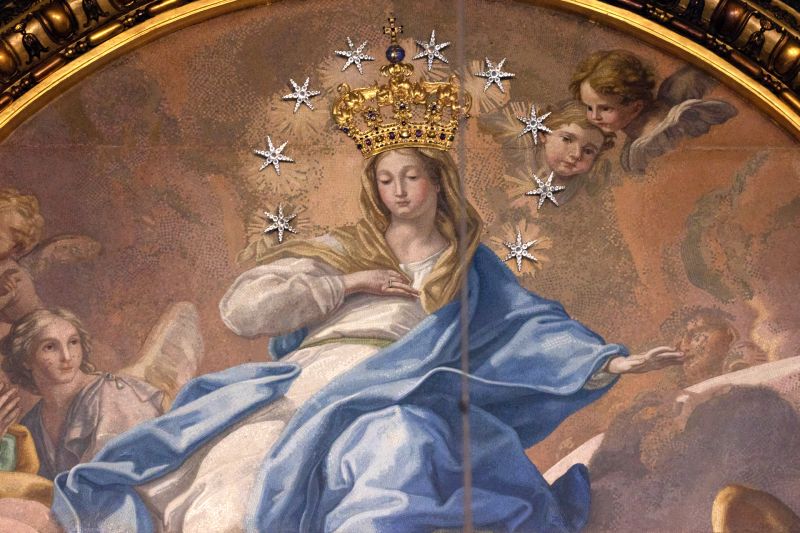
When Pope Pius IX declared the doctrine of the Immaculate Conception of the Virgin Mary on December 8, 1854, he had a golden crown added to the mosaic of Mary, Virgin Immaculate, in the Chapel of the Choir in St. Peter’s Basilica. / Daniel Ibañez/CNA
The Catholic Diocese of Arlington, Virginia, is sparing no effort in addressing that through its new, seven-part video series “Mary, Explained.”
In preparation for its upcoming golden jubilee in 2024, the diocese has launched a three-year effort to prepare for the celebration.
Year One, which began in November 2021, focused on the theme of the Eucharist. Out of that theme the diocese produced a series called “The Mass, Explained,” which received much positive feedback.
This year, the second year of preparation, the theme for the diocese is “rejoice,” and the focus is Mary’s perfect example of joy.
Kerry Nevins, multimedia producer for the Arlington Diocese, told CNA: “‘Rejoice’ is centered around Mary’s response to the Annunciation when she is told that she’s going to be the mother of God.” He explained that this was their call from Bishop Michael F. Burbidge, who leads the diocese.
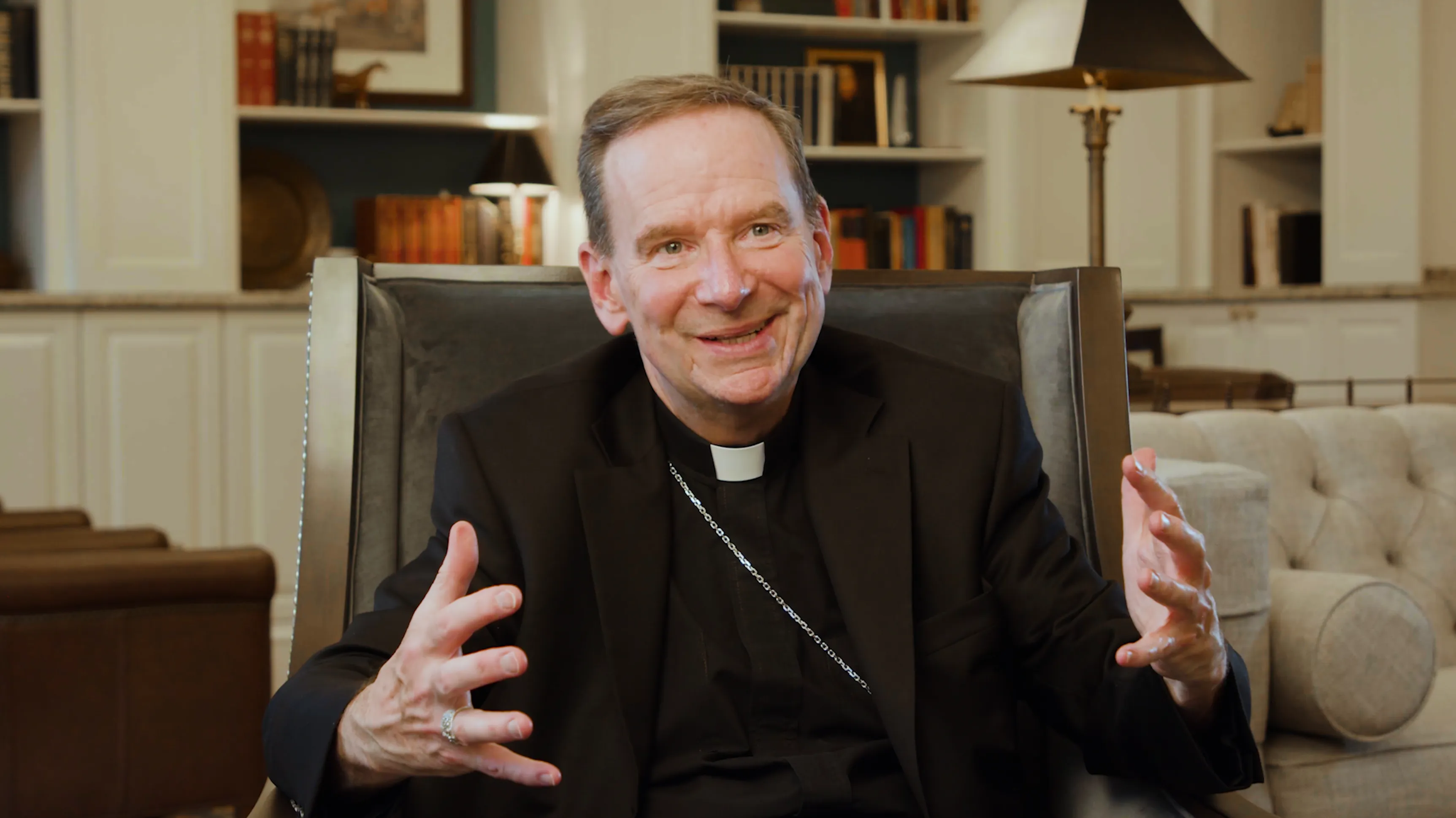
Bishop Michael F. Burbidge shares his thoughts in the “Mary, Explained” series on the importance of Marian theology and why the diocesan faithful ought to see Mary as our model disciple. Photo courtesy of Diocese of Arlington
As Burbidge, Nevins, and their Arlington Diocese team continued to explore the theme, they decided to create a video series about Mary.
The seven-part series will unpack the Marian dogmas month by month by way of addressing the following topics: Who is Mary? (May); Was she the mother of God? (June); Was she immaculately conceived? (July); Was she assumed into heaven? (August); Was she ever-virgin? (September); Why do Catholics pray and have devotions to Mary? (October); and How can we embrace Mary as our model disciple? (November).
Nevins explained that the mission of the series is to “dive into who she is, what Catholics believe about her, what Catholics don’t believe about her, and why we should even be looking to her in the first place.”
“We don’t just want to know our faith for the sake of knowing our faith so we can get a couple of answers right on Catholic ‘Jeopardy,’” Nevins told CNA. “We want people to know their faith so that they can know Christ and come to be in a relationship with him, and I think the best way that you can get to know somebody is by meeting their mom.”
Dr. Matthew Tsakanikas, associate professor of theology at Christendom College who is featured in the series, expressed how this project gracefully addresses a wide audience, hearing perspectives from priests, religious, and laypeople alike. Tsakanikas told CNA: “I think it’s written so that anyone accessing it has a chance to get insights at every level.”
Tsakanikas noted how “Mary, Explained” takes what might seem like lofty ideas and brings them down to us. “These dogmas aren’t supposed to be … just looking at Mary on a pedestal but also looking at Mary in terms of how these graces were assigning her a task and mission,” he said.
Through a deeper understanding of the Marian dogmas, viewers can understand how she, too, was commissioned to bring about the kingdom of God here on earth and hopefully encourage them to do the same.
At a glance, it’s evident that the production quality was carefully considered.
“A lot of planning went into it,” Nevins said. “We really believe that … quality is credibility.”
With endless options to click through, Nevins acknowledged that the content had to be aesthetically appealing if they wanted people to consume it. “We really want to make Catholic media beautiful because we’ve got the greatest story to tell, but if the story doesn’t look good, people aren’t going to watch it,” he said.
Beyond the production quality, the mission of the series is to stoke a fire of love for the Church and deepen devotion to Our Lady.
Father Daniel Hanley, formator at Mount St. Mary’s Seminary in Emmitsburg, Maryland, told CNA: “Letting people know and enter into relationship with Mary as spiritual mother is hugely important. She’s a real person, she’s involved in our life, and we should recognize it and let her be.”
The bishop’s leadership and inspiration is credited with the initial vision for the series, but the diocese was well suited for the project, according to Hanley. “There’s a lot of Marian devotion in our diocese,” he added.
Those involved in the production of “Mary, Explained” are hopeful that the series will bear the fruit of Marian devotion in their diocese and beyond.
“It’s part of God’s plan for salvation that people know her and let her be part of their life,” Hanley said. “I noticed that they’ll lean in when you preach about Mary. There’s a desire to know more about her.”
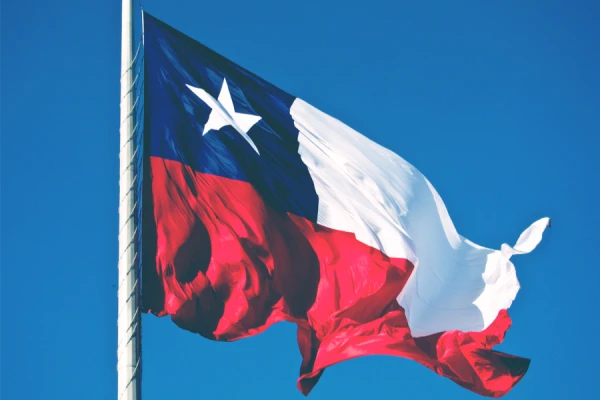
Santiago, Chile, May 1, 2019 / 10:35 am (CNA).- The Chilean bishops’ conference signed a collaboration agreement with public prosecutors Tuesday to streamline the investigation of clerical sexual abuse.
The April 30 agreement is meant “to facilitate the exchange of information concerning past, present, and future investigations of delicts of a sexual nature commited by diocesan clerics against children, adolescents, or persons with disabilities.”
The agreement protects the “confidentiality requested by those who have gone to the Episcopal Conference of Chile” as victims or witnesses.
The bishops have consented to deliver evidence of abuse-related crimes to prosecutors within 24 hours of receiving an accusation.
Auxiliary Bishop Luis Fernando Ramos Perez of Santiago, secretary general of the bishops’ conference, said the agreement is an “expression of reciprocity, of trust between institutions united by the same cause. It is a step that challenges us in the work of offering ever greater guarantees to the victims.”
He added: “When it comes to seeking truth and justice in delicts of sexual abuse of minors, the Public Ministry and the Catholic Church are not adversaries but collaborators, because we are animated by the same goal.”
Bishop Ramos called it “a very novel agreement” on the world stage, urging that “the authorities of the Holy See look at it with attention, because it can serve to illumine” other situations.
Chilean prosecutors are investigating 166 cases of clerical sex abuse or cover-up, involving 221 suspects and 248 victims, according to Reuters.





Prayers for his return.