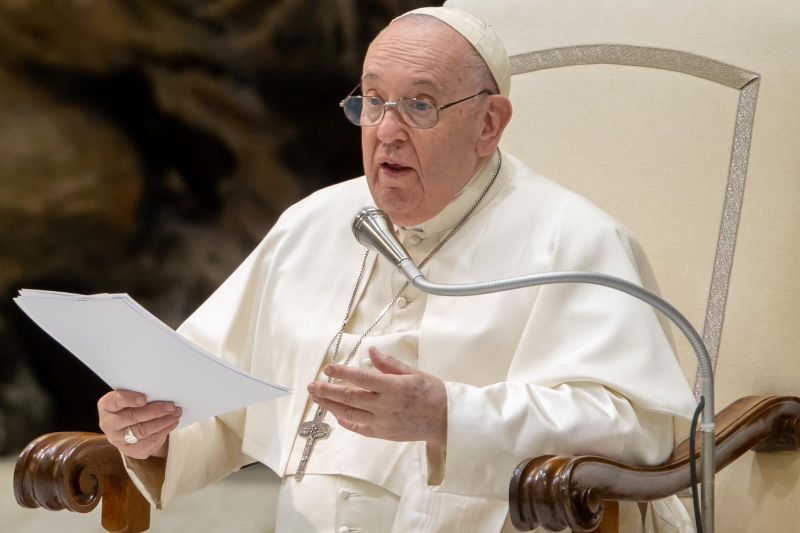
Pope Francis speaks at his general audience in Paul VI Hall on Jan. 18, 2023. / Daniel Ibanez/CNA. See CNA article for full slideshow.
Vatican City, Jan 18, 2023 / 06:05 am (CNA).
Pope Francis invited Christians on Wednesday to pray for the grace to have a “pastoral heart” like Jesus that “suffers and takes risks” out of love for others.
At his weekly public audience on Jan. 18, the pope said that Jesus provides “the unsurpassed model of evangelization.”
“Christ not only has the words of life, but he makes his life a Word, a message: that is, he lives always turned toward the Father and toward us,” Pope Francis said in Paul VI Hall.
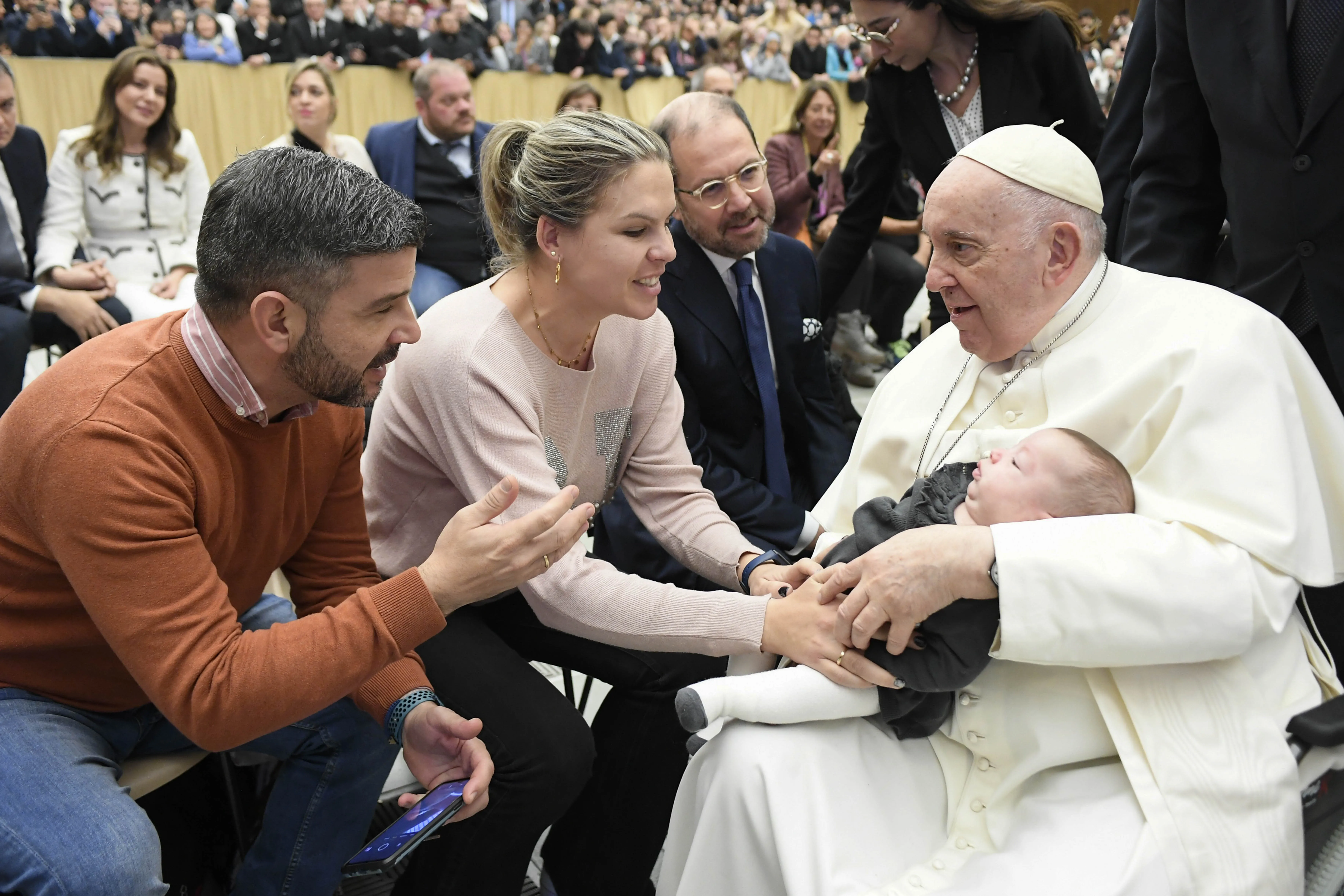
Pope Francis greets pilgrims at his general audience in Paul VI Hall on Jan. 18, 2023. Vatican Media
“Indeed, if we look at his days as described in the Gospels, we see that intimacy with his Father – prayer – occupies the first place. … Specifically, within this relationship in prayer which connects him to the Father in the Spirit, Jesus discovers the meaning of his being human, of his existence in the world as a mission for us,” he said.
After praying each day, Jesus dedicated his time to proclaiming the Kingdom of God and serving people, especially the poorest, the most vulnerable, the sinners, and the sick, the pope added.
Pope Francis said that one of the best images to represent Jesus’ style of life is that of “the Good Shepherd” who “lays down his life for his sheep” (Jn 10:11).
“By being with Jesus, we discover that his pastoral heart always beats for the person who is confused, lost, far away,” he said.
In this, Jesus the Good Shepherd provides a model against which “to evaluate our pastoral care,” Francis added.
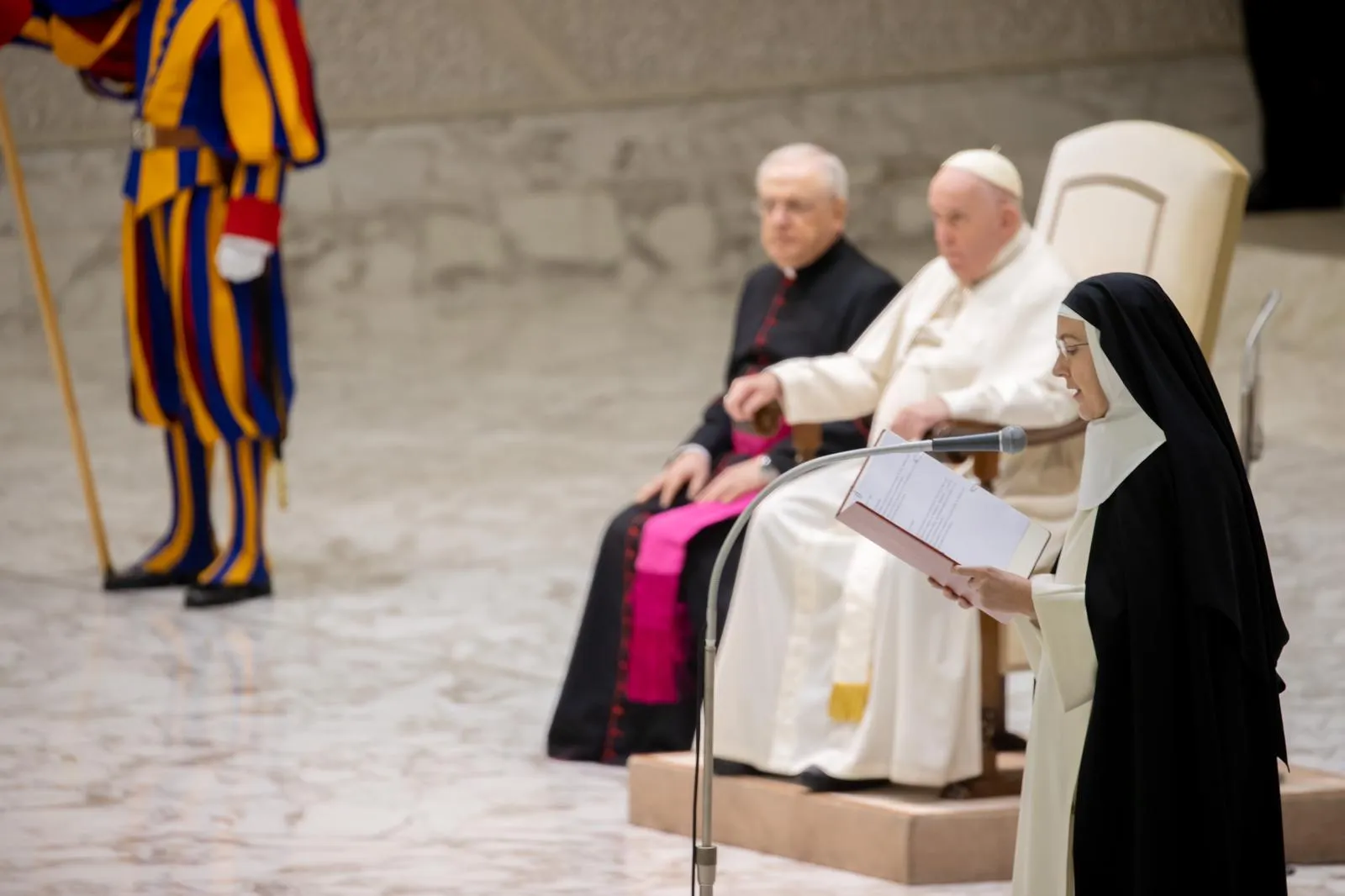
A religious sister reads the Gospel of Luke at the pope’s general audience in Paul VI Hall on Jan. 18, 2023. Daniel Ibanez/CNA
The pope recommended rereading often chapter 15 of the Gospel of Luke, which contains the parable of the lost sheep, to come to truly understand apostolic zeal.
“There we discover that God does not contemplate the sheep pen, nor does he threaten them so they won’t leave. Rather, if one leaves and gets lost, he does not abandon that sheep but goes in search of it. He does not say, ‘You got up and left – it’s your fault – that’s your business!’ His pastoral heart reacts in another way: it suffers and takes risks,” Pope Francis said.
“Yes, God suffers for those who leave, and while he mourns over them, he loves even more. The Lord suffers when we distance ourselves from his heart. He suffers for all who do not know the beauty of his love and the warmth of his embrace. But, in response to this suffering, he does not withdraw, rather he risks. He leaves the ninety-nine sheep who are safe and ventures out for the lost one. … This is God’s zeal.”
The pope’s general audience message was the second in a new weekly series of catechesis, or teachings, on evangelization and apostolic zeal.
At the end of his general audience, Pope Francis asked for people to join him in praying for a Catholic priest who was killed in Nigeria and for persecuted Christians around the world.
“I ask all of you to join me in praying for Father Isaac Achi, of the Diocese of Minna in northern Nigeria, who was killed last Sunday in an attack on his rectory,” he said.
“So many Christians continue to be the target of violence: let us remember them in our prayers!”
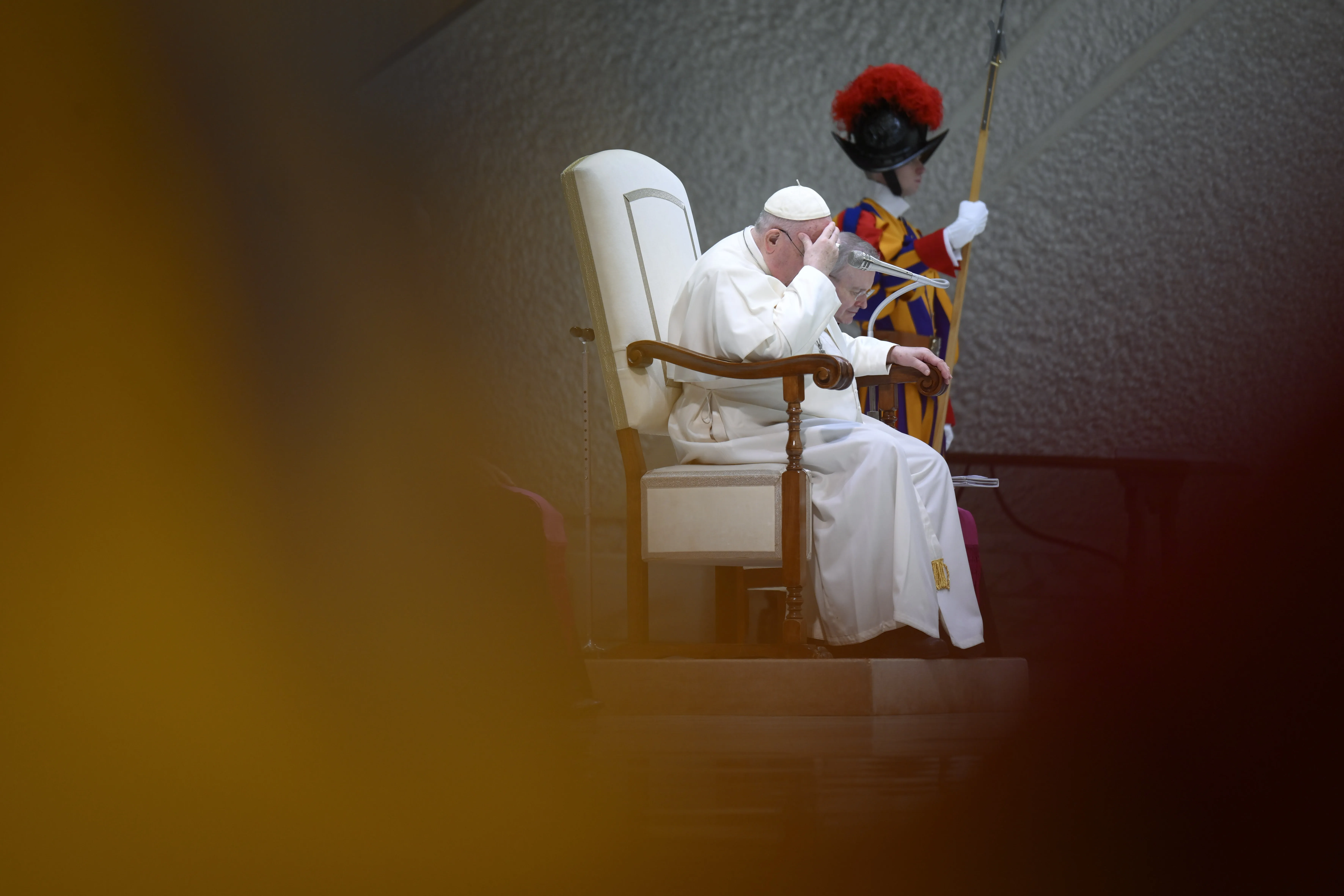
Pope Francis said that he makes “the heartbreaking grief” of Ukrainian families his own at his public audience on Jan. 18, 2023. Vatican Media
Pope Francis also urged people to pray for peace in “martyred Ukraine,” where a Russian missile strike on an apartment building last Saturday killed 45 people, including six children.
“Last Saturday, a new missile attack claimed many civilian victims, including children. I make the heartbreaking grief of the family members my own,” the pope said.
“The images and testimonies of this tragic episode are a strong appeal to all consciences. One cannot remain indifferent!”
If you value the news and views Catholic World Report provides, please consider donating to support our efforts. Your contribution will help us continue to make CWR available to all readers worldwide for free, without a subscription. Thank you for your generosity!
Click here for more information on donating to CWR. Click here to sign up for our newsletter.
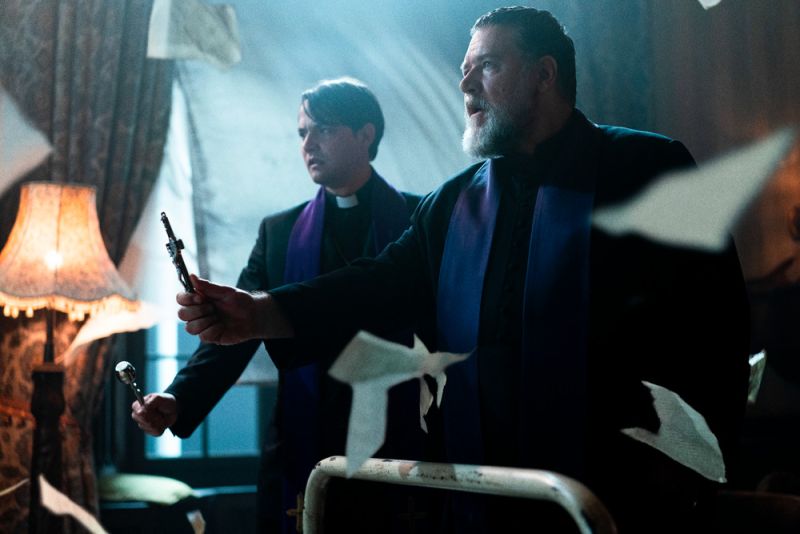
The trailer of the upcoming Russell Crowe movie “The Pope’s Exorcist” indicates that the film might not do justice to the Italian exorcist Father Gabriel Amorth or the rite of exorcism as practiced in the Catholic Church, according to an exorcist organization Amorth himself helped to found.
The International Association of Exorcists on March 7 voiced concern that the film seems to fall under the category of “splatter cinema,” which it calls a “sub-genre of horror.”
The Vatican, the statement said, is filmed with a high-contrast “chiaroscuro” effect seen in film noir.
This gives the film a “‘Da Vinci Code’ effect to instill in the public the usual doubt: Who is the real enemy? The devil or ecclesiastical ‘power’?” the exorcists’ association said.
While special effects are “inevitable” in every film about demonic possession, “everything is exaggerated, with striking physical and verbal manifestations, typical of horror films,” the group said.
“This way of narrating Don Amorth’s experience as an exorcist, in addition to being contrary to historical reality, distorts and falsifies what is truly lived and experienced during the exorcism of truly possessed people,” said the association, which claims more than 800 exorcist members and more than 120 auxiliary members worldwide.
“In addition, it is offensive with regard to the state of suffering in which those who are victims of an extraordinary action of the devil find themselves,” the group’s statement added. The statement responded to the release of the movie trailer and promised a more in-depth response to the film’s April 14 theatrical release.
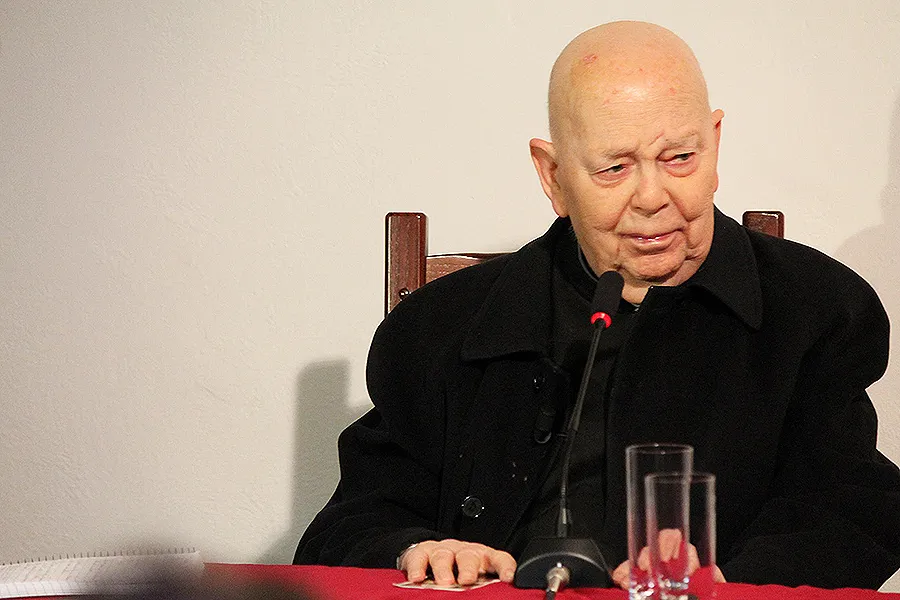
Father Gabriele Amorth, chief exorcist of Rome, speaks to CNA on May 22, 2013. Steven Driscoll/CNA
Amorth, who died at age 91 in 2016, said he performed an estimated 100,000 exorcisms during his life. He was perhaps the world’s best-known exorcist and the author of many books, including “An Exorcist Tells His Story,” reportedly an inspiration for the upcoming movie.
Several of Amorth’s books are carried by the U.S. publisher Sophia Institute Press. The publisher’s newly released book “The Pope’s Exorcist: 101 Questions About Fr. Gabriele Amorth” is an interview in which the priest addresses many topics ranging from prayer to pop music.
Michael Lichens, editor and spokesperson at Sophia Institute Press, voiced some agreement with the exorcist group.
“The International Association of Exorcists is right to be concerned and I’m thankful for their words,” Lichens told CNA. “My hope is that audiences will remember that Father Amorth is a real person with a great legacy and perhaps a few moviegoers will look up an interview or pick up his books.”
“This was a man who included St. Padre Pio and Blessed Giacomo Alberione as mentors, as well as Servant of God Candido Amantini, who was his teacher for the ministry of exorcism,” he said. “Father Amorth fought as a partisan as a young man and grew to fight greater evil as an exorcist. His life is an inspiration and I know that his work and words will still reach many.”
Amorth was born in Modena, Italy, on May 1, 1925. In wartime Italy, he was a soldier with the underground anti-fascist partisans. He was ordained a priest in 1951. He did not become an exorcist until 1986, when Cardinal Ugo Poletti, the vicar general of the Diocese of Rome, named him the diocesan exorcist.
The priest was frequently in the news for his comments on the subject of demonic forces. In an interview with The Sunday Telegraph in 2000, he said: “I speak with the devil every day. I talk to him in Latin. He answers in Italian. I have been wrestling with him, day in, day out, for 14 years.”
The movie “The Pope’s Exorcist” claims to be “inspired by the actual files of the Vatican’s chief exorcist.” The Sony Pictures movie stars the New Zealand-born actor Russell Crowe as Amorth. Crowe’s character wears a gray beard and speaks English with a noticeable accent.
“The majority of cases do not require an exorcism,” the Amorth character says in the movie’s first trailer. A cardinal explains that Crowe’s character recommends 98% of people who seek an exorcism to doctors and psychiatrists instead.
“The other 2%… I call it… evil,” Crowe adds.
The plot appears to concern Amorth’s encounter with a particular demon. Crowe’s character suggests the Church “has fought this demon before” but covered it up.
“We need to find out why,” he says.
The trailer shows short dramatic scenes of exorcism, including a confrontation between Amorth and a girl apparently suffering demonic possession.
The International Association of Exorcists said such a representation makes exorcism become “a spectacle aimed at inspiring strong and unhealthy emotions, thanks to a gloomy scenography, with sound effects such as to inspire only anxiety, restlessness, and fear in the viewer.”
“The end result is to instill the conviction that exorcism is an abnormal, monstrous, and frightening phenomenon, whose only protagonist is the devil, whose violent reactions can be faced with great difficulty,” said the exorcist group. “This is the exact opposite of what occurs in the context of exorcism celebrated in the Catholic Church in obedience to the directives imparted by it.”
CNA sought comment from Sony Pictures and “The Pope’s Exorcist” executive producer Father Edward Siebert, SJ, but did not receive a response by publication.
Amorth co-founded the International Association of Exorcists with Father René Laurentin in 1994. In 2014 the Catholic Church recognized the group as a Private Association of the Faithful.
The association trains exorcists and promotes their incorporation into local communities and normal pastoral care. It also aims to promote “correct knowledge” about exorcism ministry and collaboration with medical and psychiatric experts who have competence in spirituality.
Exorcism is considered a sacramental, not a sacrament, of the Church. It is a liturgical rite that only a priest can perform.
Hollywood made the topic a focus most famously in the 1973 movie “The Exorcist,” based on the novel by William Peter Blatty.
“Most movies about Catholicism and spiritual warfare sensationalize,” Lichens of Sophia Institute Press told CNA. “Sensationalism and terror sell tickets. As a fan of horror movies, I can understand and even appreciate that. As a Catholic who has studied Father Amorth, though, I think such sensationalism distorts the important work of exorcism.”
“On the other hand, ‘The Exorcist’ made the wider public more curious about this overlooked ministry. That is a good thing that came out, despite other reservations and concerns,” he continued. “Still, I would love it if a screenwriter and director spoke to exorcists and tried to show the often-quotidian parts of the ministry.”
An unhealthy curiosity can be a problem, Lichens said.
“When I work as a spokesperson for Amorth’s books, I am always concerned about inspiring curiosity about the demonic,” he told CNA. “As Christians, we know we have nothing to fear from the demonic but curiosity might lead some to want to seek out the supernatural or the demonic. Father Amorth has dozens of stories of people who found themselves afflicted after party game seances.”
Lichens encouraged those who are curious to read more of Amorth’s writings, some of which are excerpted on the Catholic Exchange website. Sophia Institute Press has published “Diary of an American Exorcist” by Monsignor Stephen Rosetti and “The Exorcism Files” by the American lay Catholic Adam Blai.
“First and foremost, Father Amorth was involved in a healing ministry,” Lichens said. “Like other exorcists, his work often involved doctors in physical and mental health because the goal is to bring healing and hope to the potentially afflicted.”
“Those of us who read Amorth might have been excited to read firsthand accounts of spiritual warfare, but readers quickly see a man whose heart was always full of love for those who sought his help,” he added.
The International Association of Exorcists, for its part, praised the 2016 documentary “Deliver Us,” saying this shows “what exorcism really is in the Catholic Church and “the authentic traits of a Catholic exorcist.” It shows exorcism as “a most joyful event,” in their view, because through experiencing “the presence and action of Christ the Lord and of the Communion of the Saints,” those who are “tormented by the extraordinary action of the devil gradually find liberation and peace.”
Pope Francis meets with Nigerians living in Rome on March 25, 2024. / Credit: Vatican Media
Rome Newsroom, Mar 25, 2024 / 09:30 am (CNA).
Pope Francis gave thanks on Monday for the many young Nigerians who have answered God’s call to the priest… […]
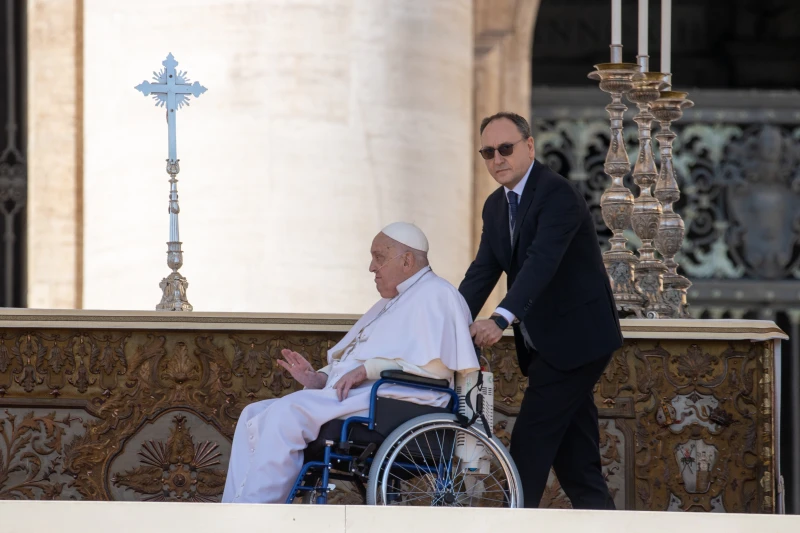
Pope Francis blesses the faithful at the Jubilee of the Sick in St. Peter’s Square, Vatican City, on April 6, 2025, as his personal nurse, Massimo Strappetti, assists him in the wheelchair. / Credit: Daniel Ibáñez/CNA
Vatican City, Apr 23, 2025 / 10:30 am (CNA).
Having cared for the aging Pope Francis as his personal nurse since 2022, Italian nurse Massimiliano Strappetti was among the few people who saw the Holy Father moments before his death on Easter Monday.
Before being appointed Pope Francis’ personal nurse in August 2022, Strappetti was the nursing coordinator for the Vatican’s health department. He started working in the Vatican in 2002 after having worked eight years in the intensive care unit of Rome’s Gemelli Hospital.
Pope Francis is seen with his personal nurse, Massimo Strappetti, at the Jubilee of the Sick in St. Peter’s Square, Vatican City, Sunday, April 6, 2025. Credit: Daniel Ibáñez/CNA
Strappetti’s appointment came very soon after he accompanied the Holy Father on a difficult apostolic journey to Canada from July 24–30, 2022. Throughout 2022, the Holy Father struggled with knee problems.
From August 2022 onward, Strappetti would be seen by the pope’s side at almost every one of the pontiff’s public appearances, including his weekly Wednesday general audiences and Sunday Angelus addresses in Rome and the Vatican as well as on his several apostolic journeys abroad.
The pope’s last words and final greetings were reportedly addressed to Strappetti, the man he trusted to care for him throughout the multiple illnesses and health emergencies he endured in the last years of his life.
“Thank you for bringing me back to the Square,” the pope is reported to have told the nurse. Stappetti, a husband and father known for his generosity toward others, brought the Holy Father in a wheelchair to the central loggia of St. Peter’s Basilica to deliver his final Easter Sunday urbi et orbi address on April 20.
After the blessing, the pope turned to Strappetti for his opinion, asking: “Do you think I can manage it?” before going down to the square to greet the 50,000 people from his popemobile, Vatican News reported.
The next day, the pope’s health began to deteriorate at around 5:30 a.m. on Easter Monday morning. An hour later, the Holy Father made a “gesture of farewell with his hand” to Strappetti before falling into a coma, after suffering a stroke, in his bed in his Casa Santa Marta apartment, Vatican News reported.
Strappetti closely accompanied the 88-year-old pope during his convalescence in the Vatican by providing round-the-clock care for the pope in his home following his March 23 release from the hospital after 38 days in Rome’s Gemelli Hospital.
In an interview with Italian newspaper Corriere della Sera, Dr. Sergio Alfieri, head of the Gemelli Hospital’s medical team that cared for the pope, said they followed the pope’s clear order, through Strappetti, to “try everything, let’s not give up” during two critical moments when they needed to decide whether to continue or stop treatment.
Prior to working more closely with the Holy Father as his personal health care assistant, Strappetti was among the medical staff who, in the summer of 2021, advised the pope to undergo testing regarding issues with his colon. On July 4 of that year, the Holy Father underwent a three-hour operation that removed part of his colon.
Later in 2021, following the colon operation and 11-day hospitalization in Gemelli, Pope Francis praised Strappetti as “a man with a lot of experience” who “saved my life,” in an interview with Spanish radio station COPE.
“Now I can eat everything, which was not possible before with the diverticula. I can eat everything. I still have the postoperative medications, because the brain has to register that it has 33 centimeters [12 inches] less intestine,” the pope quipped in the interview.
Yes, you are correct. He did not preach calling on deceased saints and venerating the church over Himself. Sacraments are our duty, yet they do not bring us salvation.
“Baptism, which corresponds to this, now saves you, not as a removal of dirt from the body but as an appeal to God for a clear conscience, through the resurrection of Jesus Christ…” (1 Pet 3:21).
The verse is worth reading several times to gain a clearer intent! We know that some verses challenge the believer to gain a fuller comprehension! You will be well acquainted with Matthew Henry. Looking at his analysis of 1 Peter 3:21:
“Noah’s salvation in the ark upon the water prefigured the salvation of all good Christians in the church by baptism; that temporal salvation by the ark was a type, the antitype whereunto is the eternal salvation of believers by baptism, to prevent mistakes about which the apostle,
I. Declares what he means by saving baptism; not the outward ceremony of washing with water, which, in itself, does no more than put away the filth of the flesh, but it is that baptism wherein there is a faithful answer or restipulation {restatement] of a resolved good conscience, engaging to believe in, and be entirely devoted to, God, the Father, Son, and Holy Ghost, renouncing at the same time the flesh, the world, and the devil. The baptismal covenant, made and kept, will certainly save us. Washing is the visible sign; this is the thing signified.
II. The apostle shows that the efficacy of baptism to salvation depends not upon the work done, but upon the resurrection of Christ, which supposes his death, and is the foundation of our faith and hope, to which we are rendered conformable by dying to sin, and rising again to holiness and newness of life. Learn, 1. The sacrament of baptism, rightly received, is a means and a pledge of salvation. Baptism now saveth us. God is pleased to convey his blessings to us in and by his ordinances, Acts 2:38; 22:16. 2. The external participation of baptism will save no man without an answerable good conscience and conversation. There must be the answer of a good conscience towards God.—Obj. Infants cannot make such an answer, and therefore ought not to be baptized.—Answer, the true circumcision was that of the heart and of the spirit (Rom. 2:29), which children were no more capable of then than our infants are capable of making this answer now; yet they were allowed circumcision at eight days old. The infants of the Christian church therefore may be admitted to the ordinance with as much reason as the infants of the Jewish, unless they are barred from it by some express prohibition of Christ.”
God bless you as you challenge us to grow in Christ,
Yes, and: “Unless you eat the flesh of the Son of man and drink his blood, you have no life in yourselves. Whoever feeds on my flesh and drinks my blood has everlasting life, . . . for my flesh is true food and my blood is true drink. Whoever feeds on my flesh and drinks my blood remains in union with me.” — John 6:53-56.
Then Luke 22:19 – “And he took bread, gave thanks and broke it, and gave it to them, saying, ‘This is my body given for you; do this in remembrance of me.’
Looking at John 6:53-56, we are presented with a challenging statement. There is a divergence of opinion on this important proclamation, let us examine! Looking at Matthew Henry’s Concise Commentary we find:
“Commentary on John 6:52-59
(Read John 6:52-59)
The flesh and blood of the Son of man, denote the Redeemer in the nature of man; Christ and him crucified, and the redemption wrought out by him, with all the precious benefits of redemption; pardon of sin, acceptance with God, the way to the throne of grace, the promises of the covenant, and eternal life. These are called the flesh and blood of Christ, because they are purchased by the breaking his body, and the shedding of his blood. Also, because they are meat and drink to our souls. Eating this flesh and drinking this blood mean believing in Christ. We partake of Christ and his benefits by faith. The soul that rightly knows its state and wants, finds whatever can calm the conscience, and promote true holiness, in the redeemer, God manifest in the flesh. Meditating upon the cross of Christ gives life to our repentance, love, and gratitude. We live by him, as our bodies live by our food. We live by him, as the members by the head, the branches by the root: because he lives we shall live also.”
There are principled believers in Christ that adhere to the doctrine of transubstantiation. It is left to each follower to determine what Christ is saying. “The New Jerome Biblical Commentary” ought to be considered as a reference point.
God bless you as you honour His name,
Brian
Yes, well said, and yet more…
In his “Introduction to Christianity” (1968), when “explaining that Christ is COMPLETELY [italics] God and COMPLETELY [man]”, not half and half, Benedict also comments that silence is part of the Christian revelation. Silence! And He also notes, for example, “the liberating, detached tranquility of him who lives on that excess of divine justice known as Jesus Christ.”
“Known as[!?],” meaning more than an included or attached virtue…Instead, justice “in person”…also “Truth, compassion, mercy, forgiveness, love, …, and peace,” all in person.
Meaning that in the infinite simplicity of God, Christ as the Word in Person IS the words that he preaches, and preaches the Word that he IS. No distinction. The Incarnation/Real Presence–Christ IS the incomprehensibly divine presence of evangelization. When graced, we then might sometimes “model” ourselves as we follow.






Jesus preached Truth, compassion, mercy, forgiveness, love, justice, and peace.
Yes, you are correct. He did not preach calling on deceased saints and venerating the church over Himself. Sacraments are our duty, yet they do not bring us salvation.
In the love that is Jesus Christ. God bless you.
“Baptism, which corresponds to this, now saves you, not as a removal of dirt from the body but as an appeal to God for a clear conscience, through the resurrection of Jesus Christ…” (1 Pet 3:21).
Dear Carl:
The verse is worth reading several times to gain a clearer intent! We know that some verses challenge the believer to gain a fuller comprehension! You will be well acquainted with Matthew Henry. Looking at his analysis of 1 Peter 3:21:
“Noah’s salvation in the ark upon the water prefigured the salvation of all good Christians in the church by baptism; that temporal salvation by the ark was a type, the antitype whereunto is the eternal salvation of believers by baptism, to prevent mistakes about which the apostle,
I. Declares what he means by saving baptism; not the outward ceremony of washing with water, which, in itself, does no more than put away the filth of the flesh, but it is that baptism wherein there is a faithful answer or restipulation {restatement] of a resolved good conscience, engaging to believe in, and be entirely devoted to, God, the Father, Son, and Holy Ghost, renouncing at the same time the flesh, the world, and the devil. The baptismal covenant, made and kept, will certainly save us. Washing is the visible sign; this is the thing signified.
II. The apostle shows that the efficacy of baptism to salvation depends not upon the work done, but upon the resurrection of Christ, which supposes his death, and is the foundation of our faith and hope, to which we are rendered conformable by dying to sin, and rising again to holiness and newness of life. Learn, 1. The sacrament of baptism, rightly received, is a means and a pledge of salvation. Baptism now saveth us. God is pleased to convey his blessings to us in and by his ordinances, Acts 2:38; 22:16. 2. The external participation of baptism will save no man without an answerable good conscience and conversation. There must be the answer of a good conscience towards God.—Obj. Infants cannot make such an answer, and therefore ought not to be baptized.—Answer, the true circumcision was that of the heart and of the spirit (Rom. 2:29), which children were no more capable of then than our infants are capable of making this answer now; yet they were allowed circumcision at eight days old. The infants of the Christian church therefore may be admitted to the ordinance with as much reason as the infants of the Jewish, unless they are barred from it by some express prohibition of Christ.”
God bless you as you challenge us to grow in Christ,
Brian
Yes, and: “Unless you eat the flesh of the Son of man and drink his blood, you have no life in yourselves. Whoever feeds on my flesh and drinks my blood has everlasting life, . . . for my flesh is true food and my blood is true drink. Whoever feeds on my flesh and drinks my blood remains in union with me.” — John 6:53-56.
Then Luke 22:19 – “And he took bread, gave thanks and broke it, and gave it to them, saying, ‘This is my body given for you; do this in remembrance of me.’
Dear Meiron:
Looking at John 6:53-56, we are presented with a challenging statement. There is a divergence of opinion on this important proclamation, let us examine! Looking at Matthew Henry’s Concise Commentary we find:
“Commentary on John 6:52-59
(Read John 6:52-59)
The flesh and blood of the Son of man, denote the Redeemer in the nature of man; Christ and him crucified, and the redemption wrought out by him, with all the precious benefits of redemption; pardon of sin, acceptance with God, the way to the throne of grace, the promises of the covenant, and eternal life. These are called the flesh and blood of Christ, because they are purchased by the breaking his body, and the shedding of his blood. Also, because they are meat and drink to our souls. Eating this flesh and drinking this blood mean believing in Christ. We partake of Christ and his benefits by faith. The soul that rightly knows its state and wants, finds whatever can calm the conscience, and promote true holiness, in the redeemer, God manifest in the flesh. Meditating upon the cross of Christ gives life to our repentance, love, and gratitude. We live by him, as our bodies live by our food. We live by him, as the members by the head, the branches by the root: because he lives we shall live also.”
There are principled believers in Christ that adhere to the doctrine of transubstantiation. It is left to each follower to determine what Christ is saying. “The New Jerome Biblical Commentary” ought to be considered as a reference point.
God bless you as you honour His name,
Brian
Yes, well said, and yet more…
In his “Introduction to Christianity” (1968), when “explaining that Christ is COMPLETELY [italics] God and COMPLETELY [man]”, not half and half, Benedict also comments that silence is part of the Christian revelation. Silence! And He also notes, for example, “the liberating, detached tranquility of him who lives on that excess of divine justice known as Jesus Christ.”
“Known as[!?],” meaning more than an included or attached virtue…Instead, justice “in person”…also “Truth, compassion, mercy, forgiveness, love, …, and peace,” all in person.
Meaning that in the infinite simplicity of God, Christ as the Word in Person IS the words that he preaches, and preaches the Word that he IS. No distinction. The Incarnation/Real Presence–Christ IS the incomprehensibly divine presence of evangelization. When graced, we then might sometimes “model” ourselves as we follow.