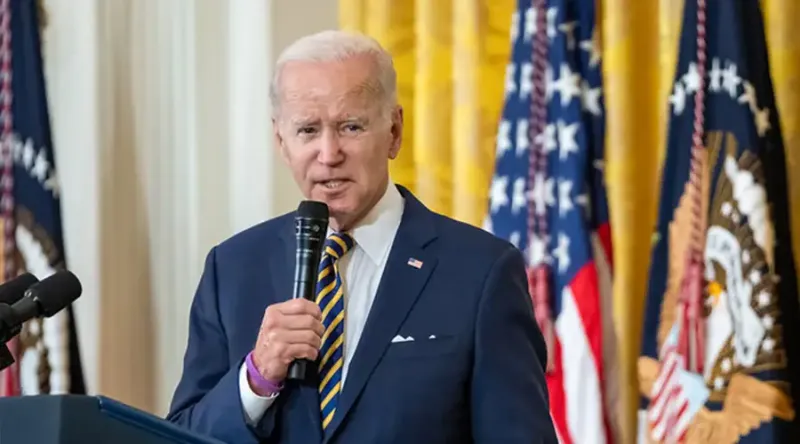
U.S. President Joe Biden / Credit: White House – Public Domain
Washington D.C., Dec 31, 2022 / 14:25 pm (CNA).
President Joe Biden paid tribute to Pope Emeritus Benedict XVI, who died on Saturday, calling him “a renowned theologian” and “an inspiration to us all.”
“Jill and I join Catholics around the world, and so many others, in mourning the passing of Pope Emeritus Benedict XVI,” Biden said following the Vatican’s announcement that the pope emeritus had died at the age of 95.
Biden is the second Catholic president in U.S. history.
“I had the privilege of spending time with Pope Benedict at the Vatican in 2011 and will always remember his generosity and welcome as well as our meaningful conversation,” the president said Dec. 31.
As vice president, Biden made a surprise visit to the Vatican and held a private meeting with Pope Benedict XVI in 2011.
“He will be remembered as a renowned theologian, with a lifetime of devotion to the Church, guided by his principles and faith,” Biden said.
“As he remarked during his 2008 visit to the White House, ‘the need for global solidarity is as urgent as ever, if all people are to live in a way worthy of their dignity,’” Biden said. “May his focus on the ministry of charity continue to be an inspiration to us all.”
Other prominent Catholic politicians also offered tributes to Benedict XVI.
Speaker of the House Nancy Pelosi praised Benedict XVI, saying: “I join our fellow Catholics in mourning the passing of Pope Benedict XVI: a leader whose devotion, scholarship, and message stirred the hearts of people of all faiths.”
Joe Donnelly, U.S. ambassador to the Holy See, issued a statement reflecting on Benedict XVI’s first address from the balcony of St. Peter’s Basilica in Rome, saying: “He set the tone for a papacy by labeling himself as a ‘simple, humble laborer in the vineyard of the Lord.’”
The Vatican announced Saturday that the funeral Mass of Pope Emeritus Benedict XVI will take place at 9:30 a.m. on Thursday, Jan. 5, in St. Peter’s Square.
Benedict XVI will be buried in the crypt under St. Peter’s Basilica.
Pope Francis will preside over the funeral, which, in keeping with Benedict’s wishes, “will be carried out under the sign of simplicity,” Vatican spokesman Matteo Bruni said.
If you value the news and views Catholic World Report provides, please consider donating to support our efforts. Your contribution will help us continue to make CWR available to all readers worldwide for free, without a subscription. Thank you for your generosity!
Click here for more information on donating to CWR. Click here to sign up for our newsletter.
Montgomery, Ala., May 3, 2019 / 11:30 am (CNA).- The Alabama House of Representatives has passed a bill that would make performing an abortion a Class A felony offence. The Human Life Protection Act would mean doctors who perform abortion could face ye… […]
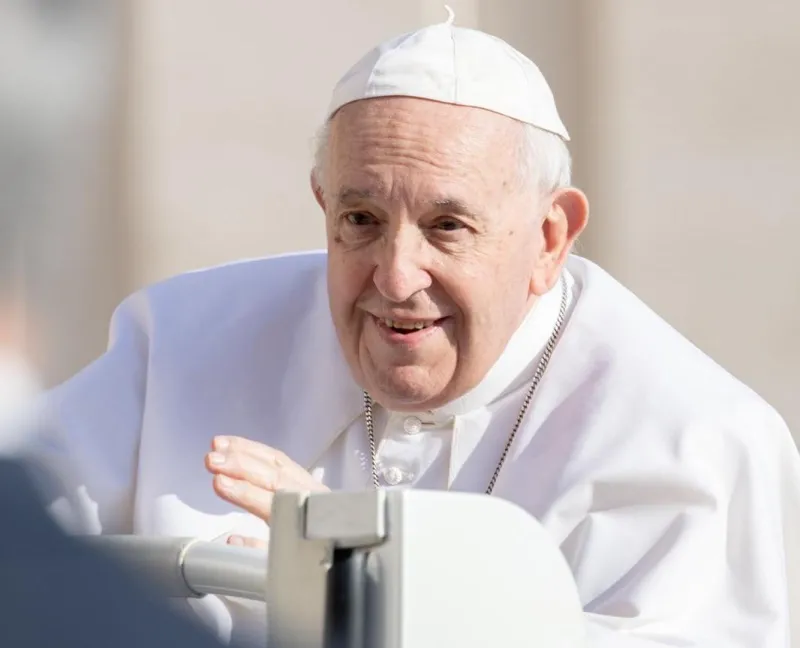
Pope Francis during the weekly general audience at St. Peter’s Square in the Vatican, Sept. 7, 2022. / Daniel Ibáñez / CNA
Rome Newsroom, Sep 7, 2022 / 04:24 am (CNA).
God can speak to us in the unexpected moments of our lives if we learn to listen well to what he is telling us in our hearts, Pope Francis said on Wednesday.
“I will give you a piece of advice: beware of the unexpected,” the pope said Sept. 7 at his weekly public audience.
“Is it life speaking to you, is it the Lord speaking to you, or is it the devil? Someone,” he continued. “But there is something to discern, how I react when faced with the unexpected.”
Francis’ general audience was again in St. Peter’s Square Wednesday after it was held inside the Vatican’s Paul VI auditorium in August to avoid the worst of the summer heat.
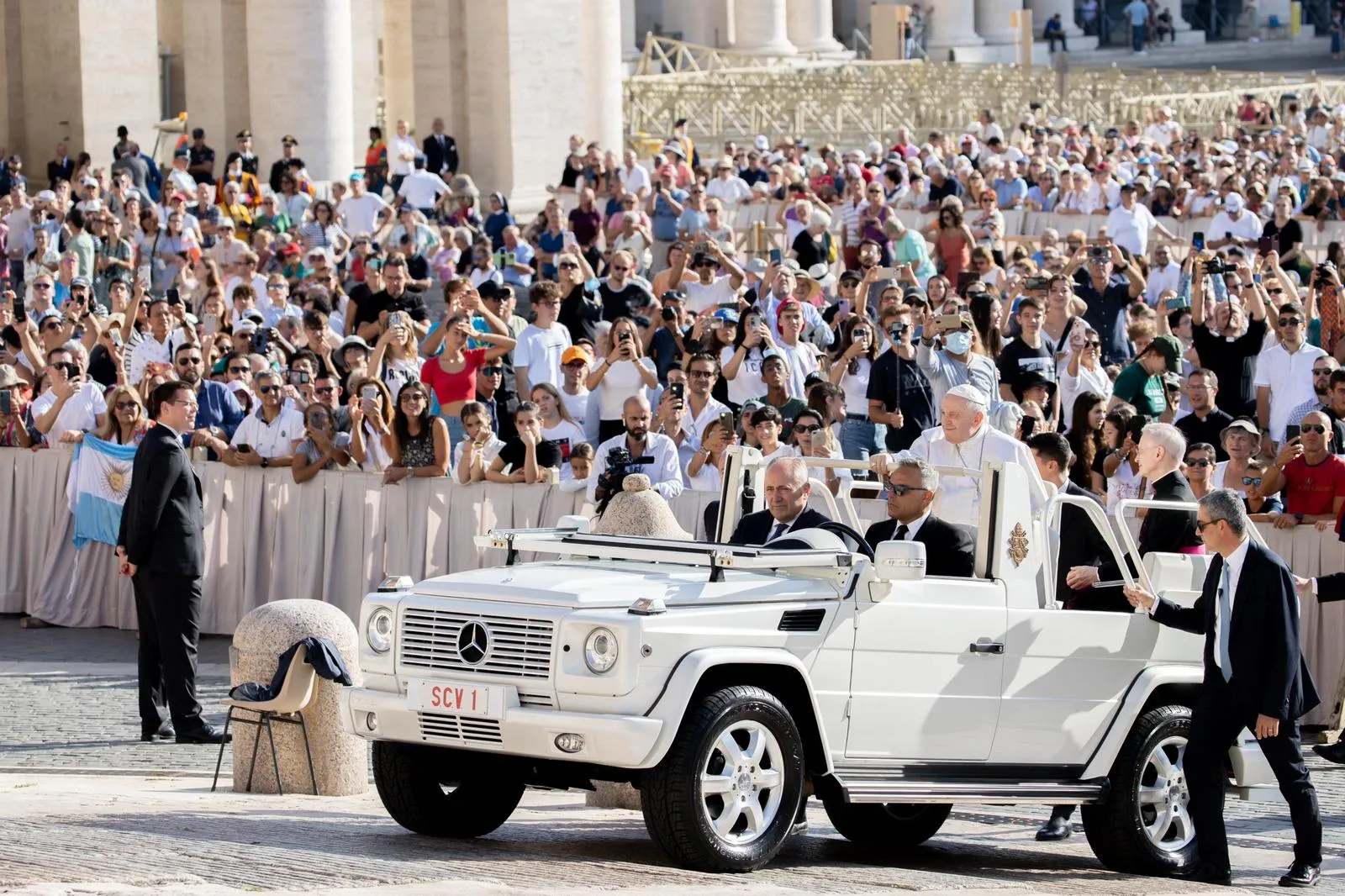
Daniel Ibáñez / CNA
The pope opened and closed his encounter with the public by riding the popemobile around the square. The audience marked his second week of catechesis on the theme of “Discernment.”
As part of discernment, the pope encouraged people to reflect on their reactions to even small, unexpected circumstances, such as the surprise arrival of one’s mother-in-law.
“I was quiet at home and ‘Boom!’ — my mother-in-law arrives; and how do you react to your mother-in-law? Is it love or something else inside? You must discern,” he said. “I was working well in the office, and a companion comes along to tell me he needs money: how do you react? See what happens when we experience things we were not expecting, and there we can learn to know our heart as it moves.”
Pope Francis said knowing how to really listen to your heart is an important part of discernment in making a judgment or decision about something.
“We listen to the television, the radio, the mobile phone; we are experts at listening, but I ask you: do you know how to listen to your heart?” he asked. “Do you stop to ask: ‘But how is my heart? Is it satisfied, is it sad, is it searching for something?’ To make good decisions, you need to listen to your heart.”
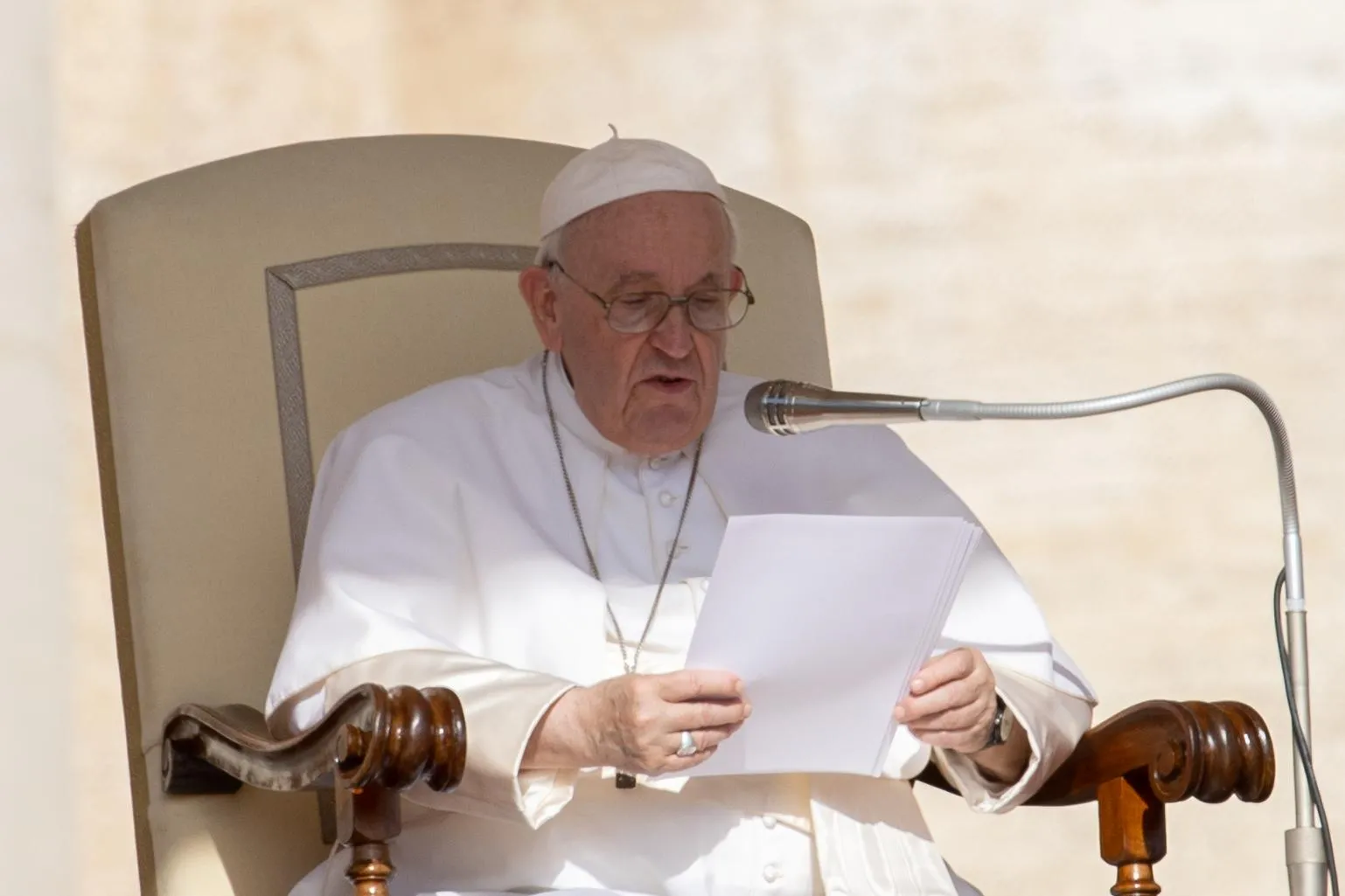
Pope Francis during the weekly general audience at St. Peter’s Square, Sept. 7, 2022. Daniel Ibáñez / CNA
To illustrate his point, the pope recalled the story of the conversion of Saint Ignatius of Loyola, a soldier enamored with stories of knights and chivalry who was forced to confront his future happiness after he was badly injured in battle.
Bored while his leg was healing, Ignatius read stories of the saints and the life of Jesus when other books were not available to him.
Francis quoted from Ignatius’ autobiography, in which the future saint wrote about himself: “‘When he thought of worldly things’ — and of chivalrous things, one understands — ‘it gave him great pleasure, but afterward he found himself dry and sad. But when he thought of journeying to Jerusalem, and of living only on herbs and practicing austerities, he found pleasure not only while thinking of them, but also when he had ceased.’”
“In this experience we note two aspects, above all,” the pope said. “The first is time: that is, the thoughts of the world are attractive at the beginning, but then they lose their luster and leave emptiness and discontent; they leave you that way, empty. Thoughts of God, on the contrary, rouse first a certain resistance — ‘But I’m not going to read this boring thing about saints’ — but when they are welcomed, they bring an unknown peace that lasts for a long time.”
He emphasized that “discernment is not a sort of oracle or fatalism, or something from a laboratory, like casting one’s lot on two possibilities.”
Francis also said that some of life’s big questions often arise after “we have already traveled a stretch of the road in life.”
Sometimes, we can get stuck on one idea and end up disappointed, he pointed out, adding that doing something good, such as a work of charity, can get us out of that rut by bringing us joy and happiness, feelings which can lead to thoughts of God.
The pope also shared a piece of wisdom from Saint Ignatius: to read the lives of the saints.
“Because they show the style of God in the life of people not very different to us, because the saints were made of flesh and blood like us, in a narrative, comprehensible way. Their actions speak to ours, and they help us to understand their meaning,” he said.
Sometimes, he added, “there is an apparent randomness in the events of life: everything seems to arise from a banal mishap — there were no books about knights, only lives of saints. A mishap that nonetheless holds a possible turning point.”
“God works through unplannable events, and also through mishaps,” he said. “Mishap: What is God saying to you? What is life telling you there?”
At the end of his general audience, Pope Francis expressed his closeness to all mothers, and “in a special way, to those mothers who have children who suffer: those who are sick, those who are marginalized, those who are imprisoned.”
“A special prayer goes to the mothers of young detainees: let hope never be lacking. Unfortunately, in prisons there are many people who take their own life, at times also young people. A mother’s love can save them from this danger. May Our Lady console all mothers distressed by the suffering of their children,” he said.




Leave a Reply