Pope Francis greets the crowd in a wheelchair at his general audience, Aug. 3, 2022. / Daniel Ibanez/CNA
Vatican City, Aug 4, 2022 / 09:40 am (CNA).
The Vatican announced Thursday that Pope Francis has appointed a “personal health care assistant.”
Pope Francis has selected Massimiliano Strappetti, a Vatican nurse whom the pope has credited with saving his life, to provide additional assistance as the 85-year-old pope faces mobility problems.
“A nurse, a man with a lot of experience, saved my life,” Pope Francis told Spanish COPE radio after his colon surgery last summer.
Strappetti advised Pope Francis to undergo tests after he had his first flare-up of diverticulitis in February 2021, according to La Repubblica. He, along with the pope’s other medical staff, recommended that the pope have an operation to keep the problem from becoming worse.
The Vatican nurse was also part of Pope Francis’ medical team during his trip to Canada, accompanying the 85-year-old pope during some of his public appearances in a wheelchair.
In his new role, Strapetti will work with Pope Francis’ personal physician, Dr. Roberto Bernabei, a professor of internal medicine and geriatrics at the Catholic University of the Sacred Heart in Rome.
The 52-year-old nurse has worked in the Vatican since 2002, after eight years in the intensive care unit at Rome’s Gemelli Hospital. He served as the coordinator for the nurses in the Vatican health care system and played an active role in the Vatican’s medical charity for the homeless.
Pope Francis’ appointment of the new medical assistant on Aug. 4 comes days after he told journalists on his return flight from Canada that he may need to slow down a bit with his travel schedule due to his health.
The pope has alternated between the use of a cane and a wheelchair during his public audiences since May, when he began medical treatment for a knee injury. Pope Francis also postponed international trips to Lebanon and South Sudan due to his health.
“I don’t think I can move at the same pace of travel as before,” the pope said during an in-flight press conference on July 30.
“I think that at my age and with this limitation I have to cut back a little bit to be able to serve the Church or on the contrary think about the possibility of stepping aside.”
If you value the news and views Catholic World Report provides, please consider donating to support our efforts. Your contribution will help us continue to make CWR available to all readers worldwide for free, without a subscription. Thank you for your generosity!
Click here for more information on donating to CWR. Click here to sign up for our newsletter.
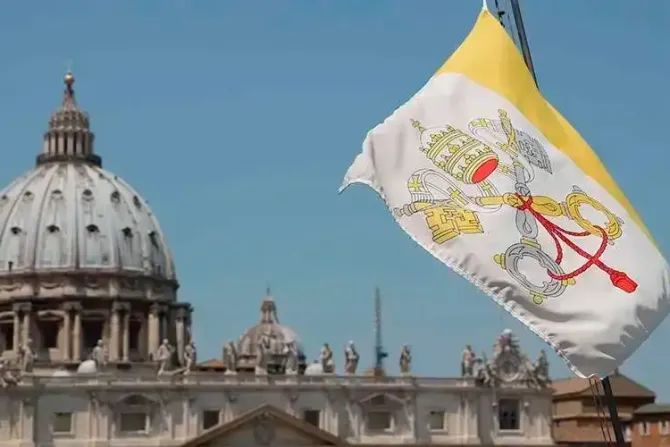
A Vatican flag, with the incorrect design likely drawn from Wikipedia, and the dome of St. Peter’s Basilica. / Bohumil Petrik/ACI
St. Louis, Mo., Apr 8, 2023 / 13:00 pm (CNA).
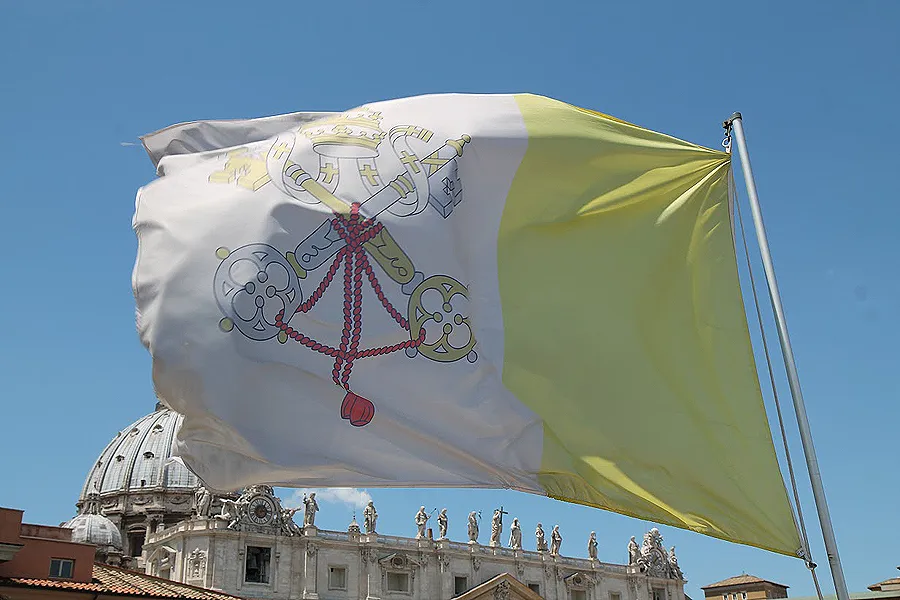
The flag of Vatican City, with its distinctive yellow and white, is instantly recognizable to many Catholics. Likely far fewer people, though, have scrutinized the papal coat of arms on the right-hand side, instead taking the intricate design — which includes famous crossed keys — for granted.
As it turns out, there’s a good chance that the coats of arms on many of the Vatican flags you’ve seen out in the world are rendered incorrectly. And it took until 2023 for the internet to start taking notice.
Imagine you wanted to print your own version of the Vatican flag. Where would you go to find a high-quality picture of one? If you’re like most internet users, your first stop would probably not be the Vatican’s official (but admittedly outdated) vatican.va website. You’re probably going to pull up Wikipedia, one of the world’s most visited websites and an endless storehouse of free image content. Flagmakers the world over appear to have done so over the years.
Imagine many people’s surprise, then, to discover that the image of the “Flag of Vatican City” displayed on Wikipedia has been wrong several times over the years, most recently from 2017 to 2022. (It was also wrong from 2006–2007.)
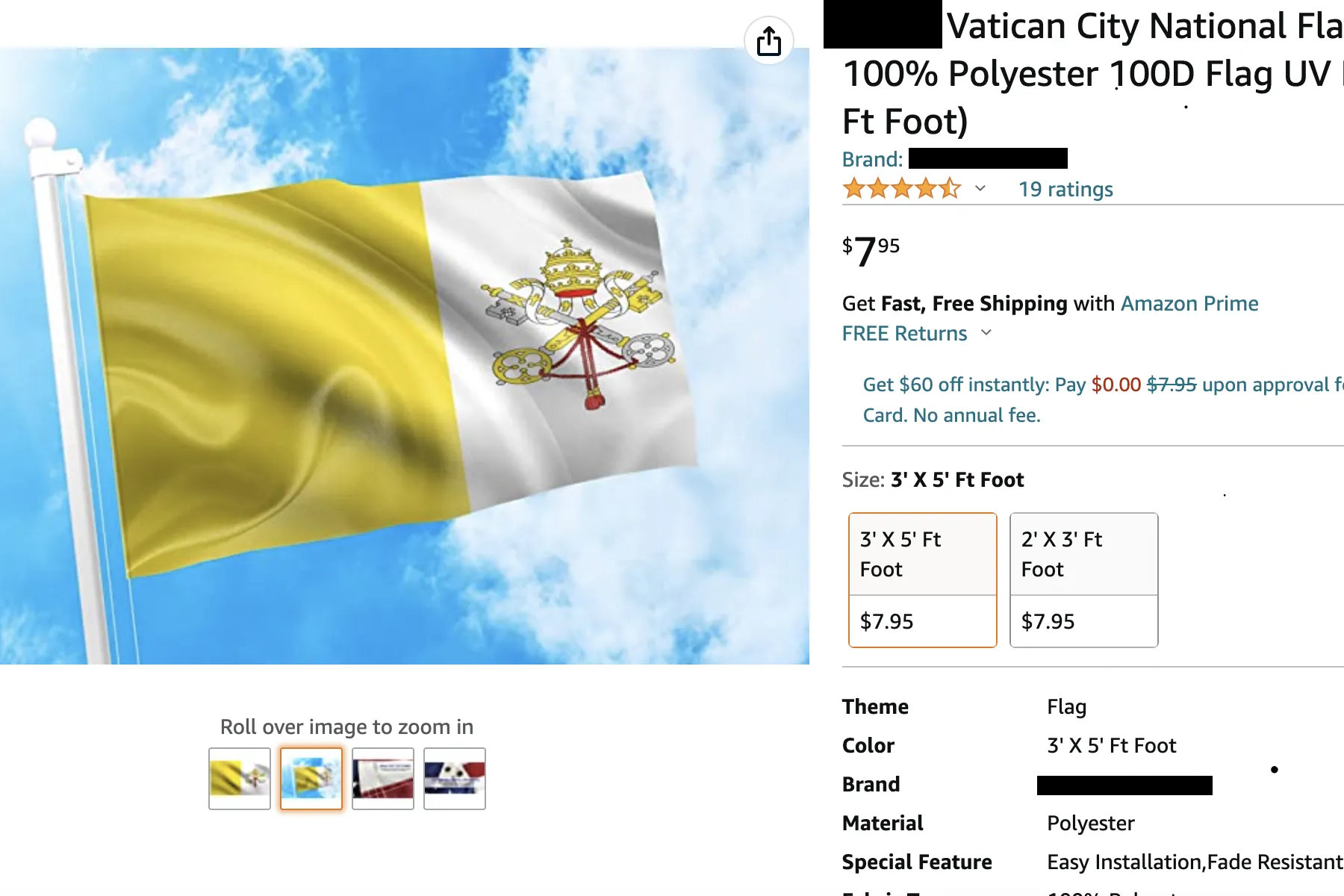
What is “wrong” about these flags, you might ask? It’s a small detail in the grand scheme of things but easy to spot once you know about it. The erroneous Wikipedia file includes a red disk at the bottom of the papal tiara as well as a different shade of yellow on portions of the coat of arms.
The anonymous Wikipedia editor who changed the look of the flag in 2017 wrote that he or she did so for “color correction” purposes, noting that the Vatican’s coat of arms includes the red at the bottom of the tiara. The only problem? The Vatican’s official flag design renders the coat of arms differently, with the circular bottom of the tiara in white.
The image was reverted to the correct one in 2022, but the damage was done. A casual internet search will turn up dozens of Vatican flags for sale that clearly used the incorrect image downloaded from Wikipedia. The incorrect flag has even made its way into emojis. (This whole situation gained attention last month after a Reddit user made a post about it.)
An inexpensive Vatican flag available for sale on Amazon that makes use of the incorrect Wikipedia flag design. Amazon/Screenshot
Father William Becker, pastor at St. Columbanus Parish in Blooming Prairie, Minnesota, read the Reddit post with interest and amusement. Becker, a self-described “flag guy,” has studied the Vatican flag for years and even wrote an entire book about it. He has fond memories of raising the yellow and white colors over his alma mater, the North American College in Rome.
Becker told CNA that the saga of the Vatican flag on Wikipedia demonstrates a need for the Vatican to step in and clarify exactly what its flag should look like, especially considering the fact that Catholic churches all over the world display the Vatican flag.
It was precisely this lack of clarity on the official design of the Vatican flag that led Becker to create a website detailing, as best as he could, the correct design for the flag.
“Cultural communities in general have turned to flags in a stunning way,” Becker commented, citing in part a proliferation of cheaply made, mass-produced flags. And, anecdotally, there seems to be an ever-increasing interest in the Vatican flag as a way for Catholics to claim an identity, whether by flying a flag at home, waving it at a papal event, or by putting one in their social media profile picture.
The Vatican flag. Bohumil Petrik/CNA
Perhaps surprisingly, the Vatican flag is less than 100 years old, as is Vatican City itself. For more than a millennium before 1870, the pope ruled over the Papal States, large regions mainly within present-day Italy. After the Vatican lost control of the Papal States, it found itself a tiny island surrounded by an acrimonious Italy. It took nearly 60 years until the ratification of the Lateran Accords of 1929 ushered in harmony between the Vatican and Italy, and the creation of the world’s smallest sovereign country.
In the days of the Papal States, many different flags were used, but the yellow and white color scheme was a common feature. Becker said the modern design was first used by the merchant fleet in the Papal States from 1825 to 1870. In 1929, that design was chosen as the new flag of Vatican City, the sovereign country.
“It took a while in 1929 to get some flags made. The techniques of mass production weren’t available yet, and so it would have been a matter of sewing up some flags and fitting out buildings with flag staffs,” Becker noted, saying that during this time and for years afterward there was quite a bit of variation between the Vatican flags people flew, perhaps even more so than today.
“That’s kind of common with other countries too, especially those that don’t really take pains to standardize their design. [Nowadays] a flagmaker is likely to go to a source like Wikipedia, and it may vary in its accuracy,” Becker told CNA.
The same flag chosen in 1929 was reconfirmed in a revised Vatican constitution, issued by Pope John Paul II in 2000. The original Vatican flag was actually square, as indeed the official version is today. Since roughly the 1960s, though, buildings began to fly oblong state flags that followed Italy’s flag proportions, probably because most Vatican flags at the time were mass-produced there.
The flag has special significance beyond the walls of Vatican City as a marker for the Vatican’s extraterritorial properties, of which there are more than a dozen. These properties, which include major basilicas such as St. Paul Outside the Walls and St. Mary Major, are marked as the Vatican’s through their flying of the papal flag.
Becker said he hopes his website will serve as a helpful resource for anyone looking for the exact Vatican flag design, at least until the Vatican issues some kind of clarification on what exactly the flag should look like.
“The papal flag is interesting because on the one hand, the Vatican is such a small state, but the papal flag is seen all over the world. Anywhere there’s a Catholic church, you might be likely to run into a papal flag,” he said.
“It would be nice if somebody at the Holy See could, through their website or wherever, make some design specifications more available … design specifications that manufacturers could rely on a bit more.”
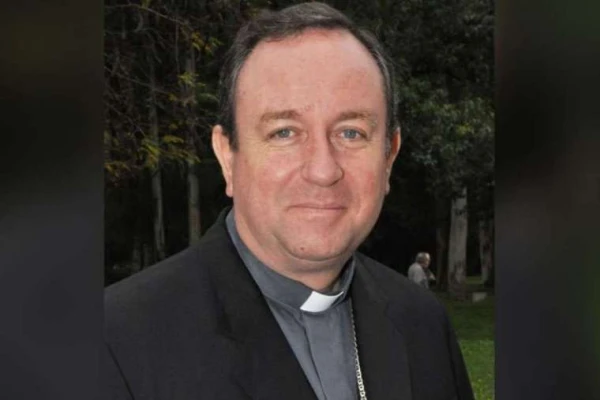
Vatican City, Jun 15, 2020 / 07:30 am (CNA).- Bishop Gustavo Zanchetta has returned to work at the Vatican amid an ongoing trial in Argentina, where he has been charged with sexual and financial misconduct.
Holy See Press Office director Matteo Bruni told CNA June 15 that Zanchetta had resumed his work at the Vatican while “remaining available to the Argentine judicial authorities.”
Bruni said that Zanchetta’s work at the Administration of the Patrimony of the Apostolic See (APSA) — the Vatican’s central reserve bank and sovereign asset management body — “does not interfere in any way with the investigations.”
Zanchetta, the former Bishop of Orán, Argentina, has been accused of “aggravated continuous sexual abuse” of two adult-aged seminarians, as well as fraud and mismanagement of funds. He denies the charges.
The accused bishop was suspended from his role as an assessor at APSA amid a canonical investigation, announced in January 2019.
APSA oversees real estate holdings and other sovereign assets. The financial operations APSA carries out are recorded in the database of the Vatican’s Data Processing Center, which includes the records of investments and financial transactions going back 50 years.
Zanchetta was one of Pope Francis’ first episcopal appointments in Argentina, where he led the Diocese of Orán from his appointment in July 2013 to 2017.
After being allowed to resign as Bishop of Orán for “health reasons” in 2017, Zanchetta was appointed by Pope Francis to the specially created position of assessor at APSA.
Argentine media have since reported that the bishop was first accused of sexually inappropriate behavior as early as 2015.
According to a report from El Tribuno, one of Zanchetta’s secretaries alerted authorities after accidentally finding sexually explicit images sent and received on Zanchetta’s cell phone in 2015. The complaint says that some of the images depict “young people” having sex, in addition to lewd images of Zanchetta himself.
Pope Francis summoned Zanchetta to Rome for five days in October 2015. The bishop claimed his phone and computer had been hacked, and that the accusations were motivated by ill feeling towards the pope. Francis reportedly accepted the bishop’s excuse that his cell phone had been hacked, and took no further action.
The Vatican has repeatedly denied having prior knowledge of sexual abuse allegations against Zanchetta before his December 2017 appointment to a Vatican office.
In a May 2019 interview, Pope Francis said that a preliminary investigation against Zanchetta had concluded and would proceed to a trial, conducted by the Congregation for the Doctrine of the Faith.
“They will make a trial, they will issue a sentence and I will promulgate it,” the pope said.
Fr. Juan José Manzano, the former vicar general of the Diocese of Orán, has claimed publicly that he first reported Zanchetta in 2015, after the pornographic images were found on his phone. Manzano said he also reported him again in 2017.
After Zanchetta was charged with assaulting two seminarians in June 2019, Orán’s Economic Crime Unit raided offices in the chancery November 2019. The raid was carried out to investigate Zanchetta’s alleged fraud against the state, according to El Oranense.
In addition to accusations of mismanaging church funds donated by the faithful in the diocese, public records show that Zanchetta received more than 1 million Argentine pesos from Salta Province to restore a rectory and for lectures at the seminary which never occurred.
Zanchetta’s canon lawyer confirmed in November 2019 that the Argentine was still living in Casa Santa Marta, where he had resided for two years, in Vatican City.
Pope Francis speaking with journalists on the papal plane on July 30. / Vatican Media
CNA Newsroom, Jul 30, 2022 / 02:22 am (CNA).
The latest Vatican intervention against the German “Synodal Way” was published by the Secretariat of State, but h… […]
1 Comment
Health is wealth. Life is a precious gift. Wishing the Holy Father good health. God bless.



Health is wealth. Life is a precious gift. Wishing the Holy Father good health. God bless.