The Catholic Church in France has secured more than $22 million in compensation for victims of child sex abuse.
The news comes about four months after a report estimated that hundreds of thousands of children were abused in the Catholic Church in France over the past 70 years.
“It’s a first step,” said Gilles Vermot-Desroches in an interview with Agence France-Presse. Vermot-Desroches is president of the Selam fund, which is responsible for gathering compensation for victims.
An initial $5.6 million has reportedly already been set aside for compensation claims under investigation by an independent panel.
It is unclear how the compensation fund was sourced. French bishops voted during their plenary assembly in November to sell off real estate and movable property of some Catholic dioceses. The Church also reportedly invited clergy and laity to make donations.
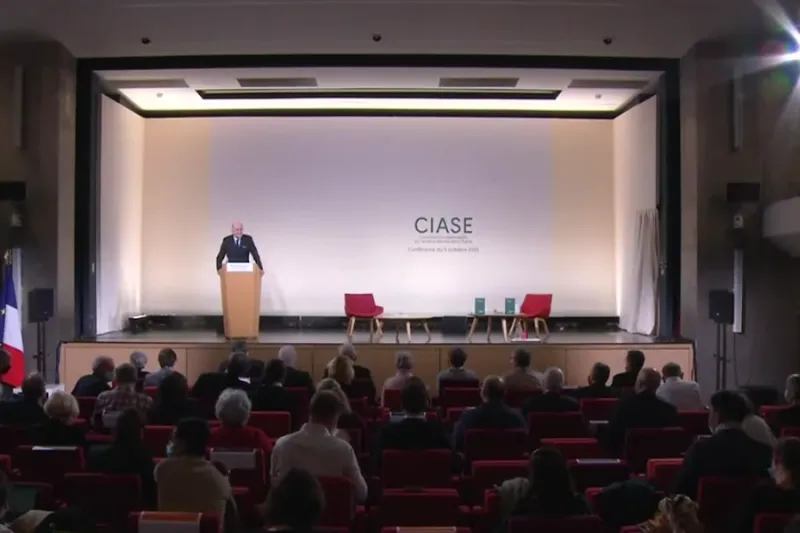
The Independent Commission on Sexual Abuse in the Church published a report on child sex abuse in the Catholic Church in France in October.
The report estimated 216,000 children were abused by priests, deacons, monks or nuns from 1950 to 2020.
It added that when abuse by other Church workers was also taken into account, “the estimated number of child victims rises to 330,000 for the whole of the period.”
Catholic bishops in France responded to the report with promises of a “vast program of renewal” of their governance practices and the possibility of mediation and compensation for abuse victims.
They also established working groups to address and prevent abuse.
At the end of their plenary assembly in November, the bishops knelt in an act of penance in Lourdes as an image of a weeping child was unveiled and an abuse victim shared their testimony.
Archbishop Éric de Moulins-Beaufort of Reims, president of the French bishops’ conference, said at the time that the bishops had recognized the Church’s “institutional responsibility” for the report’s findings.
“We felt God’s gaze on us, because we felt disgust and fear rise up in us as we realized what so many people had experienced and were experiencing in terms of suffering, even though they had the right to receive the light, the consolation, the hope of God,” the archbishop said.
Some members of a French Catholic academy criticized the methodology of the abuse report, arguing the report lacked “scientific rigor.”
“The disproportionate assessment of this scourge feeds the narrative of a ‘systemic’ character and lays the groundwork for proposals to bring down the Church-institution,” they said.
The critique’s authors noted that the report recognized that there was no causal link between celibacy and sexual abuse.
But they said that “recommendation 4 deals with priestly celibacy and invites [the Church] ‘to identify the ethical requirements of consecrated celibacy, in particular with regard to the representation of the priest and the risk incurred of bestowing on him the status of hero, or of placing him in a position of dominance.’”
They argued that “this recommendation falls outside the scope of the commission’s competence.”
The critique prompted a backlash, with several members of the academy, founded in 2008, resigning.
If you value the news and views Catholic World Report provides, please consider donating to support our efforts. Your contribution will help us continue to make CWR available to all readers worldwide for free, without a subscription. Thank you for your generosity!
Click here for more information on donating to CWR. Click here to sign up for our newsletter.
At the end of the Mass of consecration on Nov. 1, 2023, María Ruiz Rodríguez shows the ring symbolizing her membership in the Ordo Virginum. That’s the only outward sign of her consecration. / Credit: Latin Patriarchate of Jerusalem
Jerusalem, Nov 12, 2023 / 07:00 am (CNA).
On the 25th day of the ongoing conflict between Israel and Hamas, the Church in Jerusalem welcomed a new consecrated member into its fold. María Ruiz Rodríguez made her consecration in the Ordo Virginum on Nov. 1, permanently rooting herself in the local ecclesiastical community.
“A thought crossed my mind, a temptation: ‘What purpose does this step serve in the midst of current events? Doesn’t the Church have more urgent matters to attend to than to stop and celebrate the consecration of a humble woman like me?’” Ruiz shared with CNA a few days later. But she said she was immediately aware of something else.
“I told myself: I cannot delay this commitment… In fact, uniting my life with the Church in a time of suffering is even more meaningful,” she said.
Cardinal Pierbattista Pizzaballa, Latin patriarch of Jerusalem, presided over the consecration of María Ruiz Rodríguez in the Ordo Virginum on Nov. 1, 2023, in the Church of the Latin Patriarchate of Jerusalem. With this consecration, Ruiz permanently rooted herself in the local Church. Credit: Marinella Bandini
Ruiz, now 42, is originally from Spain and arrived in Jerusalem in 2018 for a period of discernment. At that time, she was a member of the “Monastic Family of Bethlehem, the Assumption of the Virgin Mary and St. Bruno,” an institute of consecrated life established in France in 1950.
It was Ruiz’s first time in the Holy Land, even though the desire to visit the sacred places in the Holy Land had long been a dream in her heart.
Iconographer María Ruiz Rodríguez with the new Roman Missal in Arabic. The book is open on the page where she depicted the Crucifixion of Jesus. Credit: Marinella Bandini
“For two years, I set aside my savings to make a pilgrimage in 2000, the year of the Great Jubilee. However, in that very year, I entered the convent, so I gave up. I felt that Jesus was saying to me: ‘I am your Holy Land.’ In a way, I had already arrived in Jerusalem,” Ruiz said.
It was in the Holy Land that Ruiz first came into contact with some consecrated women of the Ordo Virginum.
“I was looking for my place and I felt called,” she said.
The Ordo Virginum, Ruiz continued, “is the oldest form of consecration in the Church”. Abandoned over the centuries in favor of the religious life, it was rediscovered with the Second Vatican Council as a form of life that, “in a radically transformed historical context” possesses “a surprising force of attraction” and is “capable of responding not only to the desires of many women to dedicate themselves totally to the Lord and to their neighbors, but also to the concurrent rediscovery by the particular Church of its own identity in communion with the one Body of Christ” (cf. Instruction “Ecclesiae Sponsae Imago” on the “Ordo Virginum”).
Iconographer María Ruiz Rodríguez at work in her studio. The image depicts Jesus walking on water and taking St. Peter’s sinking hand (Mt 14:22-33). Credit: Marinella Bandini
Consecrated women in the Ordo Virginum choose to live a life of virginity “for the sake of the kingdom of heaven” in a lay form of life. They do not wear religious habits, do not live in communities, have no common statutes or rules, or even superiors. Instead, they maintain a personal reference to the local bishop — in this case, Cardinal Pierbattista Pizzaballa — who acts as guarantor of their journey of discernment and presides over their consecration.
The sole commitment these consecrated women make is the “resolution of chastity,” which they express during the Rite of Consecration. The only symbol they wear is a ring, emphasizing the spousal character of this vocation, which reflects the mystery of the Church as “Bride of Christ.” Engraved in Ruiz’s ring is an inscription in Hebrew meaning “O my life,” referring to Christ, and the date of her consecration.
Iconographer María Ruiz Rodríguez on her terrace looking at the horizon. In the background are the walls of Jerusalem and the outline of the Basilica of the Dormition, November 2023. Credit: Marinella Bandini
Women who consecrate themselves in the Ordo Virginum support themselves through their jobs. Ruiz is an iconographer and has been working for the Latin Patriarchate of Jerusalem for about four years. She was drawn into a project aimed at renewing liturgical books — the Missal and the Evangeliary — with her artwork.
“I first approached iconographic art when I was a nun. It was first of all a spiritual journey, a path of prayer. More than an artistic expression, an icon is a profession of faith. Before beginning the work, I invoke the Holy Spirit and ask for forgiveness for my own sins and for those who will venerate these images. I was interested in this dimension of relationship,” Ruiz shared. She spent a year researching the style and colors.
“The patriarch asked me to create something that would speak to local Christians, who are Latin by tradition but Eastern by culture. A style that was uniquely mine yet rich in the entire iconographic tradition of the Church of Jerusalem. The art of Armenian manuscripts certainly had a significant influence on me.”
Iconographer María Ruiz Rodríguez at work in her studio. Currently, Ruíz is in the process of creating the images for the Gospels of Matthew and Mark. Credit: Marinella Bandini
The patriarch takes a personal interest in overseeing Ruiz’s work. “We read the Gospel together and choose which scenes to represent, taking into account the particularity of each evangelist. He particularly enjoys highlighting passages that are less frequently represented in the artistic tradition. This is a project close to his heart,” she told CNA.
Currently, Ruíz is in the process of creating images for the Gospels of Matthew and Mark.
“The process is very laborious and involves multiple stages for each page: the pencil lettering, the crafting of the icons, then the ink lettering and finally the gilding.” The plan is for a volume of about 200 pages with 250 images.
“Making this work in Jerusalem has a special value: I can visit the places where that Gospel was lived” but also “immerse myself in Jewish culture,” she said. “This has opened my eyes to the richness that Judaism brings to Christianity. There is a perfect continuity and at the same time an unprecedented newness in the person of Christ.”
The Church of the Latin Patriarchate of Jerusalem full of people on Nov. 1, 2023, for the Mass of consecration of María Ruiz Rodríguez in the Ordo Virginum. Credit: Latin Patriarchate of Jerusalem
Ruiz learned the local languages — Arabic and Hebrew. The Mass of her consecration brought together within one place all the diverse “souls” of the Jerusalem Church: priests, friars, religious, and laity, Arab Christians and Hebrew-speaking Christians, each hearing the word of God in their own language. There were migrants, foreigners, Jews, and Christians of various denominations.
The culminating moment of María Ruiz Rodríguez’s consecration in the Ordo Virginum. The celebration took place on Nov. 1, 2023, in the Church of the Latin Patriarchate of Jerusalem. Credit: Latin Patriarchate of Jerusalem
“I believe my being a foreigner is a blessing for this Church,” Ruiz said. “Why were there such different people in the church that day? Because I am neither Arab nor Jewish, and this allows me to bring both of these peoples into my heart together. In the praise of God we were one people, transcending the divisions that usually separate us. The Church in Jerusalem also needs this, to remember its universal vocation.”
Group photo at the end of the Mass of consecration of María Ruiz Rodríguez in the Ordo Virginum. With her (in the middle, with red shirt) there are other members of the Ordo Virginum, and the bishops of the Latin patriarchate of Jerusalem (from left to right: Giacinto-Boulos Marcuzzo, bishop emeritus; Monsignor William Shomali, general vicar and patriarchal vicar for Jerusalem and Palestine; Cardinal Pierbattista Pizzaballa, Latin patriarch of Jerusalem; Monsignor Rafic Nahra, patriarcal vicar for Israel). Credit: Latin Patriarchate of Jerusalem
With her consecration, Ruiz embarks on her new journey as a “living stone” of the Jerusalem Church: “I am certain that I am finally in the right place. It is not an act of heroism. I am simply where God wants me to be.”
Turin, Italy, Jun 16, 2017 / 10:57 am (CNA/EWTN News).- A relic of St. John Bosco, which had been stolen from an Italian basilica two weeks ago, has been recovered, the local Prosecutor’s Office reported.
An urn containing a relic of St. John Bosco’s brain was discovered missing on June 3. The reliquary was kept in the Basilica of John Bosco in Asti, the saint’s birthplace, fewer than 20 miles east of Turin.
According to Italian press reports, the alleged perpetrator of the crime is a 42-year old man with a criminal record, residing in Pirenolo, Turin. He was arrested by the Asti police. The suspect allegedly planned to sell the reliquary, which he believed to be of solid gold.
St. John Bosco, founder of the Salesians, was a 19th century Italian priest who had a particular love and apostolate for at-risk and underserved youth. Today, the order serves youth throughout the world primarily in schools, homeless shelters, and community centers.
Fr. Enrico Stasi, provincial of the Salesians in Piemonte and Valle d’Aosta, thanked “the judiciary, all the police and all those who have contributed to the positive solution to this unpleasant affair.”
“It is consoling for the Salesians, for the Church in Turin and for the many friends of Don Bosco throughout the world who have abundantly demonstrated their closeness in this time,” he told Agenzia Info Salesiana.
In this regard, he said that “the occasion of the restitution and return of the relic to its original place will be for us and for the faithful another sign of the benevolence and blessing of Don Bosco for those who continue to keep his spirit alive in the world.”
The basilica has experienced some other minor thefts in recent weeks, though nothing of spiritual value.
Archbishop Cesare Nosiglia of Turin also commented on the missing relic, saying it was news “you would never want to hear, because it makes us think of a profound moral misery” that someone would steal something of spiritual and devotional value.
The archbishop told an Italian news source that he asked all of his priests to say a special prayer during their Pentecost Masses for the Salesian family and the recovery of the relic, so that it can “continue to be a point of devotion for the millions of faithful who come to the sanctuary dedicated to him.”
Pope Francis kisses the foot of one of the 12 women whose feet he washed at the Rebibbia Women’s Prison in Rome on Holy Thursday, March 28, 2024. / Credit: Vatican Media
CNA Staff, Mar 28, 2024 / 14:30 pm (CNA).
Pope Francis on Thursday washed … […]
Leave a Reply