
Washington D.C., Feb 8, 2019 / 01:50 pm (CNA).- Sen. Marco Rubio has called the humanitarian and political impasse in Venezuela “unsustainable,” and compared a blockade stopping food and medical aid from entering the country to a war crime.
The senator said leaders of the country’s security forces must choose between their orders and the needs of their families, neighbors and fellow citizens.
In a Feb. 8 interview with CNA, Rubio said that orders to prevent aid from crossing the border are illegitimate and should be refused by officers.
“They are being asked to do something that is illegitimate, they are being asked to do something that – if this were an armed conflict – would be a war crime,” Rubio said.
“Under the Geneva Conventions, the denial of the transit of food and medicine to civilian populations would be a war crime – that’s what they are being asked to participate in.”
The Republican senator from Florida is a key strategist and advisor to the Trump administration on the U.S. response to the political and humanitarian crisis in Venezuela.
Rubio said that while international support is important, the escalating humanitarian and political crisis can only be ended by Venezuelan leadership.
“Ultimately it falls upon the Venezuelan people, and by that I include members of the National Guard, the armed forces, and the police forces, to decide their own destiny and their own future.”
“The international community is here to help and support, but this is their cause.”
On Jan. 23, President Donald Trump recognised opposition leader Juan Guaidó as the legitimate interim president of the country. Nicolas Maduro has refused to recognize Guaidó, and clings to power through his control of the military.
Maduro succeeded Venezuelan president Hugo Chavez in 2013. In 2017, the U.S. Treasury Department called Maduro “a dictator who disregards the will of the Venezuelan people.”
Rubio told CNA that Maduro must relinquish power to bring stability to a country that has seen more than 3 million people flee the country since 2015 amid spiralling inflation, food shortages and mass demonstrations.
The circumstances under which Maduro might be persuaded to abandon power are unclear, the senator said.
“Do I think Maduro is going to exit power eventually? Absolutely. Do I think he is going to do it willingly? I don’t know. But a lot of that depends on the people holding him up,” the senator said.
“Here’s the bottom line: the rank and file military does not support Maduro, but they are not willing to face the very grave consequences of breaking with him.”
These leaders, Rubio said, have the opportunity and responsibility to allow aid into the country.
“There are four or five senior military leaders, starting with the defense minister [Vladimir Padrino López], who if they were to recognize the interim government, that would be the end of the Maduro regime.”
If military leaders recognize the interim government, Rubio told CNA, they could also benefit from amnesties offered by the interim government but “that window is closing, on them and on the country.”
“The further this goes, the likelier it is that senior military leaders like [defense minister Vladimir] Padrino will disqualify themselves from the ability to receive domestic and international amnesty: because they deny food and medicine and thereby commit a crime against humanity; because they try to follow orders and attack unarmed protestors and civilians.”
“It’s in their hands, they can decide to change the trajectory of Venezuela.”
In the meantime, protests continue in the country and, according to Rubio, the Venezuelan people “are well aware” that the Maduro and his loyalists stand between them and the flow of foreign aid into the country.
“There is no way, if current trends continue, that Maduro holds on to power,” Rubio said. “The question becomes: how does he leave? Does he leave through a negotiated exit or does some other even occur that forces his hand?”
Earlier this week, Maduro issued a request for Pope Francis to act as a mediator in resolving the political standoff.
While the pope said that such a request for mediation would have to come from “both sides,” Cardinal Baltazar Enrique Porras Cardozo, Apostolic Administrator of Caracas, appeared to pour cold water on the notion of papal intervention, telling Argentina’s Radio Continental Feb. 6 that the suggestion was “non-viable.”
Rubio told CNA the request for papal mediation is a delaying tactic on the part of Maduro.
“He’s already done this before, the Vatican tried to mediate [in 2016] and it was a fiasco – they walked away from it knowing that he wasn’t sincere.”
“Maduro has a very simple plan: to buy time until he can fracture the opposition and the world’s attention is diverted to some other crisis and away from Venezuela.”
“That’s the model he has followed and he’s trying to pull it off one more time.”
The Venezuelan standoff began Jan. 10, when Maduro was inaugurated at the start of his second term. Both the National Assembly and the Venezuelan bishops’ conference declared at that time Maduro’s 2018 reelection to be invalid. Guaidó declared himself the nation’s interim leader Jan. 23.
Rubio paid tribute to Guaidó and other opposition leaders in the country, noting the real dangers they face.
“I have tremendous admiration for the risk that they are taking,” Rubio said. “They have always been at risk, there are a significant number of opposition leaders dead, in jail, or in exile as a result of this regime.”
But, he said, those committed to seeing genuine democracy in Venezuela recognize that they have had no other practical option than to put themselves at risk.
“As they themselves will tell you, the alternative would be for them to surrender and give in and live under this tyranny or have to leave their country.”
The senator told CNA that direct intervention by U.S. personnel – military or otherwise – remains “a controversial concept.”
“What there is a strong international consensus behind is that Maduro should not stand in the way of humanitarian relief reaching people who are literally dying,” Rubio said, but the moral imperative lay primarily on those carrying out Maduro’s orders.
“If Maduro is going to order that aid be blocked, then it is incumbent upon those that he is ordering not to follow those orders.”
“The military and its leaders are going to have to choose: do we follow these illegitimate orders that are hurting our own people or do we actually help them to reach the starving people of Venezuela, in many cases their own parents, their own siblings, their own families, their own neighbors.”
Rubio said that direct intervention is not something currently being contemplated in Washington. But, the senator noted, it remains an option to protect American personnel, including those trying to deliver food, medicine, and other aid to the country.
“Any U.S. personnel who comes in danger as a result of actions of the Maduro security forces- there will be grave consequences for it, they are well aware of it and they should govern themselves accordingly.”
“The plan here is not to have a caravan of American soldiers or aid workers entering Venezuela, the plan is to hand this over to whoever the interim government directs so that they can distribute in a non-political way.”
“The goal is to distribute the aid through non-governmental, non-political organizations inside Venezuela, for them to distribute through Caritas for the Catholic Church, the Red Cross and other NGOs that are operating within the country.”
Maduro’s security forces, who have erected roadblocks to prevent aid from entering the country, stand between food and medicine stockpiled across the Colombian border and Venezuelan organizations ready to distribute it.
Rubio said that while international pressure and consensus is important, responsibility for resolving the impasse lies with the soldiers blocking aid from entering the country. The senator suggested they should stand down.
“The choice is theirs.”
 […]
[…]


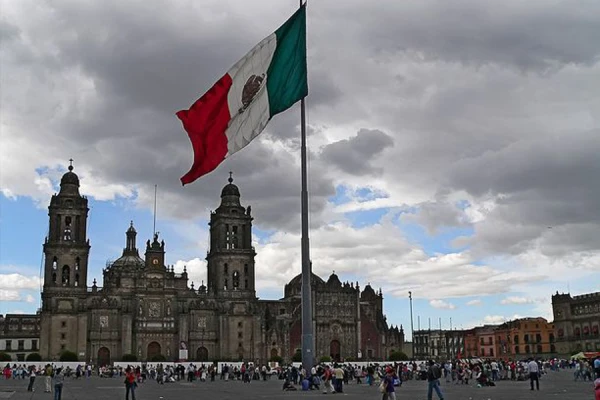

How is it possible to ‘apologise’ for something you did not do? Corporate style apology is meaningless.
Human sacrifice on a fear inducing grand scale in certain pre-Columbian Meso American and South American cultures is well atested.
The Spanish with much help from those oppressed effectively put a stop to that. Conversion to Catholicism was the means. A bad thing in the secularist mindset. Wish you were there? Think not.
Hernán Cortés marched on Tenochitlan [Mexico City] with an army of approx 500 Spaniards and several thousand Tlaxcala warriors. Tlaxcala an independent confederation had warred with the Aztecs to prevent their seizing prisoners for human sacrifice as they were wont throughout Mexico subjecting weaker tribes. Cortés initially greeted by Montezuma as a god realized the horror of daily human sacrifice to the sun god and his responsibility as a Catholic noted in correspondence and accounts in the Spanish archives Madrid [not to dismiss his intent for fame and fortune]. He returned 1521 defeated the Aztecs with assistance from the Tenochitlan warriors and other natives subject to Aztec sacrifice without which he most likely would have failed. The ‘conquest’ may also be considered a war of deliverance of non Aztec native tribes from being subject to human sacrifice. At Montezuma’s coronation several hundred thousand reportedly had their hearts cut out on the city’s blood soaked pyramids. Today tourist attractions subjects of wonder and reason for condemnation of Spain for the oppression of a wonderful culture. Considering if that culture of human sacrifice persisted and what were his ancestral blood lines perhaps Pres Obrador wouldn’t be sitting in the presidential palace.
Reparations from Spain, for terminating Aztec human sacrifice on a Hitlerian scale? Ninety-nine percent (99% !) of the victorious army was indigenous—not Spanish at all. Duh.
Historian Warren Carroll reports that Cortes’s army (lately reinforced up to possibly 1000 Spanish, by three shiploads of fighting men sent from King Charles) was joined by more than 20,000 Indian allies, “a number that in the ensuing months grew to over 100,000.”
Cortes is reported to have offered repeatedly to negotiate, “but the Mexicans would have none of it…[The house-to-house battle raged for 93 days and perhaps a quarter million perished.] On August 13 [1521] the current emperor, Cuauhtemoc, was captured. He asked Cortes to kill him, but the conquistador praised his bravery and said he would not do it” (A History of Christendom, Vol. 4: The Cleaving of Christendom, p. 30).