Vatican City, Oct 7, 2018 / 05:05 am (CNA/EWTN News).- A married couple striving to faithfully live out their life-long commitment to each other, need both God’s grace and love that is anchored in self-gift, Pope Francis said Sunday.
“What allows married couples to remain united in marriage is a love of mutual self-giving sustained by the grace of Christ,” the pope said Oct. 7.
“If, on the other hand, individual interest and satisfaction prevail in the spouses, then their union cannot endure.”
He explained that if divorce or separation should happen, however, the Church does not condemn, but “on the contrary, faced with so many painful marital failures, she feels called to live her presence of love, of charity, of mercy, to bring back the wounded and lost hearts to God.”
The same mercy God shows to all his people when they fail through sin, “teaches us that wounded love can be healed by God through mercy and forgiveness,” Francis stated.
In his meditation before the Sunday Angelus, Pope Francis reflected on the day’s Gospel, when Jesus defends the permanency of marriage in the face of questioning by the Pharisees. Jesus explained that Moses allowed divorce, because of “the hardness of your hearts,” but that this does not correspond “to the original intention of the Creator.”
Jesus invokes a passage from the Book of Genesis, where it says, “God made them male and female. For this reason, a man shall leave his father and mother and be joined to his wife, and the two shall become one flesh.”
The pope noted Jesus’ words that “what God has joined together, no human being must separate.”
“This teaching of Jesus is very clear and defends the dignity of marriage, as a union of love that entails fidelity,” he said. In this Gospel passage, Jesus confirms God’s plan for marriage, not allowing for any exceptions to the permanent commitment of marriage.
“He does this to confirm the plan of God, in which the strength and beauty of human relationships stand out,” he said.
“The Church, on the one hand does not tire of confirming the beauty of the family as given to us by Scripture and Tradition; at the same time, she strives to make his maternal closeness felt concretely to those who live the experience of broken relationships or carry on in a painful and tiring way.”
If you value the news and views Catholic World Report provides, please consider donating to support our efforts. Your contribution will help us continue to make CWR available to all readers worldwide for free, without a subscription. Thank you for your generosity!
Click here for more information on donating to CWR. Click here to sign up for our newsletter.
Vatican City, Dec 2, 2018 / 10:05 pm (CNA).- The Board of the European Payments Council (EPC) approved last month the extension of the geographical scope of the Single Euro Payments Area (SEPA) to include Vatican City State and the Holy See. Mostly see… […]
Swiss Guard cadets prepare their armor in the guards’ barracks at the Vatican on April 30, 2024. / Credit: Matthew Santucci/CNA
Vatican City, May 5, 2024 / 17:00 pm (CNA).
For the newest class of 34 Swiss Guards who will be sworn in on Monday, their service is based on faith and a love for the Church and the pope, as storied as the uniform itself.
“For me it was something, first and foremost, to give something to the Church, because the Catholic Church gave us a lot when I was a child and with this service, I can give something back,” explained Nicolas Hirt, one of the new guards who hails from the Swiss canton of Fribourg.
The cadets, joined by their instructors, gathered for a media event on April 30 in the courtyard behind the barracks adjacent to the Sant’Anna entrance, which was adorned with the flags from each of the Swiss cantons.
The Swiss Guard’s annual swearing-in ceremony will take place on Monday, May 6, in the San Damaso courtyard of the Apostolic Palace. There, the new guards will solemnly raise their right hands, with three fingers extended, representing the Holy Trinity, and proclaim their oath: “I swear I will faithfully, loyally, and honorably serve the Supreme Pontiff and his legitimate successors and I dedicate myself to them with all my strength. I assume this same commitment with regard to the Sacred College of Cardinals whenever the Apostolic See is vacant.”
Swiss Guard cadets drill at the Vatican on April 30, 2024. Credit: Matthew Santucci/CNA
There was a palpable sense of pride, perhaps even a hint of nervousness, as the young men marched last week in the storied corridors, perfecting the ancient rites ahead of a day that will mark a milestone in their lives.
Renato Peter, who comes from a small village near St. Gallen (the first from his village to enter the guards), said he first developed a desire to enter into the service of the papal guards after a trip to Rome in 2012 with his diocese.
“When you work in the Vatican, you have to feel like you go back in history because a lot of European history has been made here,” said Peter, who is mindful that those who wear the iconic tricolor uniform bear a great responsibility and represent a connection to the history of the Church.
“We are the smallest military in the world,” Peter continued, emphasizing that service in the Swiss Guards is like no other. “But, we are not training to make war. We are like the military, yes, but we’re for the security of the Pope.”
The Swiss Guard is indeed the smallest standing army in the world, numbering only 135 members (Pope Francis increased its ranks from 110 in 2018), protecting not only the smallest sovereign territory in the world, Vatican City State, but also acting as the personal security force of the Holy Father.
This year the Swiss Guard celebrated 518 years of service to the Apostolic See. Its history dates back to Jan. 22, 1506, when 150 Swiss mercenaries, led by Captain Kasper von Silenen from the central Swiss canton of Uri, arrived in Rome at the request of Pope Julius II.
But the swearing-in ceremony takes place on May 6, marking the anniversary of the Sack of Rome in 1527 by the Holy Roman Emperor Charles V when 147 guards died protecting Pope Clement VII.
The Swiss Guards form an integral part of the history of the papacy, and a core component of the security apparatus of the Vatican, but they also occupy a special palace in the popular imagination, one underscored by a profound spirituality.
“It’s another world, another culture, and above all doing a fairly unique job, that is to say, there is the protection of the Holy Father,” said Vice-Corporal Eliah Cinotti, spokesman for the guards.
“I don’t think there are many of us who are lucky enough to have the opportunity to serve the Holy Father in that way, therefore the Swiss Guard is a quite unique institution.”
Cinotti observed that for many of the pilgrims coming to Rome, which is often a once-in-a-lifetime experience, the guards act as a point of encounter between the people and the Church, shedding light on an evangelical dimension of their mission.
“Since we are Swiss Guards and represent the pope, we are also there to be Christians, to listen to these people. There is no specific training for this because it already comes from our Christian character to help others.”
Service in the Swiss Guards is both physically and psychologically demanding, and the entry requirements are strict, even though the guards do not face deployment to active war zones, like conventional soldiers.
A prospective guard must hold Swiss citizenship, be Catholic, single, and male (after five years in service the guards are allowed to marry), and be at least 1.74 meters tall (approximately 5’8”). They are required to have completed secondary school (or the equivalent) and have completed mandatory military service.
Despite what some may consider prohibitive entry restrictions, Cinotti noted, during the annual call for applications there are anywhere from 45-50 applicants, and there has not been a problem with recruitment.
During the first round, prospective candidates go through a preliminary screening and, if selected, they will sit with a recruitment officer in Switzerland for an initial interview, which generally lasts anywhere from 30 minutes to one hour. Candidates also have to undergo an intensive psychological test, to assess whether they can withstand the demands of the job.
Should their candidacy proceed, they are then sent to Rome where, for the first two months, they are exposed to the working environment of the Vatican, and around 56 hours of intensive instruction in Italian. Their instruction also includes an emphasis on their cultural and spiritual formation.
Swiss Guard cadets inspect their armor in their barracks at the Vatican on April 30, 2024. Credit: Matthew Santucci/CNA
The cadets are then sent to the Italian-speaking canton of Ticino in Switzerland, where they are instructed in self-defense and the use of firearms by local police. While the guards carry medieval halberds — an ax blade topped with a spike mounted on a long shaft — during official papal events, each is equipped with a 9mm GLOCK 19 Gen4 pistol, taser, and pepper spray.
There is also a two-year minimum service requirement after which they can decide to remain, or return to Switzerland.
“About 80% return to Switzerland and 20% stay,” Cinotti said. “And the 80% who return to Switzerland go to the police or the army or return to their basic profession or go to study at university.”
He also noted there have been some years where a guard will discern a vocation to the priesthood. “And we also had a certain point, people who entered the seminary at the time, one per year more or less.”
He added: “We haven’t had anyone for two years, but I think they will arrive, or rather it’s a question of vocations.”
Swiss Guards stand in the middle of Paul VI Hall during Pope Francis’ general audience on Jan. 10, 2024. Credit: Vatican Media
Cinotti spoke on the myriad security challenges that a guard will have to face in his day-to-day work, which can last anywhere from six to 12 hours of continuous duty, noting that there has been an uptick in the number of people coming to the Vatican for help.
Cinotti also noted that for all of the guards, there has been the additional learning curve of adapting to Pope Francis’ pastoral style, which has brought him in close proximity to the faithful during his audiences in Rome and his travels abroad.
“Pope Francis is like every pope,” Cinotti remarked. “He has his own style, and we must adapt to the pope.”
“If he wants to go to contact the people of God, we must guarantee that, of course, everything is fine, but we cannot prevent it. He does what he wants, he is the pope,” he added.
While this can raise some logistical problems, Cinotti reassured that the guards have been trained to respond to possible threats. He said they have developed a symbiotic, and always professional, relationship with Francis.
“He transmits a certain serenity and a certain awareness that we are there next to him, we are there, like the gendarmerie, which allows us to operate in complete tranquility on the ground without being disturbed,” he said.
“He likes to change plans and will change plans throughout the day,” Cinotti added, “but it suits us very well because we adapt to him and we do this service and for us, it is still important to guarantee his safety.”
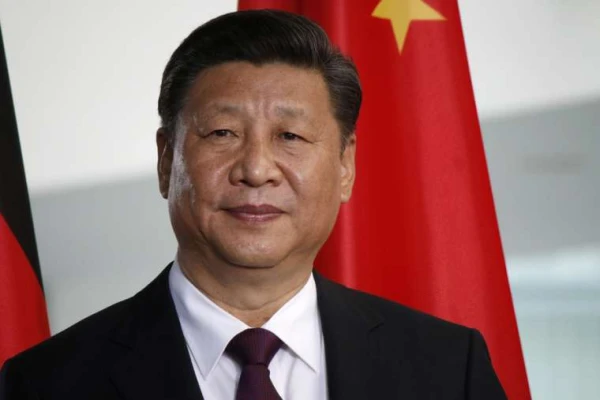
Vatican City, Mar 20, 2019 / 05:13 pm (CNA).- As Chinese President Xi Jinping travels to Rome this week, there has been much speculation as to whether his trip will also include an unofficial visit with Pope Francis.
Ahead of the Chinese president’s arrival in Italy March 21, the AP reported that Vatican Secretary of State Cardinal Pietro Parolin said, “Our door is always open.”
“The proclamation of the Gospel in China cannot be separated from a stance of respect, esteem, and trust toward the Chinese People and their legitimate state authorities,” Parolin wrote in his introduction to the book, The Church in China: A Future Yet to be Written, published this week to coincide with Xi’s visit to Italy.
Parolin wrote that the provisional agreement signed by the Holy See and China in September was “not so much a point of arrival as a starting point.”
Italian media have been speculating about a possible meeting, noting that Pope Francis’ schedule does not have many appointments planned for the dates when Xi will be in Italy March 21-23.
However Chinese sources have expressed that a potential meeting between the pope and the Chinese leader is unlikely.
The Chinese Foreign Ministry spokesman Geng Shuang said he was “not aware” of a potential meeting between the pope and the president, but said that China is ready to meet the Vatican halfway through “constructive dialogue” to “accumulate mutual trust.”
Since China severed diplomatic ties with the Holy See in 1951, a potential meeting between the pope and the Chinese leader would have to be an unofficial meeting.
Xi Jinping’s visit to Italy beginning March 21 will focus on the two countries’ economic ties with the Chinese hoping to secure Italian support for their Belt and Road Initiative, which aims to expand commerce through infrastructure investments.
The Chinese president will then travel to Monaco and meet with President Emmanuel Macron in Nice, France before returning March 26.
A Vatican source told the National Catholic Register that it is unlikely that a meeting will occur, but said that “last-minute decision is possible.”
The source added that the Vatican has been planning a papal trip to China for at least two years and hopes that it will take place by 2020.
The Vatican-China provisional agreement, signed Sept. 22, 2018, is still confidential in nature. The deal reportedly allows the Communist government-backed Chinese Catholic Patriotic Association to choose a slate of nominees for bishop. One effect of the agreement, the Holy See recognized seven illicitly consecrated Chinese bishops and entrusted them with the leadership of Chinese dioceses.
At the moment all of China’s bishops have recognition of both the government and the Holy See. Since the deal, no new bishops have yet been appointed to China.
“History often forces religious matters and political issues, ecclesial themes and cultural discussions, moral questions and social drama, into inextricable knots,” Cardinal Parolin wrote.
“The path of unity is not yet entirely complete and the full reconciliation between Chinese Catholics and the respective communities to which they belong remains a primary objective. It is more than ever necessary, therefore, that in China a serious path of purification of memory begin progressively,” he said.





Leave a Reply