Abidjan, Ivory Coast, Nov 16, 2017 / 12:44 am (CNA/EWTN News).- In preparation for the fifth summit of the African Union and the European Union, the Catholic bishops’ conferences of both continents issued a joint statement of support.
“The Commission of Bishops’ Conferences in the European Union (COMECE) and the Symposium of Episcopal Conferences of Africa and Madagascar (SECAM) … welcome this event and the decision to focus on ‘Youth’ as its central theme,” the bishops said.
“The Catholic Church is deeply rooted in both continents and as bishops we wish to address the spiritual expectations of people, and especially the youth.”
Taking place on Nov. 28-29 in Abidjan, capital of Ivory Coast, the summit will draw political leaders to discuss future partnerships between the continents. The bishops observed that youth will also be a major theme of the 2018 Synod of Bishops, held next year at the Vatican.
“At this particular moment in the history of the long-standing relations between Africa and Europe, the summit presents the political leaders of both continents with the unique opportunity to initiate an authentic mutual partnership,” the bishops said.
The two continents are connected by historical roots, they observed, citing the presence of the Christian faith that has developed in both continents over centuries of theologians, martyrs, and saints.
On a more negative note, past and present injustices also tie the two regions together, the bishops said. They acknowledged challenges including migrant issues, political unrest, and religious violence, which oppose the dignity of the human person. They also recognized the need to address current ideologies negatively affecting the youth.
“Coherent answers must be provided for the youth as they face new, wayward ideologies regarding culture, the sanctity of human life, marriage and the family, and loss of spirituality in a world where a materialistic culture is dominant.”
The statement said the summit should promote economic and sociological growth on both continents by developing opportunities for better education, career training, and jobs.
This should be aided by public policies allowing for private investment and infrastructure projects, they said. Policies should be just and ensure fair trade, they said, addressing intercontinental strains over migration concerns and African resources.
“New local industries and sustainable development of agriculture may furthermore help to reduce the stress which forces young people to leave,” the bishops said, referencing the poor economic policies and proxy wars that have displaced thousands of African migrants.
Corruption problems must be countered by institutional transparency, they said, noting a general lack of trust from the people toward politicians.
The statement also encouraged joint projects and regular conferences between the continents, stating that respectful discussion must be procured to bring “inter and intra-continental healing” where transgressions have sown ethnic strife.
Conference such as the upcoming one “should bring to light different forms of disillusionment, especially among the youth, and identify ways of addressing them in a spirit of mutual respect for persons and for different cultures,” the bishops said.
If you value the news and views Catholic World Report provides, please consider donating to support our efforts. Your contribution will help us continue to make CWR available to all readers worldwide for free, without a subscription. Thank you for your generosity!
Click here for more information on donating to CWR. Click here to sign up for our newsletter.
The sisters Madeleine and Marie-Liesse together with Louis Antona at the entrance of Greece. The three young people covered the distance from Paris to Jerusalem on foot, arriving in mid-May 2024. “I needed to walk 4,500 kilometers to understand that Jesus is not just in Jerusalem, but was by my side every step of the way,” Antona told CNA. / Credit: Photo courtesy of French pilgrims Madeleine and Marie-Liesse
Jerusalem, Jun 18, 2024 / 06:00 am (CNA).
On Sept. 17, 2023, two sisters left Paris and walked for approximately eight months to Jerusalem. Madeleine and Marie-Liesse, 19 and 22, who grew up in a Catholic family, decided to become pilgrims to grow in their faith.
“We needed to make the faith our own,” they told CNA. “This pilgrimage was to discover God, to truly search for him and deepen our faith. We learned that we can trust God; he takes care of us in everything. The Gospel is not a joke.”
Two months later, in mid-November 2023, Louis Antona, 24, also left Paris on foot, bound for Jerusalem. The three young people met providentially in Albania, walked together through Turkey, then parted ways and reunited in Jerusalem. They shared the story of their pilgrimage with CNA.
“I needed to walk 4,500 kilometers to understand that Jesus is not just in Jerusalem but was by my side every step of the way,” Antona told CNA. He walked a total of 189 days and arrived in Jerusalem on May 18.
Madeleine and Marie-Liesse — who asked that their last name not be used to protect their privacy — left from the Basilica of the Sacred Heart of Montmartre in the center of Paris with the blessing of their parents and a priest.
“It was a calling from God,” Madeleine said of the decision she and her sister made to leave. “There’s no need for reasons when God calls; you simply need to follow what he tells you.”
Madeleine and Marie-Liesse during a moment of their journey, between Slovenia and Croatia. “The faith of the people struck us: during Advent, tradition dictates that Mass be attended every morning at 6, and every time we went, the church was packed with people,” they told CNA. The two sisters left Paris on September 17, 2023, and walked for about eight months to Jerusalem. Credit: Courtesy of French pilgrims Madeleine and Marie-Liesse
The sisters created a simple blog to keep friends and family updated on their pilgrimage. The photos and brief stories reveal all the freshness of two young people on a journey while not hiding moments of doubt and difficulty.
“We chose to embark on this journey as beggars,” Marie-Liesse told CNA. “We left with just a few clothes and nothing else — no food, no money. We wanted to surrender ourselves into the hands of providence. Every evening, we knocked on people’s doors asking for shelter, a bed, and food. The Lord always provided.”
Their days were marked by walking and prayer.
“We didn’t have a strict rule because we had to adapt every day to the people who hosted us, the place, and the situation,” Marie-Liesse explained. “But we had a framework: We knew we had to pray in the morning, at midday, at night… It was important for us to be faithful to God. Every day, we also recited a rosary, praying for the intentions entrusted to us.”
The most challenging moment was making the decision to continue the journey after hearing that war had broken out in the Holy Land. “We were in Germany and full of doubts about whether to go on.”
Their journey led them to cross Switzerland, Germany, Austria, Slovenia, and Croatia. In Croatia, “the faith of the people struck us: during Advent, tradition dictates that Mass be attended every morning at 6, and every time we went, the church was packed with people,” the sisters wrote on their blog.
They stopped for a month in Medjugorje (Bosnia and Herzegovina), where their family joined them for Christmas.
“It was a difficult time. Again, we didn’t know what to do. But after a period of discernment, we realized that Christ was calling us back on the road again,” Madeleine said.
Madeleine and Marie-Liesse crossed Montenegro and arrived in Albania, where they encountered Antona.
“I had just finished my studies and wanted to offer something to God,” Antona told CNA. “I wasn’t sure what, but I thought that the best thing I had at that time was time itself. So, I decided to offer God a year of my life by embarking on a journey. It was a challenge; I wasn’t sure if I would enjoy walking and being alone.”
Louis Antona, 24, during a moment of his journey. “I had just finished my studies and wanted to offer something to God,” he told CNA. “I thought that the best thing I had at that time was time itself. So, I decided to offer God a year of my life by embarking on a journey.” Credit: Photo courtesy of Louis Antona
Antona decided to leave, despite the war. “I believe the hardest part of a pilgrimage like this is deciding to start. I knew that if I gave up because of the war, I would never do it again. Anyway, I thought that by the time I arrived, the war would already be over.”
Madeleine and Marie-Liesse are filled with wonder at the manifestation of providence in every detail of their pilgrimage, in the beautiful weather and in the rain, in every small encounter — those who hosted them after seeing them at the bus stop, those who taught them how to make bread, the gentleman who opened his door just before a downpour. “If we had arrived a minute later, we wouldn’t have met him,” they said.
The encounter with Antona wasn’t coincidental either. The two sisters had prayed to God to give them a travel companion.
“We planned to not go through Turkey because we were two women alone, but we would have liked to go that way. So we asked God to meet one pilgrim, and we met him,” the sisters explained.
The three crossed Macedonia and Greece, arriving in Turkey on Palm Sunday. In this predominantly Muslim country, they celebrated Easter, warmly welcomed by the small French-speaking community there.
The sisters Madeleine and Marie-Liesse together with Louis Antona received a blessing from a priest during a Mass in Turkey. They arrived in Turkey on Palm Sunday 2024. In this predominantly Muslim country, they celebrated Easter, warmly welcomed by the small French-speaking community there. Credit: Photo courtesy of Louis Antona
“Every day of this pilgrimage was a miracle,” Antona said. “Every day we have met people who smiled or were nice to us. I have to say that in Turkey we found the most welcoming people.”
“It is not uncommon for the Turks to spontaneously lend us a hand,” Madeleine and Marie-Liesse wrote on their blog. “In Turkey, we encountered an infinite respect for passing strangers and for Christianity, even though Christians here are forced to protect themselves from regular attacks.”
The arrival of Madeleine and Marie-Liesse in Albania. In the photo, Marie-Liesse is in front of a statue of Mother Teresa, who was originally from this country. “Every evening, we knocked on people’s doors asking for shelter, a bed, and food. The Lord always provided,” they told CNA. Credit: Photo courtesy of French pilgrims Madeleine and Marie-Liesse
Upon leaving Turkey, the paths of the three pilgrims split again. The sisters’ route went through Cyprus but they could not find a way from there to Jerusalem by sea due to suspension of transportation because of the war. Providentially, they met someone in Cyprus who offered to pay for airfare, and the sisters arrived in Tel Aviv on May 6. Three days later, on the feast of the Ascension, they were in Jerusalem.
“Many times, we thought we couldn’t reach Jerusalem,” Madeleine said. “We learned that the journey is even more important than reaching the goal. Being here is a great gift, just to be here.”
“We unpacked our bags once and for all, knelt before this Holy Land, and prayed. What peace, what a moment of grace! As we admired the sunrise and the golden light that brought color to the roofs of the old city, we could reread the wonders of God and meditate on the Gospels. His infinite love overwhelmed us,” the two sisters wrote on their blog.
The sisters Madeleine and Marie-Liesse received a blessing from a Franciscan friar at the Basilica of the Holy Sepulcher after their arrival in Jerusalem. “The greatest gift is to be here and understand what happened here, to see with our own eyes, to witness the actual places,” Madeleine said. “We were able to pause in every place, to pray and meditate in silence.” Credit: Photo courtesy of French pilgrims Madeleine and Marie-Liesse
Madeleine has no doubts: “Prayer is what carried us. When you’re weak, that’s when you’re strongest because that’s when God can act in you; you don’t take up all the space. Trusting in God can be challenging, but when you understand that God only wants you to be happy and will give you everything you need, then you realize you have everything to be happy in this moment; you can trust him.”
Ten days later, on the eve of Pentecost, Antona also arrived in Jerusalem. “Even if I had to stop somewhere else, at least I would have aimed to reach Jerusalem. This is a very important city for Christians, but the journey you take to reach it is also very important.”
French pilgrim Louis Antona arrived in Jerusalem on May 18, at the vigil of Pentecost. “Every day of this pilgrimage was a miracle,” he said. Credit: Photo courtesy of Louis Antona
The three pilgrims are still in the Holy Land. They have had the opportunity to participate in various celebrations and to visit the holy places in addition to many other sites in the area.
“The greatest gift is to be here and understand what happened here, to see with our own eyes, to witness the actual places,” Madeleine said. “We were able to pause in every place, to pray and meditate in silence.”
A journey like this isn’t for everyone, but all three of the pilgrims agree that “if God calls you, go in peace. If God helps you, everything becomes possible.”
The French pilgrims rest under the portico of the Church of the Beatitudes on a hill overlooking the Sea of Galilee. In the photo is Louis Antona. A journey like this isn’t for everyone, but, the three young people said, “if God calls you, go in peace. If God helps you, everything becomes possible.” Credit: Photo courtesy of French pilgrims Madeleine and Marie-Liesse
Abidjan, Ivory Coast, Oct 16, 2020 / 11:01 pm (CNA).- Religious leaders in Ivory Coast have appealed for dialogue and peace ahead of the presidential election, scheduled for Oct. 31 amid persistent tensions.
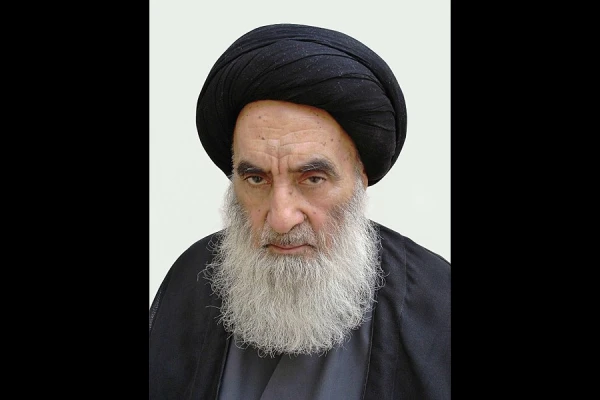
Baghdad, Iraq, Feb 2, 2021 / 03:19 pm (CNA).- During his upcoming trip to Iraq, Pope Francis will meet with the Shia Muslim leader Ali al-Sistani, a man in his 90s who many international analysts consider a decisive player in the region since the end of the Iraq War.
Pope Francis will visit Iraq March 5-8. According to the Holy See Press Office, Pope Francis will visit Baghdad, the site of Ur, Mosul, Bakhdida, and Erbil.
The details of the schedule of Pope Francis’ voyage have not yet been released yet. However, Raphael Cardinal Sako, Chaldean Patriarch of Babylon, revealed some of Pope Francis’ possible activities.
In a Jan. 28 meeting with journalists organized by the French Bishops Conference and the association Oeuvre d’Orient, Cardinal Sako said Pope Francis would have on March 6 a private meeting with Ali al-Sistani.
According to Cardinal Sako, the two leaders will release a joint declaration against “all those who attack life.” Cardinal Sako could not confirm if the two would sign a document on human fraternity, as is the cardinal’s wish.
According to Chaldean sources, Cardinal Sako has been working for two years behind the scenes to see this meeting happen. Right after the Declaration on Human Fraternity, signed by Pope Francis in Abu Dhabi with the Grand Imam of Al-Azhar, a major figure in Sunni Islam, in February 2019, Cardinal Sako said that it would be important that the Pope might make a similar gesture with a Shia leader.
Cardinal Sako deemed that having a declaration for human fraternity signed with a Shia leader would be necessary for Pope Francis to embrace all the Islamic world. And Al-Sistani seems to be the most qualified person.
Ali al-Sistani was born in 1930. Hailing from Iran, he moved to Najaf in the 1950s. In 1993, al-Sistani succeeded Abu al-Qasim al-Khoei in Najaf’s Hawza, the senior Shia clerical leadership.
The Senior Vatican watcher Sandro Magister described al-Sistani in 2007 as “the most authoritative and consistent supporter of a vision of Islamic quietism.”
al-Sistani’s view was in contrast with that of the Iranian ayatollah Khomeini, who lived in Najaf from 1965 to 1978. Khomeini thought that “only a good society can create good believers,” and on this basis, he empowered the Muslim clergy and set the foundation for the theocratic state of Iran.
On the contrary, al-Sistani maintains that “only good citizens can create a good society.” In the last decade, al-Sistani has raised as the most heard and influential voice in Shia Islam and Iraq.
al-Sistani became famous outside of Iraq only after the overturn of the Saddam Hussein regime in 2003. His opinions on the fall of Saddam Hussein and the end of the Baathist regime quickly grabbed international media’s headlines.
In particular al-Sistani sent a message to the Iraqi people, saying that he “wished the Iraqis to overcome this difficult period of their history without being framed in sectarian and ethnic conflicts.”
The 2004 Battle of Najaf pitted US and Iraqi forces against the Mahdi Army, a Shia Islamis militia led by Muqtada al-Sadr. al-Sistani was in London for a medical visit when the battle began, and he promptly returned to Najaf, advocating a truce between the parties.
Between 2006 and 2007, Iraq experienced a wave of sectarian violence that broke with the strike of two military imams’ shrines in Samarra. Even in that extreme situation, al-Sistani showed his moderate side: he asked to abstain from violence and condemn the acts of violence “striking and dividing the country.”
al-Sistani backs the separation between religion and politics, and he supports a civil government based on the people’s will, not a common position among Muslims.
In 2017, Iraqi forces were about to defeat the Islamic State that had invaded the Nineveh Plains three years before. al-Sistani’s intervention was crucial. He called all Iraqi citizens to take arms to defend the country, regardless of their ethnicity or religious beliefs. Thousands of volunteers responded to the call and formed the Popular Mobilization Forces, playing a crucial role in stopping the Islamic State.
That al-Sistani has a different view from the Iranian Shia was evident in 2014, when the Iraqi premier was Nouri al-Maliki, considered a strategic partner to Iran. al-Sistani did not back his confirmation as premier, although he had won the elections. However, al-Sistani’s position did not go unheard: Haider al-Abadi, a moderate Shia, was appointed Prime Minister.
Recently, al-Sistani hit the headlines for another initiative: Ahmed al-Safi, one of his public representatives, asked in his behalf the abolition of pensions and privileges for high ranked officials. The saved resources, he suggested, should be allocated to provide service and alleviate the low-income population’s situation.
The pension for a member of parliament amounts to $6,500 a month, and is for life, which goes along with security, housing, and other privileges.
Iraq’s 2020 was not only characterized by the spread of COVID but also by protests. Thousands of protesters took to the streets to demand for a change in the political-institutional system and the end of rampant corruption.
The protesters sent several appeals to al-Sistani since they believed he was the only one able to understand their requests. And so it was natural to most of the international observers to set the gaze on al-Sistani since they knew that every word of his was going to be listened to.
al-Sistani is also strongly opposed to any kind of external interference on Iraqi issues. After the Iraq War, he weighed in the public debate asking to call for new elections, thus pushing the transition between US Ambassador Lewis Paul Bremer, who had served as Provisional Coalition Administrator of Iraq, and the interim government led by Ayad Allawi.
Despite his advanced age and precarious health conditions, al-Sistani is still considered a stability factor in Iraq.
For local observers, Pope Francis’ meeting with al-Sistani will, in the end, close the circle. First, the Pope backed the re-opening of the dialogue with Al-Azhar. The renewed rapport with Al-Azhar led to Pope Francis’ trip to Egypt in 2017, then to five consecutive meetings between the Pope and the Grand Imam of Al-Azhar, and the Document on Human Fraternity signed by the Pope and the imam in Abu Dhabi on Feb. 4, 2019.
Now, it is time for Pope Francis to extend his arms to Shia Islam, and Cardinal Sako saw in a meeting with al-Sistani an excellent opportunity to do that. The meeting between the Pope and al-Sistani could also tell the Iraqi people that the Pope backs the “quietist” –non-violent, more spiritual- wing of the Muslim world.
All of these issues will be part of the March 6 meeting. It will not be in Najaf, as Cardinal Sako hoped. It will be, anyway, an important meeting.






Leave a Reply