

 By
By Representatives of Christianity and Buddhism, Hinduism, Jainism, and Sikhism met in Rome to promote interreligious dialogue and cooperation across the continent.

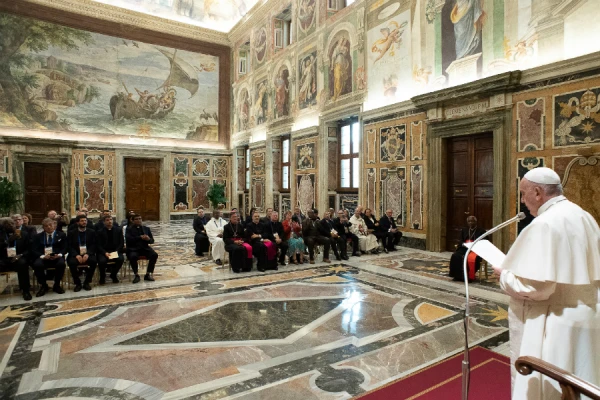
Representatives of Christianity and Dharmic religions present in Europe gathered in Rome this week to reflect on fraternity and promote interreligious dialogue and cooperation across the continent.
The Vatican’s Dicastery for Interreligious Dialogue organized the June 23–24 meeting at the Pontifical University of St. Thomas Aquinas, also known as the Angelicum, under the theme: “Buddhists, Christians, Hindus, Jains and Sikhs in Europe: Building Fraternity through Dialogue and Collaboration.”
According to a June 24 Vatican statement, “some prominent religious leaders, academics, scholars and representatives of Christianity and the Dharmic religions (Buddhism, Hinduism, Jainism, and Sikhism)” took part in the conference.
The meeting, promoted by the dicastery “in continuity with its previous initiatives,” brought together people committed to “strengthening human fraternity through interreligious dialogue and cooperation in Europe.”
The Vatican said the conference was “conducted in a cordial atmosphere and in a spirit of respect and openness” and offered participants “an opportunity for mutual listening, learning and enrichment.”
Participants reflected on the challenges facing contemporary societies and “reaffirmed the importance of dialogue and collaboration as means of fostering understanding, solidarity and hope,” the statement said.
Fraternity should not be a utopia
In his welcoming address, Cardinal George Jacob Koovakad, prefect of the Dicastery for Interreligious Dialogue, lamented that fraternity is often viewed as “a utopian idea,” particularly in a context marked by war and division.
Looking to Europe, he recalled the continent’s “cultural and religious heritage” and its history of diverse groups living together amid migration, globalization, and demographic change.
The cardinal described Europe as a “rich melting pot” of ethnic groups, languages, and religious traditions — a heritage he said should be valued in order to build “an inclusive, cohesive and harmonious society” that respects human dignity and human rights, including the right “to profess and practice one’s own religion.”
In this context, the Vatican statement said participants “acknowledged the foundational role of fraternity for building cohesive and peaceful communities.”
They also stressed that believers, “while serving as credible witnesses of their morals and faith convictions, must never shy away from contributing to the flourishing of fraternity through concrete actions that promote peace, harmony and the wellbeing of all.”
The participants also “highlighted the importance of strengthening mutual respect, cooperation and engagement today, while remaining rooted in their respective religious traditions.”
The meeting reaffirmed a shared commitment “to nurturing a culture of encounter and collaboration for the common good,” according to the Vatican.
Participants also expressed hope that “such collaboration will continue to inspire the wider society and contribute to the building of fraternity and peace.”
This story was first published by ACI Prensa, EWTN News’ Spanish-language sister service. It has been translated and adapted by EWTN News English.
If you value the news and views Catholic World Report provides, please consider donating to support our efforts. Your contribution will help us continue to make CWR available to all readers worldwide for free, without a subscription. Thank you for your generosity!
Click here for more information on donating to CWR. Click here to sign up for our newsletter.

Leave a Reply