

 By
By The vice president told Air Force Academy graduates to “use technology to make you better, but never submit to it.”
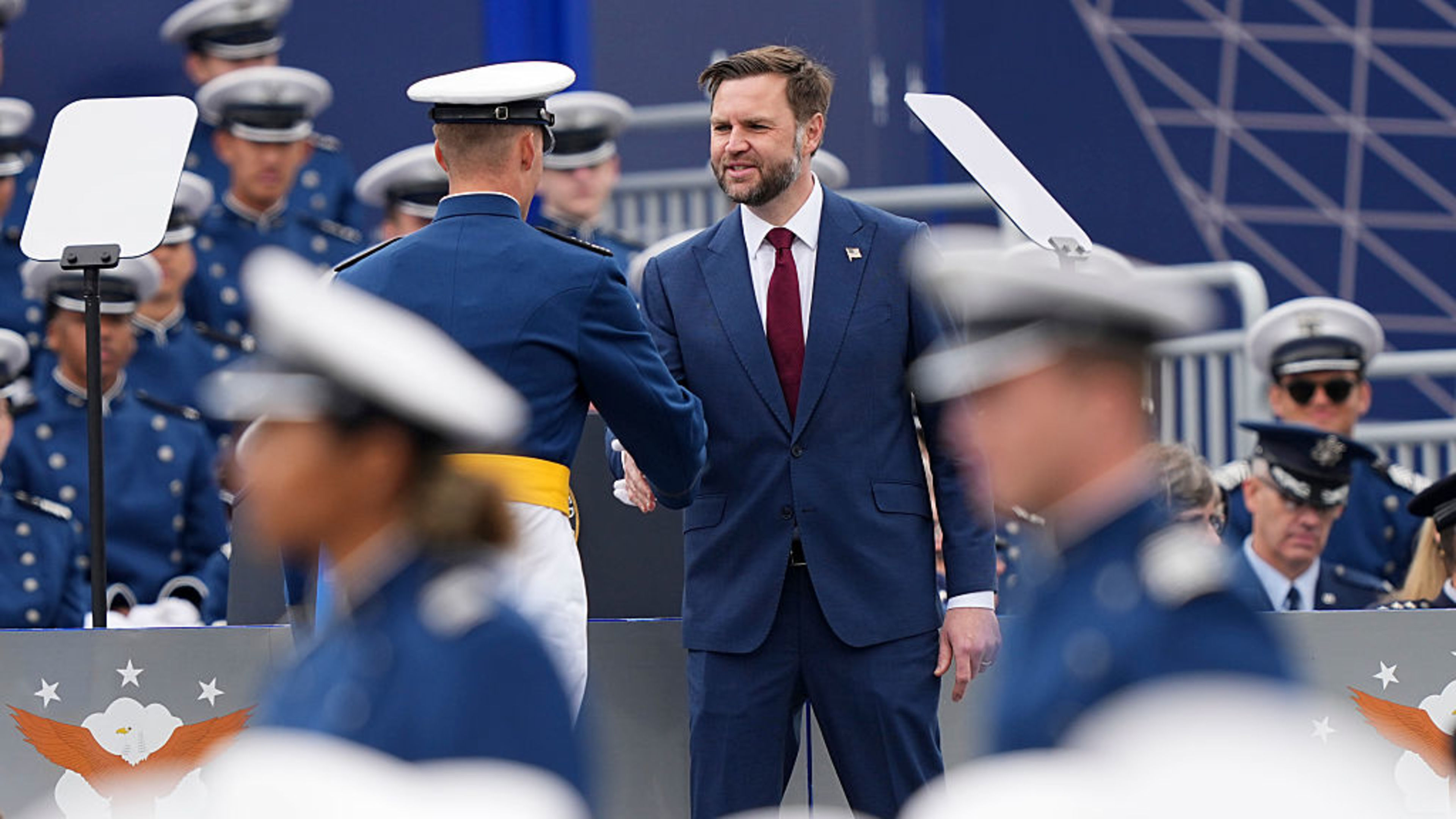
Vice President JD Vance told graduates of the U.S. Air Force Academy on May 28 that regarding modern warfare and artificial intelligence (AI), he agrees with Pope Leo XIV’s recent admonition “not to outsource the most important decisions to digital technology.”
During the commencement address in Colorado Springs, Colorado, Vance told over 900 graduating cadets that “the thing I worry about most with AI is how it will change warfare.”
Vance said that “decisions over life and death must be made by humans and not machines.” He warmed the graduates to fiercely guard their roles “as the decision-makers in warfare” rather than outsource to AI.
“You are the masters of warfare and both your minds but also your hearts are the opposite of artificial,” he said. “Use technology to make you better, but never submit to it.”
Vance echoed Pope Leo’s recently released encyclical Magnifica Humanitas, in which the pope said human beings must not allow AI to make decisions in war because those systems do not “have a moral conscience, since they do not judge good and evil, grasp the ultimate meaning of situations, or bear responsibility for consequences.”
Leo called for a “moral and social discernment that safeguards the primacy of the human person, in order to ensure that it will always be human intelligence, with its conscience and freedom, that guides technical innovations and responsibly determines their use and limits.”
In the encyclical, the pope said that AI’s power “remains entirely tied to data processing. So-called artificial intelligences do not undergo experiences, do not possess a body, do not feel joy or pain, do not mature through relationships and do not know from within what love, work, friendship or responsibility mean.”
A total of 931 graduates received their diplomas during the graduation ceremony and will enter the Air Force or Space Force, where they will serve for a minimum of five years.
Though Vance told the graduates his main worry with AI is how it will affect war, he also acknowledged other concerns, namely “how it will affect the labor market, how it will distribute resources, and how it has fundamentally changed how we interact with one another, our social lives.”
Leo also addressed these concerns in the encyclical, writing that while AI systems “often surpass human intelligence in speed and computational capacity, offering tangible benefits across many fields,” society must not forget “the primacy of human labor over any mindset focused solely on finance or productivity — with the consequent attention to the people and families most susceptible to exploitation.”
AI systems “may imitate language, behavior and analytical skills, or even simulate empathy and understanding,” the pope wrote, “but they do not understand what they produce, for they lack the affective, relational and spiritual perspective through which human beings grow in wisdom.”
Just War theory ‘outdated’
The vice president told the cadets that what “makes Americans unique … is that we wage war justly,” admonishing them they must do the same when they become “the ones who lead on the battlefield.”
Waging just wars “is an incredible burden to put on your shoulders. But it is one that we entrust to you with full confidence,” Vance said. “And if the warfare of the future is to live up to the moral values of our ancestors, decisions over life and death must be made by humans and not machines.”
“Youʼre the ones who ensure that our lethality in war, which is amazing and necessary … also coexists with our heart and with our conscience”, he said.
In his encyclical, however, Leo suggested the Church must update its “just war theory” in light of modern technological and political developments.
“Today, more than ever, without prejudice to the right to self defense in the strictest sense, it is important to reaffirm that the ‘just war’ theory, which has all too often been used to justify any kind of war, is now outdated,” the pope said.
While acknowledging nations’ continued right to legitimate self defense, the pope wrote that resorting to “force, violence and weapons reflects a relational poverty that always has disastrous consequences for civilian populations.”
“Humanity possesses far more effective and capable tools for promoting human life and resolving conflicts, such as dialogue, diplomacy and forgiveness,” he said.
Vance’s address to the Air Force cadets comes after Pope Leo’s recent comments implying the U.S. is not engaged in a just war in Iran, remarks that were followed by a verbal attack from U.S. President Donald Trump.
Vance weighed in on the matter several weeks ago, saying the pope should take more care when he speaks on theological issues such as just war.
“In the same way that it’s important for the vice president of the United States to be careful when I talk about matters of public policy, I think it’s very, very important for the pope to be careful when he talks about matters of theology,” he said.
If you value the news and views Catholic World Report provides, please consider donating to support our efforts. Your contribution will help us continue to make CWR available to all readers worldwide for free, without a subscription. Thank you for your generosity!
Click here for more information on donating to CWR. Click here to sign up for our newsletter.

Leave a Reply