

 By
By In a country where deprivation is the norm, the situation is exacerbated by deteriorating infrastructure and the U.S. fuel embargo. People are hungry and the Church is striving to meet their needs.

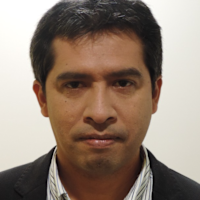
The president of the Cuban Bishops’ Conference, Bishop Marcelo González Amador, said people are coming to parishes in Cuba saying “they’ve gone days without eating.”
In a conversation this week with Aid to the Church in Need/Spain, the 70-year-old prelate expressed his anguish over the crisis afflicting the country, saying that “Cuba is hurting.”
González, the bishop of Santa Clara, recounted that “there are people showing up [at the parishes] saying they’ve gone days without eating and don’t know where to turn. Food can’t be kept fresh due to the lack of electricity, and recently people have been frequently fainting in church because many of them haven’t eaten.”
“Everything is a struggle to survive. The present is precarious; the future, totally uncertain.” It’s “the most difficult and saddest moment in the history of my people that I have ever witnessed,” he said.
Furthermore, the crisis is also impacting the healthcare system, as “in some major hospitals, surgeries are not being performed due to a lack of water” and surgical supplies. “I know of more than one case where someone had to seek out every necessary resource — even suture thread — from family or friends abroad in order to undergo surgery,” he noted.
González also addressed the fear of a possible conflict with the United States. “The fear of war is tremendous; it’s part of the daily concern of many people. People are talking about it all the time, which is very stressful, especially for the children and elderly,” he noted. “On the street, you can hear people saying: ‘We can no longer bear such suffering, and we have nowhere to turn.’”
In conversations, you can sense “sadness, hopelessness, and uncertainty” among the people. “Those who are able to emigrate are doing so. What’s left is an increasingly aging country, just with old people devoid of resources and with meager pensions,” he stated.
González noted that the lack of electricity put an end to overnight Eucharistic adoration and led to an increase in robberies on the streets as well as in homes.
Despite this, he pointed out, the Church strives to “keep the spirit alive, offer hope where there is none, listen, and provide accompaniment.”
Among the faithful, “initiatives are springing up to aid those living in destitution, the poorest and most needy; among these are small soup kitchens and meal delivery services for the physically impaired and the bedridden sick. They’re coming up with food and resources out of nowhere,” he said.
The bishop recounted that at one soup kitchen serving over 300 people, the religious sisters had to improvise by mixing “cans of black and white beans in order to provide more servings. People see that; they see that the Church is sharing, that it gives whatever it has.”
The bishop said this action “is evident proof of what God’s providence and Christian charity are capable of doing.” He said “the day a nun or a priest dies of hunger or for lack of medication is the day no one is left alive, because everyone shares the little they have.”
“It’s truly beautiful that this aid, this charity, is carried out without manipulation by any party, simply thanks to people who wish to help. And you can also see the gratitude of those who receive it,” he remarked.
However, rising prices and fuel shortages have pushed the Church into a “pastoral maintenance mode,” as priests are often unable to celebrate Mass in rural villages and hamlets due to a lack of resources.
“There are places where people are much more isolated and vulnerable. Religious congregations, too, are in a precarious state, and many lack sufficient resources to sustain their presence on the island,” he explained.
“Although many people are leaving the island, the Church remains; the people recognize and appreciate this choice,” González said, asking that Cuba not be forgotten. In addition to prayer, the bishop stated that, while “not everything can be solved, any help counts. The people of Cuba are suffering, and the Church is part of that people.”
Amid this situation, Caritas Cuba continues its work of distributing humanitarian aid sent from the United States to those affected by Hurricane Melissa in October 2025.
This assistance, consisting of food and hygiene supplies, is being distributed in the dioceses of Holguín-Las Tunas, Bayamo-Manzanillo, Santiago de Cuba, and Guantánamo-Baracoa, areas affected by the natural disaster.
This story was first published by ACI Prensa, the Spanish-language sister service of EWTN News. It has been translated and adapted by EWTN News English.
If you value the news and views Catholic World Report provides, please consider donating to support our efforts. Your contribution will help us continue to make CWR available to all readers worldwide for free, without a subscription. Thank you for your generosity!
Click here for more information on donating to CWR. Click here to sign up for our newsletter.

Leave a Reply