

 By
By Founded under Russian imperial rule in 1910, Lithuania’s Ateitis federation has survived occupations and secularization to become a rare model of sustained Catholic youth engagement in Europe.

VILNIUS, Lithuania — As Catholic youth movements across Europe continue to shrink or retreat from public engagement, Lithuania’s Ateitis Federation stands out as a rare exception: an intergenerational Catholic movement that still forms leaders, sustains disciplined membership, and translates faith into civic presence.
Once a lay Catholic resistance movement behind the Iron Curtain, Ateitis at its 115th anniversary offers a rare case study of Catholic youth translating faith into sustained public influence in post-Soviet Europe.
From a student journal to a national movement
Ateitis began as a student magazine, circulated discreetly among Lithuanian university students during the final years of the Russian Empire. Its founders were young Catholics who recognized the increasingly secularized educational and civic model imposed by imperial authorities and refused to accept it as inevitable.
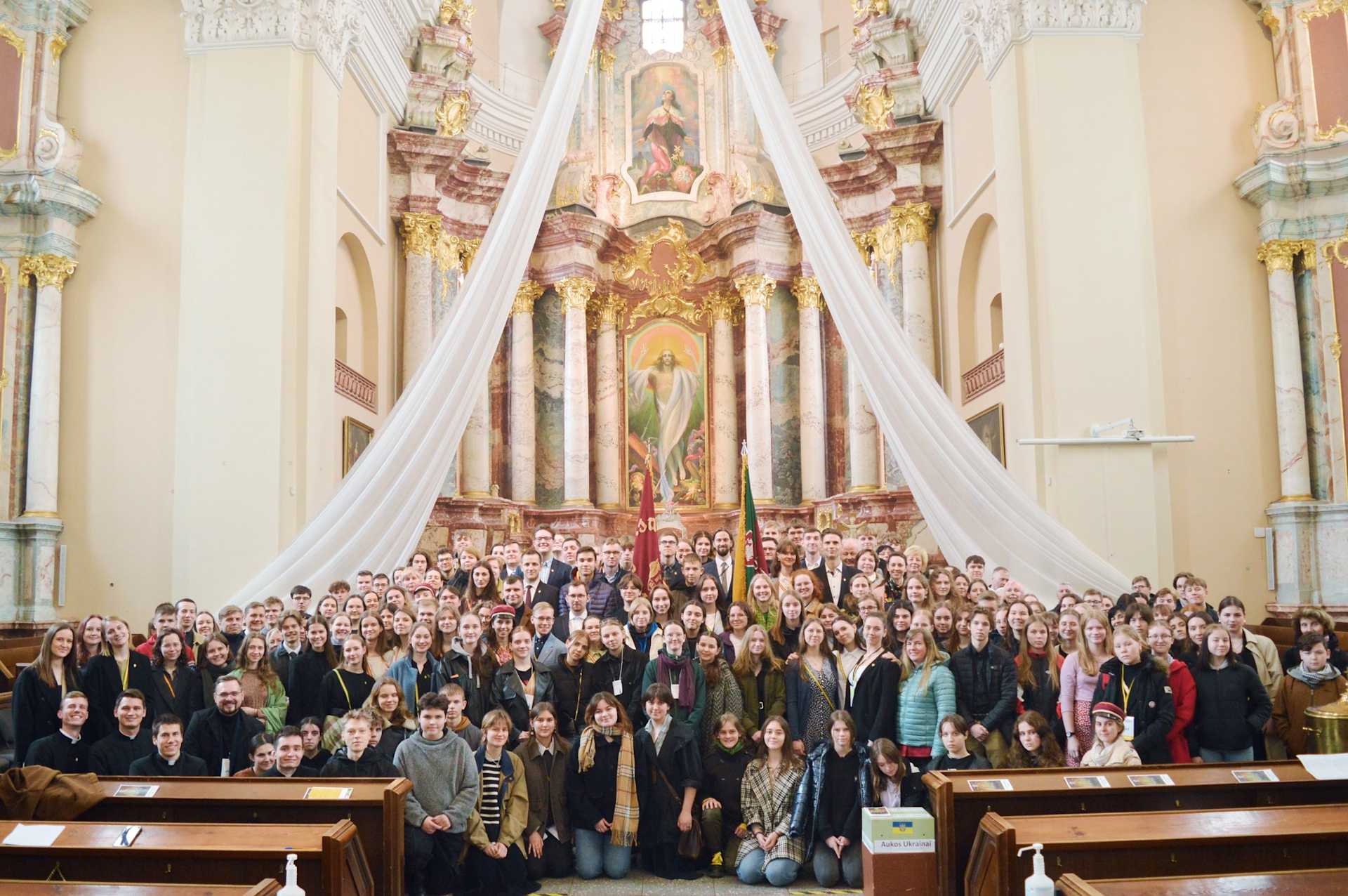
Eventually the name of the publication became the name of a broader Catholic youth federation, one that wove together faith, intellectual formation, and national renewal. Its essence was summed up in the words that became its motto: “Visa atnaujinti Kristuje” — “To renew all things in Christ.”
That phrase echoes the mission of St. Pius X, whose 1903 encyclical E Supremi Apostolatus called for a moral and religious renewal of society in Christ. Ateitis became one of the early movements in the region to adopt that vision explicitly, aligning itself with the wider tradition of Catholic Action.
Principles that endure
In 2020, Archbishop Gintaras Grušas of Vilnius, himself the spiritual leader of the Ateitis Federation, reflected publicly on how the movement’s five principles function as a direct response to modern ideological pressures: Catholicism as an answer to relativism, nationality as a safeguard against rootless globalism, family as a response to radical individualism, intellectual excellence against cultural mediocrity, and public engagement as a defense against efforts to exclude faith from the public square.
That emphasis on coherent formation helps explain why Ateitis has remained unusually active at a time when many Catholic initiatives struggle to maintain continuity.
A demanding membership
In an era when many young people hesitate to commit to anything long-term, the federation continues to ask for more than occasional participation.
“If you want to become a full member, you are asked to take an oath in front of the entire organization,” Ignas Kriaučiūnas, the general secretary of Ateitis, told EWTN News.

Kriaučiūnas acknowledged that the meaning of this oath has been interpreted in different ways over time, “ranging from an almost monastic vow to a symbolic declaration,” but insisted that it remains “a powerful foundation of our organizational unity,” clearly distinguishing a committed member from someone who simply appreciates the movement.
Those who want to take the oath must also complete age-appropriate tasks and commitments intended to demonstrate that they are already living the federation’s principles.
Continuity of traditions
Like many youth movements, Ateitis has retreats and major gatherings. But Kriaučiūnas believes the federation’s durability depends on something less dramatic than events: a consistent structure of local life.
“Yes, events are fun,” he said, “but success is determined by quiet, steady work.”
Ateitis organizes school-aged members into basic units and groups, while students form clubs and even student corporations. The key, he explained, is having “a constant form of activity” — a regular format that gathers people “at least once a month” — which creates both retention and generational continuity.
That continuity of formation naturally strengthens one of the hardest things for Catholic initiatives to maintain: meaningful, active partnership between members present now and those who came before.
Young members bring energy and enthusiasm. Alumni, in turn, provide resources and support, not merely as donors, but as participants who find renewed meaning through the movement’s ongoing life. “There you have it,” Kriaučiūnas said, “the recipe for successful intergenerational cooperation.”
‘To renew all things in Christ’ — not only in church settings
Ateitis is often described as possessing a strong intellectual tradition, and for some, that reputation can sound intimidating. But Kriaučiūnas insisted that serious reflection on faith should not feel like a separate, rarefied activity — it must be integrated into everyday life.

“Our motto is: ‘Renew everything in Christ,’” he said. And he stressed that the word “everything” is meant literally: “Not just university or school, but also your home or the gym.”
That approach, he explained, shapes a movement in which members from different professions and interests can actually meet, rather than remaining siloed by age or vocation. It also forms Catholics who do not “leave their faith in the churchyard but carry it out into the whole world.”
The result, he suggested, is a natural apostolate: meeting people in ordinary spaces — at universities, workplaces, and sports settings — all while showing that Catholic faith is not a limitation on life but an impetus toward growth.
“We are Catholics, and that does not prevent us from living,” he said. “On the contrary, it is precisely the impulse of faith that drives us to study, play sports, and live with joy.”
A warning for the future
Asked what Catholic leaders across Europe might learn from Ateitis’ 115-year history, Kriaučiūnas hesitated to present the movement as a model of superiority. But he did offer one clear caution: Catholic organizations must resist drifting into structures that dilute their Church identity.
He pointed to the temptation to transform Catholic movements into modern NGOs (nongovernmental organizations) “financed by large donors,” a shift that can subtly reorder loyalties and priorities.
Ateitis, he said, has managed to avoid becoming dependent on state or international institutions that can pressure movements to “put our loyalty to the Church on the back burner.”
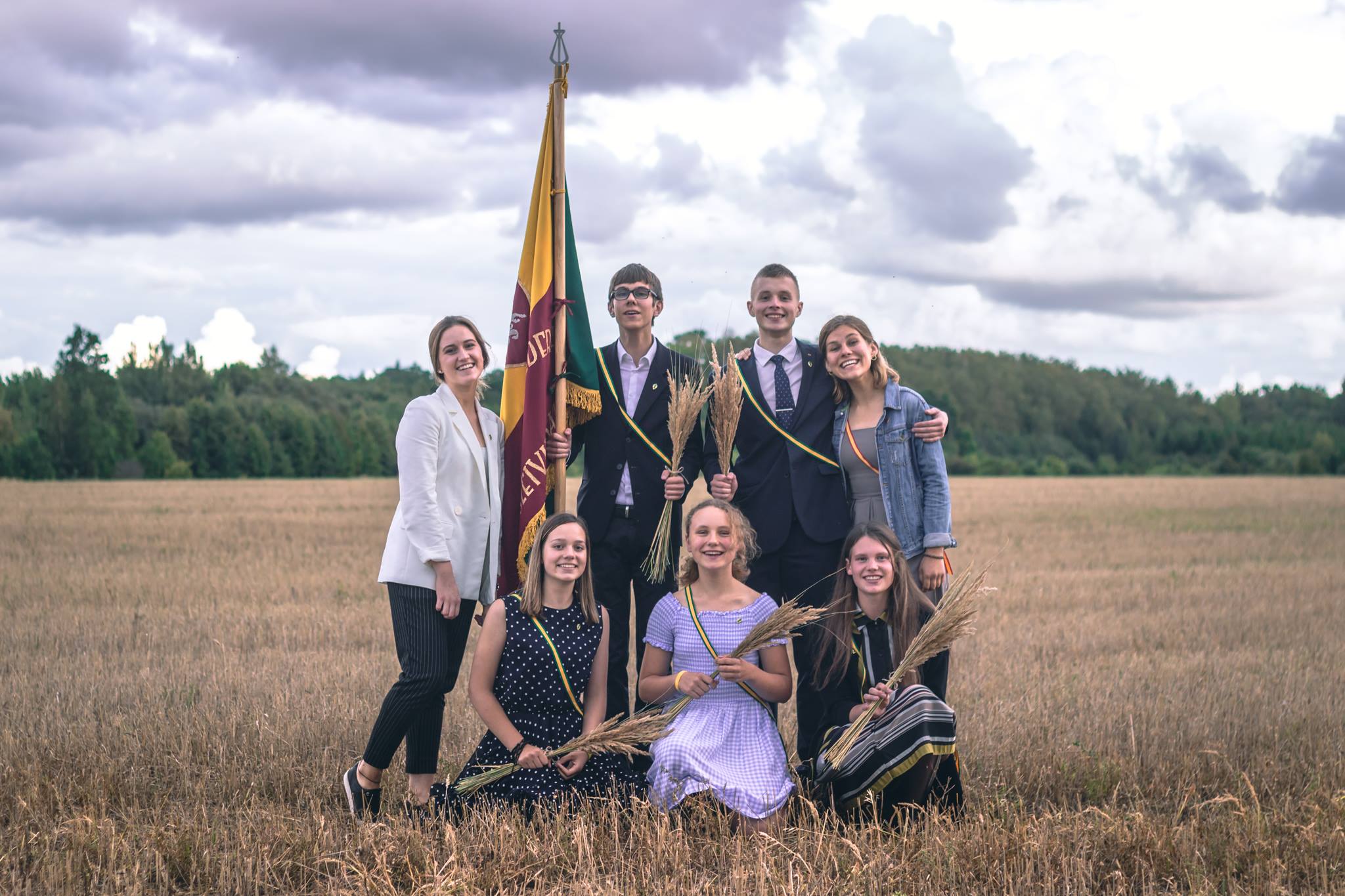
Yet he also admitted that the movement has faced its own dangers, including the risk of confusing preservation with renewal. Referencing a warning often attributed to Pope Benedict XVI that “the Church, married to her own age, becomes a widow,” Kriaučiūnas said there were times Ateitis forgot to repeatedly ask what it means to renew the world in Christ.
“As we sometimes joke,” he said, “we did not renew everything, but preserved everything in Christ.”
Looking forward, he expressed confidence in a younger generation of leaders who are not burdened by institutional memory but attentive to the concerns of today. Each era must choose fidelity anew, he said, echoing Benedict’s insistence that “each generation must choose its ideals anew.”
“It is not enough to have renewed everything in Christ 115 years ago,” Kriaučiūnas added. “We must do so again now.”
If you value the news and views Catholic World Report provides, please consider donating to support our efforts. Your contribution will help us continue to make CWR available to all readers worldwide for free, without a subscription. Thank you for your generosity!
Click here for more information on donating to CWR. Click here to sign up for our newsletter.

Leave a Reply