


ACI MENA, Dec 1, 2025 / 15:21 pm
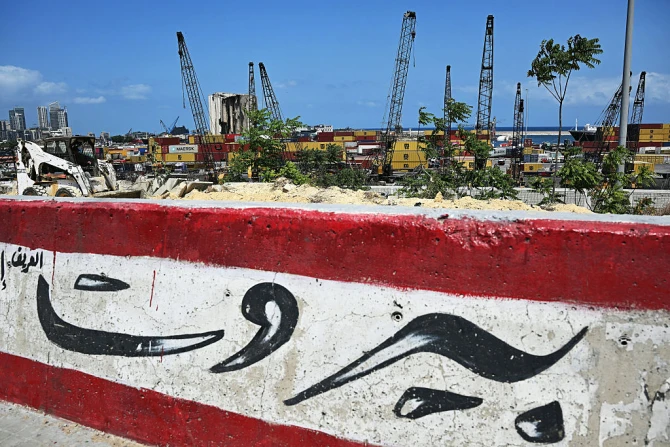
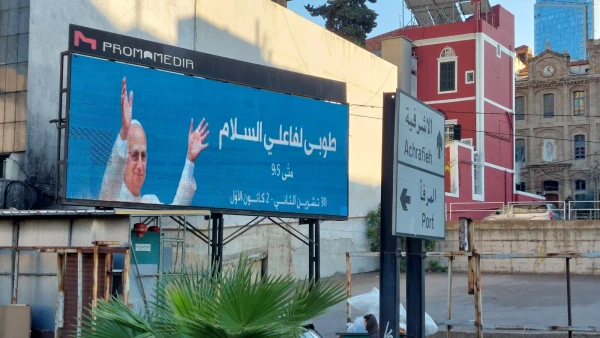
As part of his visit to Lebanon, Pope Leo XIV will pray at the site of the Aug. 4, 2020, Beirut port explosion — the largest nonnuclear blast in modern history. For William Noun, the brother of a victim, this initiative is crucial and a continuation of what Pope Francis began.
The explosion left more than 200 dead and 6,000 injured — 800 hospitalized in regular wards, 130 in intensive care. It particularly devastated East Beirut’s predominantly Christian neighborhoods. The scale of devastation surpassed anything Lebanon had experienced in decades: bloodied streets, collapsed buildings, and entire districts destroyed. The word most used by witnesses to describe the situation was “apocalyptic.”
Vatican solidarity
The destruction was not limited to lives, infrastructure, and finances. It also crushed the morale of an already-exhausted population as they watched their capital collapse in front of their eyes. Yet the tragedy drew significant international solidarity, including strong support from the Vatican.
Immediately after the explosion, Pope Francis sent a donation of 250,000 euros ($295,488) to the Church in Lebanon to support emergency relief and recovery efforts.
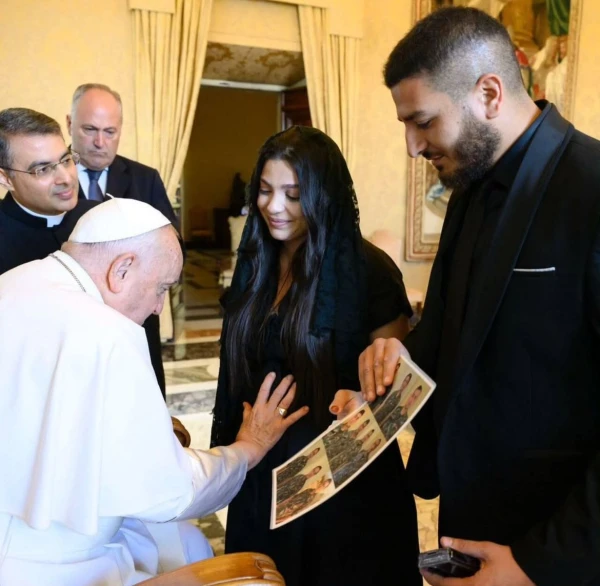
His support continued in the years that followed. In the summer of 2024, Francis met at the Vatican with relatives of the Beirut port victims. Noun, who lost his brother Joe in the blast, was among those present.
In an interview with ACI MENA, CNA’s Arabic-language news partner, Noun underscored the profound significance of his visit to the Vatican, both personally and in the pursuit of justice.
He traveled to Rome with his wife, Maria, who, like him, lost a sibling in the explosion. Bound by grief, they eventually chose life. Three years after the blast, they married, and when they met Pope Francis, Maria was pregnant.
For Noun, the encounter with Francis was unforgettable. He recalled how attentively the pope listened, how genuinely he wanted to understand the victims not as statistics but as lives abruptly torn apart. Noun showed him photographs of his brother Joe, who led a Catholic youth movement in their hometown; Francis lingered over the images and asked to know more about Joe.
Until that moment, public discourse on the explosion had focused almost entirely on numbers, not on the lives behind them. But Francis, consistent with his pastoral approach, made a point of focusing on the human dimension.
The visit also carried weight on the justice front. Noun and other families met with Vatican Secretary of State Cardinal Pietro Parolin to discuss the investigation, the political obstruction, and the urgent need for international support.
For Noun, the meeting had a tangible impact, but momentum later faded. With Pope Leo’s trip to Beirut, he now sees a rare opportunity to revive the struggle for truth and accountability that has been repeatedly silenced.
A nation without justice
Lebanese authorities have yet to deliver justice for the victims of the Beirut port explosion more than five years after the blast devastated the capital. For Noun, justice is nonnegotiable.
“Justice is a right; whether it comes early or late, it is still a right,” he said. “No one can accept losing it, especially after an explosion of this magnitude.”
When asked what stands in the way of the truth, Noun pointed first to political interference and pressure on the investigation. That, he argued, is why support from the Vatican matters. “The pressure coming from the pope’s office can break through the political pressure blocking the case.”
The second major obstacle, he said, is the absence of genuine international will. Countries that call themselves “friends of Lebanon,” he argued, have refrained from offering real help. “If there had been sincere political will, the truth would have appeared within the first two or three months.”
The blast shook the world and sparked global outrage, yet meaningful international assistance to the investigation never materialized. There were statements of solidarity but, he noted, “no one provided anything that actually helped move the investigation forward.”
The unanswered question
The blast was triggered by 2,750 tons of ammonium nitrate stored improperly in a warehouse at the port, material that had been sitting there for years despite repeated warnings from officials. Behind the shipment lies a complex network of businessmen, intermediaries, and companies spread across nearly 10 countries with alleged links to networks close to the Bashar al-Assad regime.
Yet what happened specifically that Aug. 4 remains unresolved. No conclusive evidence has clarified the cause of the fire that ignited the explosives. Was it an accident, an attack, or sabotage? Five years later, the central question remains unanswered.
A significant number of Lebanese continue to believe that the explosion bore the fingerprints of Israel. In his conversation with ACI MENA, Noun noted that Hezbollah moved quickly in the opposite direction.
“From the beginning, accusations were circulating,” he said. “But Hezbollah was the first to absolve Israel completely; they said it was an electrical short circuit or welding sparks.”
He recalled the speech delivered on Aug. 8 by the secretary-general Hassan Nasrallah, just four days after the blast, which stunned many Lebanese because Hezbollah typically blames Israel for everything. That time, however, they dismissed the possibility outright.
From that moment on, Noun argued, the party worked aggressively to obstruct the investigation, putting pressure on the families of the victims, the presiding judge, and judicial authorities. The campaign included public and legal attacks against Judge Tarek Bitar, political paralysis that froze the government for six months, and repeated withdrawals of Hezbollah-aligned ministers from Cabinet sessions.
“It would take hours to detail everything they did publicly,” Noun said. “And even more happened behind closed doors, with security and political figures.”
The goal, he believes, was to ensure that the investigation itself never reaches a conclusion. “The strategy is not just to remove a judge,” he said. “The strategy is to destroy the investigation. They refuse any investigation and want to declare it an ‘accident’ and close the case.”
“I’m not the only one pointing fingers at Hezbollah; three-quarters of the country does,” he added.
Noun is now one of the central figures representing the families of the Beirut blast victims and leading the fight against impunity. His battle has been far from easy. He has been the target of smear campaigns — particularly from Hezbollah supporters — and he was arrested in 2023 following comments he made on television about the stalled investigation. In 2025, he and Peter Bou Saab, also the brother of a victim, reported being assaulted by armed men shortly after a rally held by the families of the victims.
Despite the pressure, Noun is not willing to back down. His goal remains unchanged: justice.
More than a symbolic visit
Noun believes that Pope Leo’s presence in Beirut carries weight far beyond symbolism. The Vatican, he noted, holds not only a spiritual authority but also a social and, at times, political influence. It has closely followed the port blast investigation since 2020 and is fully informed about its developments. For him, this visit represents a continuation of what Pope Francis began; a sustained moral pressure that keeps the pursuit of justice alive.
He said families do not yet know whether Pope Leo will deliver a speech at the port site, and for now they have been asked simply to attend and follow the instructions of the Vatican’s organizing team, since the gathering is primarily meant to be a moment of prayer. But if the pope does speak, Noun said he hopes to hear a clear message affirming support for justice and renewed international pressure.
“The pope understands exactly where he will be standing and what it means for the families to be beside him,” Noun emphasized. The Vatican’s voice, he believes, matters: The pope is close to global decision-makers, and his position gives him unique leverage.
“There is a major role he can play, not only through prayer and faith but also by influencing action,” he said.
Father Dany Dergham, a Maronite priest who leads the “Church Talks Politics’’ platform, has a more concrete request for Pope Leo. In a post on X, he addressed the pope directly, writing: “Your Holiness, if you wish to bring us a gift on the occasion of your visit, the most precious and sacred to us would be the satellite images of the Beirut port crime, which can be requested from the concerned countries through Vatican diplomacy, so that we may know who killed our families and our children, destroyed our homes, blew up our churches and institutions, and shattered our dreams.”
Beyond the blast
Noun’s hopes for the papal visit extend far beyond the explosion, although it remains at the heart of his struggle. What he wishes Pope Leo, the Vatican, and the international community to recognize is the critical importance of safeguarding the Christian presence in Lebanon.
Lebanon, he stressed, remains the only country in the region where Christians enjoy this degree of freedom. But that reality, he warned, is under threat. He believes the Church must take a more active role in helping young Christians remain in the country rather than emigrating. While acknowledging the important work the Church already does, he argued that much more is needed, from early childhood education and schools to universities, housing initiatives, and long-term support systems that allow families to build a future in Lebanon.
Noun also pointed to growing tensions between Hezbollah and the Christian community. According to him, the pope’s visit is already being framed by Hezbollah supporters in sectarian terms, questioning the state’s preparations and national attention surrounding it.
Speaking about the broader political context, he expressed deep concern over what he described as Hezbollah’s separation from the national interest. “Every time something national brings people together, they choose to break away from the national consensus and go in a different direction. They believe everything is done against the party’s interests,” he said.
Noun argued that the party and its community must recognize that “they are not the decision-makers, not the ones who run the country, and their militant logic cannot govern Lebanon.” He stressed that Lebanon’s Christian community cannot survive without a functioning state: “It is the state that protects everyone, not weapons and militias.”
According to Noun, most Christians today are far removed from Hezbollah’s environment and mentality, and while a few attempt to present an illusion of harmony, “when you look at any village where Hezbollah supporters coexist with Christians, you see the tensions very clearly.” He said that what the party portrays publicly is very different from the reality on the ground.
Noun also said it is against this backdrop that Pope Leo’s stop at the port carries real weight. His visit to the port will not rewrite the past, and it may not be enough to break the system that has blocked the truth, but standing on that ground forces the world to look again at a case many hoped would fade. And for the families of the victims, that visibility is itself a form of resistance, a refusal to let powerful people close the file.
If you value the news and views Catholic World Report provides, please consider donating to support our efforts. Your contribution will help us continue to make CWR available to all readers worldwide for free, without a subscription. Thank you for your generosity!
Click here for more information on donating to CWR. Click here to sign up for our newsletter.
Leave a Reply