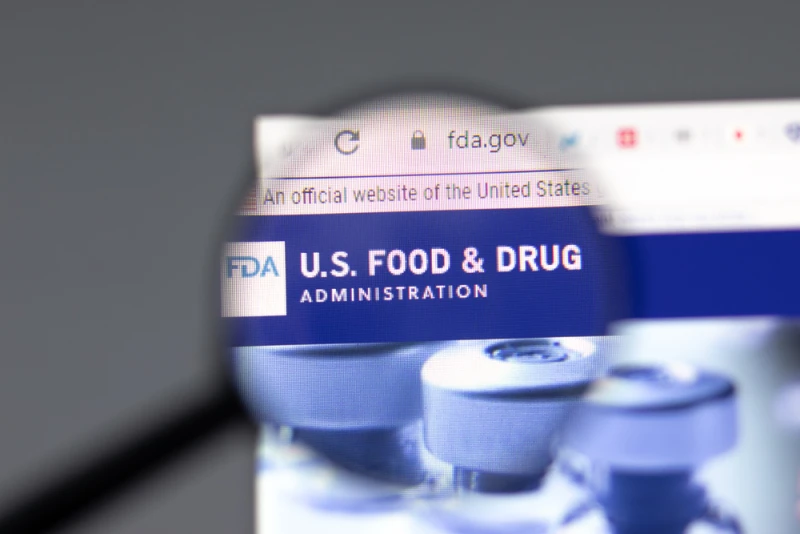
The FDA approved a new abortion pill this week made by a company seeking to “normalize abortion.” / Credit: Postmodern Studio/Shutterstock
CNA Staff, Oct 2, 2025 / 16:13 pm (CNA).
The U.S. Food and Drug Administration (FDA) this week approved a new abortion pill made by a company that explicitly says it seeks to “normalize” abortion.
A Sept. 30 letter obtained from the office of Sen. Josh Hawley, R-Missouri, said the FDA approved the abbreviated new drug application for “mifepristone tablets” from Evita Solutions, a Virginia-based pharmaceutical company.
The FDA said in the letter that it had “concluded that adequate information has been presented to demonstrate that the drug meets the requirements for approval” under the Federal Food, Drug, and Cosmetic Act.
On its website as of Oct. 2, Evita Solutions was advertising a “new generic mifepristone product” coming to the U.S. Mifepristone constitutes one of the major components of abortion pill prescriptions.
The company says it “assist[s] the medical community in recognizing the utility and freedom that medical abortion provides patients.”
“[W]e seek to normalize abortion care, and we commit to making care accessible to all,” it says.
Evita Solutions did not immediately respond to a request for comment on Oct. 2. The drug’s approval, meanwhile, was met with criticism and pushback from pro-life advocates.
In an X post, Hawley called the approval “shocking.”
He wrote that the approval came “when the evidence shows chemical abortion drugs are dangerous and even deadly for the mother. And of course 100% lethal to the child.”
Marjorie Dannenfelser, the president of Susan B. Anthony Pro-Life America, said in a media statement that the “reckless” approval by the FDA was “unconscionable.”
“These dangerous drugs take the lives of unborn children, place women and underage girls at serious risk, empower abusers, and trample the pro-life laws enacted by states across the nation,” she said.
Kristan Hawkins, the president of Students for Life of America, said in a statement that the Trump administration’s approval of the drug “represents a true failure.”
“More babies will die; more women will be harmed; and more Americans [will be] exposed to abortion water pollution as a direct result of this unfathomable decision,” she said. “This is a stain on the Trump presidency and another sign that the deep state at the FDA must go.”
If you value the news and views Catholic World Report provides, please consider donating to support our efforts. Your contribution will help us continue to make CWR available to all readers worldwide for free, without a subscription. Thank you for your generosity!
Click here for more information on donating to CWR. Click here to sign up for our newsletter.
Peter Kilpatrick, the new president of The Catholic University of America, addresses students, staff, and faculty at the Mass of the Holy Spirit on Sept. 1, 2022, at the Basilica of the National Shrine of the Immaculate Conception in Washington,… […]
Washington, D.C. Newsroom, Jan 17, 2024 / 15:00 pm (CNA).
The celebration of Mass at a southern California parish was interrupted by an armed police pursuit of a suspected gunman on Tuesday morning. The incident occurre… […]
Lia Garcia, director of Hispanic Ministry at the Archdiocese of Baltimore, speaks at a panel discussion exploring the impact of U.S. Latinos on the 2024 election hosted by Georgetown University’s Initiative on Catholic Social Thought and Public Life on Monday, Oct. 7, 2024. / Credit: Georgetown University/Art Pittman
Washington, D.C. Newsroom, Oct 10, 2024 / 06:00 am (CNA).
As a record number of Hispanic Americans will be eligible to vote this November, many are asking what impact Latinos — and Latino Catholics in particular — will have on the 2024 election.
Though acknowledging the great diversity in culture and thought among American Hispanic communities, the panelists posited that the overarching values of family, faith, and care for the poor will factor largely into Latinos’ decisions at the ballot box this November.
“We are big on family, family values … We want to be welcoming and be very attentive to the needs of others,” said Lia Garcia, one of the panelists and the director of Hispanic ministry at the Archdiocese of Baltimore.
“We throw big parties, we eat a lot of food,” she added, laughing. “Everybody is invited to our gatherings, so our faith teaches us that we are built to be in communion in relationship with God and in relationship with one another.”
Hispanics don’t fit into a box
Speaking with CNA after the panel, Garcia said that in her work with Hispanic Catholics, she has heard “a lot of anxiety about what is going to happen” and “about who is going to win” the presidency.
She said that many Hispanic voters “feel pinned” between conflicting priorities held by Trump and Harris.
“They feel that they have to choose between the issue of abortion and defending immigrants,” she said. “Latino Catholics are very much for life. You can see that in our big families. But they also have a concern about the immigration issues. Even if immigration doesn’t directly affect them because now they’re documented, but they know someone, they know a family member, they know a colleague … it’s really scary to people how Latinos are portrayed to the rest of the world as criminals.”
A member of the audience asks a question during a panel discussion exploring the impact of U.S. Latinos on the 2024 election hosted by Georgetown University’s Initiative on Catholic Social Thought and Public Life on Monday, Oct. 7, 2024. Credit: Georgetown University/Art Pittman
Hispanic voters have historically favored Democrats in national and local elections. The panelists noted, however, that Republicans have been faring better with Latinos in recent elections and polls, giving credence to predictions that the Hispanic vote is no longer a monolith.
Recent polling on Hispanics backs up this theory. Newsweek reported this week that while Democratic presidential candidate Kamala Harris is still leading among Hispanics by a wide margin, 56% to 38%, her lead has shrunk from the 59% Joe Biden held in 2020 and even further from the 66% held by Hillary Clinton in 2016.
Instead of loyalty to a party, panelists said Hispanics appear motivated mostly by their family values and concern for the poor and downtrodden.
Father Agustino Torres, a priest with the New York-based Franciscan Friars of the Renewal, said that in his ministry to young Latinos he has witnessed that Hispanic youth “have this fire” for caring for the downtrodden, especially for poor migrants.
“Sometimes we’re American Catholics rather than Catholic Americans. We allow our politics to inform our faith rather than our faith informing our politics,” Torres said. “But this is the reality: I’m responsible for you and you’re responsible for me. If I see someone falling down on the sidewalk, like, I am obligated because of my baptism, and this is a good thing … This is the Gospel.”
Father Agustino Torres, a priest and member of the Franciscan Friars of the Renewal, pointed out that
“sometimes we’re American Catholics rather than Catholic Americans. We allow our politics to inform our faith rather than our faith informing our politics.” Credit: Peter Pinedo/CNA
“When we teach this, they are just like, ‘yes,’ and it unites their worlds, family, faith, outreach,” he said.
To be clear, like most Americans, U.S. Hispanics are most concerned with the economy. EWTN published a poll of U.S. Catholics in September that found that most of the country’s Hispanic Catholics — 56.8% — said the economy (including jobs, inflation, and interest rates) is the most important issue deciding their vote this election cycle.
The next-highest priorities were border security/immigration at 10.5%, abortion at 9.7%, health care at 5.3%, and climate change at 5%.
Yet, according to panelist Santiago Ramos, a Catholic philosopher at the Aspen Institute, even when it comes to their approach to economic issues, Hispanics do not easily fit into the political right or left.
Ramos said Hispanics challenge the “nationalist, right-wing” as well as progressivist categorizations.
“There is a community aspect to our existence, family-oriented, dare I call it socially conservative aspect to our existence that doesn’t always mesh with mainstream liberal institutions,” he explained. “So, there are all sorts of ways that we pop up in American politics and force people to see things they don’t want to see.”
Among new voters, Hispanics loom large
Aleja Hertzler-McCain, a reporter on Latino faith and American Catholicism for Religion News Service, pointed out that half of the new voters who have become eligible to vote since 2020 are Hispanic.
According to the Pew Research Center, there will be 36.2 million eligible Hispanic voters this year, up almost 4 million from 2020. While noting that U.S. Hispanics historically have low voter turnout, Hertzler said the sheer volume of new Hispanic voters could have a “big impact” on the election.
Whatever the outcome of the election, Garcia said she is “really excited” to see the Hispanic community have its voice heard in the democratic process.
“I can’t wait to see that. I’m really excited about the election for that particular reason,” she said.
“The beauty of our culture,” Garcia went on, “is we can draw from our own experiences growing up with big families, big celebrations, and also with our faith that draws us to relationship with one another. And I think that is where we can sense how [concern for] the common good is not only something that comes from God but comes from our culture as well.”






Leave a Reply