



CNA Staff, Jul 30, 2025 / 16:39 pm (CNA).
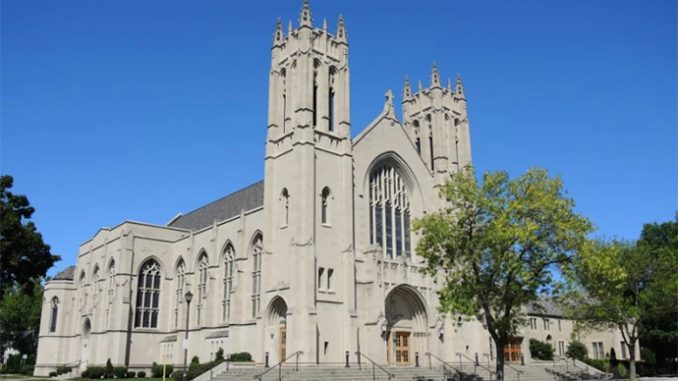
Hundreds of clergy abuse victims agreed to a massive settlement from the Diocese of Rochester, New York, this week, bringing the diocese’s years-long bankruptcy proceedings closer to an end.
Documents obtained by CNA show a near-unanimous vote in favor of accepting the diocese’s proposed $246 million settlement plan, with just a handful of “abstain” votes and none voting against it.
The payment comes after years of wrangling in U.S. bankruptcy court as the diocese, the survivors, and diocesan insurance providers worked to come to a settlement amount on which all of them could agree.
In 2022 the diocese said it would pay $55 million into a settlement fund, with Bishop Salvatore Matano noting that “additional recoveries” could come from diocesan insurers.
Earlier this month Continental Insurance Co. agreed to pay $120 million into the settlement fund, bringing the total contributions from the diocese, its parishes, and insurers up to the $246 million figure.
U.S. Bankruptcy Judge Paul Warren said in court this week that he intended to approve the agreement in September.
In a statement on Wednesday, the diocese said it was “hopeful that the bankruptcy plan will be approved … and help to ease the hurt and suffering of the survivors, who have endured this painful process for six years.” The diocese first filed for bankruptcy in 2019.
“We pray that they will know the peace of Jesus and their faith, so scarred by those who so betrayed their trust, will be restored in Our Lord who is our ultimate hope,” the statement said.
The settlement, once it has been approved, will be among the larger payouts of any U.S. diocese for an abuse or bankruptcy proceeding.
The Diocese of Rockville Centre, New York, holds the record for the largest diocesan payout in the U.S. so far after it agreed last year to a $323 million settlement.
The U.S. record for any diocese or archdiocese, meanwhile, was set by the Archdiocese of Los Angeles, also last year, when it agreed to an $880 million payout.
In some cases parishioners have legally challenged the terms of diocesan bankruptcy settlements. Catholics in the Diocese of Buffalo, New York, earlier this month convinced the state Supreme Court to issue a temporary halt on settlement payments the diocese is requiring of parishes. The Vatican is currently considering a dispute over parish mergers there.
Dioceses and archdioceses pay for settlements from a variety of sources, including parish contributions, insurance payouts, and the sale of diocesan property.
If you value the news and views Catholic World Report provides, please consider donating to support our efforts. Your contribution will help us continue to make CWR available to all readers worldwide for free, without a subscription. Thank you for your generosity!
Click here for more information on donating to CWR. Click here to sign up for our newsletter.


$246,000,000 in one diocese alone — all because some bishops “didn’t want to create a scandal.” They succeeded admirably. Do they wonder why many think twice before placing further trust in them?
And the abuse of the laity by the clergy goes on. It’s just that not all abuse is sexual. Let’s remember one oft-stated truth – all abuse is abuse of power. The abuse of power is happening most recently in the Archdiocese of Detroit. Pope Leo is watching that abuse happen and does nothing.
On the matter of financial payments to laypersons who have been abused by clergy, the abuse is compounded. How? Because the money paid out to victims comes directly and indirectly (insurance) FROM THE LAITY. Remember, the clergy produce no revenue of their own. What money the Church has that goes towards penalties assessed for clerical abuse COMES FROM THE LAITY. The laity are paying for their own remuneration.
“AND THEY WERE LIKE SHEEP WITHOUT A SHEPHERD.”
We are told that insurance will cover the bulk of these settlements. Unfortunately, this is often not true, because the Diocese acted in bad faith in dealing with abusers. Often, the abuse was covered up and abusers were protected. This gives the insurance companies an out on paying for settlements. And of course, the parishes get “assessed” some sort of “fee” to pay for the settlements.
$246 million is a lot of money. That money could have been used for Catholic Education, help for the poor,etc. What are we supposed to think? We, the laity, have no voice in this. We are expected to just “pay, pray and obey.” Many of us are disgusted and will no longer obey.
I hope our dioceses have learned the lesson that these types of allegations need to be immediately turned over to law enforcement to investigate.
A criminal conviction of a sexual predator doesn’t completely shield a diocese from further civil law suits but I think it would go a long way to show they are serious about the issue.
We read: “$246 million is a lot of money.”
Yes, but it’s still less than one-third as much as the federal government has been paying EACH YEAR to Planned Parenthood ($800 million). And now we hear the head of PP complaining that unless the Fed continues to abuse the tax-paying public, this is a violation of PP’s Constitutional right to assembly.
The pain of the abused speaks to a profound theological crisis. The monetary settlements, while a form of earthly justice, are ultimately an inadequate response to the spiritual harm inflicted. The abuse by a priest, a man ordained to represent Christ to the faithful, is not merely a personal transgression; it is a desecration of the sacred office and a wound upon the Body of Christ itself. The very foundation of the priestly vocation is to stand in persona Christi capitis, acting in the person of Christ the head. When this sacred trust is betrayed, the resulting agony is not only psychological but also deeply theological, shaking the very faith of the victim.
A genuine repentance points to a crucial aspect of Christian ethics. True repentance, as the Church Fathers have taught, requires metanoia—a fundamental change of heart and mind that leads to a turning away from sin. It is a process that must be followed by a forsaking of the sinful action itself and the establishment of safeguards to prevent its recurrence. The question of whether the Church has truly embraced this metanoia in its response to clerical sexual abuse is a matter of both internal integrity and external witness. The Church is called to be a sign of holiness to the world. When its actions, or lack thereof, appear to tolerate such deviance, it not only fails to live up to this calling but also undermines its credibility and its mission to evangelize. The integrity of the Church’s witness depends on its unwavering commitment to justice and the absolute intolerance of abuse.
The reading of St. Peter Damian’s “Book if Gomorrah” (A.D. 1051) should be required every one thousand years, whether it’s needed or not. Maybe we can look forward to metanoia millennial celebration in 2051 after all the abusers and implicated bishops have died off.
Another disgraceful diocesan bankruptcy settlement. All because men leading a gay lifestyle were admitted to seminaries and later ordained to the priesthood. Sometimes this happened unknowingly but other times, indisputably, knowingly by those in leadership positions.
Certainly insurers have wised up and now have exclusions in their diocesan insurance policies (that is, insurers still willing to provide any coverage to dioceses). I believe there should be a way for the laity in the pews to have similar exclusions in their parish support offerings.
St. Peter Damian, pray for us.
Tom: and let’s remember that gay priests grow up to be gay bishops.
Notes on the whiteboard.
It is not credible that society will legalize deviance including for children but hold the Church accountable for unchecked deviance including forced settlement payouts through insurance; and trying to attack the Church as to discredit mercy. I am not presenting a “stark contrast”, I am trying to show the the parts and the whole are not working as they are supposed to.
In such a context as what should be, the recent moves by Weisenburger and his demonstration of focus amount to the ridiculous. A bishop is required to address what is truly amiss and stand the consequences; and get in there with true pluck.