
Washington D.C., Jul 25, 2017 / 12:08 am (Church Pop).- As the Senate prepares to vote later today to repeal and replace the Affordable Care Act, pro-life leaders are working to ensure pro-life language is included in the final version of the bill voted on.
“There is no reason for private non-governmental organizations, like Planned Parenthood, to receive millions of dollars every year in taxpayer money. I will keep working with my colleagues to include pro-life provisions in the healthcare bill because abortion is not healthcare,” Senator James Lankford (R-Okla.) said.
The Senate is set to vote Tuesday on repealing and replacing the Affordable Care Act, although it has not been announced which replacement bill will ultimately be voted on.
However, there are concerns that the final legislation voted on in the Senate will not include pro-life provisions.
On Friday, the Senate Parliamentarian sent out a guidance stating the pro-life provisions in the bill – stripping Planned Parenthood of Medicaid reimbursements for one year and prohibiting any tax credits from paying for insurance that includes abortion coverage – could be removed short of 60 votes.
Senate Republicans do not have the 60 votes usually required to move a bill to the floor for a vote, but they had planned to pass a bill under the process of reconciliation, where legislation pertaining to the budget can be passed with a simple majority of votes.
The Parliamentarian, however, advised on Friday that the pro-life provisions violated the “Byrd Rule,” which prevents language not pertaining to the budget from being included in a bill passed through the reconciliation process.
However, the language stripping Planned Parenthood of federal funds reportedly can be adjusted and re-inserted into the legislation voted on Tuesday. The language preventing federal funding of plans covering abortions, however, may still be blocked from a vote.
The 2016 Republican Party platform states that “we will not fund or subsidize healthcare that includes abortion coverage.”
“The news from the parliamentarian was another dip in the roller coaster ride,” Marjorie Dannenfelser, president of the Susan B. Anthony List, told the Washington Post on Sunday. “We have been reassured the problem can be fixed, so are in a tentative support mode still.”
The most recent Senate health care proposal, the Better Care Reconciliation Act, would reduce spending on Medicaid and put a cap on Medicaid payments to states based on their population. Federal subsidies for coverage would also be reduced, and the penalties imposed on people who are without health insurance, along with the employer insurance mandate, would be done away with.
Scored by the Congressional Budget Office, it was determined to reduce the deficit by $420 billion over a decade, but would increase the number of uninsured by 22 million.
However, some have cautioned that the CBO scores are “flawed” as they consider only government actions while ignoring the private sector. Thus, if a government requirement for persons to have health insurance – the individual mandate – were to be repealed, that would be considered by the CBO for scoring, but not the effect of incentives for persons to buy insurance like tax credits and health savings accounts.
Critics have pointed to the nearly identical scoring of both a simple repeal of the ACA, which judged by the CBO to result in 22 million more uninsured persons, and the House-passed American Health Care Act, a repeal-and-replace bill, which was also determined to result in 23 million more uninsured.
Bishop Frank Dewane of Venice, chair of the U.S. bishops’ domestic justice and human development committee, meanwhile said that the first version of the Senate bill was “unacceptable” and that the revised version did not contain enough improvements to change that determination.
Regarding the first version of the bill, he said in June that “it is precisely the detrimental impact on the poor and vulnerable that makes the Senate draft unacceptable as written.”
“At a time when tax cuts that would seem to benefit the wealthy and increases in other areas of federal spending, such as defense, are being contemplated, placing a ‘per capita cap’ on medical coverage for the poor is unconscionable,” he said of the proposed per capita caps in Medicaid funding to states.
Regarding the repeal of the individual mandate, and its replacement with a penalty for going more than 63 days without coverage, he said that “many people are forced to use their resources to address immediate needs,” and that the penalty “will leave these individuals and families without coverage when they need it most.”
And the bill would also result in higher premiums and less relief for some of those who need it most, he said. “In many places, older and lower-income people will pay more than under current law because of decreased levels of tax credit support and higher premiums.”
When the revised plan was released, Bishop Dewane said in a July 13 statement that it was still unacceptable and that “more is needed to honor our moral obligation to our brothers and sisters living in poverty and to ensure that essential protections for the unborn remain in the bill.”
Last week, short of the needed votes to pass the bill through the Senate, Majority Leader Mitch McConnell ultimately announced that a vote would occur to repeal and replace the ACA.
However, the Senate on Tuesday will reportedly vote on a “motion to proceed” on the House bill, the AHCA, and then would attach amendments to repeal and replace the ACA.
These amendments would include language from the 2015 repeal bill and a version of the Senate’s recent health care proposal. That language would reportedly not include the protections against taxpayer funding of insurance plans with abortions.
On July 21, Bishop Dewane said that the Senate would need an acceptable health care plan to replace the Affordable Care Act if they voted to repeal the ACA.
He said that “in the face of difficulties passing these proposals, the appropriate response is not to create greater uncertainty, especially for those who can bear it least, by repealing the ACA without a replacement.”
“Yet,” he said, “reform is still needed to address the ACA’s moral deficiencies and challenges with long-term sustainability.” The bishops had previously said that funding of abortion coverage in plans offered on the exchanges, as well as lack of coverage for immigrants, were among their concerns with the Affordable Care Act and their reasons for ultimately not supporting its passage.
 […]
[…]


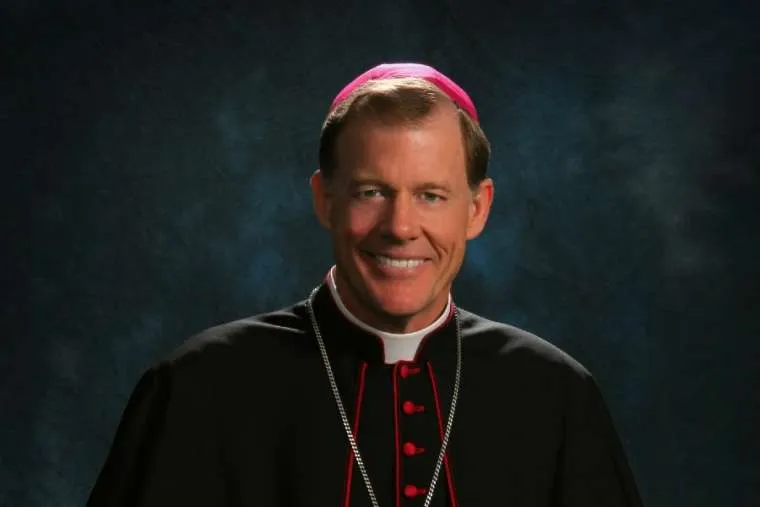


We read: “At the event, Wester called Pope Francis’ statement that nuclear weapons are immoral ‘groundbreaking’ and asked the faithful to ‘to speak the truth’ on the matter.”
“Immoral?” Not to question the precarious military state of the world today, and the incomprehensible magnitude of any nuclear war, is it still possible to responsibly pause at the slogan of Pope Francis? In the circumstances of the 1960s and the then nuclear arms race, the SECOND VATICAN COUNCIL took a position regarding the possession of nuclear weapons—and approved the schema by a vote of 2111 to 251.
During DEBATE, it was noted by Archbishop Nannan that the impression given in schema to the average reader was that “the possession of nuclear arms is condemned as immoral.” But in further explanation, “the rebuttal of Bishop Schroffer and Archbishop Garrone claimed that ‘nowhere in Articles 80 and 81 is the possession of nuclear arms condemned as immoral.’ The words of the text were selected with a purpose, they said, and must be accurately understood. Nor was it denied that freedom could be temporarily preserved through the possession and accumulation of nuclear weapons. It was only denied that the arms race was ‘a safe way to preserve lasting peace.’ Nor was it stated that nuclear arms were a ’cause of war’.[….] “This letter and reports to the general assembly] now stated that Article 81 did not intend ‘to condemn nuclear weapons indiscriminately,’ and that the text in no way intended to impose ‘an obligation of unilateral destruction of atomic weapons'” (Fr. Ralph Wiltgen, SVD, “The Rhine Flows into the Tiber,” 1967, p. 281).
TODAY is not the 1965 of the Cold War nuclear arms race—which now is replaced by a proliferation of nuclear powers.* And, no one today is counseling unilateral disarmament. Still, beyond the great value of the prayer vigil, it might be more credible to not invoke—as “groundbreaking”—a preemptive one-liner.
(* United States, Russia, China, France, United Kingdom, India, Israel, Pakistan, North Korea; formerly Ukraine and not yet Iran).
Wester is just another woke Catholic bishop. Just a little information, Wester. Abortion has killed thousands of times more human persons than nuclear bombs have. Yet, how much effort do you expend changing minds and hearts against the holocaust that is going on under your nose? More moral posturing by our feckless bishops.
That’s right: Only one person will ever go to Hell, and that’s whoever personally kills the most people, right? Judas Iscariot will back you up on that one!
Or, if you prefer, it is often necessary to kill thousands of innocents to honor the memory of your deceased ruler or to insure military victory. Once you accept that principle, it’s just a matter of practicality to do this with technology, rather than cutting out their still-beating hearts and tossing the lifeless bodies down the steps of a pyramid. But the important thing remains: the worship of Huitzilopochtli.
“To start with, some impulse, perhaps a sort of desperate impulse, drove men to the darker powers when dealing with practical problems. There was a sort of secret and perverse feeling that the darker powers would really do things; that they had no nonsense about them…. But with the idea of employing the demons who get things done, a new idea appears more worthy of the demons. It may indeed be truly described as the idea of being worthy of the demons; of making oneself fit for their fastidious and exacting society. Superstition of the lighter sort toys with the idea that some trifle, some small gesture such as throwing the salt, may touch the hidden spring that works the mysterious machinery of the world. And there is after all something in the idea of such an Open Sesame. But with the appeal to lower spirits comes the horrible notion that the gesture must not only be very small but very low; that it must be a monkey trick of an utterly ugly and unworthy sort. Sooner or later a man deliberately sets himself to do the most disgusting thing he can think of. It is felt that the extreme of evil will extort a sort of attention or answer from the evil powers under the surface of the world.”
Of course, Chesterton was too woke to join in the worship of Huitzilopochtli. He even wrote, “In any case it is clear enough that the painted and gilded civilisation of tropical America systematically indulged in human sacrifice. It is by no means clear, so far as I know, that the Eskimos ever indulged in human sacrifice. They were not civilised enough. They were too closely imprisoned by the white winter and the endless dark. Chill penury repressed their noble rage and froze the genial current of the soul. It was in brighter days and broader daylight that the noble rage is found unmistakably raging. It was in richer and more instructed lands that the genial current flowed on the altars, to be drunk by great gods wearing goggling and grinning masks and called on in terror or torment by long cacophonous names that sound like laughter in hell.” Worship of Huitzilopochtli requires a more pragmatic man, nicht?
As usual, your ramblings suggest you’re tormented. Peace be with you.