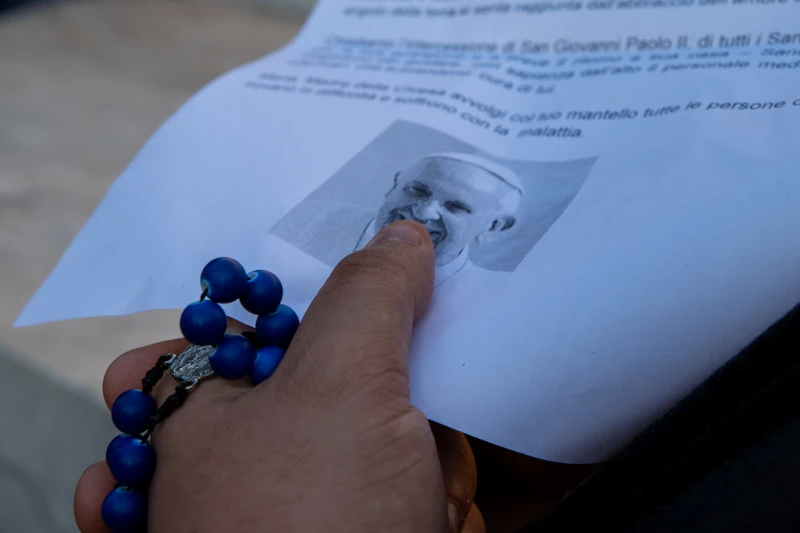
A faithful holds a rosary while touching an image of Pope Francis during prayers for the pontiff’s recovery at Gemelli hospital on Saturday, Feb. 22, 2025. / Credit: Daniel Ibáñez/CNA
Vatican City, Feb 25, 2025 / 15:50 pm (CNA).
Pope Francis continues to be in a serious but stable condition as he concludes his 12th day in Rome’s Gemelli Hospital, the Vatican said.
In the latest communication on the 88-year-old pope’s health, issued on the evening of Feb. 25, doctors said his “clinical condition remains critical but stationary,” without any acute respiratory episodes.
It added that Francis’ hemodynamic parameters — that is, how his blood flows through the blood vessels — is also stable, and he underwent a follow-up CT scan on Tuesday to monitor his lungs following a pneumonia diagnosis last week.
After receiving the Eucharist in the morning, Pope Francis also “resumed work activities,” the message concluded.
The pontiff was admitted to Gemelli Hospital north of the Vatican in Rome on Feb. 14 after more than a week of illness. The Vatican and doctors have said Francis is suffering from respiratory infections, double pneumonia, and chronic illnesses.
In a press conference on Feb. 21, Pope Francis’ medical team said he was “not out of danger” due to his age and fragile health, but that the pope “is not a quitter” and they were doing everything possible to have him be able to safely return to his Vatican residence.
If you value the news and views Catholic World Report provides, please consider donating to support our efforts. Your contribution will help us continue to make CWR available to all readers worldwide for free, without a subscription. Thank you for your generosity!
Click here for more information on donating to CWR. Click here to sign up for our newsletter.
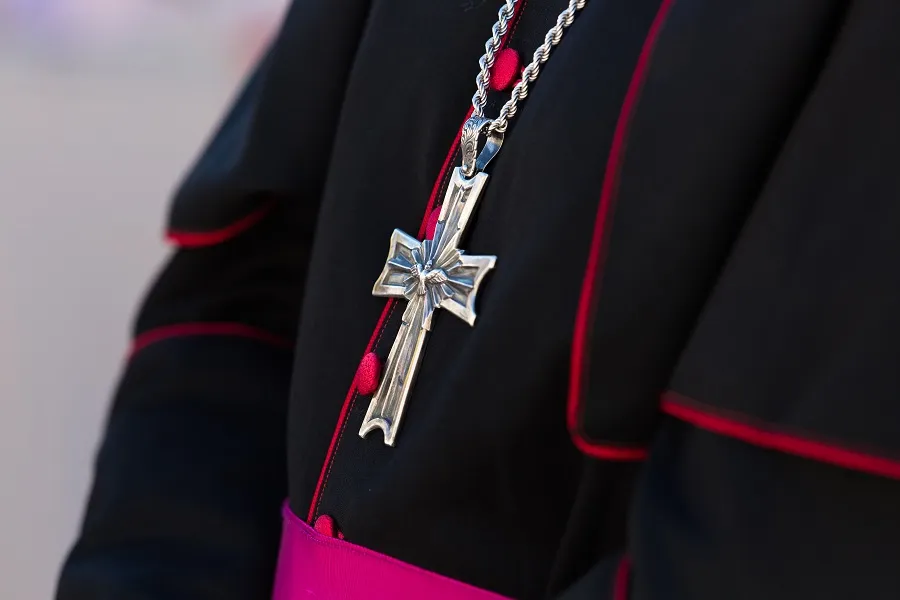
Vatican City, Dec 4, 2017 / 05:01 am (CNA/EWTN News).- On Monday the Vatican announced Pope Francis’ appointment of Oratorian Fr. Mario Alberto Aviles as auxiliary bishop of the Diocese of Brownsville.
He joins Bishop Daniel E. Flores, who has served as the sixth bishop of Brownsville since February 2010.
Aviles, who has served as Procurator General of the Confederation of the Oratory of St. Philip Neri since 2012, has also been appointed the titular bishop of the See of Cataquas in modern-day Algeria.
The Oratory of St. Philip Neri is a pontifical society of apostolic life made up of Catholic priests and lay-brothers. There are 86 congregations around the world, including several in the United States.
The Procurator General acts as the representative of the congregations to the Holy See, usually residing in Rome.
Aviles, 48, was born in Mexico City on Sept. 16, 1969. In 1986 he entered the Oratory of St. Philip Neri in Mexico City, two years later moving to the Pharr Oratory in the Diocese of Brownsville.
He first attended the Catholic Panamerican University in Mexico City, then transferred to Rome to study philosophy and theology at the Pontifical Athenaeum Regina Apostolorum University.
He received a master’s of divinity at the Holy Apostles Seminary in Cromwell, Conn. in 2000. He also has a master’s degree in Educational Leadership from the University of Phoenix.
On July 21, 1998 he was ordained a priest for the Confederation of the Oratory of St. Philip Neri.
From his ordination he was Parochial Vicar of the parish of St. Jude Thaddeus in Pharr, Texas until 2002, he then served as parish priest of Sacred Heart parish in Hidalgo.
He was Dean of the Oratory Academy and Oratory Athenaeum in Pharr from 2005-2012 and a member of the Diocesan Pastoral Council at Brownsville since 2011.
He has been Procurator General of the Confederation of the Oratory of St. Philip Neri since 2012 and speaks Spanish, English and Italian.
The Diocese of Brownsville, formed in 1965, encompasses the counties of Willacy, Cameron, Hidalgo and Starr at the southern border of Texas. Cameron, Hidalgo and Starr also border the Rio Grande River, which divides the Diocese of Brownsville from the dioceses of Matamoros and Nuevo Laredo in Mexico.
The diocese is 4,226 square miles in area with a population of approximately 978,369 inhabitants, of which 831,613 are Catholic.
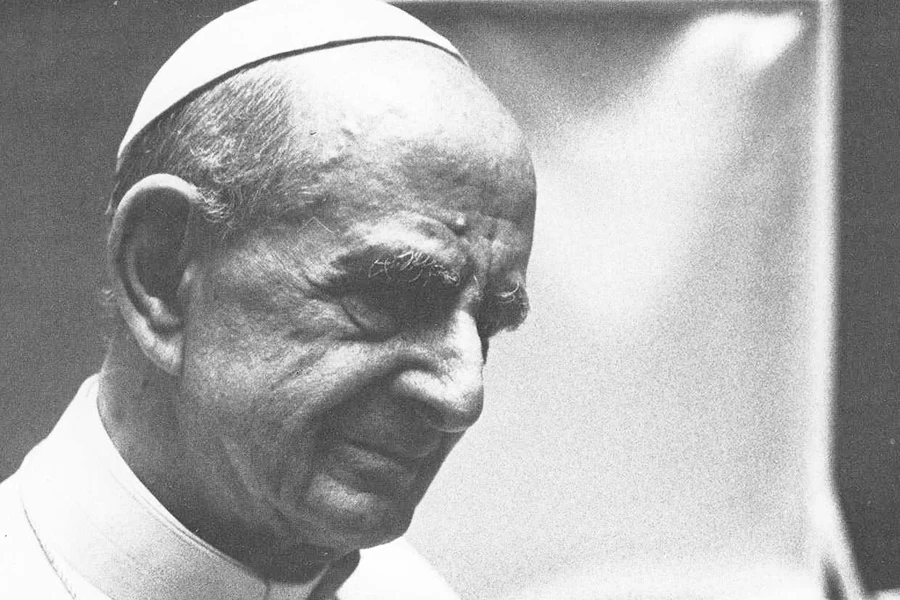
Vatican City, Aug 1, 2017 / 03:02 am (CNA/EWTN News).- As its 50th anniversary approaches, the story of how Blessed Pope Paul VI arrived at the final text of “Humanae Vitae” will be a main focus of discussion.
Paul VI issued his encyclical in 1968, after a commission of theologians and experts spent four years meeting to study in-depth whether the Church could be open to the contraceptive pill or other artificial forms of birth control.
In his encyclical, Pope Paul VI reaffirmed that sexual relations cannot be detached from fecundity. The event was a watershed moment in the Church.
A study group from the Rome-based John Paul II Institute for Marriage and Family aims to produce a paper on the development of the encyclical. The group is led by cultural anthropology professor Monsignor Gilfredo Marengo, who teaches at the institute.
Professor Marengo told Vatican Radio July 25 that the commission in the end “was not able to give Bl. Paul VI what he needed to draft the encyclical,” and so the Pope “had almost had to start again.”
He underscored that Bl. Paul VI’s work was made even more difficult by the fact that “public opinion in the Church was very much polarized, not only between in favor and in opposition to the contraceptive pill, but also among theologians, who presented the same polarized counter-position.”
While the discussion was still ongoing, a document favorable to Catholic approval of the birth control pill was published simultaneously in April 1967 in the French newspaper Le Monde, the English magazine The Tablet, and the American newspaper the National Catholic Reporter.
The report emphasized that 70 members of the Pontifical Commission were favorable to the pill, but in fact the document was “just one of the 12 reports presented to the Holy Father.” Those are the words of Bernardo Colombo, a professor of demographics and a member of the commission, writing in the March 2003 issue of “Teologia,” the journal of the theological faculty of Milan and Northern Italy.
When Paul VI published Humanae Vitae, public opinion was thus already oriented against the Church’s principles which the pontiff reaffirmed, and the Church’s teaching was strongly targeted.
Prof. Marengo told Vatican Radio that “Humanae Vitae” deserved an in-depth study.
The professor’s first impression is that when the study group’s research is complete “it will be possible to set aside many partisan readings of the text” and will be easier to “grasp the intentions and worries that moved Paul VI to solve the issue the way he did.”
The story of the encyclical dates back to 1963, when St. John XXIII established the commission to study the topics of marriage, family, and regulation of birth.
Pope Paul VI later enlarged the commission’s membership from six to twelve people. Then he further increased its numbers to 75 members, plus a president, Cardinal Alfredo Ottaviani, head of the Congregation for the Doctrine of the Faith; and two deputies, Cardinals Julius Doepfner and John Heenan.
After the end of the works of the commission, Paul VI asked a restricted group of theologians to give further examination to the topic.
Pope Francis has shown great appreciation for Bl. Paul VI and for “Humanae Vitae” several times, such as in an interview March 5, 2014 with the Italian newspaper Il Corriere della Sera, ahead of two synods on the family.
Asked if the Church was going to take up again the theme of birth control, the Pope responded: that “all of this depends on how ‘Humanae Vitae’ is interpreted. Paul VI himself, at the end, recommended to confessors much mercy, and attention to concrete situations.”
The Pope added that Bl. Paul VI’s “genius” was “prophetic,” because the Pope “had the courage to place himself against the majority, defending the moral discipline, exercising a culture brake, opposing present and future neo-Malthusianism.”
“The question,” Pope Francis concluded, “is not that of changing the doctrine but of going deeper and making pastoral (ministry) take into account the situations and that which it is possible for people to do. Also of this we will speak in the path of the synod.”
Prof. Marengo told Vatican Radio that it would also be “very useful to piece together the path to the drafting of the encyclical, which developed in different phases from June 1966 to its publication on July, 25th 1968.”
He said the encyclical must be placed in the context of “everything important and fruitful the Church has said on marriage and family during these last 50 years.”
Prof. Marengo’s study group includes John Paul II Institute president Prof. Pierpaolo Sequeri; Prof. Philippe Chenaux of the Pontifical Lateran University, an authority regarding the Second Vatican Council and the history of the contemporary Church; and Professor Angelo Maffeis, president of the Paul VI Institute based in Brescia.
As in the lead-up to “Humanae Vitae,” there is misleading news coverage of the study group.
When the news of the study group first broke, it was described as a “pontifical commission” aimed at changing the teachings of “Humanae Vitae.”
Professor Marengo dismissed this as an “imaginative report” in a June interview with CNA. For his part, Archbishop Vincenzo Paglia, chancellor of the John Paul II Institute, confirmed that no pontifical commission had been appointed. He maintained that “we should look positively on all those initiatives, such as that of Professor Marengo of the John Paul II Institute, which aim at studying and deepening this document in view of the 50th anniversary of its publication.”
Etsurō Sotoo is an enthusiastic advocate of the cause of canonization of Gaudí, known as “God’s architect.” / Credit: Public Domain CC-BY-SA-4.0 Wikimedia Commons
Madrid, Spain, Sep 20, 2024 / 08:00 am (CNA).
For the first time, a sculptor and native of Japan will be awarded the Ratzinger Prize.
His name is Etsurō Sotoo, born in 1953 in Fukuoka, Japan, and a graduate of Kyoto University.
A 1978 visit to Spain changed the course of his life forever.
Arriving in the city of Barcelona, he was impressed by the construction of the Sagrada Familia basilica and asked to work there as a sculptor.
Following instructions left by Antoni Gaudí, the renowned Spanish architect of the monument, still under construction, Sotoo began his work on the basilica’s Nativity façade.
During his stay in Barcelona, Etsurō Sotoo converted to Catholicism and received the sacrament of baptism.
Sotoo is an enthusiastic advocate of the cause of canonization of Gaudí, known as “God’s architect.”
Sotoo’s handiwork is found in various parts of the Basilica of the Sagrada Familia and in other places in Spain as well as in Japan and Italy, in the Cathedral of Florence.
Pope Benedict XVI consecrated the Sagrada Familia basilica during a trip to Barcelona in 2010, expressing his great appreciation for the figure and art of Antoni Gaudí.
Cyril O’Regan
Irish theologian Cyril O’Regan is also a winner of the 2024 Ratzinger Prize.
Since 1999, he has been a professor of systematic theology in the Department of Theology at the University of Notre Dame in Indiana.
He studied philosophy in Ireland and earned a doctorate, also earning another doctorate in theology at Yale University in Connecticut.
Cyril O’Regan is Huisking Professor of Theology at the University of Notre Dame. Credit: McGrath Institute for Church Life lecture series/Screenshot
O’Regan is the author of numerous articles and several books, including “The Heterodox Hegel” (1994), “Gnostic Return in Modernity” (2001), “Theology and the Spaces of Apocalyptic” (2009), “Anatomy of Misremembering,” and “Newman and Ratzinger” (publication in progress).
His lectures are highly appreciated by his students, and he has dedicated several relevant articles to the figure and teachings of Joseph Ratzinger (Pope Benedict XVI).
“I am delighted and also feel incredibly honored given the caliber of scholars and thinkers who have received it before me,” O’Regan said of the recognition.
Nov. 22 award ceremony and Mass
On Friday, Nov. 22, Cardinal Pietro Parolin, secretary of state of the Holy See, is scheduled to present the prize to both professor O’Regan and Sotoo.
The ceremony will take place in the Sala Regia of the Apostolic Palace. That same morning, a Mass will be celebrated in memory of Pope Benedict XVI at his tomb in the Vatican Grottoes. The two winners will be received by Pope Francis.
What is the Ratzinger Prize?
The Ratzinger Prize was started in 2011 to recognize scholars whose work demonstrates a significant contribution to theology in the spirit of Cardinal Joseph Ratzinger, the Bavarian theologian who became Pope Benedict XVI.
The awardees are chosen by Pope Francis based on the recommendations of a committee made up of five cardinals who are members of the Roman Curia.
It is currently made up of Cardinal Kurt Koch, prefect of the Dicastery for Promoting Christian Unity; Cardinal Luis Ladaria, prefect emeritus of the Dicastery for the Doctrine of the Faith; Cardinal Gianfranco Ravasi, president emeritus of the Pontifical Council for Culture; Archbishop Salvatore Fisichica, pro-prefect of the Dicastery for Evangelization; and Bishop Rudolf Voderholzer Regensburg, president of the Pope Benedict XVI Institute.
With the 2024 edition, the total number of Ratzinger prize winners ascends to 30. These are mainly eminent personalities in the studies of dogmatic or fundamental theology, sacred Scripture, patristics, philosophy, law, sociology, or in artistic activity such as music, architecture, and now sculpture.
The winners, who hail from 18 different countries on five continents, are not only Catholics but also belong to other faith traditions, such as Anglicanism, Lutheranism, and Judaism.
This story was first published by ACI Prensa, CNA’s Spanish-language news partner. It has been translated and adapted by CNA.
I long for the days when the comings and goings of the Roman Pontiff had an air of mystery attached to it. Do we really need a blow by blow, minute by minute detailing of the daily activities of the Pope. We know so much now that whatever the Pope does or says something it has become trivialized.






I long for the days when the comings and goings of the Roman Pontiff had an air of mystery attached to it. Do we really need a blow by blow, minute by minute detailing of the daily activities of the Pope. We know so much now that whatever the Pope does or says something it has become trivialized.