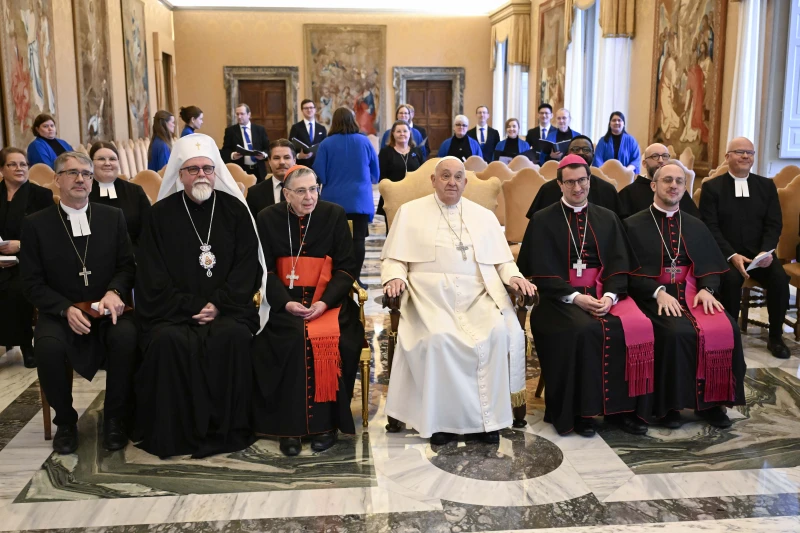
Pope Francis meets with an ecumenical delegation from Finland on Jan. 20, 2025, at the Vatican. / Credit: Vatican Media
ACI Prensa Staff, Jan 21, 2025 / 14:15 pm (CNA).
Pope Francis on Monday emphasized the ecumenical vocation shared by Christians during an audience held at the Vatican with Finnish representatives of various Christian denominations who have made a pilgrimage to Rome on the occasion of the feast of St. Henry, celebrated Jan. 19.
The Jan. 20 meeting took place in the Vatican Apostolic Palace and was attended by the head of the Finnish Orthodox Church, Archbishop Elia of Helsinki, as well as Catholic Bishop Raimo Goyarrola of the Diocese of Helsinki and Bishop Matti Salomäki of the Evangelical Lutheran Church.
The Holy Father stressed that bearing witness to the incarnate love of Christ “is our ecumenical vocation, in the communion of all the baptized.”
As part of the Week of Prayer for Christian Unity and the 2025 Jubilee Year, the pontiff stressed that St. Henry, the patron saint of Finland, represents an icon of hope “that finds its sure and firm foundation in God.”
As a messenger of peace, he continued, St. Henry “urges us to never cease lifting up our prayers for the precious and fragile gift of peace.”
At the same time, he pointed out that he is “a symbol of the unity given by God,” since his feast day continues to unite “Christians from different churches and ecclesial communities in the common praise of the Lord.”
He also applauded the fact that this pilgrimage is accompanied by the choir of the Sanctae Mariae Chapel, recalling that “whoever sings, prays twice.”
He then referred to the Nicene-Constantinopolitan Creed shared by Christians as an “extraordinary musical score of faith” and a “symphony of truth,” with Jesus Christ at the center.
“Whoever listens to this ‘symphony of truth’ not only with their ears but [also] with their hearts will be touched by the mystery of God, who bends down toward us, full of love, in his Son,” he said.
To express with confidence the “filial vocation” of ecumenism, Pope Francis invited those present to pray the Lord’s Prayer.
This story was first published by ACI Prensa, CNA’s Spanish-language news partner. It has been translated and adapted by CNA.
If you value the news and views Catholic World Report provides, please consider donating to support our efforts. Your contribution will help us continue to make CWR available to all readers worldwide for free, without a subscription. Thank you for your generosity!
Click here for more information on donating to CWR. Click here to sign up for our newsletter.
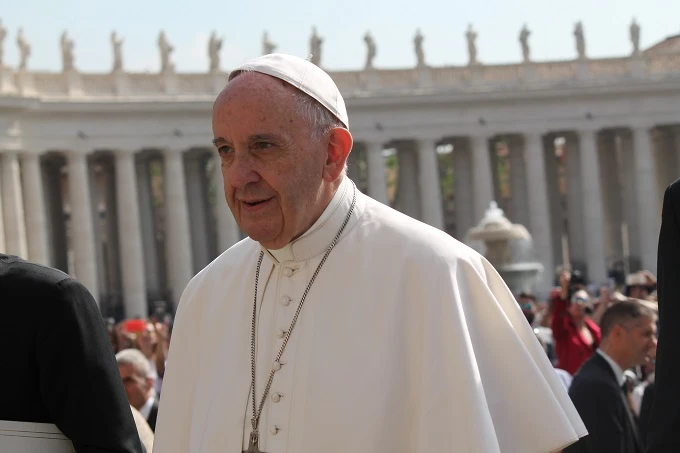
Pope Francis in St. Peter’s Square on March 8, 2023. / Daniel Ibáñez/CNA
Rome, Italy, Mar 30, 2023 / 04:47 am (CNA).
Pope Francis will continue to receive treatment after being hospitalized for a respiratory infection on Wednesday, a Vatican sp… […]
Vatican City, May 3, 2018 / 08:53 am (CNA/EWTN News).- In his prayer video for the month of May, Pope Francis said laypeople are on the “front lines” of the Church’s life and activities, and asked Catholics of all states and vocations to pray for the laity and their mission.
“Laypeople are on the front line of the life of the Church,” the pope said in the video, published May 3, urging the Church to be thankful for the laity “who take risks, who are not afraid and who offer reasons for hope to the poorest, to the excluded, to the marginalized.”
As Francis speaks in his native Spanish, the video shows lay people in different professional and familial states, including a doctor embracing a patient, a mother holding her child, a newlywed couple leaving a church and rescue workers bringing a boat of migrants ashore.
The video then shows scenes of families, scenes of people jumping up and down and hugging during a sports competition, people hiking and a couple working in a greenhouse.
“Let us pray together this month that the lay faithful may fulfill their specific mission, the mission that they received in Baptism, putting their creativity at the service of the challenges of today’s world,” he said, adding that “we need their testimony regarding the truth of the Gospel and their example of expressing their faith by practicing solidarity.”
An initiative of the Jesuit-run global prayer network Apostleship of Prayer, the pope’s prayer videos are filmed in collaboration with the Vatican Television Center and mark the first time the Roman Pontiff’s monthly prayer intentions have been featured on video.
The Apostleship of Prayer, which produces the monthly videos on the pope’s intentions, was founded by Jesuit seminarians in France in 1884 to encourage Christians to serve God and others through prayer, particularly for the needs of the Church.
Since the late 1800s, the organization has received a monthly, universal intention from the pope. In 1929, an additional missionary intention was added by the Holy Father, aimed at the faithful in particular.
However, as of last year, rather than including a missionary intention, Pope Francis opted to have only one prepared prayer intention – the universal intention featured in the prayer video – and will add a second intention for an urgent or immediate need should one arise.
In comments in a May 3 press release on the video, Fr. Frédéric Fornos, SJ, international director of the Pope’s Worldwide Prayer Network and the Eucharistic Youth Movement, noted that often people think priests are the only ones responsible for carrying forward the Church’s mission.
However, lay people “are the ones who are at the heart of the world, and the ones who have a key role in transforming society,” he said, adding that “it is in families, in classrooms, in offices, in factories, in the fields, in daily life, where we find the opportunity to be salt and light of God’s Kingdom, the flavor of the Gospel.”
Pope Francis himself has been a frequent critic of clericalism, saying that for many, the Church is reduced to just priests and the hierarchy, and encouraging lay Catholics to be more active in evangelizing. He has also made incorporating more space for laity within the ranks of the Curia a goal of his reform.
In an April 2016 letter to the Pontifical Commission for Latin America, Pope Francis called clericalism “one of the greatest distortions” facing the local Church on the continent.
“[We’d] do well to recall that the Church is not an elite [of] priests, of consecrated people, of bishops but all of us make up the faithful and Holy People of God,” he said, noting that everyone begins their life as a layperson.
Clericalism, he said, is the result of “a mistaken way of living out the ecclesiology proposed by the Second Vatican Council,” which “forgets that the visibility and the sacramentality of the Church belong to all the people of God and not just to an illuminated and elected few.”
He discouraged clergy from relying on trite phrases about their flock such as “it’s time for the laity.”
While well-intentioned, the phrase has little meaning when stacked against actions, he said, explaining that clergy should focus on encouraging the laity to be active, but “it is not the job of the pastor to tell the laypeople what they must do and say.”
“It is illogical and even impossible for us as pastors to believe that we have the monopoly on solutions for the numerous challenges thrown up by contemporary life.”
In an interview given to El Sembrador Nueva Evangelización – ESNE TV and Radio station the same year but published in 2017, Francis said he believes laity need to “come out of the caves.”
“Sometimes I think the best business we can do with many Christians, is to sell them mothballs so that they put them in their clothes and in their lives and aren’t eaten by moths,” he said, explaining that in order to fulfill their mission, lay Catholics “have to go out, they have to go and bring the message of Jesus” to others.
Similarly, in a speech to Bangladeshi bishops during his visit to the nation in December 2017, the pope told them to “show ever greater pastoral closeness to the lay faithful, and to “recognize and value the charisms of lay men and women, and encourage them to put their gifts at the service of the Church and of society as a whole.”
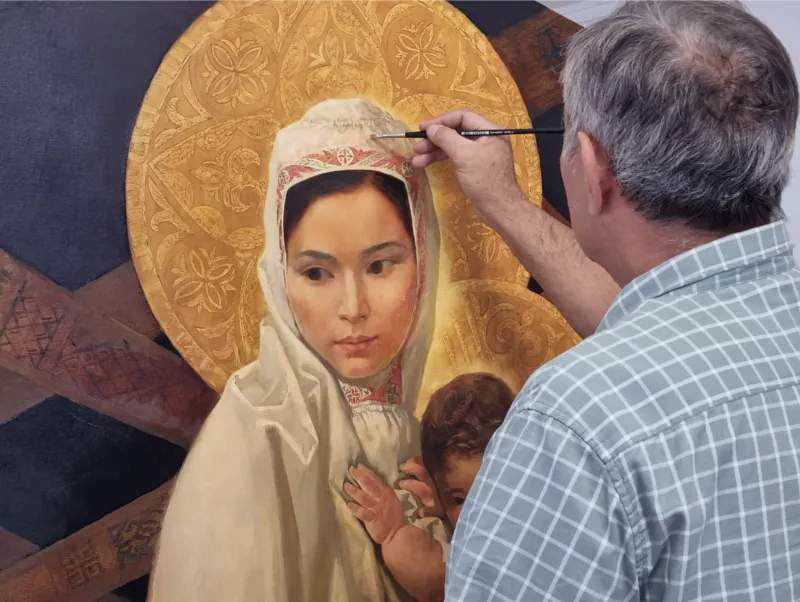
Kazakh artist Dosbol Kasymov works on the icon “Mother of the Great Steppe” in advance of Pope Francis’ Sept. 13-15 trip to Kazakhstan. / Alexey Gotovsky/CNA
Rome Newsroom, Sep 6, 2022 / 09:03 am (CNA).
A Kazakh artist is creating possibly the first-ever painting of Mary and the Child Jesus as native Kazakhs; it will be displayed in Kazakhstan’s only Marian shrine.
It is hoped that the icon, in the form of a triptych, will be blessed by Pope Francis during his Sept. 13-15 visit to the Central Asian country, where more than 70% of the population is Muslim.
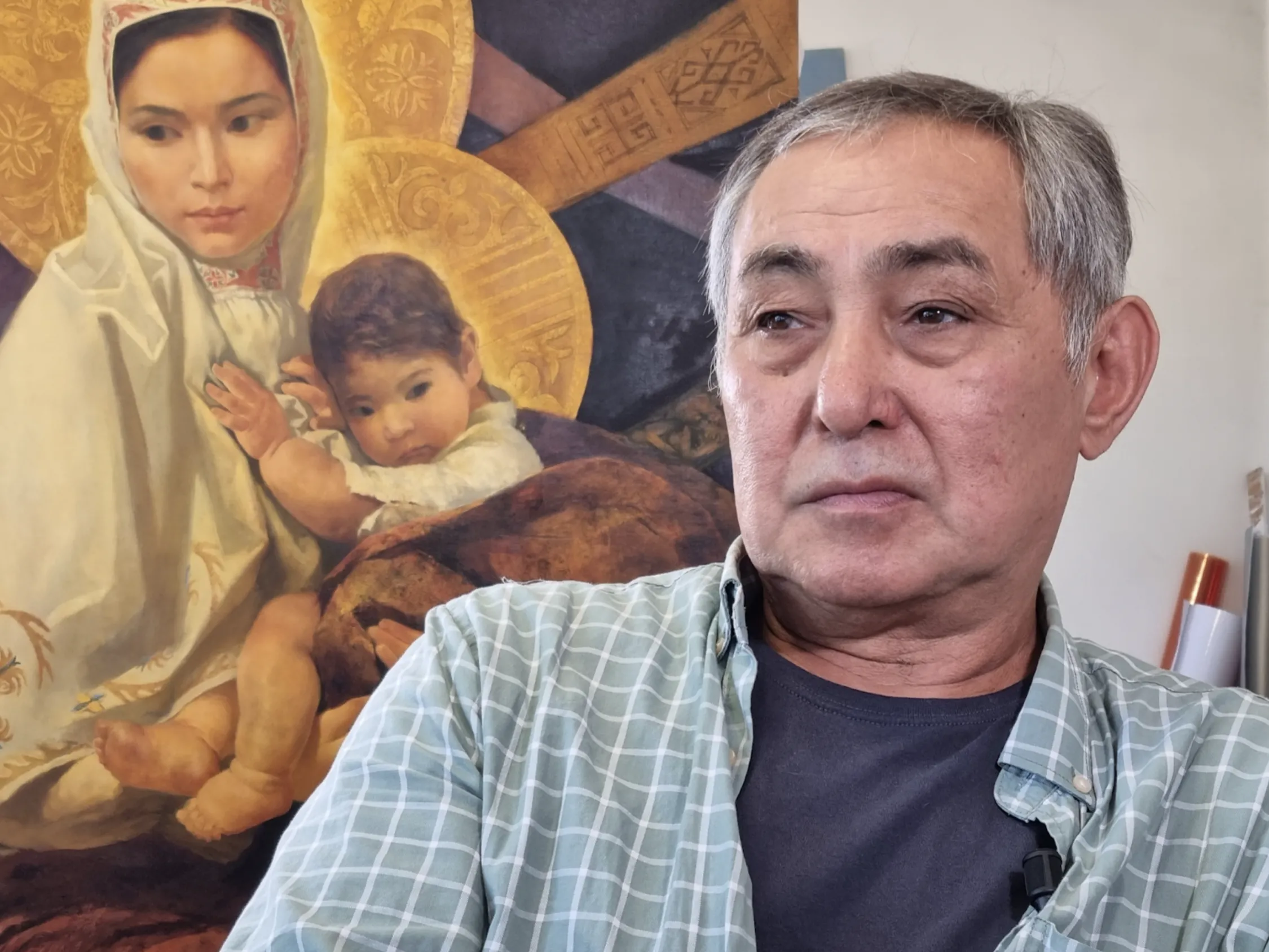
The artist, Dosbol Kasymov, told EWTN News in Almaty, Kazakhstan, on Aug. 5 that his inspiration for the image came from his culture’s love and reverence for mothers.
Mother is “a common image,” uniting mankind, Kasymov said. “We are all born, we all came into this world thanks to our mothers.”
Titled “The Mother of the Great Steppe,” the large icon was commissioned by Archbishop Tomasz Peta, the head of Kazakhstan’s Catholic diocese, Maria Santissima in Astana.
The Kazakh Steppe is a treeless, semi-desert grassland covering the northern part of the country, south of the Ural Mountains.
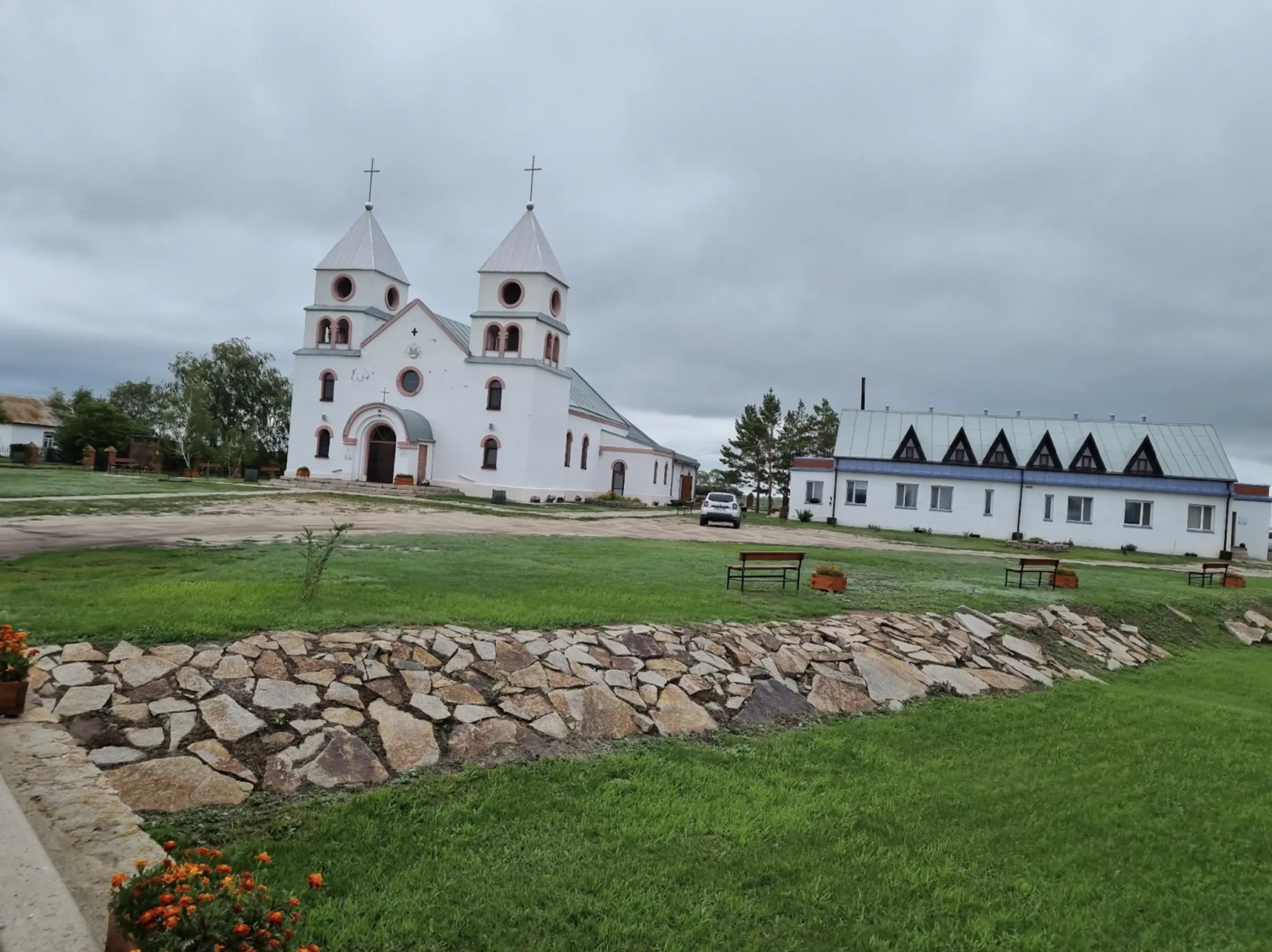
Peta told EWTN News last month that the image of the Kazakh Mary and Jesus is intended for Kazakhstan’s only Marian shrine, Mary Queen of Peace, in the town of Ozernoe, about 68 miles southeast of Nur-Sultan.
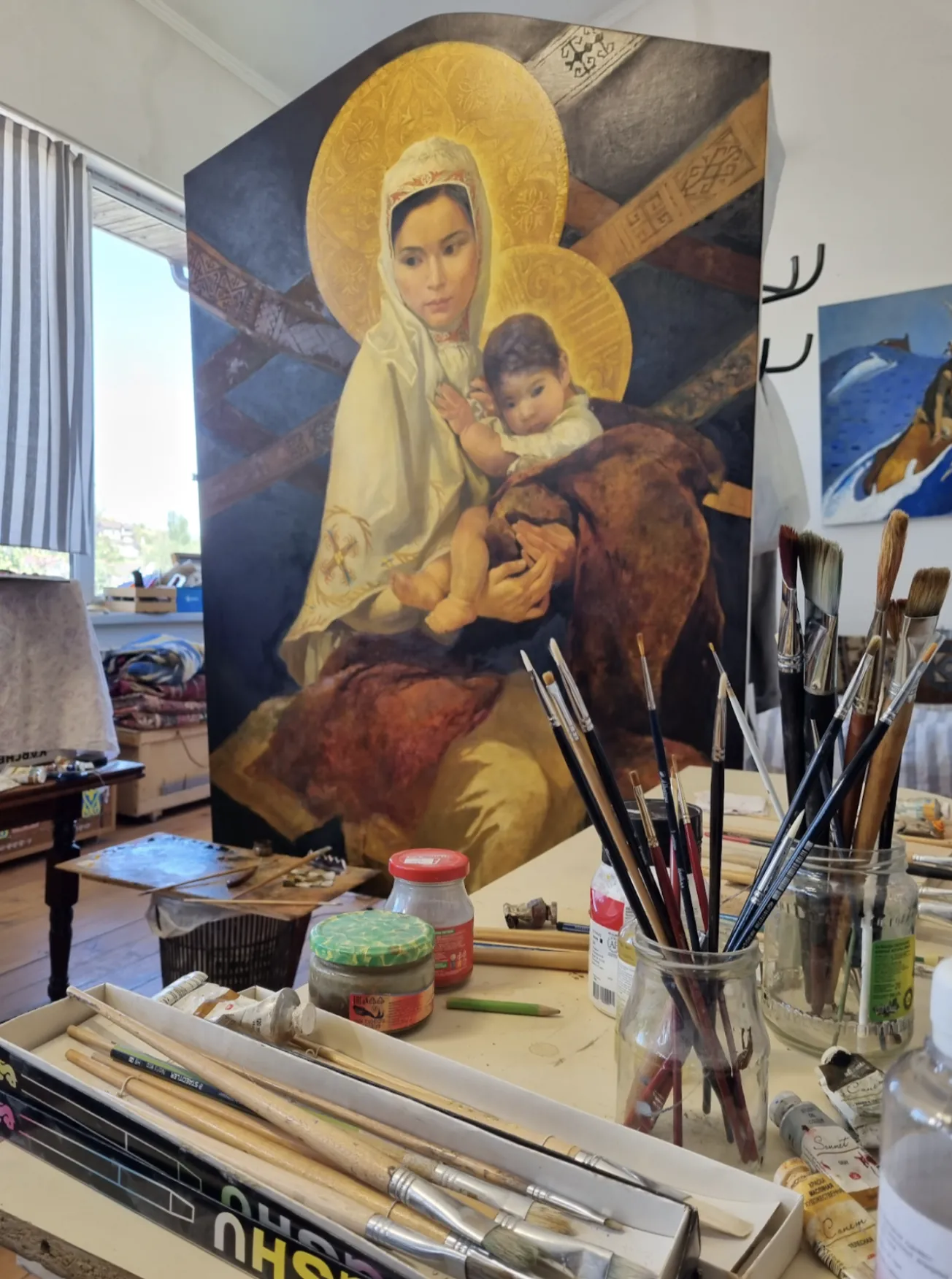
The painting depicts the Virgin Mary as a Kazakh woman dressed in traditional clothing. In her arms, she holds her baby son, the Child Jesus, held in the robe of an adult man, a sign of his future death and the Roman tunic he will wear on his way to the cross.
Kazakh artist Dosbol Kasymov spoke to EWTN News about his icon “Mother of the Great Steppe” in advance of Pope Francis’ Sept. 13–15 trip to Kazakhstan. Alexey Gotovsky/CNA.
EWTN News spoke to the artist ahead of Pope Francis’ visit to Kazakhstan, while the painting was still a work in progress. Kasymov spoke about some of the traditional Kazakh symbols he incorporated into the icon.
“The Kazakh ornaments, like all the ornaments in the world, have their own symbols. The nimbus, it’s made in the form of a star. On one side is a flower, on the other side is a star, and on the other side is a part of the Kazakh carpet ‘Tuskeiz,’” he explained.
Kasymov said the Child Jesus’ halo is in the form of a shanyrak, the emblem of Kazakhstan and a common cultural symbol based on the shape of a cross.
Ethnic Kazakhs are predominantly Sunni Muslims, the most commonly practiced religion in the country. According to a 2009 national census, the second most practiced religion is Russian Orthodox Christianity, at more than 20%. The country, which has approximately 250,000 Latin-rite Catholics, according to 2008 statistics, is also home to many immigrants.
The nationally-acclaimed painter said he hopes his work will be received by the people of Kazakhstan “with love, with warmth, because, above all, it is the image of the mother.”
“Here is my personal opinion: I think that Kazakhs are very tolerant, they easily accept any culture,” he said.
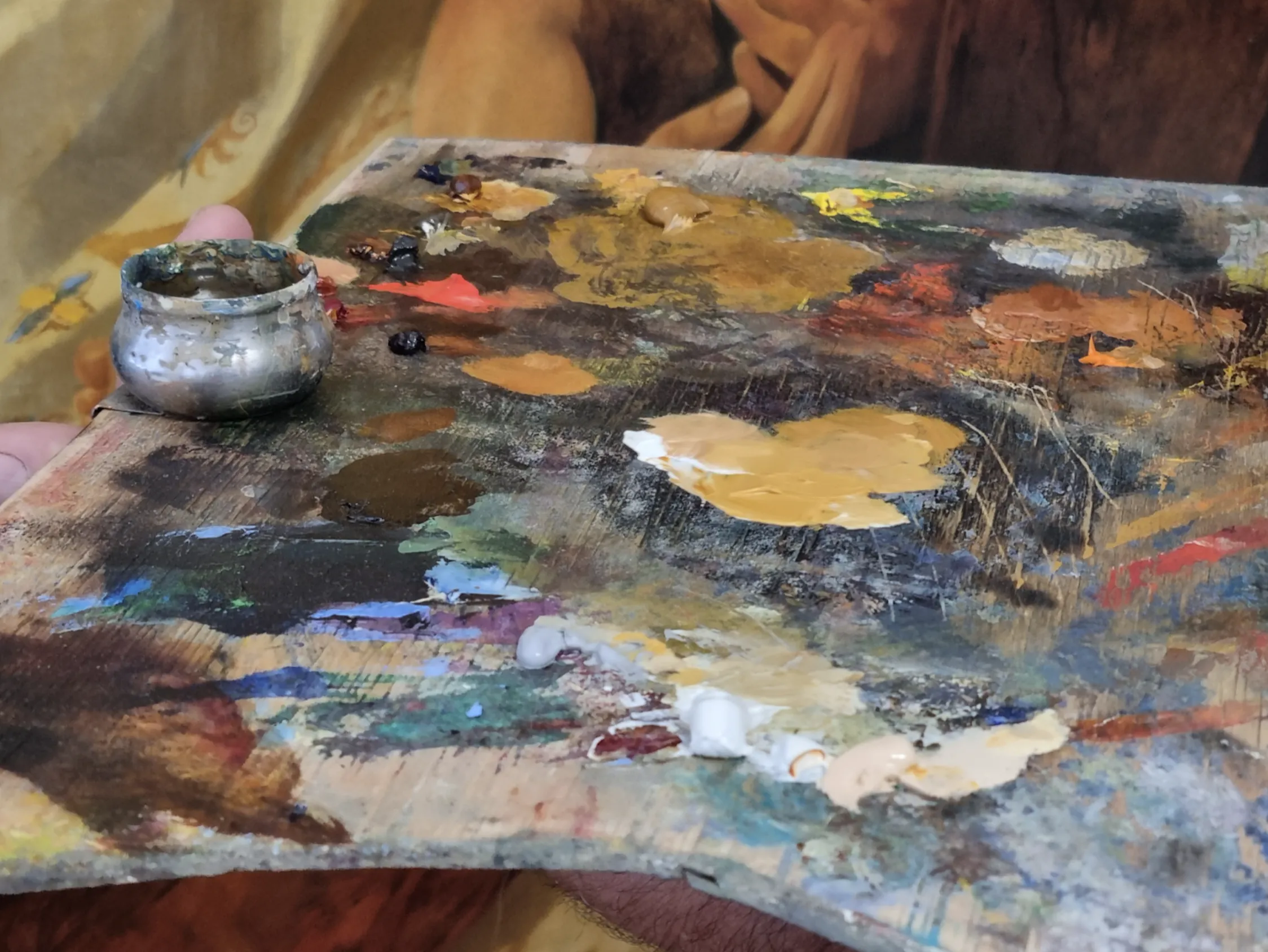
A detail of the palette of artist Dosbol Kasymov in his studio in Almaty, Kazakhstan. Alexey Gotovsky/CNA
The finished icon is expected to include a panel on each side depicting an ethnically Kazakh angel playing traditional musical instruments.
After the image is blessed in Nur-Sultan by Pope Francis, who will visit the city for the VII Congress of Leaders of World and Traditional Religions, it will be placed in a new prayer chapel at the Mary Queen of Peace Shrine in Ozernoe.
Peta said the new chapel would be built in the shape of a yurt, the traditional round tent used by nomadic groups in Central Asia. The shrine is also getting a new pilgrim welcome center dedicated to St. John Paul II.
The new chapel “is for all people, regardless of faith and nationality; this yurt will be a meeting place with Mary, and through Mary, with Jesus,” Peta said.
Mary Queen of Peace Shrine in Ozernoe, Kazakhstan. Alexey Gotovsky/CNA
Kasymov said he faced a difficult decision when Peta asked him to create an icon of Mary and the Child Jesus, given that he himself is not Christian, nor even particularly religious.
“When the offer came in to write this work, of course I had my doubts,” he said. “But then I talked to my relatives, brothers, friends and they said, ‘Of course you should write it, it’s our common culture.’”
“The Mother of the Great Steppe” in progress in the studio of artist Dosbol Kasymov on Aug. 5, 2022. Alexey Gotovsky/CNA
Kasymov said he is also interested to see how his depiction of Our Lady of the Steppe interacts with the many European images of the Blessed Virgin Mary.
“I want to praise our beauty, too, and I want the beauty of our women, the beauty of our mothers to be understandable,” he said.
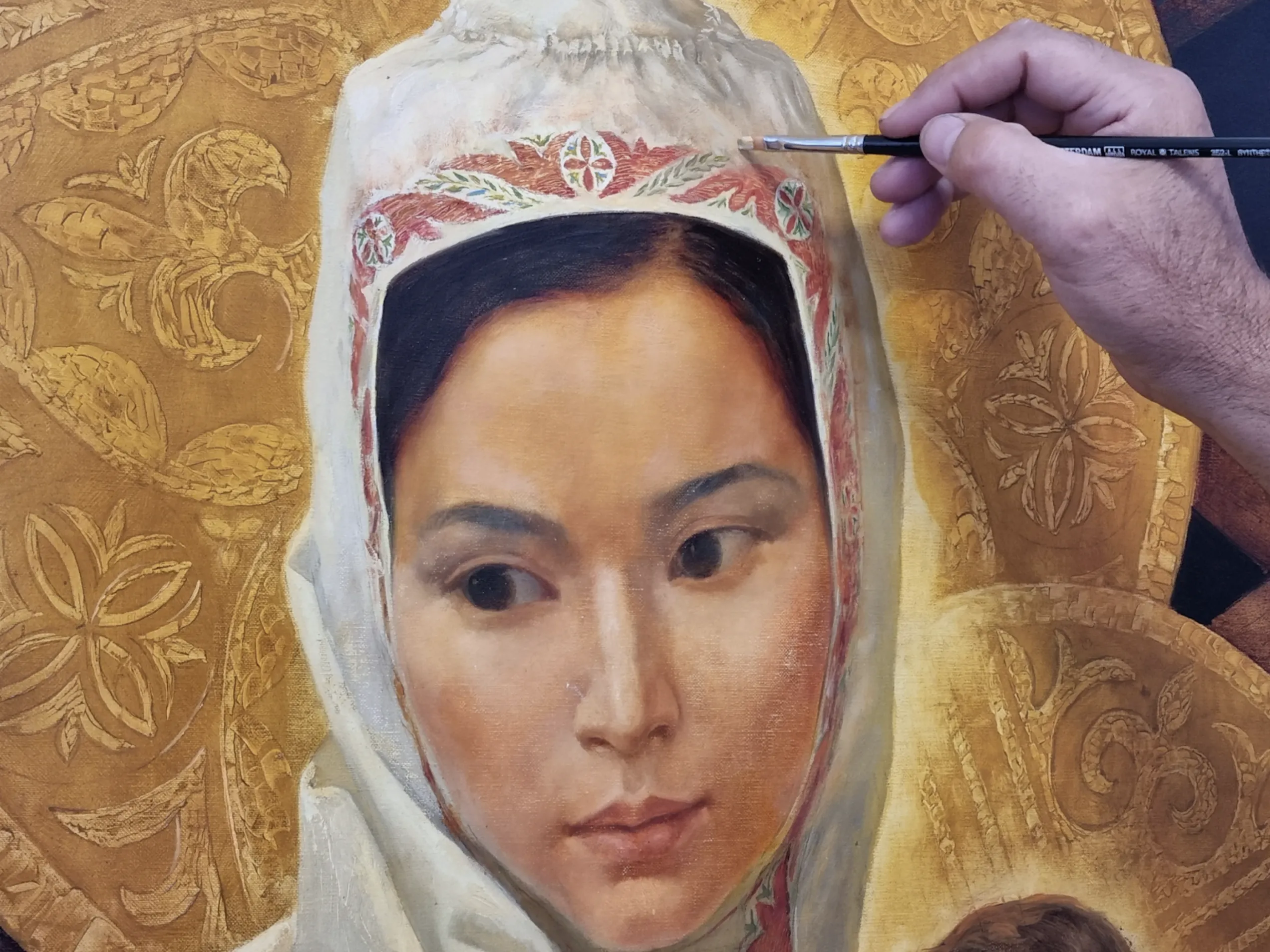
He explained that Mary is shown looking away because “Kazakhs consider it not quite right or polite for a woman to look directly into the face of her interlocutor.”
“We say in Kazakh, ‘Tygylyp Karama,’ do not stare straight ahead,” he said. “A woman should not look at the spectator directly, she looks a little into the distance. It’s a trait of modesty and part of etiquette.”
The Virgin Mary’s gaze can also be interpreted to mean that she is thinking about the future, that “she senses what is going to happen to her son,” he said.
A detail on the painting of “Mother of the Great Steppe” by Dosbol Kasymov. Alexey Gotovsky/CNA
The Christ Child, who is looking the other way from his mother, “has a mixture of feelings,” the artist noted. “It is as if on the one hand, he does not want to separate from his mother, but on the other hand … somewhere in his depths, in his young subconsciousness, there is also an understanding that he has a path, as each of us has our own path.”
Amusing to see Bergoglio getting all ecumenical with other churches’ leaders when he can’t stand even the thought of Catholics who attend the Holy Sacrifice of the Mass as it’s been celebrated since ancient times.




Amusing to see Bergoglio getting all ecumenical with other churches’ leaders when he can’t stand even the thought of Catholics who attend the Holy Sacrifice of the Mass as it’s been celebrated since ancient times.
We are privileged to be journeying as pilgrims in ecumenical times.