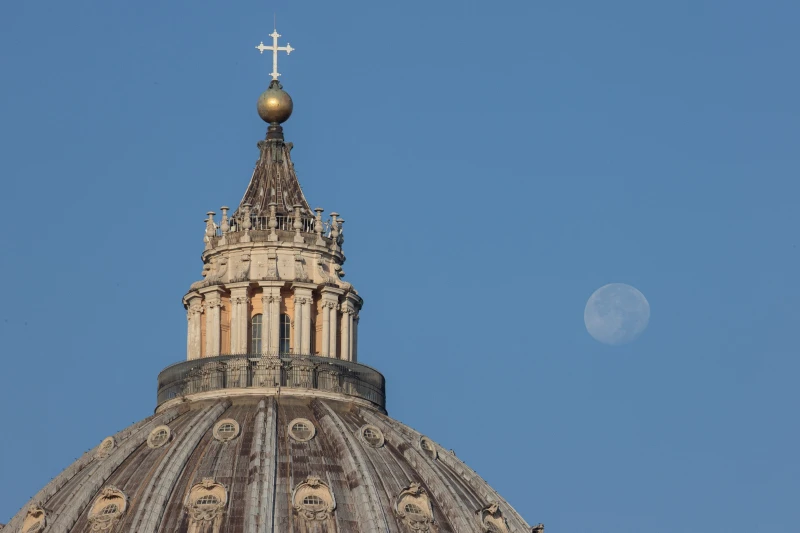
The moon was visible over St. Peter’s Basilica, Vatican, on the morning of Oct. 12. 2022. / Daniel Ibáñez / CNA
Rome Newsroom, Nov 29, 2024 / 10:00 am (CNA).
The Vatican’s chief prosecutor confirmed at a public event on Wednesday that despite prior denials, the Vatican does possess a confidential file on the disappearance of Emanuela Orlandi — the so-called “Vatican girl” who went missing over 40 years ago.
The Vatican “found” the file, it does “exist,” the Vatican’s promoter of justice, Alessandro Diddi, said at a book presentation in Rome on Nov. 27, according to Italian media.
Orlandi’s brother, Pietro Orlandi, has maintained for years that the Vatican had information on his missing sister that it was withholding from the Italian authorities.
Diddi said Wednesday the content of the dossier is confidential, but the Vatican continues to collaborate with Italy in its new investigation into how the 15-year-old Emanuela disappeared in 1983.
Orlandi was the daughter of an envoy of the prefecture of the pontifical house and a citizen of Vatican City State. Her disappearance at age 15 in June 1983 has been one of Italy’s biggest unsolved mysteries and, since it occurred, the subject of international intrigue, including speculation about the Vatican’s role.
Public interest in the case was also rekindled in 2022 after the release of the true-crime documentary “Vatican Girl: The Disappearance of Emanuela Orlandi” on Netflix.
At the request of Orlandi’s family, the Vatican conducted a new investigation into the case at the beginning of 2023, sharing its findings with Rome prosecutors that summer.
In November 2023, the Italian Senate voted to begin a new parliamentary inquiry into Orlandi and another girl who went missing in Rome around the same time.
The four-year parliamentary commission has “full investigative powers” and a budget of 50,000 euros per year to shed light on the 1983 disappearance of the two girls.
If you value the news and views Catholic World Report provides, please consider donating to support our efforts. Your contribution will help us continue to make CWR available to all readers worldwide for free, without a subscription. Thank you for your generosity!
Click here for more information on donating to CWR. Click here to sign up for our newsletter.
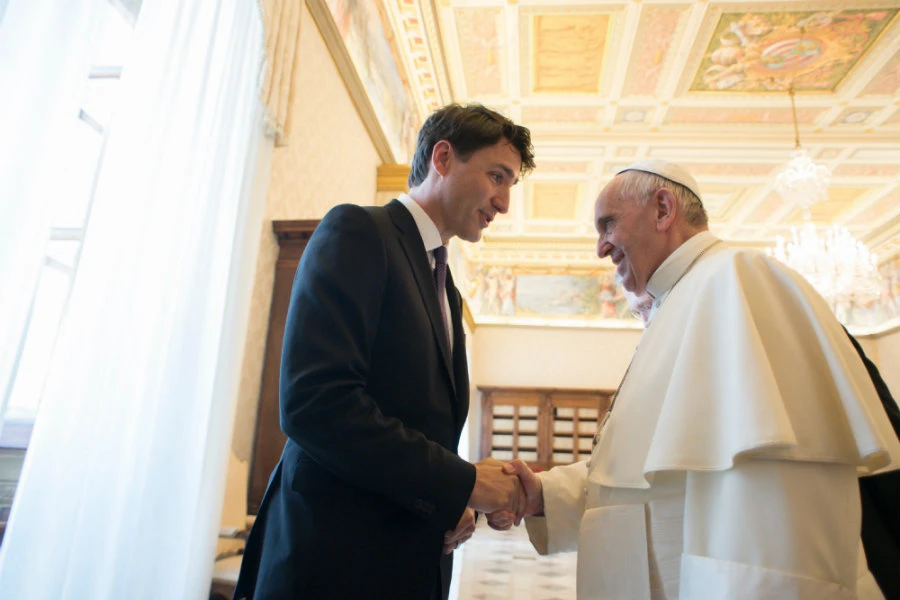
Vatican City, May 29, 2017 / 10:40 am (CNA/EWTN News).- Pope Francis met with Canadian Prime Minister Justin Trudeau in a private audience which focused on religious freedom as well as reconciliation with native people of Canada.
According to a brief May 29 communique from the Vatican, Pope Francis and Prime Minister Trudeau conversed on the topics of integration and reconciliation with indigenous people, as well as religious liberty and current ethical issues.
In their 36-minute meeting which the Vatican described as “cordial,” they touched on the positive bilateral relations between the Holy See and Canada, “along with the contribution of the Catholic Church to the social life of the country.”
Afterward “in the light of the results of the recent G7 summit, attention turned to various matters of an international nature, with special attention to the Middle East and areas of conflict,” the communique stated.
During the visit, Trudeau extended an invitation to Pope Francis to visit the country of Canada, during which time he could bring the Church’s apology for harm done to indigenous people in Canada in the mid-19th through 20th centuries when 150,000 children from native tribes were forced to undergo “enculturation” to the state through attendance at residential schools.
Some 6,000 children died in the schools and though they were state-owned, a number were managed by Catholics. The Truth and Reconciliation Commission, which ran from 2008-2015, called for action on 94 points, one of which was an apology from the Catholic Church.
In 2009, Benedict XVI did apologize for the Church’s participation in the system during a meeting with the head of the Canadian National Assembly, Phil Fontaine, showing “his pain and anguish caused by the deplorable conduct of some members of the Church,” adding that “acts of abuse can never be tolerated by society.”
The Prime Minister’s spokesman, Cameron Ahmad, said Trudeau’s main agenda for the conversation with Francis was reiterating the open invitation to the Pope to come to Canada and for “reconciliation” with the indigenous communities on this point.
Ahmad also said that other important topics for Trudeau included the climate, religious and ethnic diversity – such as interreligious dialogue – and immigration.
At the end of the meeting, the Pope gave Trudeau a medallion symbolizing forgiveness, joy and mutual acceptance. It also references the scripture passage from Matthew 5:7, “Blessed are the merciful, for they will be shown mercy.”
Francis also gave him a copy of his environmental encyclical Laudato Si, as well as copies of his 2015 Apostolic Exhortation on the family “Amoris Laetitia” and his 2013 exhortation “Evangelii Gaudium.”
Along with the three customary documents, the Pope also gave the prime minister a copy of his message for the 2017 World Day of Peace, which he signed, just like the one he gave to U.S. President Donald Trump during their meeting last week.
For his part, Trudeau gifted Francis a copy of “Relations de Jesuits du Canada,” a rare 6-volume edition that documents the Jesuits’ reports on Canadian territory, and a Jesuit vocabulary in a special edition.
The meeting was not Trudeau’s first visit to the Vatican. A Catholic, he met St. John Paul II in 1980 during the papal meeting of his father, former Canadian Prime Minister Pierre Trudeau with the pope.
Afterward, Trudeau met with Secretary of State Cardinal Pietro Parolin and Secretary for Relations with States Archbishop Paul Richard Gallagher.
Absent from Trudeau’s agenda for the audience were any topics related to life-issues, particularly that of euthanasia. Assisted suicide was legalized by the federal government in Canada on June 17, 2016. It now falls to the local provinces to reform the medical system to be in conformity with the new laws.
Canadian bishops from the provinces of Ontario and Quebec met with Pope Francis recently for their ad limina visits in April and the beginning of May. During the meetings the bishops all expressed concerns regarding the threat to freedom of conscience in relation to euthanasia’s legalization.
London, Canada, Aug 8, 2018 / 12:11 am (CNA/EWTN News).- A Canadian man suffering from an incurable disease claims that despite asking for home care, the medical team at an Ontario hospital would offer him only medically assisted suicide.
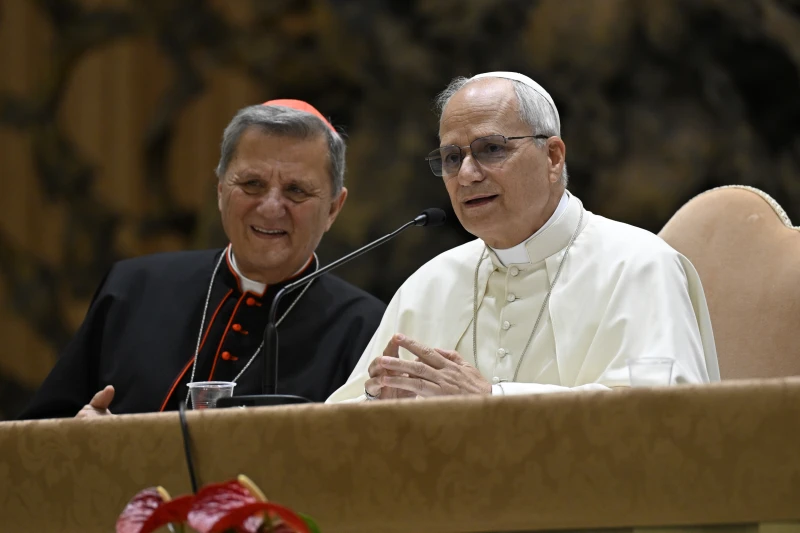
Pope Leo XIV sits next to Cardinal Mario Grech, general secretary of the Vatican’s synod office, during the jubilee of synod teams and participatory bodies in the Vatican’s Paul VI Hall on Oct. 24, 2025. / Credit: Vatican Media
Vatican City, Oct 25, 2025 / 12:00 pm (CNA).
There is no single model for what synodality should look like in all countries and cultures, Pope Leo XIV said in a discussion with synod leaders from around the globe, held at the Vatican on Friday.
“We have to be very clear, we’re not looking for a uniform model. And synodality will not come with a template where everybody and every country will say this is how you do it,” the pope said in the Paul VI Hall Oct. 24.
“It is, rather, a conversion to a spirit of being Church, and being missionary, and building up, in that sense, the family of God.”
Leo spoke about synodality in unscripted remarks in English, Spanish, and Italian during the opening session of a meeting for the jubilee of synodal teams and participatory bodies, taking place in Rome Oct. 24-26, part of the Church’s wider 2025 Jubilee of Hope.
Around 2,000 people are attending the synod-focused jubilee, which includes a two-day meeting “aimed at translating the orientations of the [Synod on Synodality’s] Final Document into pastoral and structural choices consistent with the synodal nature of the Church,” according to the Vatican’s synod office.
Pope Leo XIV listens to reports from seven representatives around the world about the implementation of synodality on their continents during the jubilee of synodal teams and participatory bodies at the Vatican on Oct. 24, 2025. Credit: Vatican Media.
The pope joined part of the program on Friday evening to listen to representatives from different regions give reports on the implementation of synodality in their parts of the world, and to answer their questions about the synodal process.
Synodality, Leo said, “is to help the Church fulfill its primary role in the world, which is to be missionary, to announce the Gospel.”
He added that synodality “is not a campaign. It’s a way of being and a way of being Church. It’s a way of promoting an attitude, which begins with learning to listen to one another.”
The pope recalled the value of listening, “beginning with listening to the Word of God, listening to one another, listening to the wisdom we find in men and in women, in members of the Church, and those who are searching who might not yet be members of the Church.”
He also addressed resistance to the synodal process, such as worry by some that it is an attempt to weaken the authority of the bishop.
“I would like to invite all of you … to reflect upon what synodality is about and to invite the priests particularly, even more than the bishops, to somehow open their hearts and take part in these processes,” Leo said. “Often the resistance comes out of fear and lack of knowledge.”
He emphasized the need to prioritize formation and preparation at every educational level.
“Sometimes ready answers are given without the proper, necessary preparation to arrive at the conclusion that maybe some of us have already drawn, but others are not ready for or capable to understand,” he said.
“We have to understand that we do not all run at the same speed. And sometimes we have to be patient with one another,” Leo said. “And rather than a few people running ahead and leaving a lot behind, which could cause even a break in an ecclesial experience, we need to look for ways, very concrete ways at times, of understanding what’s happening in each place, where the resistances are or where they come from, and what we can do to encourage more and more the experience of communion in this Church which is synodal.”
Asked if groupings of churches, such as regional bishops’ conferences, will continue to grow in the life of the Church, Leo said, “the brief answer is yes, I do expect that, and I hope that the different groupings of churches can continue to grow as expressions of communion in the Church using the gifts we are all receiving through this exercise if you will, this life, this expression of synodality.”
The pontiff also weighed in on the topic of women and their participation in the Church, though he set aside the most controversial questions, which he said are being examined in a separate study group.
“So leaving aside the most difficult themes,” he said, “there are cultural obstacles, there are opportunities, but there are cultural obstacles. And this has to be recognized, because women could play a key role in the Church, but in some cultures women are considered second-class citizens and in some realities they do not enjoy the same rights as men.”
“In these cases, there is a challenge for the Church, for all of us, because we need to understand how we can promote the respect for the rights of everyone, men and women,” he encouraged.
The Church can promote a culture in which there is co-participation of every member of society, each according to their vocation, Leo continued. “We have to understand how the Church can be a strength to transform cultures according to the values of the Gospel.”





Leave a Reply