




ACI Digital, Aug 17, 2023 / 09:32 am (CNA).
The long dominance of liberation theology is at the root of the decline of Catholicism in Brazil, according to Friar Clodovis Boff.
Until 2007, the religious was an important theologian of liberation theology, although not as famous as his brother Leonardo, a former Catholic priest who is one of the founders of the movement, which gained popularity in the 1970s and emphasized freedom from poverty and oppression as the key to salvation.
Then, in a move that alienated him from his famous brother, Clodovis Boff published the article “Liberation Theology and Return to Fundamentals,” in which he accused liberation theologians of making the poor the center of theology instead of Jesus Christ.
Now, Boff has written a book calling for a re-centering of the Latin American Catholic Church in Christ.
“It is necessary for the Church to once again emphasize Christ as priest, as master and Lord, and not just the fight against poverty and the climate crisis,” he said at the launch of the book “The Crisis in the Catholic Church and Liberation Theology,” written in collaboration with Father Leonardo Rasera and recently released by Ecclesiae.
“These are important questions, but without drinking from Christ, who is the source, everything dries up, everything dies,” Boff said.
In the late 1960s, when liberation theology began its long dominion of religious thought in Brazil, more than 90% of Brazilians were Catholics.
Since then, the percentage of Catholics in the Brazilian population has decreased and now stands at 51%.
Moreover, Brazilian Catholics have a very low rate of church attendance. A survey conducted by Georgetown University’s Center for Applied Research in the Apostolate (CARA) in 36 countries last year showed that only 8% of Brazilian Catholics go to Mass on Sunday. The rate was the third lowest among the analyzed countries.
For Boff and Rasera, the decline in church attendance is due to the deposit of faith not being passed on.
With liberation theology, “faith is instrumentalized in terms of the poor,” Boff writes in the book. “One falls into utilitarianism or functionalism in relation to the Word of God and to theology in general,” he continues.
He says liberation theology “appeals to ideas such as ‘margins of gratuity’ and ‘eschatological reserve’ to assert its respect for the transcendence of faith. In fact, the part of transcendence is, in this theology, the smallest and least relevant part, the ‘lion’s share’ falling, as always, to the ‘liberating reading’ of faith.”
According to the friar, this is leading many Catholics to Protestantism, esotericism, neopaganism, and even Satanism.
“Far from having disappeared, it would be absurd to say so, faith in Christ continues to be a reference for the Church,” the friar said in a launch of his book in which he spoke on the theme “The Crisis in the Catholic Church: Lack of Faith, Ideologies, and Worldliness.”
“But the decisive question is whether faith in Christ is your central, main, determining reference,” he said. “It is not a question of the Church affirming the centrality of Christ only in formal and theoretical terms but of affirming it existentially and operationally, as being the beating heart of all its life and action,” the friar said.
“Doctrinally affirming the primacy of Christ in the Church costs little,” he said.
“Affirming, however, in an existential way, that Christ is the absolute center of the Church, costs, and a lot: It costs the heart and the soul, when it does not cost tears and perhaps blood,” he said.
In his book, Clodovis talks about how he collaborated with proponents of liberation theology during the pontificates of Pope John Paul II and Pope Benedict XVI.
For him, it is necessary that liberation theology be rethought with Christ at the center, not the poor, in order to be “timely, useful, and necessary,” as St. John Paul II said in his letter to the Brazilian bishops in 1986.
This story was first published by ACI Digital, CNA’s Portuguese-language news partner. It has been translated and adapted by CNA.
If you value the news and views Catholic World Report provides, please consider donating to support our efforts. Your contribution will help us continue to make CWR available to all readers worldwide for free, without a subscription. Thank you for your generosity!
Click here for more information on donating to CWR. Click here to sign up for our newsletter.


“. . . this is leading many Catholics to Protestantism . . .”
And not just in Brazil.
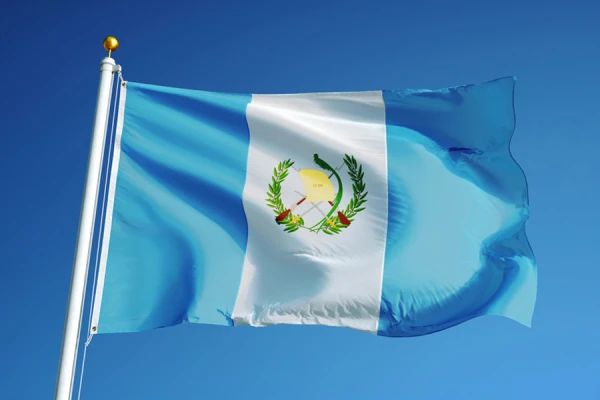
Back in 2006 when I was my diocese’s Director of Catholic Charities I made the decision that we would begin doing medical missions to Guatemala. What convinced me was a visit to Guatenala where I witnessed firsthand numerous missionaries from protestant denominations who were in Guatemala for one reason which was to convert baptized Catholics into protestant evangelicalism. I also was aghast at the thousands of evangelical churches that dotted the landscape. I thought to myself that I could just retutn to my home diocese and do nothing or I could begin to organize Catholics in my diocese to become missionaries to the Guatemalan people. That I did
Sometimes the road to Protestantism is the road back to Rome. They go there because we are not doing our job in teaching and evangelizing. We should be thankful for what they do and acknowledge what we are NOT doing. We should love our “separated brethren “ and share with them the fullness of faith just as Paul did with those who only knew of the baptism of John and those who did not have the fullness of the Holy Spirit.
How’s that Liberation Theology working out in Nicaragua, Pope Francis?
Such a question to pose to Pope Francis as one may readily anticipated his response “Nicaragua is struggling only because the radical traditionalist have precluded the fullest implementation of Liberation Theology in Nicaragua as well as throughout the world.”
There is arguable evidence that “liberation theology” was not so much the intellectual achievement of theologians as a construct of communists, esp. in Romania, who tried to package Marxism in Christian wineskins and found gullible “thinkers” buying the sauce.
Absolutely true, “liberation” theology was political, thoroughly, and the cause of decline of true Christianity in all parts of the world it was and still is being espoused. We can not “believe” in a church that is based on faith in a political solution to societal ills. It will fail, and in fact in this instance,brought about even more suffering and persecution, even more poverty, than BEFORE the new Catholicism in the form of Liberation Theology was espoused. I listened and learned from these liberation theologists in the 70s and 80s, and wised up when I saw the results. Results on the poor is what my bottom line is, and liberation theolody/marxism does not raise up the poor.
100% agree. Oddly my full comment of agreement was declined to post, but at least I can 100% agree
Sorry, it WAS accepted, just after I posted it was not. Apologies.
So the Vatican discernment for the catastrophe called liberation theology in Brazil is to resuscitate and rehabilitate it for worldwide export. 🤦♀️
Quick, lock the doors and alert the masters of synodality that there’s another “backward” Christian lurking in Brazil!
And, of the Boff brothers, why are we reminded of the difference, too, between Karl Rahner and his brother and priest Hugo? Fr. Hugo Rahner once said that he would like to translate Karl’s theologically foggy German tomes—into German!
“It is necessary for the Church to once again emphasize Christ as priest, as master and Lord, and not just the fight against poverty” or climate change.
Absolutely. Jesus DID say the poor would always be with us. He said nothing about climate change yet He does control the wind and the rain. He set limits to the seas.
Without HIM we can do absolutely zero, NADA, nothing. So why do delude ourselves, huh? He also said He would be with us always, so why do we wait to call upon Him?
The problem is that too many clergy imagine that Catholicism is the same thing as Communism. Its not. But by the time some realize it, the damage is already far gone. If some are FINALLY waking up to the fact that they have tossed out the baby with the bath water, more the better. The REAL question is, can the many decades of damage still be reversed?
In the public health scam COVID-cum-COVID-vaccine, the Pope propagated a singular solidarity in the scam vaccinations as the way of universal human fraternity and (somehow) love of the poor -all through the Cross of Christ.
At a particular Way of the Cross event he demonstrated a total conviction with a patterning to obedience, “Christ at the absolute center with a cost”.
I forgive the Pope for it. It is nonetheless a total disaster. Of what now ensues, I think it is necessary to practice greater fidelity in faith in order to make up for what remains absent; help what might be inoffensive or perhaps right; and be vigilant for what is still likely to go wrong again.
I would like to point out to him, for a consideration, that what the “singular solidarity” approach does in many instances, is, it merely leaves his apostolate and that of many others, hamstrung. And it can contain a rigidity all its own.
What is the percentage of professed Catholics in traditionally known “Catholic” nations, such as Italy or Spain? Also, we all need to read in Sacred Scripture Thessalonians 2:1-8 a great falling way from Christ’s Church.
Liberation Theology is heresy. You can’t “put Christ at the center” of heresy “because it will cost you”. You have to reject the heresy.
The thing with heresy is that it gets in your blood, your very spirit becomes polluted; and only the grace of God can purify.
This article is too descriptive and carries forward the tone of accommodation. Christ does not rectify heresy, He destroys it.
Make mammon the priority over holiness of soul and you have gone awry. Give the poor enough mammon and you save them from evil? Hardly. Yet, how many with enough mammon believe they no longer need God? Too many. Brazil is wealthy. As the wealth has come, the need for the faith diminished. The SJWs post V2 had the same “pie in the sky” mentality about divinizing saving the helpless poor. The orders that took their eyes off Heaven and refocused their energies on lifting the poor out of poverty were all dissolved from atrophy 5-years or so afterward. It was a death knoll. Jesus said that “the poor will always be with you.” I think it’s well past time we accept that and move on to saving souls again. It matters.
To understand the impact of Liberation Theology in Brazil, it’s necessary to assess it in the wider context of world affairs in the region, plus the common cultural dynamic of class color. Insofar as world affairs the US supported a policy of support and intervention for dictatorial leaders who were anti communist. Example, the notoriously oppressive Somoza govt Nicaragua, which precipitated the Ortega anti Catholic regime. Class color is a preferential tendency for lighter complected leadership. We find this in S America, India, and elsewhere, and to a large extent during the history of the US [today in the US there’s an exaggerated, likely unjust effort to reverse the trend at the expense of the lighter complected].
Most of the clergy in S America were from upper to middle class families, many plantation patroons. Archbishop Romero, Salvador, was murdered because he opposed the class system that victimized the poor. Whatever the source of Liberation Theology, its error in sidelining Christ in favor of the underprivileged, climate it remains that it addressed injustices that are at least partially responsible for Catholic apostasy.
It’s an historical fact that Jorge Bergoglio, when prefect for the Jesuits in Argentina refused to support three confreres involved in the liberation movement who were arrested and mistreated by police. He later contended that this was a mistake. According to biographer Austen Ivereigh he reversed course, adapting a Peronist socialist outlook that may explain his radical approach to traditional doctrine. John Paul II opposed Liberation Theology but successfully intervened in the similar Solidarity movement in Poland. Perhaps he could have done as well in S America.
“Jesus said to him, ‘If you wish to be perfect, go, sell your possessions, and give the money to the poor, and you will have treasure in heaven’” (Matthew 19:21). A primary dynamic in Christ’s message is compassion for those in need. That is mentioned throughout the Gospels and letters.
There are injustices in this world that require correction. Keeping people in virtual slave labor conditions to preserve wealth and status is an injustice. Unfortunately, the Vatican failed to develop a viable response to the immoral disparity between the upper and lower classes in S America. When Catholic missionaries addressed these moral issues, aside from the ideologues, with due prudence, they were falsely accused of being Marxists.
For the rest of us, if we content ourselves with our comfortable status and neglect witness to the truth, for example, those in dire need we neglect a vital dimension of our salvation. As readers well know I don’t agree with all that Pope Francis proposes. But on this social justice issue I agree fully.
Liberation Theology is a pseudo-Christian idea. Sadly it won’t be abandoned anytime soon. The hubris in the hierarchy will likely double down on the failing and flawed idea until the numbers are unavoidable. Too many people assume that the peddlers of Liberation Theology are interested in growing the church. I’d posit their real aim to is to feel good in their emoting of the ideas within Liberation Theology instead of actually doing good. The WSJ had an article on the rise of Pentecostalism in South America not too long ago. One of the speculated ideas was that the Liberation Theology hold put economic prosperity in a negative light, whereas the non-Catholic denominations were at peace with those in poverty trying to break into the middle class.
Here is an attempt t0 apply “liberation theology” to Catholic schools which are now too expensive for the poor:
“A preferential option for the poor” should be maintained in our Catholic Schools. If we find that we cannot afford to keep our schools open to the poor, the Church should be ready to use its resources for something else which can be kept open to the poor. We cannot allow our Church to become a church primarily for the middle-class and rich while throwing a bone to the poor. The priority should be given to the poor even if we have to let the middle-class and rich fend for themselves.
Practically speaking, the Catholic Schools must give up general education in those countries where the State is providing it. The resources of the Church could then be focused on “Confraternity of Christian Doctrine” and other programs which can be kept open to the poor. These resources could then be used to help society become more human in solidarity with the poor. Remember, the Church managed without Catholic Schools for centuries. It can get along without them today. The essential factor from the Christian point of view is to cultivate enough Faith to act in the Gospel Tradition, namely, THE POOR GET PRIORITY. The rich and middle-class are welcome too. But the poor come first.
Seriously? What is your issue, really? Do you imagine the middle class and “wealthy” kids have no souls to be saved? Poor is a relative concept, with most poor Americans ( with clean clothing, new sneakers and cell phones) looking like they have a pretty decent deal to the rest of the world. That is why we are presently in need of a very large WALL to keep these folks OUT.We do indeed have a standard public school system here in the US. However with the leftist oriented teachers telling the kids the US is a horrible country, slamming the white kids for being white, and indoctrinating ALL the kids with noxious and perv sexual concepts, I would not enroll a dog there. Finally, statistics show most US public schools have exceedingly large numbers of kids not meeting standards of achievement for math and English. Why would ANYONE with a brain put their kids there. Finally, with the middle class and wealthy tuition payers pushed out of Catholic schools, who do you imagine is going to come up with the cash to pay the teachers, electric and heating bill, etc? The poor folks? Dont think so. We do indeed have poor catholics and existing catholic schools should make certain to admit a few such families to the school tuition free. A teacher will be teaching whether there are 16 kids in the class or 18. Our church just took up a collection of school supplies for a neighboring parish for the upcoming school year. There are of course deserving poor, but some of us are tired of having to hear the whine and then get kicked for it.
“This option [for the poor] is not limited to material poverty, since it is well known that there are many other forms of poverty, especially in modern society—not only economic, but cultural and spiritual poverty as well” (St. John Paul II, Centesimus Annus, 1993, n. 57).
Liberation Theology is not merely “thoroughly political movement that actually works against the poor/exploits the poor”; it is heresy.
So you blend Marxist ideology with Christian theology and then wonder why people end up leaving the church? That’s not exactly rocket science.
Liberation Theology was an effective tool in the armory of Jesus of Nazareth. In his time Jesus liberated the sinners from sin, the tax collectors from greed, the exploiters from practicing all forms of corruption. Following in the footsteps of Christ, the apostles and the disciples became teachers and practitioners of liberation theology. Sensitizing and conscientizing the simple and pious people who were led astray by the regimes of the Pharisees, the Sadducees, and the Levites, the good old liberation theologians of the first century unleashed a sustainable emancipatory model for living and serving in dignity, as human beings made in the image and likeness of the divine.
Liberation Theology is a modern heresy.