Cardinal Juan Jesús Posadas Ocampo. / Credit: Archdiocese of Guadalajara
ACI Prensa Staff, May 26, 2023 / 12:15 pm (CNA).
On the 30th anniversary of the murder of Cardinal Juan Jesús Posadas Ocampo, the Mexican Bishops’ Conference recalled the “open wound” left by the unsolved crime.
Posadas was archbishop of Guadalajara from 1987–1993.
In a May 24 statement, the Mexican bishops recalled that the cardinal “was the victim of an act of unjustifiable violence that left an open wound in our hearts and in the history of our country.”
Posadas was shot to death on May 24, 1993, in the parking lot of the Guadalajara International Airport in the Mexican state of Jalisco. While some posit that he was killed in the crossfire during a confrontation between drug cartels, the authorities have not resolved the case.
However, Cardinal Juan Sandoval Íñiguez, who succeeded Posadas as the archbishop of Guadalajara in 1994, has a different version of the story.
In a 2016 Facebook video, Sandoval, then archbishop emeritus, declared the murder was “a crime by the state, perpetrated by the Federal Judicial Police, that is, by the PGR police.”
Sandoval even named Rodolfo León Aragón, then director of the PGR, as the person in charge of the murder, who in turn most probably got his orders from then-Attorney General Jorge Carpizo, whose death in 2012 was “somewhat suspicious” and ended the investigation.
The Attorney General’s Office (PGR) at the time operated under the executive branch of the government and was in charge of investigating federal crimes. In 2018, it was replaced by what is now the Attorney General’s Office of the Republic, which is completely independent of the executive, legislative, and judicial branches.
In the 2016 video, Sandoval indicated that a possible motive for the killing was Posadas’ allegations of a link between the authorities and organized crime, as well as his work in favor of the constitutional reforms of 1992, which recognized the legal personality of the Catholic Church in Mexico.
In their May 24 statement, the bishops of Mexico remembered Posadas as “a man of unwavering faith and a courageous voice who stood up for Christian values and tirelessly fought for justice and peace in Mexico.”
“We remember his life and sacrifice with gratitude and admiration,” the bishops said. They recognized that “his commitment to those most in need inspires us to follow his example of love, service, and forgiveness.”
At the end of their message, the Mexican bishops encouraged that the “legacy” of Posadas “would be a guide for our lives and a constant call for unity and solidarity among all Mexicans.”
The Archdiocese of Guadalajara said on its Facebook page that the faithful of this city “continue to pray for his eternal rest” and also “that [Posadas’] murder be cleared up and that we may soon obtain justice and forgiveness.”
This story was first published by ACI Prensa, CNA’s Spanish-language news partner. It has been translated and adapted by CNA.
If you value the news and views Catholic World Report provides, please consider donating to support our efforts. Your contribution will help us continue to make CWR available to all readers worldwide for free, without a subscription. Thank you for your generosity!
Click here for more information on donating to CWR. Click here to sign up for our newsletter.
Bishop Rudolf Voderholzer of Regensburg. / Julia Wächter
Regensburg, Germany, Sep 30, 2021 / 03:00 am (CNA).
A German Catholic bishop suggested this week that the country’s “Synodal Way” is using the abuse crisis to reshape the Church on Protest… […]
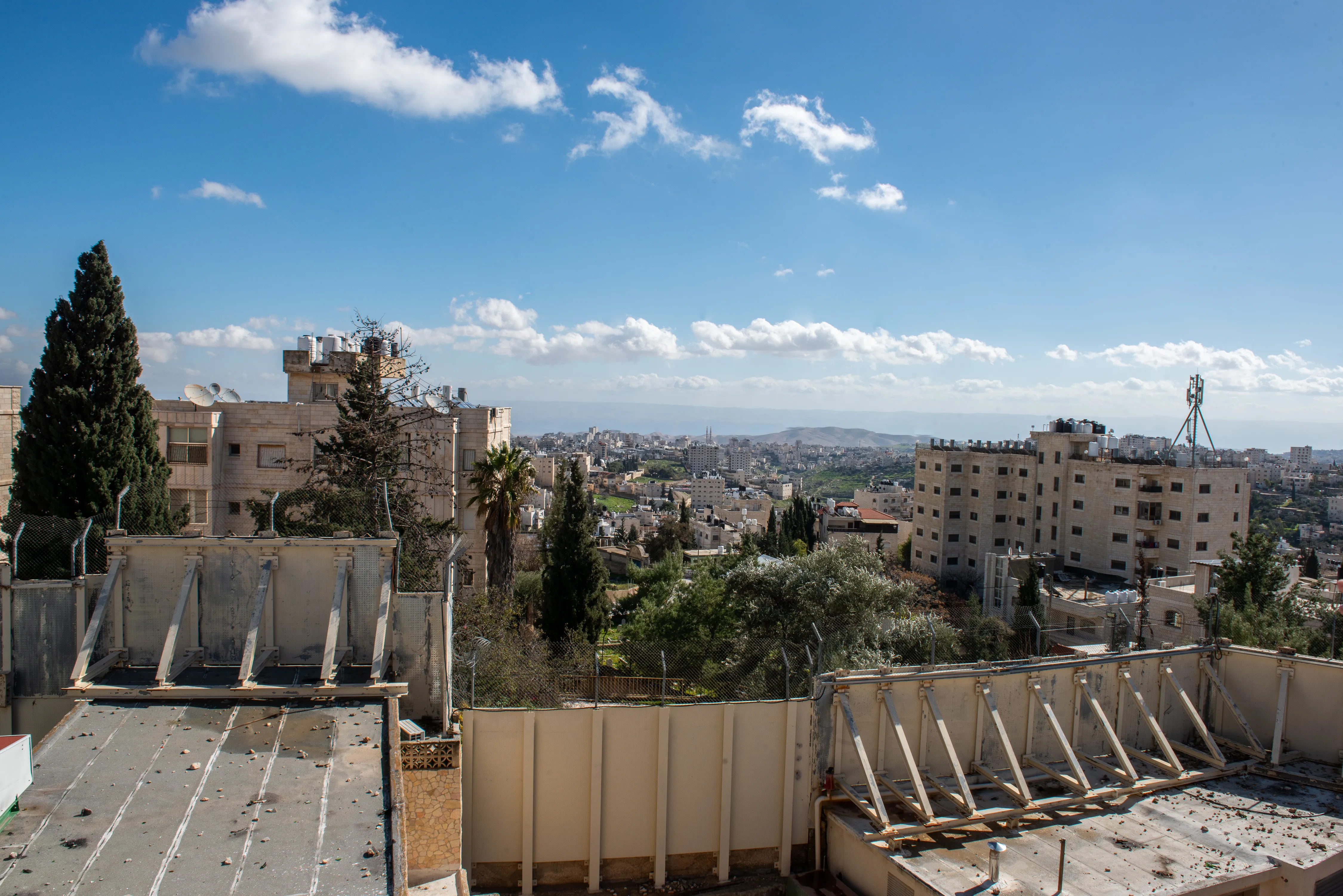
A view of the separation wall between Israel and the Palestinian Territories from behind a window in the Comboni Sisters’ house in East Jerusalem. / Credit: Marinella Bandini
Jerusalem, Feb 17, 2024 / 06:00 am (CNA).
The Comboni Sisters have been living on the border of East Jerusalem since 1967. Running along the border of their property is a wall, constructed by the Israelis in 2009, dividing the village of Bethany/al-Eizariya — renowned as the site of the resurrection of Lazarus. The sisters’ residence remains on the Israeli side, while the church and the tomb of Lazarus are on the Palestinian side, on the other side of the wall.
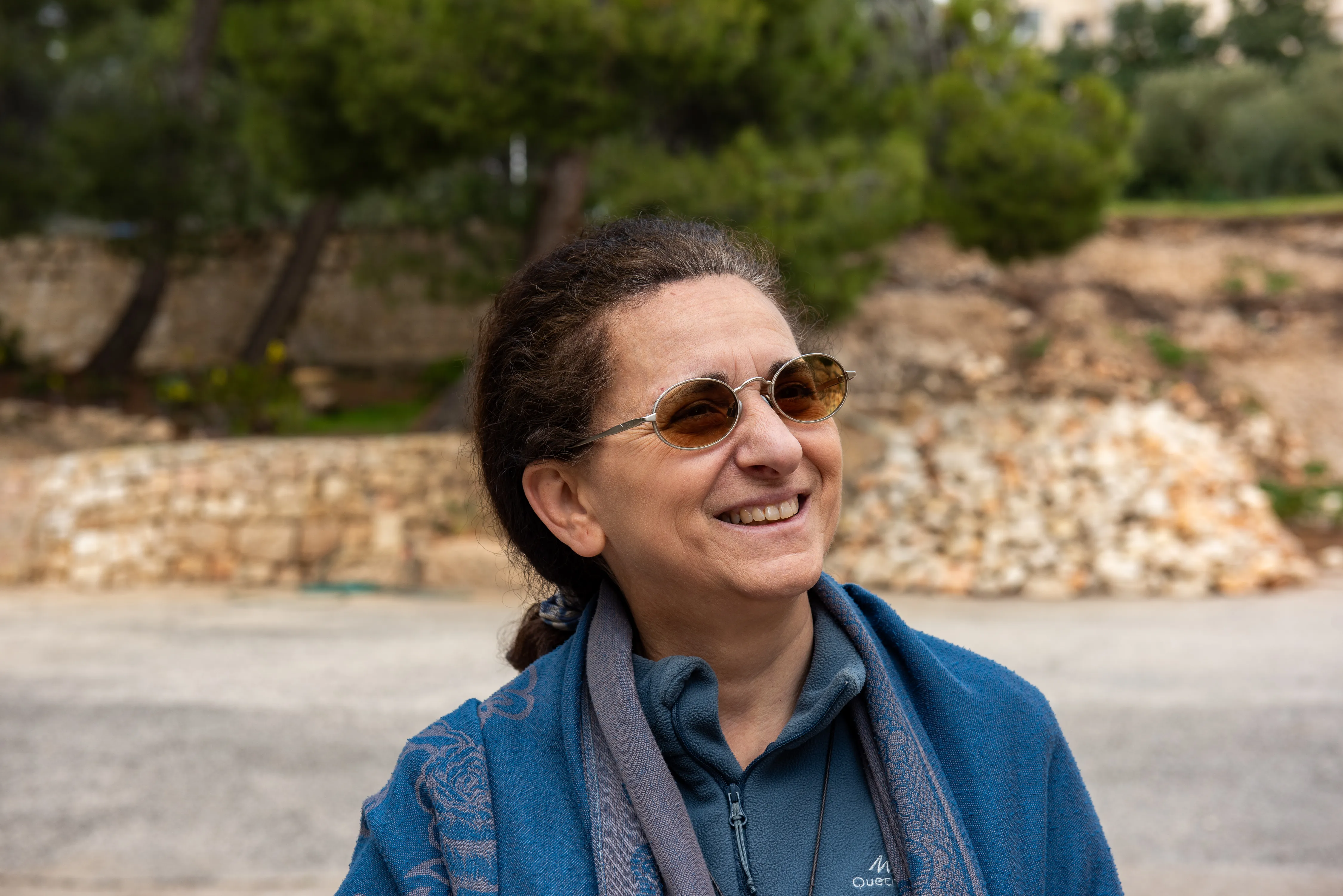
“For us, the passage from Scripture that says ‘in Christ the wall of separation between peoples has been broken down’ is very powerful [Eph 2:14], especially when there is a physical wall in front of us that clearly indicates this separation,” Sister Anna Maria Sgaramella, provincial councilor and coordinator of the Middle East Zone for the Comboni Sisters, told CNA.
Sister Anna Maria Sgaramella, provincial council and coordinator of the Middle East Zone for the Comboni Sisters. Credit: Marinella Bandini
Sgaramella arrived in Jerusalem for the first time on Sept. 26, 2000. The very next day, the second intifada — a major uprising by Palestinians against Israeli occupation — erupted. She witnessed the siege of the Basilica of the Nativity in Bethlehem, where she taught theology.
Later, she was transferred to Egypt, where in 2011, she witnessed the uprising known as the “Arab Spring.”
Since 2013, Sgaramella has permanently returned to Jerusalem and now faces another long and bloody conflict. “I have always been struck by the deep sense of hope and determination to move forward among the Palestinian people. With this war, I see it weaker; people are more exhausted,” she said.
A view of the separation wall between Israel and the Palestinian Territories from the terrace of the Comboni Sisters’ house in East Jerusalem. The wall, constructed by the Israelis in 2009, runs along the border of their property, dividing the village of Bethany/al-Eizariya in two, believed to be the site of the miracle of the raising of Lazarus. The sisters’ residence remains on the Israeli side, while the church and the tomb of Lazarus are on the other side of the wall. Credit: Marinella Bandini
There are currently six Comboni Sisters in Jerusalem and each is involved in a specific ministry. They usually come together for morning Mass and evening vespers as well as for meetings and reflection. Their community house is open to religious individuals seeking periods of study or discernment and serves as a center of spirituality for both the congregation and the local Church. The sisters host educational workshops and spiritual exercises as well as welcome pilgrims.
The Comboni Sisters in Jerusalem in a recent photo at the Jordan River. The Comboni Sisters’ community in Jerusalem currently consists of six sisters and each is involved in a specific ministry. Credit: Photo courtesy of Sister Anna Maria Sgaramella
Sgaramella shared with CNA what it’s like to live on the border.
“With the construction of the wall, we found ourselves in the middle, between Palestinians and Israelis,” she explained. “The Palestinians attempt to bypass the wall — especially to pray at the Dome of the Rock — while the Israelis try to repel them in an endless game.”
“Being in the middle is a physical position that has also become a spiritual one,” Sgaramella continued. “We had to reflect and decided to ‘stay in the middle,’ between these two peoples, to serve as a bridge between them. By placing ourselves in the middle, we listen to the injustice faced by the Palestinians and also to the fears of Israeli families.”
For this reason, the religious community has chosen to maintain a small presence in the Palestinian area. Two sisters reside in an apartment beyond the wall, about 100 feet from the Comboni Sisters’ residence.
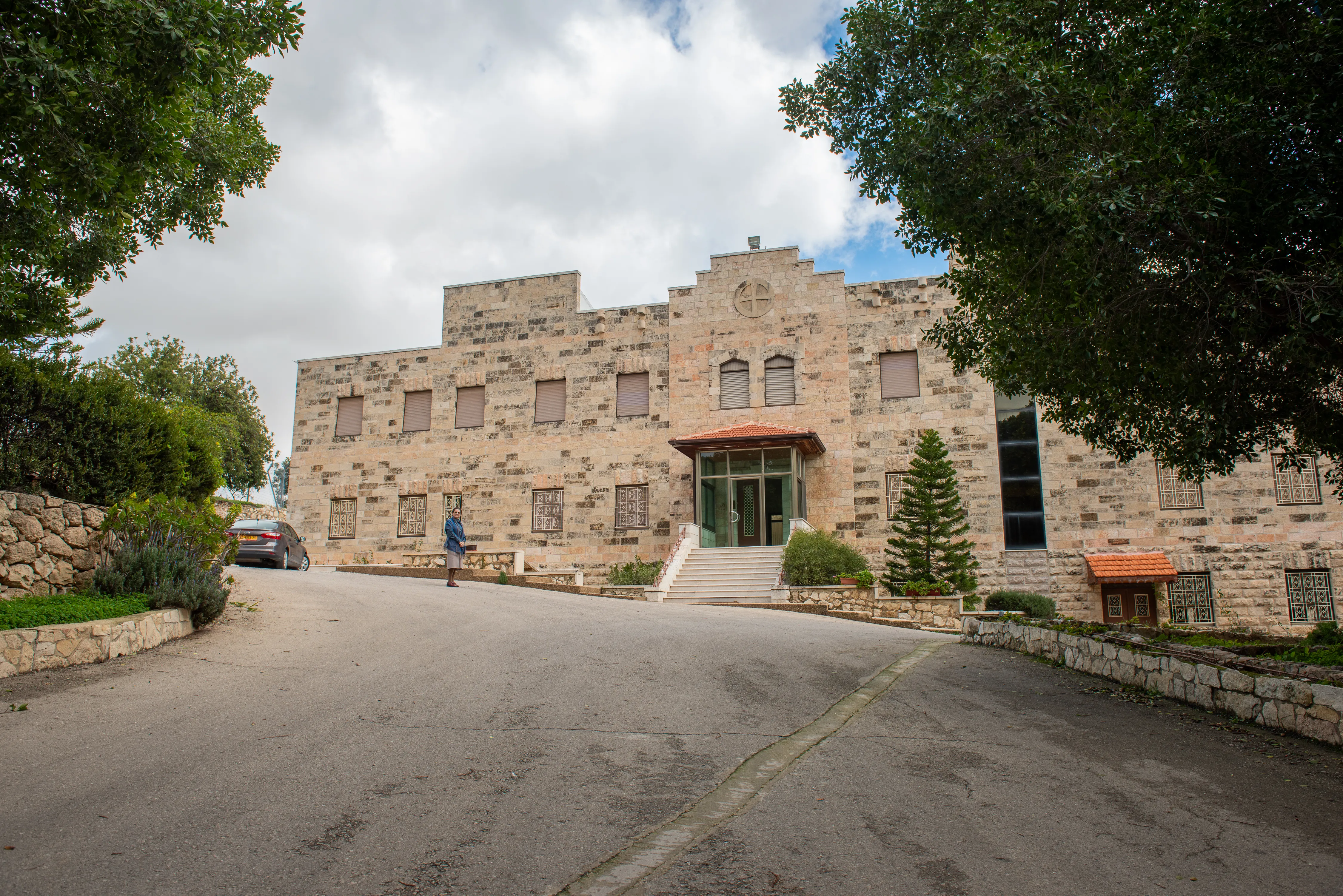
The exterior of the Comboni Sisters’ house in East Jerusalem where the Comboni Sisters have been living since 1967. Credit: Marinella Bandini
“We desired to stay and share the lives of those people and accompany the small remaining Christian community there. Every time they need to reach the community, they have to travel 18 kilometers [about 11 miles] passing through the Israeli checkpoint,” Sgaramella explained.
The sisters do not do this simply in the spirit of altruism, explained Sgaramella, who is also involved in ecumenical and interreligious dialogue. “We understood from the beginning that being in the middle comes at a cost. It often means getting hit from both sides. On one hand, there are stones and Molotov cocktails from the Palestinians that land on our property; on the other hand, we are under the smoke of tear gas launched in response by the Israelis,” she said.
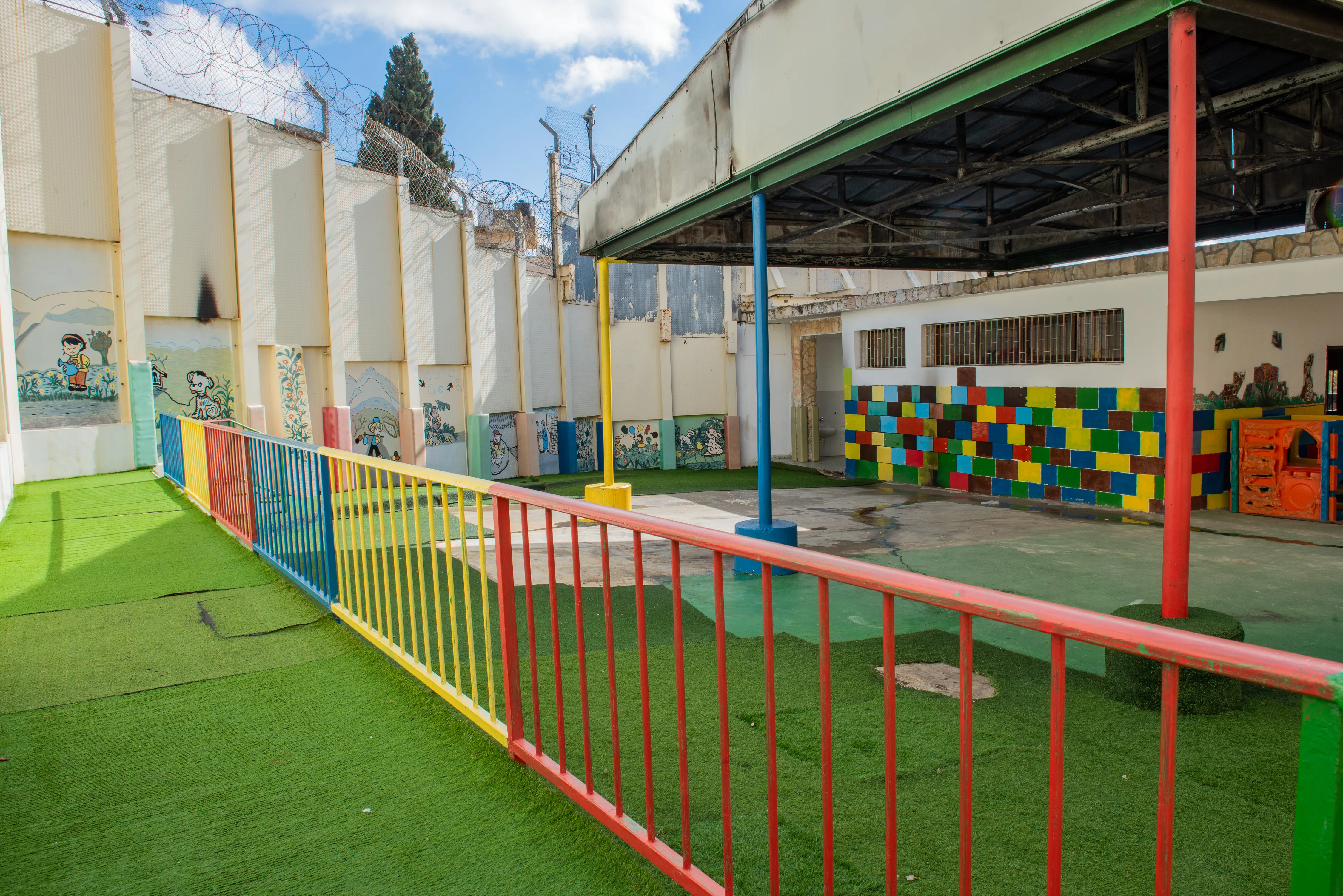
One incident happened the night of Oct. 6, just hours before the Hamas attack on Israel. Some Molotov cocktails landed on the synthetic grass in the part of the property that houses the kindergarten, causing a fire — the signs of which are still visible today. The fire destroyed the grass, playground equipment, and blackened the recently painted wall.
The exterior of the kindergarten, housed on the Comboni Sisters’ property. In the background is the separation wall that was erected on the edge of the Comboni Sisters’ property in 2009.
The kindergarten is a work that the Comboni Sisters have been carrying out since their arrival and today it serves as an important point of connection with the surrounding community. This significance has grown, especially after the construction of the wall.
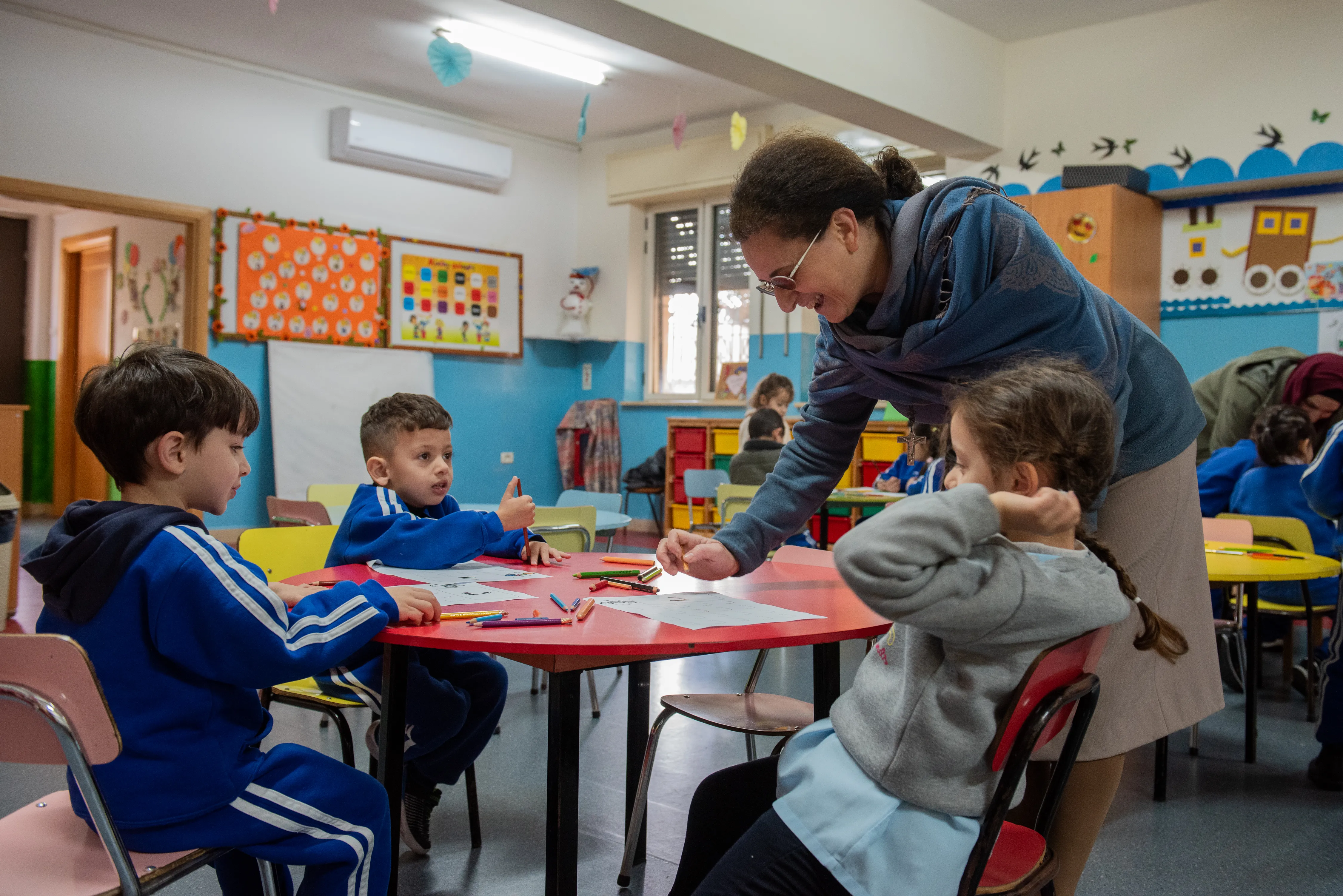
“The presence of the kindergarten has never been questioned, neither with the wall nor with the war,” said Sgaramella, who is the director. The kindergarten is attended by approximately 40 children, all of whom are Muslims, divided into two classes. Formally, it is under the jurisdiction of the Palestinian Ministry of Education. “It is a project that meets the needs of the people; furthermore, episodes of violence never occur during the day when the children are present,” she added.
Sister Anna Maria Sgaramella of the Comboni Sisters talks with the children in one of the kindergarten classes hosted at their home in East Jerusalem. The presence of the kindergarten has never been questioned, said Sgaramella, the director. Credit: Marinella Bandini
Every morning, the children begin with a prayer. “We tell the parents right from the start,” Sgaramella explained. “It’s a prayer of thanksgiving for what God has created, for the day, for life, a blessing for parents, neighbors, friends, and also for children who suffer. We pray for peace in the world and in this country.”
Regarding the families, she shared: “There is great trust and respect. They usually choose to send their children here, especially for moral education and English-language instruction.”
Most of the children come from East Jerusalem, but some also come from al-Eizariya. One of the two teachers, Nihal Hashmime, who is also the vice director, has to pass through the checkpoint every day to get to work.
“With the war,” the sister told CNA, “we faced some educational challenges because initially, some children were absent. The work we do with them is to impart certain values, such as peace, friendship, love, and respect for differences.”
Play is also an important aspect. “Children here do not find toy weapons, and they are not allowed to bring them from home,” Sgaramella said.
“Our attempt in education and all other activities is to break down this wall that leads to seeing the other as an enemy,” Sgaramella said. “Sometimes it is difficult to recognize the universality of salvation. We know that Jesus died for everyone, but in certain conflict-ridden contexts, it is challenging to acknowledge the other as a brother. Personally, the field of teaching theology provides me with the space to build bridges among believers. Because in every religion, there are sincere believers seeking truth.”
Pope Francis meets with a delegation from the Society of Catholic Publicists of Germany on the 75th anniversary of its foundation Jan. 4, 2024, at the Vatican. / Credit: Vatican Media
ACI Prensa Staff, Jan 5, 2024 / 18:30 pm (CNA).
Pope Francis… […]




Leave a Reply