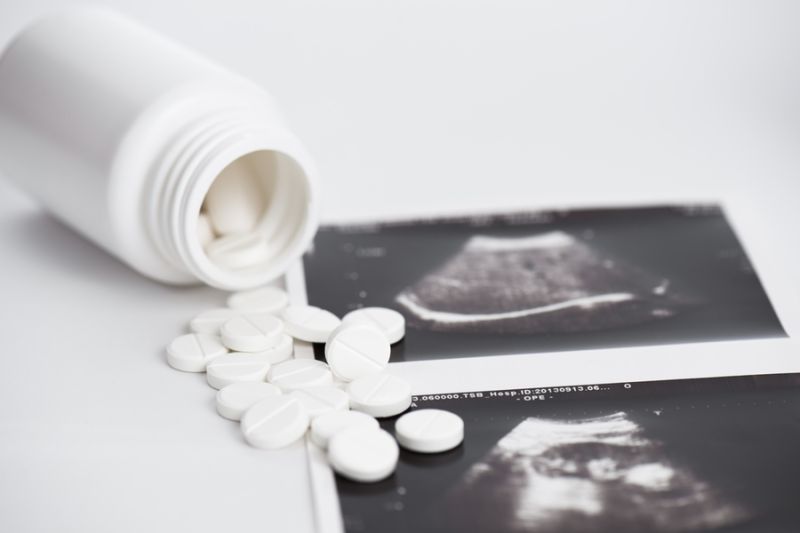
The first hearing in what could be the most consequential abortion case since the overturning of Roe v. Wade is set for this Wednesday, March 15.
The Alliance for Hippocratic Medicine (AHM), along with several other medical organizations and doctors, is suing the Federal Drug Administration for its approval and expansion of the abortion drug mifepristone.
On Jan. 3, the FDA changed its policy to allow pharmacies, such as CVS and Walgreens, to sell mifepristone. Previously, the FDA only allowed certified doctors, clinics, and some mail-order pharmacies to dispense the drug. After the FDA’s policy change, any patient with a prescription can obtain mifepristone from her local retail pharmacy.
Represented by the Alliance Defending Freedom (ADF), AHM is alleging that the FDA has been recklessly endangering women and young girls for decades by ignoring its own research and testing standards and continuing to expand its mifepristone approval.
The case is being heard by U.S. Judge Matthew Kacsmaryk for the Northern District of Texas, a Trump appointee.
The Wednesday court date was announced to lawyers involved with the case on Friday.
Kacsmaryk reportedly planned to not announce the hearing date to the public until Tuesday evening and urged attorneys to not disclose the information to avoid any disruptions to the proceedings.
According to the New York Times, Kacsmaryk said that court staff have “faced security issues, including death threats.”
A high-stakes case, if Kacsmaryk rules against the FDA, the administration could be forced to rescind its approval of the drug, bringing its legal distribution to a halt across the country, even in states where abortion remains legal.
Mifepristone is the first of two drugs used in chemical abortions, which account for 53% of all abortions in the country, according to the Guttmacher Institute.
The drug works by cutting off nutrients necessary for a fetus to continue developing. A second drug, misoprostol, is then ingested 24 to 48 hours later and induces contractions that expel the dead unborn child.
Mifepristone was first approved in 2000 and is commonly used throughout the country today.
“The abortion industry loves the chemical abortion regimen because it has such low overhead costs; the mother is the abortionist. The supplier of the lethal chemicals still gets paid, but the mother ingests the pills, expels the baby, and disposes of the body on her own,” California Right to Life director Mary Rose Short told CNA.
According to Short, “the abortion pill regimen [in California] is considered such a basic staple that the Democratic Legislature mandated that all state universities provide abortions in their campus health centers.”
ADF argues that the FDA never conducted thorough tests on mifepristone’s effect on minors, directly harming young girls across the nation who use the drug to this day.
Dr. Ingrid Skop, an OB-GYN and director of medical affairs at the Charlotte Lozier Institute, told CNA in February that “chemical abortion pills are far more dangerous than surgical abortion. They are far more dangerous than the abortion industry has told the American public.”
This is a developing story.
If you value the news and views Catholic World Report provides, please consider donating to support our efforts. Your contribution will help us continue to make CWR available to all readers worldwide for free, without a subscription. Thank you for your generosity!
Click here for more information on donating to CWR. Click here to sign up for our newsletter.
The advertising campaign by pro-life NGO Zavod ŽIV!M in Slovenia. / ADF International.
Ljubljana, Slovenia, Dec 9, 2021 / 04:00 am (CNA).
A court ruling against a pro-life group in Slovenia delivered “a blow” to the right to free expression, a … […]
Members of the Sts’ailes First Nation at Holy Rosary Cathedral last year for the first Mass to integrate a First Nation language. A Cardus report presents the voices of Indigenous Canadians speaking about their faith and distinguishing it from the traditional spirituality they’re often associated with. / Photo courtesy Nicholas Elbers, 2022
Vancouver, Canada, May 17, 2023 / 14:15 pm (CNA).
A groundbreaking report published by the Ottawa-based Cardus Institute has given voice to Indigenous Canadians who are frustrated by secular society’s unawareness of — or unwillingness to accept — the fact that almost half of them are Christian.
“I find that insulting to Indigenous people’s intelligence and freedom,” Catholic priest Father Cristino Bouvette said of the prejudice he regularly encounters.
Bouvette, who has mixed Cree-Métis and Italian heritage and now serves as vicar for vocations and Young Adults in the Diocese of Calgary, was one of 12 individuals interviewed by Cardus for the report “Indigenous Voices of Faith.”
Father Deacon Andrew Bennett, left, leads a post-production discussion by Indigenous Voices of Faith participants. Photo courtesy of Cardus
Prejudice against Indigenous Christians has become so strong, even inside some Indigenous communities, “that Indigenous Christians in this country right now are living in the time of new martyrdom,” Bouvette said.
Although that martyrdom may not cost them their lives, “they are ostracized and humiliated sometimes within their own communities if they openly express their Christian or Catholic faith.”
Statistics Canada reported last year that the 2021 census found that 850,000, or 47%, of Canada’s 1.8-million Indigenous people identify as Christian and that more than a quarter of the total report they are Catholic. Only 73,000, or 4%, of Indigenous people said they adhere to traditional Indigenous spiritual beliefs.
In a new report, Cardus wants to “amplify the voices of Indigenous Canadians speaking for themselves about their religious commitments, which sometimes clash with the typical public presentation of Indigenous spirituality.” Photo courtesy of Cardus
Ukrainian Catholic Deacon Andrew Bennett, program director for Cardus Faith Communities, conducted the interviews for the think tank last fall. He published his report in March at a time when Canadian mainstream media and many political leaders continued to stir division and prejudice through misleading commentary about abandoned cemeteries at Indian Residential Schools.
The purpose of the report, he writes, “is to affirm and to shed light on the religious freedom of Indigenous peoples to hold the beliefs and engage in the practices that they choose and to contextualize their faith within their own cultures.”
Too often, however, “the public narrative implies, or boldly declares, that there’s a fundamental incompatibility between Indigenous Canadians and Christianity or other faiths,” Bennett said. “[M]any Indigenous Canadians strongly disagree with those narratives.”
Father Bouvette is clearly one of those.
“We did not have Christian faith imposed upon us because of [my Indigenous grandmother’s] time in the residential school or her father’s time in the trade school that he was sent to,” Bouvette said. “No, it was because our family freely chose to receive the saving message of Jesus Christ and lived it and had continued to pass it down.”
Bouvette said his “grandmother was not tricked into becoming something that she didn’t want to be, and then tricked into staying that way for 99 years and 11 months of her life. She was a Christian from the day of her birth, and she remained a Christian until the day of her death. And so that was not by the consequence of some imposition.”
Nevertheless, Canadians continue to labor under a prejudice holding the opposite view. “I do believe that probably the majority of Canadians at this time, out of some mistaken notion of guilt for whatever their cultural or ethnic background is, think they are somehow responsible for Indigenous people having had something thrust upon them that they didn’t want,” Bouvette said.
“We did not have Christian faith imposed upon us,” Father Cristino Bouvette says in a Cardus report on Indigenous faith. Photo courtesy of Cardus
“But I would say, give us a little more credit than that and assume that if there is an Indigenous person who continues to persevere in the Christian faith it is because they want to, because they understand why they have chosen to in the first place, and they remain committed to it. We should be respectful of that.”
The executive director of the Catholic Civil Rights League, Christian Elia, agrees and says society should grant Indigenous Catholics the respect and personal agency that is due all Canadians.
“Firstly, I am not an Indigenous person, so I cannot speak for our Indigenous brothers and sisters, but neither can non-Indigenous secularists who choose to ignore that Indigenous people in Canada continue to self-identify as Christian, the majority of these Catholic,” Elia said in an interview with The B.C. Catholic.
He said his organization has heard from many Indigenous Catholics who are “growing weary of the ongoing assumption that somehow they have been coerced into the faith, that it is inconceivable that they wish to be Catholic. This condescending attitude must stop.”
Deacon Rennie Nahanee, who serves at St. Paul’s Indian Church in North Vancouver, was another of the 12 whom Bennett interviewed. A cradle Catholic and member of the Squamish First Nation, Deacon Nahanee said there is nothing incompatible with being both an authentic Indigenous person and a Catholic.
“I’m pretty sure we had a belief in the Creator even before the missionaries came to British Columbia,” he said. “And our feelings, our thoughts about creation, the way that we lived and carried out our everyday lives, and the way that we helped to preserve the land and the animals that we used for food, our spirituality and our culture, were similar to the spirituality of the Catholic Church.”
“I believe that’s why our people accepted it. I don’t think anybody can separate themselves from God, even though they say so.”
Interviewed later by The B.C. Catholic, Nahanee said he is not bothered by the sort of prejudice outlined by Bouvette. “People are going to say or do what they want,” he said.
Voices of Indigenous Christianity
Bennett, program director of Cardus Faith Communities, interviewed 12 Indigenous Canadians, most of them Christian, about their religious commitments, “which often clash with the typical public presentation of Indigenous spirituality.” Here is a selection of some of their comments:
Tal James of the Penelakut First Nation in Nanaimo spoke about the relationship between Indigenous culture and his Christian faith:
Tal James and wife Christina. Photo courtesy of Project 620 – James Ministry
“I think … that our [Indigenous] cultures were complete, and in Jesus they’re more complete. I think that’s a big thing and a big step for a lot of us. You’re going to have a lot of non-Indigenous people look at you and question your actions based on your Aboriginal heritage. Don’t take that to heart. They’re the ignorant ones who don’t want you to flourish. Those of you who are Christians, First Nations Christians, you come to the table with the same gifting that non-Aboriginal people have. For them to say, ‘We want to make room for you at the table,’ correct them. You are already at the table, and encourage them to step back and allow your gifts to flourish. Because it’s one in the same spirit.”
Rose-Alma McDonald, a Mohawk from Akwesasne, which borders New York, Ontario, and Quebec, talked about re-embracing her Catholic faith:
Rose-Alma McDonald. Photo courtesy of Cardus
“I surprised everybody, including myself, in terms of embracing Catholicism after 20 years away. So I’ve had a few epiphanies in the sense that this is why my mother made me do so much in the church growing up. When I’m working, volunteering, and doing stuff in the church, I remember that. I keep remembering I’m Catholic and I’m still Catholic. I will stay Catholic because of the way I was raised.”
Jeff Decontie, a Mohawk from the Algonquin First Nations who lives in Ottawa, talked about being a person of faith in a secular world:
Jeff Decontie. Photo courtesy of Cardus
“Secular worldviews can sort of eat up everything around them and accept a whole wide range of beliefs at the same time. For example, you have the prevailing scientific thinking alongside New Age believers, and people in society just accept this, saying, ‘Oh, whatever it is you believe in, all religions lead to the same thing.’ No one questions it. How can these contradictions coexist? … Then we ask an [Indigenous] elder to lead prayer? Any other religion would be a no-no, but you can ask for an elder who’s going to pray a generic prayer to some generic Creator, and it’s not going to ruffle any feathers. I think that’s the danger of secular thought creeping into Canada: It goes unnoticed, it’s perceived as neutral, but at the same time it’s welcoming a whole wide range of beliefs. And it doesn’t just influence Indigenous thought. It’s influencing Christianity.”
Rosella Kinoshameg, a member of the Wikwemikong Reserve on Manitoulin Island in Ontario, spoke about being Indigenous and Catholic:
Rosella Kinoshameg. Photo courtesy of the Catholic Register
“Well, I can’t change being Indigenous. That’s something that is me. I can’t change that. But to believe in the things that I was taught, the traditional things, the way of life and the meanings of these things, and then in a church, well, those things help one another and they make me feel stronger.”
This article was originally published May 10, 2023, in The B.C. Catholic, a weekly publication serving the Catholic community in British Columbia, Canada, and is reprinted here on CNA with permission.
Washington D.C., May 3, 2017 / 03:20 pm (CNA/EWTN News).- Civic and religious leaders this week addressed a disturbing rise in religious hate crimes in recent years, especially harassment and violence perpetrated against Jews, Muslims, and Sikhs.
“While it is clear that Sikh Americans are not alone in experiencing a rise in hate crimes, the experience of our community is important to understand how dangerous this current era of inflammatory rhetoric promises to be if action is not taken,” Dr. Prabhjot Singh, a Sikh physician, said in his May 2 written testimony before the Senate Judiciary Committee.
The Senate Judiciary Committee heard testimony from representatives of the Anti-Defamation League, a Sikh doctor, and the civil rights division at the Justice Department on “responses to the increase in religious hate crimes” in the U.S.
“Crimes against Jews are the most common religious hate crimes and they have increased,” Sen. Chuck Grassley (R-Iowa), chair of the committee, noted, but Islamophobic incidents rose the sharpest amongst all religious groups with a 67 percent spike from 2014 to 2015 according to FBI statistics.
Although overall hate crimes, including crimes based on race, sexual orientation, religion and ethnicity, went down in number from 2000 to 2015, religion-based hate crimes went up 23 percent from 2014 to 2015, Eric Treene, special counsel for religious discrimination at the Justice Department’s civil rights division, pointed to FBI statistics.
Dr. Singh, in his written testimony, told of how Sikhs are only one of many religious groups in the U.S., yet violence against them is representative of a worsening in religious bigotry.
Singh was violently beaten by a mob on the streets of New York City in 2013. As he lay awaiting treatment for his injuries in the hospital, he learned that the Muslim woman lying next to him in the emergency room wearing a hijab, or a religious headscarf, was attacked by the same group of young men.
“They threw a bottle of urine at her face, cutting her nose,” he said. Yet reporters who documented Singh’s attack in a story did not mention the assault on the Muslim woman because, in Singh’s words, “they said it would complicate the story, which was about a professor and doctor who was ‘mistakenly’ attacked in his own neighborhood.”
“We cannot accept this premise,” he insisted in his Tuesday testimony. “There is no such thing as a ‘mistaken’ hate crime. No one should ever be targeted. The only mistake is thinking otherwise.”
The attack, he continued, was only the latest incident in a rash of harassment and violence against Sikhs in the U.S. since the 9/11 attacks in 2001.
“Some of our fellow Americans,” Singh said, “call us ‘ragheads and towelheads,’ or ‘ISIS and Al Qaeda.’”
“Ominously, the Sikh Coalition has consistently found that a majority of Sikh students in our nation’s public schools experience bias-based bullying and harassment,” he added. “Some of our children are accused of being ‘terrorists.’ Others have had their turbans ripped off.”
Sadly, these attacks are part of a larger landscape of “threats, arson, assault, and murder” against Muslims, Jews, Hindus, African-Americans, and LGBTQ persons, he said.
“We seem to be backsliding into a new nativist era. This endangers us all,” he said.
Anti-Semitic and Islamophobic acts rose in 2016 in the presidential election and have continued in 2017, Jonathan Greenblatt, CEO and national director of the Anti-Defamation League, explained in his testimony.
Anti-Semitic incidents rose by over one-third in 2016 with “1,266 acts targeting Jews and Jewish institutions,” according to the ADL 2016 audit of incidents.
The campaign only intensified tensions that had already been aggravated, he added.
“And anti-Semitic abuse has soared on social media,” he noted, as “hateful, anti-Semitic invective” flourished on the mediums during the election season as well as harassment of Jewish journalists by white supremacists including the use of “triple parentheses, to publicly ‘tag’ Jews online.”
The election “featured harshly anti-Muslim rhetoric and anti-Semitic dog whistles,” he said, “and fostered an atmosphere in which white supremacists and other anti-Semites and bigots feel emboldened and believe that their views are becoming more broadly acceptable.”
President Trump’s “initial reluctance to address rising anti-Semitism” has helped normalize this bigotry, Greenblatt said, and some of his supporters played a direct role in it.
“Much of the vandalism and harassment used slogans sourced from the Trump campaign such as ‘Make America Great Again,’” he said. Incidents during and after the election – anti-Semitic graffiti and assault – were perpetrated with expressed support for Trump.
In addition, in the election there were “stereotyping of many groups, including women and immigrants, threats to ban Muslims from entering or living in the country, pronouncements that Islam ‘hates’ America, mocking of disabled people, and political candidates attacking one another based on their physical appearance,” he said.
Dr. Singh said he “was horrified to hear our President last weekend telling thousands of people at a rally that immigrants are snakes waiting to bite America,” he referred to Trump’s words at a recent rally in Harrisburg, Pa.
“Words matter, and when political leaders divide and dehumanize us, this lays the groundwork for hate to infect our society,” he stated.
All this has not only continued in 2017, but the number of incidents has spiked sharply, Greenblatt said.
He noted 161 bomb threats against Jewish synagogues or buildings so far and three reported desecrations of Jewish cemeteries.
“The bomb threats against JCCs, schools, ADL offices, and other community institutions in dozens of states across the country attracted very considerable attention,” he said, “causing evacuations, significant service disruptions, program cancellations, and deep community anxiety.”
Some of the threats were graphic in nature, warning of a “bloodbath” or the decapitations of Jews in explosions.
Action must be taken to stem these incidents, witnesses insisted. Preventative measures could include mandatory reporting laws for hate crimes, a federal inter-agency task force on hate crimes, and public officials speaking out against bigotry.
Dr. Singh shared how his son will soon enter Kindergarten, yet according to statistics, will probably be the victim of bigotry.
“These young years are formative, and how children are treated tells us so much about who we are as a nation, and who we aspire to be,” he said.
Leave a Reply
