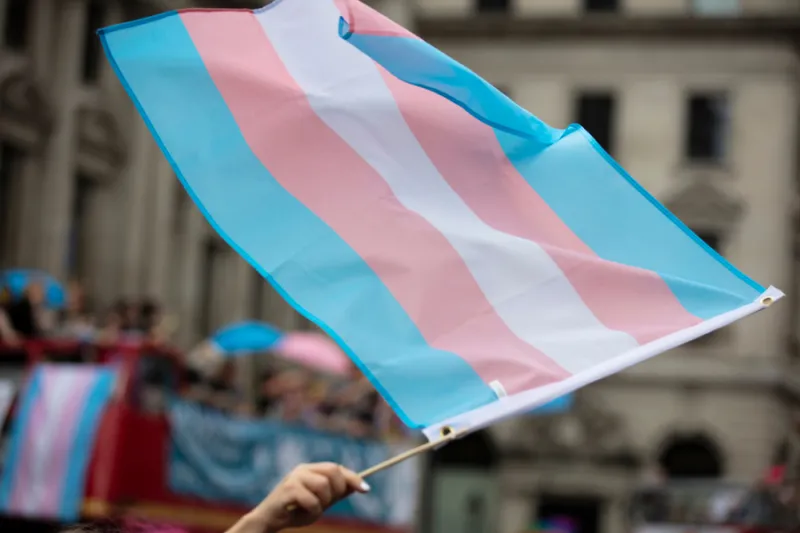
The Plenary of Spain’s national council of the judiciary has questioned the draft law on “the real and effective equality of trans people and for the guarantee of LGTBI rights.”
The bill would provide for self-determination of gender, so a person can change one’s name and sex on their National Identity Document by presenting a declaration, without the need for medical reports or proof of having started hormone treatments.
The legal change of sex could be requested beginning at the age of 12 with judicial authorization. For those 14 to 16 years old, it could be requested with the consent of parents or legal representatives; after 16 years of age, the person could go to the civil registry office alone and request the change, without the need for anyone to certify the change.
The draft law would also prohibit conversion, or reparative, therapy.
On April 8, judges Ángeles Carmona, Clara Martínez de Careaga, and Wenceslao Olea sent a report to the members of the General Council of the Judiciary on the draft law expressing serious doubts about it, saying they considered that in some aspects it would violate the rights of heterosexual women and that it goes against the best interests of minors.
The CGPJ oversees Spain’s judiciary, and among its functions is reporting on laws pertaining to judicial questions.
During an April 20 vote, the Plenary of the CGPJ accepted the points made in the April 8 report, and objected to the prohibition of reparative or conversion therapy, since “the prohibition does not fit those situations which have the consent of the affected person.”
“By majority, it has been agreed to propose that the age limit be raised to 18 years so that a person can request on his own the rectification of the registry related to sex. In this way, the procedure provided for in the preliminary draft for minors between 12 and 14 years of age which requires judicial approval, prior processing of a voluntary jurisdiction file and the demonstration of the necessary maturity and the stable will to proceed to rectify the sex in the registry would be extended to the age of majority,” the justices stated.
In addition, three other magistrates, José Antonio Ballestero, Juan Manuel Fernández, and José María Macías, presented a dissenting opinion strongly questioning whether “the mere manifestation of the will is enough for the rectification of the sex registry to be effective.”
These three members of the CGPJ noted that “such an important decision and with effects also for third parties, such as that of gender change, cannot depend on the mere expression of will.”
“The gender dysphoria that justifies the change of sex must have an accreditation that allows establishing a correspondence between the real will and the expressed will, and that this is not the result of not only a spurious interest, nor of an unthinking or little matured decision,” the judges said, according to the newspaper El Debate.
“We consider insufficient the mere declaration of will as a sufficient element for the effectiveness of the right to rectify the registry related to sex, and accreditation must be required of nonconformity with the sex mentioned in the registration of the birth, by the means that the legislator deems proportionate and appropriate,” they stressed.
The three judges emphasized that the European Court of Human Rights has dispensed with the requirement of surgical intervention for a change of sex, but “it has not done the same with the need for a diagnosis, nor the need to justify a stable situation of transsexuality.”
And although they noted that the World Health Organization stopped considering transsexuality a pathology, it kept it in an epigraph of “conditions related to sexual health” called “gender incongruence,” so it is evident that an effort has been made “to eliminate the stigma of mental illness or pathology, but it has not stopped considering it as a situation that can come into contact with or require health services.”
Consequently, the judges considered that “the establishment of certain requirements, accrediting gender dysphoria, would be constitutionally legitimate” and they also emphasized that “the proposed change does not correspond to the registry function, since, if the law is passed, it will not be confirming and publishing facts and acts that refer to the civil status of persons, but rather mere manifestations of will devoid of any evidentiary basis.”
The draft law was approved by Spain’s Council of Ministers in June 2021, and sent to the legislature.
At that time Bishop Luis Argüello, auxiliary bishop of Valladolid and spokesman for the Spanish bishops’ conference, said the draft law law “transforms feelings into a legal category and enthrones the will to do whatever one wants without any limits.”
Bishop Argüello stressed that the draft law “ignores the sexual reality of all the cells of the body and above all, it despises people who are suffering by proposing they change their National Identity Document (DNI) as a way out” of their gender dysphoria.
If you value the news and views Catholic World Report provides, please consider donating to support our efforts. Your contribution will help us continue to make CWR available to all readers worldwide for free, without a subscription. Thank you for your generosity!
Click here for more information on donating to CWR. Click here to sign up for our newsletter.
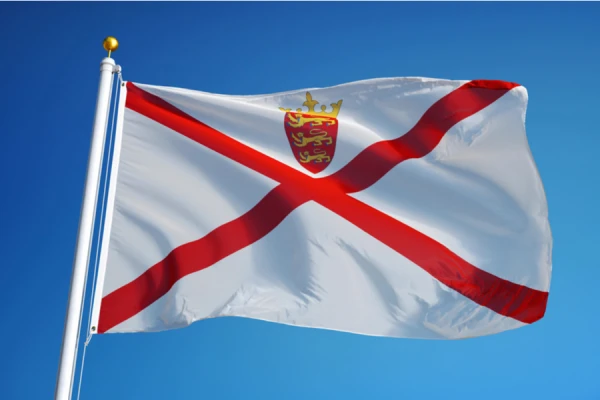
St. Helier, Jersey, Mar 12, 2021 / 05:01 pm (CNA).- Jersey has formed a citizens’ jury to determine whether assisted suicide should be allowed on the island.
Out of 477 people who applied to sit on the jury, 23 were “randomly selected to provide a broadly representative sample of the Island’, Channel 103 reported the government as saying.
An expert advisory team to the group includes several university professors from mainland universities such as Oxford and the University of Bristol.
The jury will meet virtually ten times over two months, starting March 18, to hear evidence and consider and debate the legal, ethical, and medical implications of legalizing assisted suicide.
Lawmakers in Jersey will ultimately make the decision whether to legalize assisted suicide, taking into account the jury’s recommendation, which is due in June.
Jersey is a British crown dependency, with its own government and legal system, though the British monarch remains head of state. It has a unicameral legislature called the States Assembly.
One of the expert advisors to the jury is Dr. David Jones, an Oxford bioethicist who is a member of the Healthcare Executive Group and the Department of Social Justice of the Catholic Bishops’ Conference of England and Wales, as well as a corresponding member of the Pontifical Academy for life.
Jersey, along with Britain’s other channel islands, is part of the Diocese of Portsmouth. Bishop Philip Egan of Portsmouth has spoken out in recent years against proposals to legalize assisted suicide on another channel island, Guernsey.
In a 2018 Palm Sunday letter, Egan wrote that assisted suicide is “fundamentally incompatible with a doctor’s role as healer.”
“Someone near the end of life needs emotional support, comfort and care, good pain control, respect and loving communication – not suicide on prescription…Let us redouble our efforts to offer this support, not least to anyone tempted to suicide or a hurried death,” he wrote.
Guernsey’s parliament ultimately rejected the proposal to legalize assisted suicide during May 2018. Had the island passed the measure, Guernsey would have been the first place in the British Isles to allow assisted suicide.
During the early stages of the Guernsey bill’s proposal, a number of Christian leaders voiced their opposition to the measure in a joint letter signed by 53 pastoral ministers and 41 churches.
Assisted suicide and euthanasia are illegal in mainland Britain. Several countries in Europe, including Belgium and the Netherlands, have legalized the practice.
More than a half-dozen states in the U.S., including Oregon, have legalized assisted suicide, with New Mexico poised to be the latest. H.B. 47, which would legalize assisted suicide in New Mexico, is quickly moving through the legislature, drawing dismay from Santa Fe Archbishop John Wester.
The Australian island of Tasmania is expected to soon become the third Australian state to legalize assisted suicide and euthanasia, after a bill to do so passed the lower house of the state’s parliament in early March.
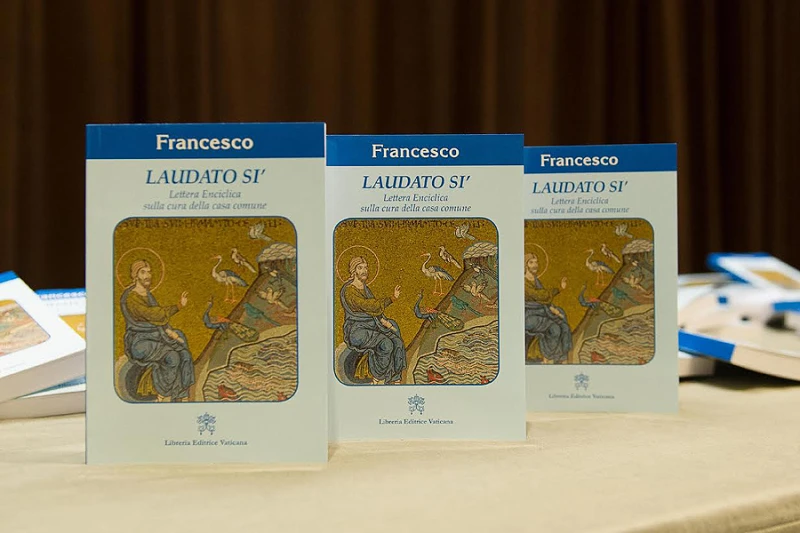
A defining theme of Pope Francis’ papacy has been his urging of humanity to better care for the natural environment, which he has done most prominently in his landmark 2015 encyclical Laudato Si’ and numerous subsequent writings and speeches.
The pope’s emphasis on this topic — especially his foray into climate science via his recent encyclical Laudate Deum — has variously drawn both praise and consternation from Catholics in the United States, about half of whom do not share Pope Francis’ views on climate change, according to surveys.
In Laudate Deum, which was released in October as a continuation to Laudato Si’, Francis wrote that the effects of climate change “are here and increasingly evident,” warning of “immensely grave consequences for everyone” if drastic efforts are not made to reduce emissions. In the face of this, the Holy Father criticized those who “have chosen to deride [the] facts” about climate science, stating bluntly that it is “no longer possible to doubt the human — ‘anthropic’ — origin of climate change.”
The pope in the encyclical laid out his belief that there must be a “necessary transition towards clean energy sources, such as wind and solar energy, and the abandonment of fossil fuels.” This follows a call from Pope Francis in 2021 to the global community calling for the world to “achieve net zero carbon emissions as soon as possible.”
He further lamented what he called “certain dismissive and scarcely reasonable opinions [on climate change] that I encounter, even within the Catholic Church.”
In light of the new encyclical — which extensively cites the U.N.’s Intergovernmental Panel on Climate Change (IPCC) — Pope Francis was invited to speak at this week’s United Nations Climate Change Conference, known as COP28. Though the 86-year-old pope was forced to cancel his trip due to health issues, the Vatican has indicated that he aims to participate in COP28 this weekend in some fashion. It announced today that Vatican Secretary of State Cardinal Pietro Parolin will represent the pope at the conference.
While various Catholic groups have welcomed the pope’s latest encyclical, some Catholics have reacted with persistent doubts, questioning whether the pope’s policy prescriptions would actually produce the desired effects.
How do Americans feel about climate change?
According to a major survey conducted by Yale University, 72% of Americans believed in 2021 — the latest available data year — that “global warming is happening,” and 57% believe that global warming is caused by human activity.
More recent polling from the Pew Research Center, conducted in June, similarly suggests that two-thirds of U.S. adults overall say the country should prioritize developing renewable energy sources, such as wind and solar, over the expansion of the production of oil, coal, and natural gas. That same survey found that just 3 in 10 adults (31%) say the U.S. should completely phase out oil, coal, and natural gas. The Yale study found that 77% of U.S. adults support at least the funding of research into renewable energy sources.
Broken down by party affiliation, Pew found that a large majority of Democratic and Democratic-leaning independents — 90% — favor alternative energy sources, while just under half, 42%, of Republicans and Republican-leaning adults think the same. Within the Republican cohort, however, 67% of Republicans under age 30 prioritize the development of alternative energy sources, compared with the 75% of Republicans ages 65 and older who prioritize the expansion of oil, coal, and natural gas.
In terms of the expansion of alternative energy sources, two-thirds of Americans think the federal government should encourage domestic production of wind and solar power, Pew reported. Just 7% say the government should discourage this, while 26% think it should neither encourage nor discourage it.
How do America’s Catholics feel about climate change?
Surveys suggest that Catholics in the United States are slightly more likely than the U.S. population as a whole to be skeptical of climate change, despite the pope’s emphatic words in 2015 and since.
A separate Pew study suggests that 44% of U.S. Catholics say the Earth is warming mostly due to human activity, a view in line with Pope Francis’ stance. About 3 in 10 (29%) said the Earth is warming mostly due to natural patterns, while 13% said they believe there is no solid evidence the planet is getting warmer.
According to the same study, 71% of Hispanic Catholics see climate change as an extremely or very serious problem, compared with 49% of white, non-Hispanic Catholics. (There were not enough Black or Asian Catholics in the 2022 survey to analyze separately, Pew said.)
One 2015 study from Yale did suggest that soon after Laudato Si’ was released, U.S. Catholics were overall more likely to believe in climate change than before. That same study found no change, however, in the number of Americans overall who believe human activity is causing global warming.
Pope Francis’ climate priorities
Beyond his groundbreaking writings, Pope Francis has taken many actions during his pontificate to make his own — admittedly small — country, Vatican City, more sustainable, including the recent announcement of a large order of electric vehicles, construction of its own network of charging stations, a reforestation program, and the continued importation of energy coming exclusively from renewable sources.
Francis has often lamented what he sees as a tepid response from developed countries in implementing measures to curb climate change. In Laudate Deum, he urged that new multinational agreements on climate change — speaking in this case specifically about the COP28 conference — be “drastic, intense, and count on the commitment of all,” stating that “a broad change in the irresponsible lifestyle connected with the Western model would have a significant long-term impact.”
The pope lamented what he sees as the fact that when new projects related to green energy are proposed, the potential for economic growth, employment, and human promotion are thought of first rather than moral considerations such as the effects on the world’s poorest.
“It is often heard also that efforts to mitigate climate change by reducing the use of fossil fuels and developing cleaner energy sources will lead to a reduction in the number of jobs,” the pope noted.
“What is happening is that millions of people are losing their jobs due to different effects of climate change: rising sea levels, droughts, and other phenomena affecting the planet have left many people adrift. Conversely, the transition to renewable forms of energy, properly managed, as well as efforts to adapt to the damage caused by climate change, are capable of generating countless jobs in different sectors.”
‘Leave God’s creation better than we found it’
Dr. Kevin Roberts, president of the Washington, D.C.-based Heritage Foundation think tank, told CNA that he has noticed a theme of frustration and confusion among many Catholics regarding the Holy Father’s emphasis on climate change.
A self-described outdoorsman and former president of Wyoming Catholic College, Roberts spoke highly to CNA of certain aspects of Laudato Si’, particularly the pope’s insights into what he called “human ecology,” which refers to the acceptance of each person’s human body as a vital part of “accepting the entire world as a gift from the Father and our common home.”
Dr. Kevin Roberts, president of the Heritage Foundation. Courtesy of Heritage Foundation.
“I like to think [Pope Francis] personally wrote that, because I could see him saying that,” Roberts said of the passage, which appears in paragraph 155 of the encyclical. Roberts said he even makes a point to meditate on that “beautiful and moving” passage during a retreat that he does annually.
That portion of Laudato Si’ notwithstanding, Roberts said he strongly believes that it detracts from other important issues, such as direct ministry to the poor, when Pope Francis elevates care for God’s natural creation as “seemingly more important than other issues to us as Catholics.” He also said he disagrees with Pope Francis’ policy prescriptions, such as a complete phasing out of fossil fuels, contained in Laudate Deum.
“We of course want to pray for him. We’re open to the teaching that he is providing. But we also have to remember as Catholics that sometimes popes are wrong. And on this issue, it is a prudential matter. It is not a matter of morality, particularly when he’s getting into the scientific policy recommendations,” Roberts said.
Roberts said the Heritage Foundation’s research and advocacy has focused not on high-level, multinational agreements and conferences to tackle the issues posed by climate change but rather on smaller-scale, more community-based efforts. He said this policy position is, in part, due to the historical deference such multinational conglomerates of nations have given to China, the world’s largest emitter of greenhouse gases overall.
He said agreements within the U.S. itself, with businesses and all levels of government working together, have produced the best results so far when it comes to improving the environment. He also pointed to examples of constructive action that don’t involve billions of dollars, such as families making the choice to spend more time outdoors or engaging in local activities that contribute to environmental conservation and community life, such as anti-litter campaigns and community gardening. The overarching goal, he said, should be to “leave God’s creation better than we found it.”
Roberts — who said he personally believes humans likely have “very little effect” on the climate — said he was discouraged to read other portions of Laudato Si’, as well as Laudate Deum, that to him read as though they had come “straight out of the U.N.” Despite his criticisms, Roberts urged his fellow Catholics to continue to pray for the Holy Father and to listen to the pope’s moral insights.
“I just think that the proposed solutions are actually more anti-human and worse than the purported effects of climate change,” he added.
‘A far more complex issue’
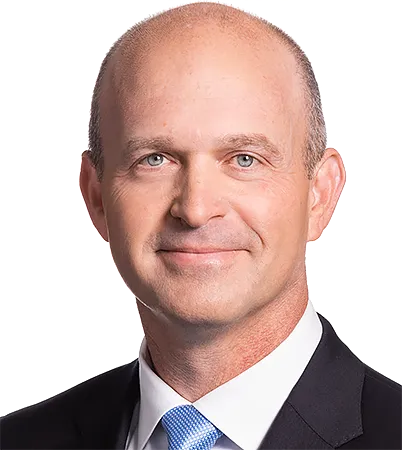
Greg Sindelar, a Catholic who serves as CEO of the Texas Public Policy Foundation (TPPF), a conservative think tank that studies the energy industry, similarly expressed concerns to CNA about the potential impact of certain climate change mitigation policies on human flourishing.
Like Roberts, Sindelar spoke highly of certain aspects of the pope’s message while expressing reservations about some of the U.N.-esque solutions proposed in Laudate Deum.
“I think the pope is right about our duty as Catholics to be stewards and to care for the environment. But I think what we have to understand — what we have to balance this with — is that it cannot come at the expense of depriving people of affordable and reliable energy,” Sindelar said in an interview with CNA.
“There’s ways to be environmentally friendly without sacrificing the access that we all need to reliable and affordable energy.”
Greg Sindelar is CEO of the Texas Public Policy Foundation, a think tank in America’s leading energy-producing state. Courtesy of Texas Public Policy Foundation
Sindelar said TPPF primarily promotes cheap, reliable access to energy as a means of promoting human flourishing. The free-market-focused group is skeptical of top-down governmental intervention, both in the form of regulation and incentives or disincentives in certain areas of the energy sector.
When asked what he thinks his fellow Catholics largely think about the issue, Sindelar said many of the Catholics he hears from express the view that government policies and interventions rarely produce effective solutions and could potentially hinder access to energy for those in need.
“I think it’s a far more complex issue than just saying we need to cut emissions, and we need to transfer away from fossil fuels, and all these other things. What we need to do is figure out and ensure ways that we are providing affordable and reliable electricity to all citizens of the world,” he reiterated.
“When the pope speaks, when the Vatican speaks, it carries a lot of weight with Catholics around the world, [and] not just with Catholics … and I totally agree with him that we need to be thinking about the most marginalized and the poorest amongst us,” Sindelar continued.
“[But] by going down these policy prescription paths that he’s recommending, we’re actually going to reduce their ability to have access to that,” he asserted.
Sindelar, while disagreeing with Pope Francis’ call for an “abandonment of fossil fuels,” said he appreciates the fact that Pope Francis has spoken out about the issue of care for creation and has initiated so much public discussion.
“I think there is room for differing views and opinions on the right ways to do that,” he said.
Effective mitigation efforts
Susan Varlamoff, a retired biologist and parishioner at St. John Neumann Catholic Church in the Atlanta area, is among those Catholics who are committed to Pope Francis’ call to care for creation and to mitigate the effects of climate change. To that end, Varlamoff in 2016 created a peer-reviewed action plan for the Archdiocese of Atlanta to help Catholics put the principles contained in Laudato Si’ into action, mainly through smaller, more personal actions that people can take to reduce their energy usage.
Retired biologist Susan Varlamoff. Photo courtesy of Susan Varlamoff
The Atlanta Archdiocese’s efforts have since garnered recognition and praise, Varlamoff said, with at least 35 archdioceses now involved in an inter-diocesan network formed to exchange sustainability ideas based on the latest version of the plan from Atlanta.
“It’s fascinating to see what everybody is doing, and it’s basically based on their talents and imaginations,” Varlamoff said, noting that a large number of young people have gotten involved with their efforts.
As a scientist, Varlamoff told CNA it is clear to her that Pope Francis knows what he’s talking about when he lays out the dangers posed by inaction in the face of climate change.
“He understands the science, and he’s deeply concerned … he’s got remarkable influence as a moral leader,” she said.
“Part of what our religion asks us to do is to care for one another. We have to care for creation if we’re going to care for one another, because the earth is our natural resource system, our life support, and we cannot care for one another if we don’t have that life support.”
Responding to criticisms about the financial costs associated with certain green initiatives, Varlamoff noted that small-scale sustainable actions can actually save money. She offered the example of parishes in the Atlanta area that have drastically reduced their electric bills by installing solar panels.
“[But,] it’s not just about saving money. It’s also about reducing fossil fuels and greenhouse gas emissions, and protecting the natural resources for future generations,” she said.
Moreover, Varlamoff said, the moral imperative to improve the natural environment for future generations is worth the investment. “When [Catholics] give money, for example, for a social justice issue like Walking with Moms in Need or special needs, the payback is improving lives. We’re improving the environment here,” she emphasized.
Bishop Georg Bätzing / Photo credit: Synodaler Weg / Maximilian von Lachner
CNA Newsroom, Sep 27, 2022 / 12:33 pm (CNA).
The president of the German Bishops’ Conference, Bishop Georg Bätzing, said that the shortest definition of religion is “in… […]
“It would violate the rights of heterosexual women and that it goes against the best interests of minors”, (three judges). A widely held opinion here in the US. Although, the key to this writer is the other judges in like complaint. A philosophical, even theological if our anthropology is Christocentric, “Whether the mere manifestation of the will is enough for the rectification of the sex registry to be effective”. Does reality have prominence in determining ethics or does the will? The answer for the reasonable is a given, yes.
However, we’re living in a hypersonic, convulsing [we’ve gone beyond supersonic weapons to kill ourselves here the weapon is advanced liberty to do what you want where you want whenever you want, courtesy of Sandals] universe [now with residents in space stations] emitting new paths beyond reality. We have pansexuality and beyond the imaginable. When was craziness determined a liberty? Or is it that we are compelled to admit that Justice Anthony Kennedy’s definition of liberty 1992 Planned Parent E PA v Casey is a monumental evil judicial premise. What will nominal Catholics think of next? Well, we have a president that’s working it.





And we live in a rational, scientific age?
“It would violate the rights of heterosexual women and that it goes against the best interests of minors”, (three judges). A widely held opinion here in the US. Although, the key to this writer is the other judges in like complaint. A philosophical, even theological if our anthropology is Christocentric, “Whether the mere manifestation of the will is enough for the rectification of the sex registry to be effective”. Does reality have prominence in determining ethics or does the will? The answer for the reasonable is a given, yes.
However, we’re living in a hypersonic, convulsing [we’ve gone beyond supersonic weapons to kill ourselves here the weapon is advanced liberty to do what you want where you want whenever you want, courtesy of Sandals] universe [now with residents in space stations] emitting new paths beyond reality. We have pansexuality and beyond the imaginable. When was craziness determined a liberty? Or is it that we are compelled to admit that Justice Anthony Kennedy’s definition of liberty 1992 Planned Parent E PA v Casey is a monumental evil judicial premise. What will nominal Catholics think of next? Well, we have a president that’s working it.