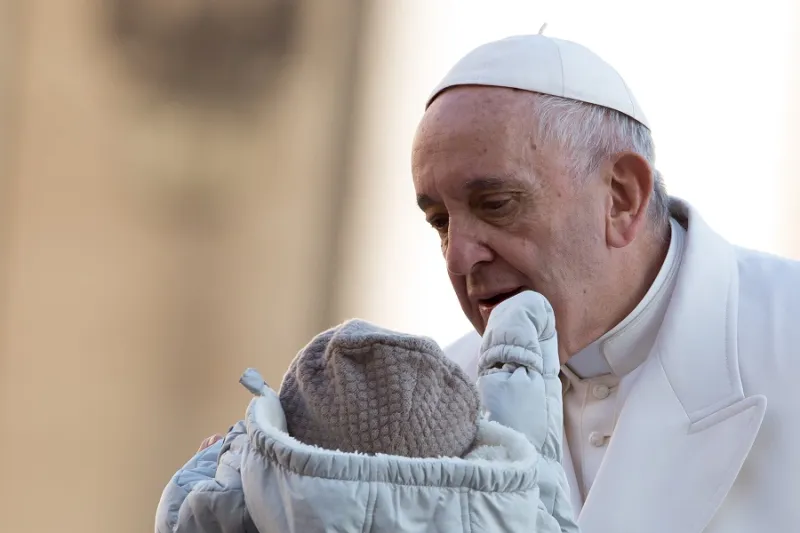
Pope Francis blesses a baby at the General Audience in St. Peter’s Square on Nov. 22, 2017. / Daniel Ibanez/CNA.
Vatican City, Mar 1, 2022 / 05:55 am (CNA).
The Vatican on Tuesday amended its law to include three days of paid paternity leave for employees who have a new child through birth or adoption.
The March 1 rescript, which was approved by Pope Francis in December 2021, added an article to the Vatican’s 2017 law on family benefits for lay employees.
The law already included five months of paid maternity leave, in line with Italy’s national maternity leave policies.
The law also foresaw a transfer of maternity leave to the father in the circumstance that the mother died or was physically incapacitated after birth.
From March 1, an employee who is a new father — through birth, adoption, or fostering — will have the right to be off for three working days while receiving his full salary.
The article 10bis was added to the section on parental leave.
The Vatican on Tuesday also updated the General Regulations of the Roman Curia to introduce the possibility of offering “on-call work contracts,” also sometimes called “intermittent work contracts.”
The “on-call work contracts” are a subcategory of the “fixed-term contracts” already offered by the Roman Curia and included in the general regulations.
“For the performance of discontinuous or intermittent services, for technical, organizational or replacement needs, or if in particular periods the need arises for not predetermined services, the Authorities in charge of the individual Entities may stipulate fixed-term contracts denominated ‘on call,’ provided that they are within the limits of its own budget,” the new article states.
The law also says that on-call work contracts should not exceed 665 days of work within a five-year period. Personnel employed under such contracts will be enrolled in the Vatican’s pension fund, but under a separate management.
Both of Tuesday’s texts were signed by the Vatican Secretary of State Cardinal Pietro Parolin, who said that Pope Francis had granted the incorporation of the new articles into existing Vatican and Holy See law in a meeting with him on Dec. 13, 2021.
Parolin said that the law on intermittent work contracts would go into effect as soon as the separate management within the pension fund has been set up.
If you value the news and views Catholic World Report provides, please consider donating to support our efforts. Your contribution will help us continue to make CWR available to all readers worldwide for free, without a subscription. Thank you for your generosity!
Click here for more information on donating to CWR. Click here to sign up for our newsletter.
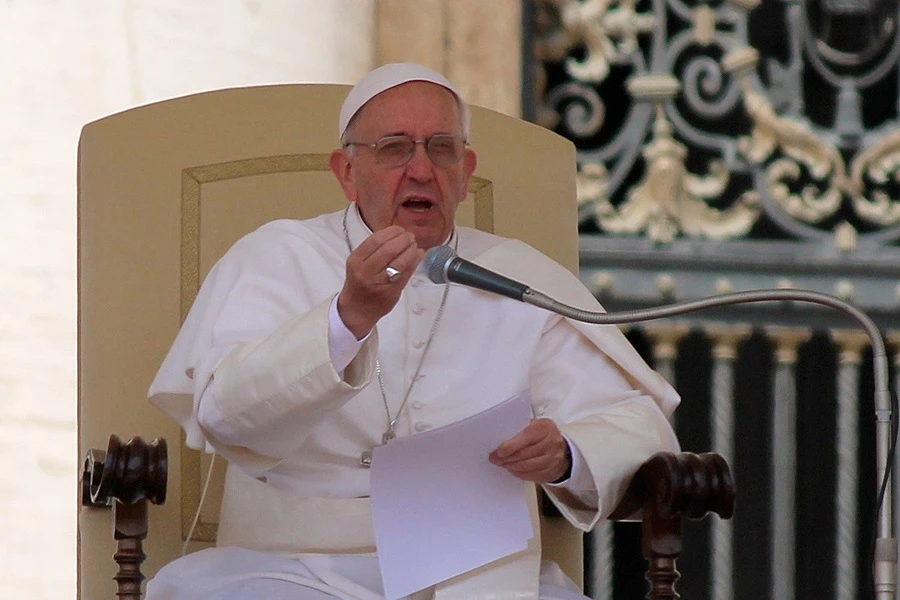
Vatican City, Jan 5, 2018 / 06:14 am (CNA/EWTN News).- On Friday Pope Francis said education is a family matter, and rather than contradicting one another, parents and teachers must collaborate openly and constructively to form children in core values which enable them to face modern challenges.
Speaking of the relationship between education and the family, the Pope said “everyone knows that this relationship has been in crisis for some time, and in certain cases is completely broken.”
At one point there was a mutual reinforcement between the instructions given by teachers and those given by the parents, however, “today the situation has changed.”
“But we cannot be nostalgic for the past,” Pope Francis said. Rather, we must make careful note of the changes that have affected both the family and schools, and renew our commitment “for a constructive collaboration for the good of children and young people.”
If this synergy no longer occurs in a “natural way,” he said it must be promoted with a planning approach, and if necessary with the contribution of experts in the educational field.
To do this, he stressed the need for “a new ‘complicity’ between teachers and parents. Above all to renounce thinking like opposing fronts, blaming each other.”
On the contrary, parents and teachers must put themselves in the shoes of the other, “understanding the objective difficulties that one and the other encounter today in education, thus creating greater solidarity.”
Pope Francis spoke to members of the Italian Association of Catholic Teachers at the conclusion of their national congress, which took place Jan. 3-5 in Rome.
He has stressed the importance of the relationship between parents and their children’s teachers before, using examples from his own past experience to drive the point home.
In his speech Friday, Francis also touched on the importance of building a culture of encounter from a young age and spoke of the need for a more solid education in ecology.
He encouraged those present to strive to build a culture of encounter in “an even more extensive and incisive way” than has been done in the past.
This “cultural challenge” is the basis for primary education, when children are still young, he said, explaining that Christian teachers, whether they are in Catholic or state-run schools, “are called to stimulate in the students an openness to the other as a face, as a person, as a brother and sister to know and respect with their story, with their merits and defects, their richness and limits.”
Francis said this also means forming youth who are open to an interested in the reality around them, who are capable of tenderness and free from the “widespread prejudice” which insists that to be worth something, “you must be competitive, aggressive, harsh toward others, especially toward those who are different, a stranger or whoever in any way is seen as an obstacle to their own affirmation.”
Unfortunately, this is “the air” that children often breathe, he said, adding that the remedy is to make it so that they can breathe “a different air which is healthier, more human.”
To accomplish this, the relationship between teachers and parents “is very important,” he said.
Pope Francis also pointed to what he sees as the need for a greater ecological education, which he said doesn’t consist of just a few notions that are taught in the classroom, but instead means educating students in a lifestyle based on care for creation and the common home.
He stressed the need for “a lifestyle that is not schizophrenic,” such as that lived by those who care about animals going extinct but ignore the problems faced by the elderly, or those who defend the Amazon forest but neglect workers’ right to a just salary.
“The ecology in which to educate must be integral,” he said, adding that all education “must point to the sense of responsibility: not to transmit slogans that others should implement, but to rouse the taste of experiencing an ecological ethic starting from everyday choices and actions.”
Francis also touched on the importance of making and being part of associations, saying they are a value that shouldn’t be underestimated, but must rather be continually cultivated.
“I urge you to renew your will to be and make associations in the memory of the inspiring principles, in reading the signs of the times and with a gaze open to the social and cultural horizon,” he said, and told participants not to be afraid of the challenges and even conflicts that can often arise in lay associations.
Rather than being hidden, these differences must be confronted “with an evangelic style in search of the true good of the association,” he said, explaining that to be an association “is a value and a responsibility, which right now is entrusted to you.”
Pope Francis closed his speech thanking the participants for their presence and their work, and asked for their prayers.
Vatican City, Aug 9, 2020 / 05:59 am (CNA).- When caught in difficult moments or trials, turn your heart to God, who is near even when you do not search for him, Pope Francis said in his Angelus address Sunday.
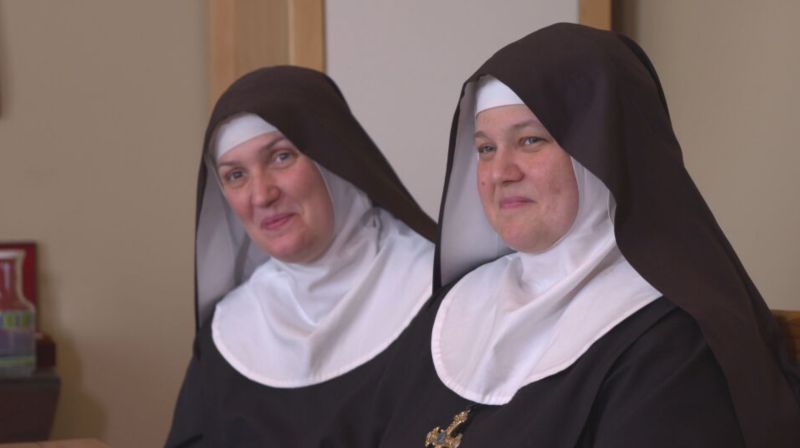
Sister Scholastica Radel (left) and Mother Abbess Cecilia Snell of the Benedictines of Mary, Queen of Apostles, discuss the recent exhumation of the order’s foundress, Sister Wilhelmina Lancaster, in an interview with EWTN News In Depth on May 30, 2023, at their abbey in Gower, Missouri. / EWTN News
Washington, D.C. Newsroom, Jun 4, 2023 / 08:00 am (CNA).
Her flashlight was dim, so when Mother Abbess Cecilia Snell first peered inside the cracked coffin lid and saw a human foot inside a black sock where one would expect to find only bone and dust, she didn’t say anything.
Instead, she took a step back, collected herself, and leaned in for another look, just to be sure. Then she screamed for joy.
“I will never forget that scream for as long as I live,” recalled Sister Scholastica Radel, the prioress, who was among the members of the Benedictines of Mary, Queen of Apostles, who were present to exhume the remains of their foundress, Sister Wilhelmina Lancaster.
“It was a very different scream than any other scream,” the abbess agreed. “Nothing like seeing a mouse or something. It was just pure joy. ‘I see her foot!’”
What the sisters discovered that day would cause a worldwide sensation: Roughly four years after her burial in a simple wooden coffin, Sister Wilhelmina’s unembalmed body appeared very much intact.
In an exclusive TV interview with EWTN News In Depth, the two sisters shared details of their remarkable discovery — revealing, among other things, that Sister Wilhelmina’s body doesn’t exhibit the muscular stiffness of rigor mortis — and reflected on the deeper significance of the drama still unfolding at their Abbey of Our Lady of Ephesus in rural Gower, Missouri.
They also clarified that Sister Wilhelmina’s coffin was exhumed on April 28, nearly three weeks earlier than CNA had understood. The sisters explained that it took about two weeks to remove dirt, mold, and mildew before they moved her body to the church. You can hear excerpts from the interview and other commentaries in the video at the end of this story.
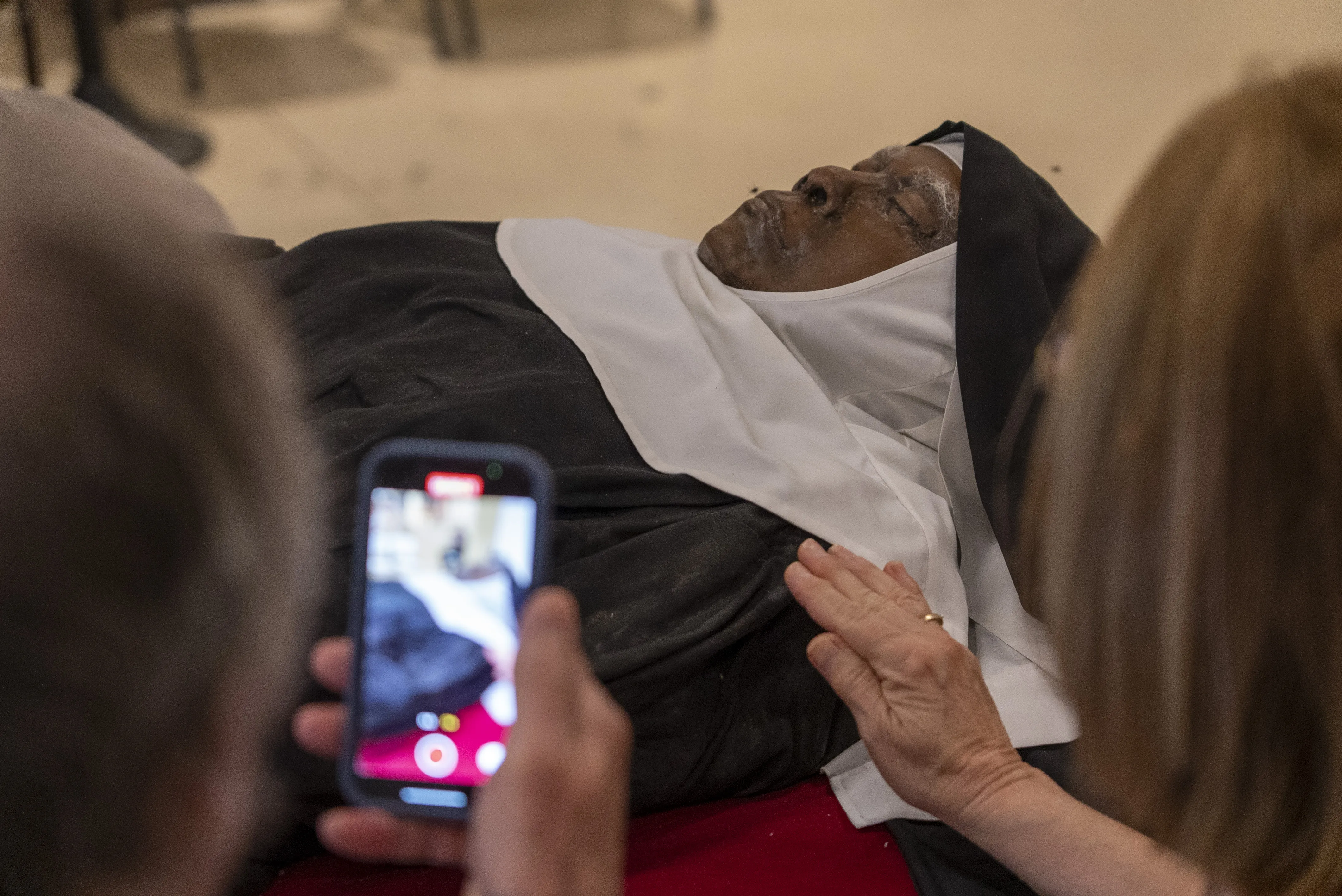
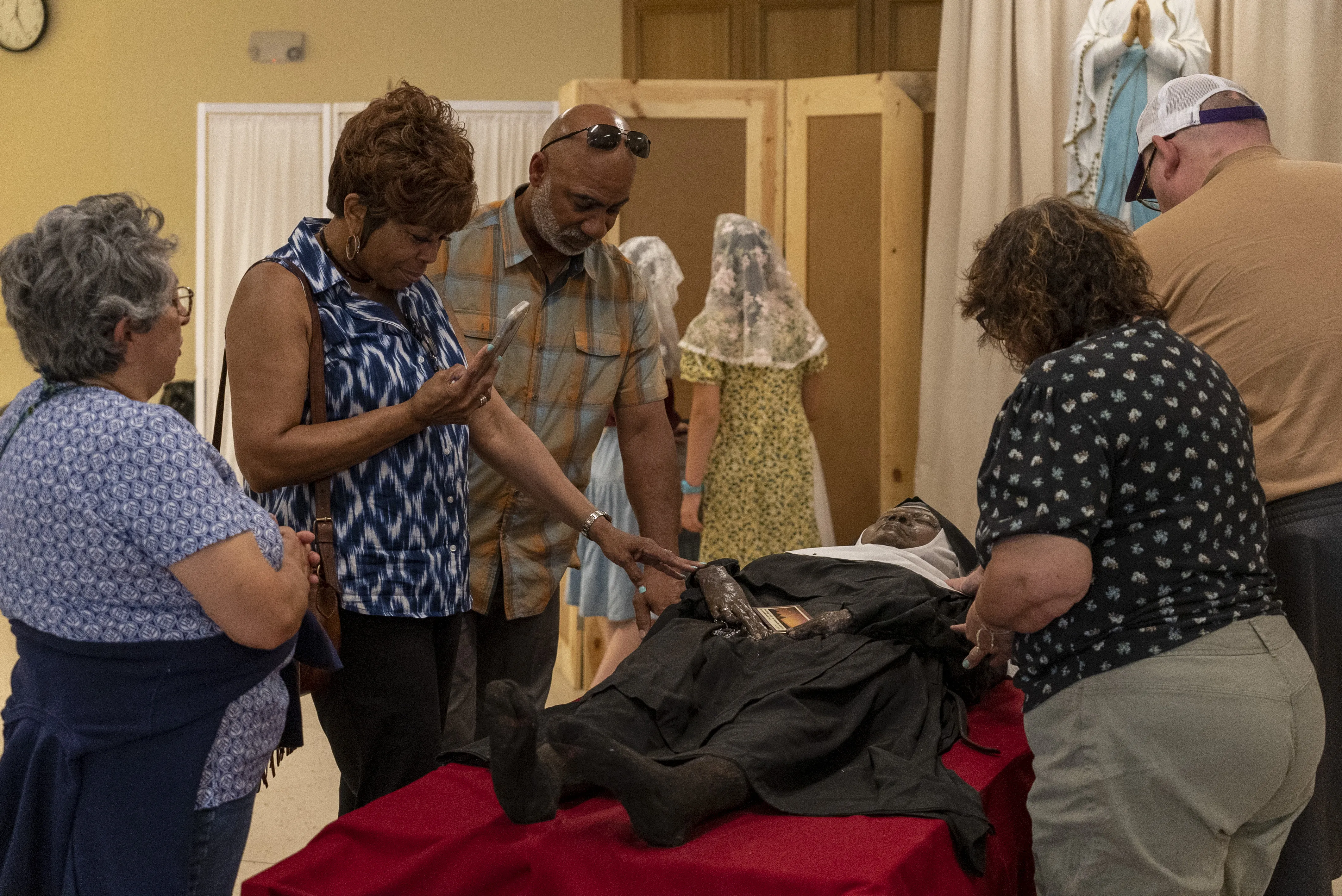
Pilgrims visit the body of Sister Wilhelmina Lancaster, the foundress of the Benedictines of Mary, Queen of Apostles, in Gower, Missouri. EWTN News
Of particular significance to the members of the contemplative order, known for their popular recordings of Gregorian chants and devotion to the Traditional Latin Mass, is that the traditional habit of their African American foundress also is surprisingly well-preserved.
“It’s in better condition than most of our habits,” Mother Cecilia told EWTN’s Catherine Hadro.
“This is not possible. Four years in a wet coffin, broken in with all the dirt, all the bacteria, all the mildew, all the mold — completely intact, every thread.”
For the sisters, the symbolism is profound. A St. Louis native, Sister Wilhelmina spent 50 years in another religious order but left after it dispensed with the requirement of wearing its conventional habit and altered other long-established practices. She founded the Benedictines of Mary in 1995 when she was 70 years old.
“It’s so appropriate, because that’s what Sister Wilhelmina fought for her whole religious life,” Mother Cecilia said of the habit.
“And now,” Sister Scholastica said, “that’s what’s standing out. That’s what she took on to show the world that she belonged to Christ, and that is what she still shows the world. Even in her state, even after death, four years after the death, she’s still showing the world that this is who she is. She’s a bride of Christ, and nothing else matters.”
‘I did a double take’
The Benedictine community exhumed Sister Wilhelmina, almost four years after her death, after deciding to move her remains to a new St. Joseph’s Shrine inside the abbey’s church, a common custom to honor the founders of religious orders, the sisters said.
Members of the community did the digging themselves, “a little bit each day,” Mother Cecilia said. The process began on April 26 and culminated with a half-dozen or so sisters using straps to haul the coffin out of the ground on April 28.
The abbess revealed that there was a feeling of anticipation among the sisters to see what was inside the coffin.
“There was a sense that maybe God would do something special because she was so special and so pure of heart,” Mother Cecilia said.
It was the abbess who looked through the cracked lid first, shining her flashlight into the dark coffin.
“So I looked and I kind of did a double take and I kind of stepped back. ‘Did I just see what I think I saw? Because I think I just saw a completely full foot with a black sock still on it,'” she recalled saying to herself.
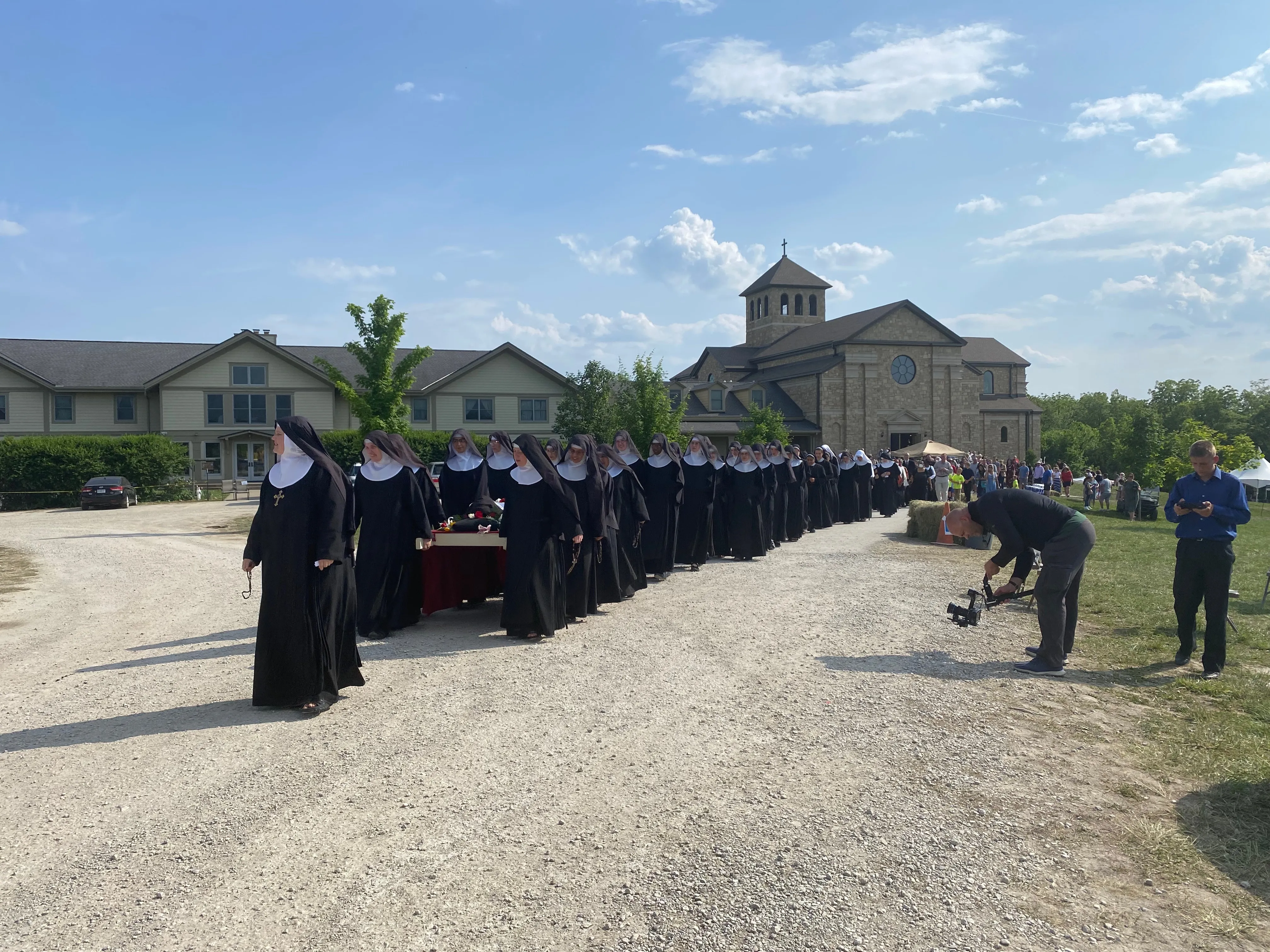
Members of the Benedictines of Mary, Queen of Apostles, lead a procession with the body of their foundress, Sister Wilhelmina Lancaster, at their abbey in Gower, Missouri, on May 29, 2023. Joe Bukuras/CNA
Sister Wilhelmina’s features were clearly recognizable; even her eyebrows and eyelashes were still there, the sisters discovered. Not only that, but her Hanes-brand socks, her brown scapular, Miraculous Medal, rosary beads, profession candle, and the ribbon around the candle — none of it had deteriorated.
The crown of flowers placed on her head for her burial had survived, too, dried in place but still visible. Yet the coffin’s fabric lining, the sisters noted, had disintegrated. So had a strap of new linen the sisters said they used to keep Sister Wilhelmina’s mouth closed.
“So I think everything that was left to us was a sign of her life,” Sister Scholastica reflected, “whereas everything pertaining to her death was gone.”
Another revelation from the interview: Contrary to what one would expect in the case of a four-year-old corpse, Sister Wilhelmina’s body is “really flexible,” according to Sister Scholastica.
“I mean, you can take her leg and lift it,” Mother Cecilia observed.
EWTN News In Depth also spoke with Shannen Dee Williams, an author and scholar who is an expert on the history of Black Catholicism. Sister Wilhelmina’s story, she said, is an important reminder of “the the great diversity and beauty of the Black Catholic experience across the spectrum.”
“It’s a really important story that reminds us of what is the great diversity of what is the Black Catholic experience.” – @BlkNunHistorian explains the significance of Sister Wilhelmina choosing a traditional habit for her community. pic.twitter.com/nJmyQ6UYjA
— EWTN News In Depth (@EWTNNewsInDepth) June 3, 2023
‘A unifying moment’
There has been no formal declaration by Church authorities that Sister Wilhelmina’s body is incorrupt, nor has an independent analysis been conducted of her remains, the condition of which has puzzled even some experienced morticians. Neither is there any official process yet underway to put the African American nun on a possible path to sainthood.
Pilgrims visit the body of Sister Wilhelmina Lancaster, foundress of the Benedictines of Mary, Queen of Apostles, in Gower, Missouri. EWTN News
In the interview, Mother Cecilia called what’s happening at the abbey “a unifying moment for everybody” in a time of discord.
“There’s so much division, and it’s crazy,” she said. “We’re children of God the Father, every single one of us. And so you see, Sister Wilhelmina is bringing everyone together . . . I mean, this is God’s love pouring forth through people of every race, color,” she said.
“They come and they’re blown away, and it makes them think,” the abbess said. “It makes them think about God, about, ‘OK, why are we here? Is there more than just my phone, and my job, and my next vacation?’”
As for what comes next, no one can say. “We love God so much, his sense of humor, the irony, this humble little black nun hidden away in a monastery is a catalyst for this. It’s like a spark to send fire to the world,” Mother Cecilia said.
“It’s just remarkable,” she said. “But this is the kind of thing that God does when we need a wake-up call.”




Leave a Reply