




Vatican City, Jan 28, 2022 / 14:00 pm (CNA).
Who is Benedict XVI? This is the question that has emerged in the minds of many in recent days; days of great suffering for him and for the Church.
At the beginning of his pontificate in 2005, he wanted to say that he saw himself as a humble servant in the vineyard of the Lord, thinking of the parable found in the Gospel of Matthew (21:33-43). In that parable, Jesus criticized the behavior of those who, by their infidelity, ruined the vineyard planted with sacrifice and devotion. In that vineyard, loved by God, the owner had sent workers to ensure it was well cultivated. It belonged to him and the workers should have taken care of it and not taken possession of it.
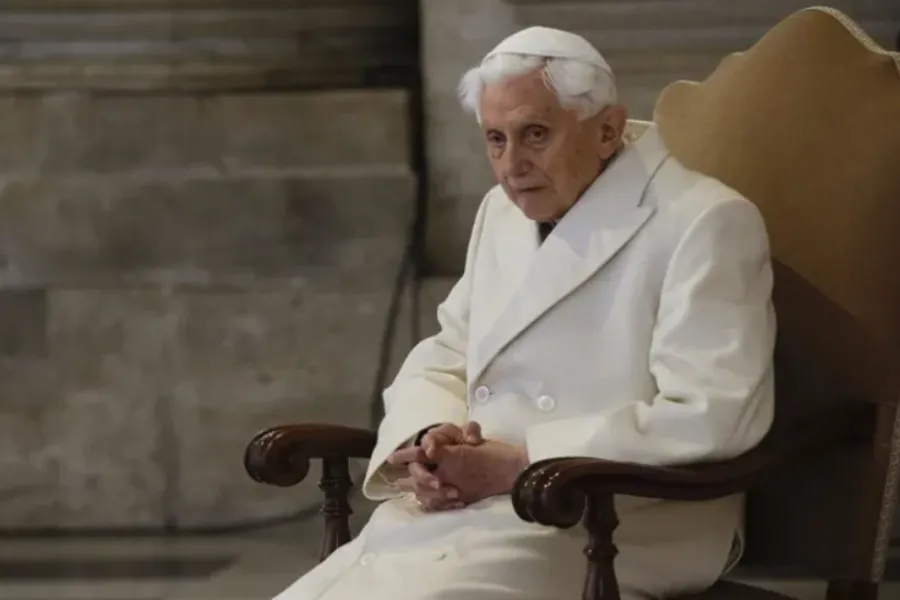
I have known Benedict XVI personally above all because at the beginning of his papal ministry, he called me to Rome from the Philippines, where a year earlier he had assigned me as his papal representative.
I remember well our first meeting; it was at the beginning of July 2007. He had appointed me Substitute (Sostituto) of the Secretariat of State, that is, one of his closest collaborators. This allowed me to visit him at least once a week to talk about the issues that were close to his heart and receive appropriate guidance on many aspects of the life of the Curia and the Church.
The office of substitute was also entrusted with the organization of papal trips, so that during the four years that I remained in office, before being appointed prefect of the Congregation for the Evangelization of Peoples, I had the opportunity to accompany him to the various countries where he made his apostolic journeys.
In those years, the issue of pedophilia emerged with virulence in the Church. It was not known in the terms with which it has since gradually emerged. But it was always clear to me that Benedict XVI was willing to face it with determination.
In this, I can testify first of all to his profound and very high moral and intellectual honesty.
This is unquestionable, even if there is no shortage of those who today are railing against him. They are free to do so, but I can affirm that I have never found in him any shadow or attempt to hide or minimize anything. Nor can his sensitivity in dealing with things with a profound moral sense be mistaken for uncertainty or anything else.
I also know well his immense distress in the face of serious ecclesial questions, and I clearly remember an expression he used to utter with a deep sigh: “How inscrutable is the abyss into which we fall because of human misery!” This distressed him intimately and he sometimes remained silent for a long time. All the more so if these human miseries touched men of the Church.
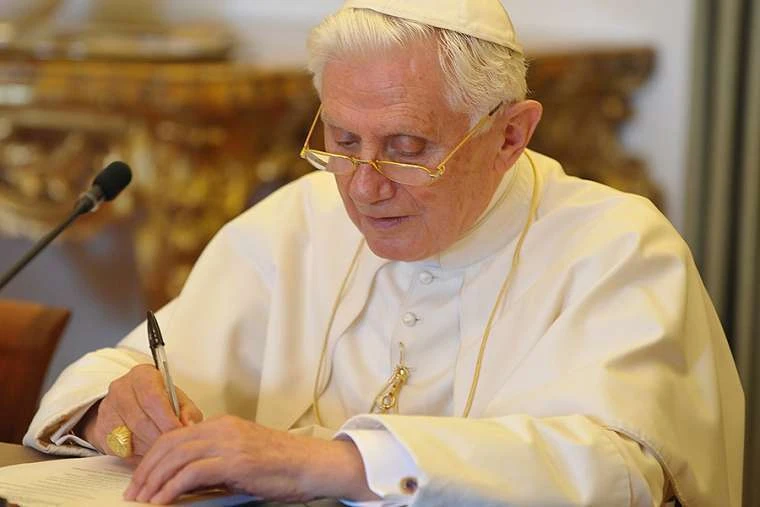
He had a noticeable sensitivity for the victims. When, in preparation for apostolic trips (to the United States, Australia, etc.), he received requests for meetings with victims of abuse, he told me about them; he wanted to know my thoughts on how to accommodate these requests.
I can affirm that he advised two things that were very important to him. 1) Deep respect for the victims whose identity had to be safeguarded; therefore, he wanted the meetings to take place far from the gaze of cameras or other visual instruments. He did not want any spectators, but he wanted me to be among the very few who were discreetly present.
2) He did not want the meeting to be a sort of “audience” with a simple handshake and a quick glance, but a real prayer meeting; it should have a spiritual dimension and take place in front of God from whom one should implore mercy.
For this reason, he accepted the idea that the meetings should take place in the chapel, in front of the Holy Eucharist. Thus, after a few minutes of prayer with the victims, after some heavy emotional moments, he would pray the Our Father with them; he paid attention to each of them, listened with visible and palpable emotion, and, at the end, he entrusted a rosary to each one.
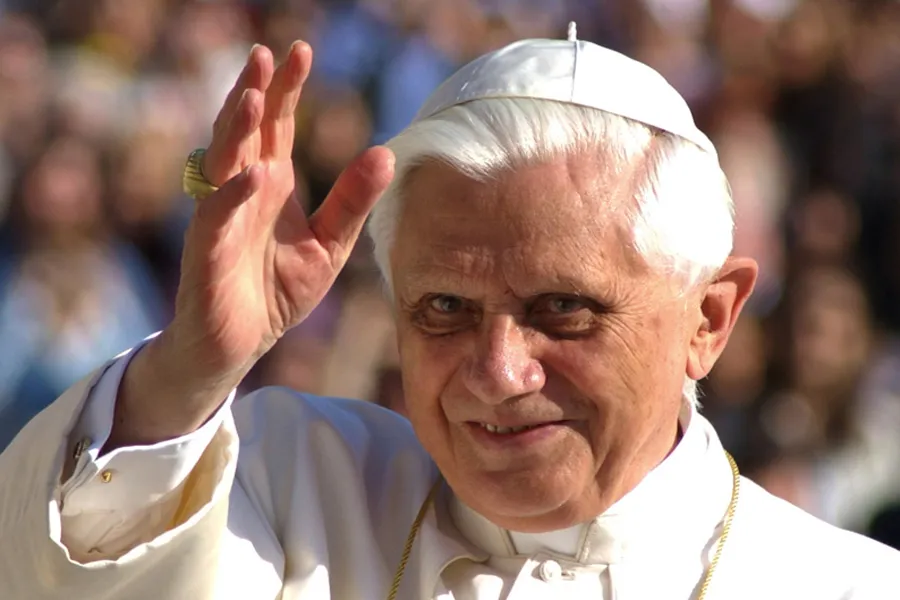
In those encounters, there was not only the sense of the humiliation suffered by the victims, but also the humiliation of a man of the Church who could never have imagined that such degrading actions could happen, and yet now offered the balm of a prayer and the relief of solidarity in the name of that God who had humbled himself and taken on his shoulders the human condition and its sins.
In every encounter there was always a true recognition that the human and spiritual had been violated. There was always the entrustment to God made by deeply moved brothers and sisters; there was a request for forgiveness from the whole Church to God, and there was a commitment that would see Benedict XVI combine mercy and justice. That he did through steps that previously had not existed.
This is the Benedict XVI who I have known up close. A “pastor,” a “worker” in the vineyard of the Lord, who had in his heart — always — a profound “solicitude for all the Churches” and for an afflicted, fallen, and godless humanity, in accordance with what he said when he visited, on that distant afternoon of April 25, 2005, the Basilica of St. Paul Outside-the-Walls, where the Apostle of the Gentiles reposes.
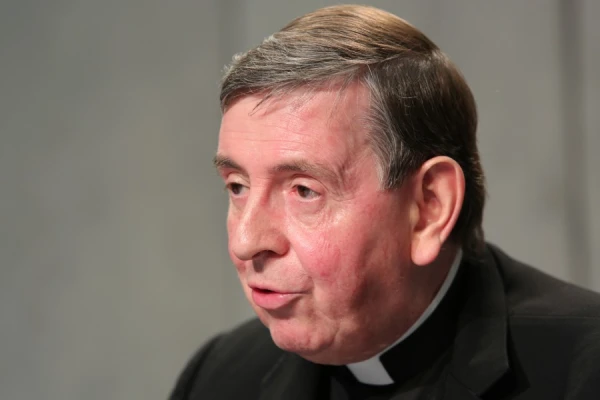
Cardinal Fernando Filoni is the Grand Master of the Equestrian Order of the Holy Sepulchre of Jerusalem. This article was first published by ACI Stampa, CNA’s Italian-language news partner.
If you value the news and views Catholic World Report provides, please consider donating to support our efforts. Your contribution will help us continue to make CWR available to all readers worldwide for free, without a subscription. Thank you for your generosity!
Click here for more information on donating to CWR. Click here to sign up for our newsletter.


Point A. Benedict XVI was opposed by the homosexual cult organization of Danneels-Martini, self-called the Sanct Gallen Mafia, because he deposed and defrocked some 400 sex abusing priests, and dozens of Bishops for sex abuse snd or coverup; 80% or more of the cases we know were homosexual predators of teen boys.
B. When the sex abuse coverup Cardinals we’re fanning the flames when B16 abdicated, the coverup Cardinals obviously hatched a buzz-subversion-phrase not-so-curiously repeated in pulpits by homosexual promoting priests (as I heard in Spring Lake NJ), and obviously repeated by such from pulpits in some parishes in Maryland (when I heard Catholics there use the very same phrase). The exact words were this: He can’t handle the sex abuse crisis.
C. In 2010 the Catholic world learned that Cardinal Danneels was forced to retire in disgrace after being exposed in the Belgian Press (De Staandard and other papers) in Aug 2010 for denying justice to the Vanguelwhe family, who were reporting that their own uncle Bishop Roger Vanguelwhe had taped his little nephew, their brother. Danneels tried to intervene to protect his friend Bishop Vanguelwhe, and suspecting Danneels of betrayal, the Vanguelwhe family tape recorded his intervention against them, where (get this) he specifically refused the family’s request to report their uncle Bishop Vanguelwhe to Pope Benedict, preposterously telling the family that it was not possible for him (the primate of Belgium) to get in contact with B16.
D. When the same homosexual Sanct Gallen mafiosi Danneels published his biography, he bragged about getting Cardinal Bergoglio elected to the papacy, and reminded audiences that he and his mafiosi tried to do the same in 2005, but failed on the first try.
E. And while Bergoglio was Archbishop of Buenos Aries and President of the Argentine Bishops Conference, he directed a multi-million dollar defense and victim smear campaign defending the notorious sex predator Rev. Julio Grassi, which is reported by more candid Catholic sources, including Damian Thompson of the Spectator (UK). Bergoglio even dared to try to intervene and influence judges on the Argentine Supreme Court, who repulsed him and sentenced Grassi to 15 years in prison. This may explain why The Pontiff Bergoglio/Francis prefers not to return to Argentina, even though he managed to visit Chile when he was trying to protect Bishop Barros in the Osorno sex abuse case.
F. And when in 2013, after diligent years subverting B16, Danneels and his like-minded fiendish-sex abusers and coverup artists, including McCarrick and Mahoney of the US, managed to get Cardinal Bergoglio, the great Argentinian sex abuse coverup artist, elected as Pontiff, who was the man standing on the balcony with the new Pontiff Francis? You guessed it: sex abuse coverup Cardinal Danneels, resurrected by the Pontiff Francis, and rewarded for his electioneering by being placed on the guiding committee for “The Family Synod.” (That’s what “The Family” is really all about in the Buenos Aries Pontificate.)
And so now we hear from CNA reiterating this German Catholic Church establishments little smear attempt against B16, all narrative, and no facts, while at the same time not-so-curiously for nine long years having managed never to write an article about the Argentine Julio Grassi sex predator case, the biggest sex abuse case in Argentine history, involving then Cardinal Bergoglio defending Grassi.
Pardon me if, given the known behavior of the sitting Pontiff and his Cardinal electors and friends, that I perceive this whole article to be nothing other than a carefully calibrated way of the Church’s McCarrick-Danneels establishment damning B16 with faint praise, in order to pave the way for the German-Katholik-Sex-Revolution-Synod, while the Pontiff Francis grins, and pretends he is against it.
(I will be post links to articles and podcasts by Damian Thompson etc.)
I would suggest stepping back a bit and considering the impression these continual rants are making of you and how they reflect on your integrity and character. The common theme of your many posts is some issue related to McCarrick and the church’s response to clergy abuse, whether or not the posted article speaks to those topics.
It’s pretty clear that there is some unresolved personal issue going on here. If that is the case, it is not appropriate to use this forum as an outlet for your personal axe grinding. Personal issues should be addressed with professionals in the context of therapy, not in a comments section on a website.
What is the basis for the diagnosis of as clear “unresolved personal issue”? By what credential are we to judge an “appropriate…use [of] this forum as an outlet for …personal axe grinding”?
Could we not lay the same claim to many comments by many posters? Chris and you both usually have viewpoints from which others may profit.
The article IS about clerical sex abuse and Benedict’s handling of same. Chris’ comment relates to the OP. Germany’s secular report on clerical abuse was released this past week. The secular authorities implicated Benedict in mismanagement and cover-up of legitimate claims of abuse against clergy under his oversight. The comment is relevant, timely, of general interest, and fact-based.
Thank you Meiron, I appreciate what you wrote, mainly because I sense that candor and truth-telling are completely out of fashion in our “contemporary” Church.
I relay these horrible truths (which are very ugly) because I love Christ’s Church, and I am fighting, with ehat little means are in my power, for truthfulness and justice in our Church, and at this moment in history, I believe the Church is largely controlled by those Bishops and Cardinals who are Saduccees: they have no supernatural faith, they have contempt for the truth, contempt for law, and contempt for justice.
Here, here. I am in total agreement with you. Chris in Maryland (where I also happen to reside) brings up many valid points about the historical “sweeping under the rug” of the sexual abuse scandal and how many of those now in positions of power are at the root of that scandal. We have long since passed the point of “polite discussion” concerning this and several other related issue. In our secular “Heinz 57” gender society, those of us who believe God created man and woman, and nothing more, had better wake up and see that there is a dedicated war being waged against us, and the “enemy” is “inside the wire”. If you are still in “negotiation mode”, you are losing. The time to fight has arrived.
As a coda, wrt to the title, I might suggest an alternative:
“Who is Cardinal Filoni?”
Apparently, he is a card-carrying member of the Secretariat of State. Given the Secretariat of State’s history of covering up sex abuse cases, to the point where Cardinal Ratzinger finally persuaded Pope JP2 to take sex abuse investigations away from the Secretariat of State (under the then-corrupt head Cardinal Sodano, accused in print by Editor of First Things Jody Bottum), it is not serious for The Church faithful to be served a “defense” of B16 by a member of the organization that helped resurrect McCarrick (despite knowing that he had been confronted and discreetly ordered to cease his “activities” by B16, because of the allegations of abusing seminarians), and having McCarrick help the Secretariat of State complete its long-desired treacherous Secret China Accord, completed by the likewise corrupt Secretary of State Parolin.
I think Benedict was too discrete in dealing with McCarrick.
I agree with that.
An investigation should have been opened.
But frankly, given the adulation heaped on McCarrick before he was exposed by James Grein, I doubt that most Bishops or Cardinals or in fact laity would have supported B16 in putting McCarrick under investigation.
What are you, Chris – a sedevacantist or a sedeprivationist?
No, and no.
While I am neither, I do agree with Jesus that some people are on their way to the abyss, and I agree with Dante that some of them will be Popes, and I have the distinct impression that the sitting Pontiff, and many of his Cardinal electors and assorted sycophants in our contemporary Church, may be joining company with Alexander VI.
Papa Ben is a hero of the Faith. Any attack on him can only originate in someone’s envy or resentment or jealousy, perhaps from anti-German stereotypes, or from – I dare say it – Satan.
Agree.
Damian Thompson on Pontiff Francis corruption in 2018.
Damian Thompson in Sep 2018, on the repulsive sex coverup artist Danneels, and the legacy-media covering for the Pontiff Francis:
https://www.complicitclergy.com/2018/09/01/how-the-media-are-covering-up-for-pope-francis/
And we had the fanatical pro-fornication and pro-abort Cardinal Martini come and go in the modern history of the Church and his scandal hardly caused a stir of embarrassment let alone condemnation. If you’re a prelate with seniority, you apparently get a free pass even by the “good” prelates.
I’m a nobody and I am grateful to have this important and verified information made available. Thank You and God Bless You.
Thank you Bill…from one nobody to another.
The problem with BXVI was his unhealthy almost singular focus on doctrinal matters over pastoral concerns. This horrific imbalance resulted in deeper damage to the Church. A number of comments above mention the case of Ted McCarrick. Long known by Ratzinger to be a homosexual predator, Uncle Ted was never punished by Papa Ben. However, Ratzinger was quick to remove doctrinally challenged bishops, like for example, William Morris of Toowoomba, Australia.
To sum up. The sorry state of the Church is such, even our faithful and holy prelates do not have many they can trust to assist them in all matters necessary to carry out pastoral and doctrinal matters. JPII, for example, is often faulted for those he elevated to the episcopate when he essentially rubber stamped those, whom he did not know, that were presented to him.
Yes, what you say is very true. Remember Benedict saying that his authority stopped at his office door? His resignation in light of having few to trust is reasonable. Continually confronted by betrayals, immoralities, and brazen acts of disobedience (e.g., McCarrick’s exemplar), subjectively he must have mourned the objective fact of his inability to function. Our giving him the benefit of the doubt allows his resignation within
Benedict understanding of God’s Divine Will, and justifiably acting upon that understanding.
In this regard, BXVI’s resignation is forgivable. God does allow good to follow confusing and sorrowful events (e.g., Crucifixion followed by Resurrection). The faithful now have no excuse to deny or overlook sins of the fathers; such sins have been over-exposed to light, and we can no longer easily explain them away. Remember Benedict’s saying the boat was seriously listing and his saying that the church would become a remnant? We cannot deny that we’ve all been witness to that.
“never punished,” I mean, “not defrocked….”
I would argue that Benedict’s emphasis on sound doctrine and theology was not a “horrific imbalance” at all. It was a necessary and long-overdue course correction. A God-honoring life is built from the ground up, and its foundation is rooted in sound doctrine. Good theology produces God-honoring behavior, and theological distortions and ambiguities create the spiritual swamp that is the current state of affairs in the church. The fact that many “leaders” have drifted away from basic and essential Catholic teaching is the real horror here.
From Filoni we read: “In those years, the issue of pedophilia emerged with virulence in the Church. It was not known in the terms with which it has since gradually emerged. But it was always clear to me that Benedict XVI was willing to face it with determination.”
This assertion is thoroughly documented in Peter Seewald’s second volume: “Benedict XVI: A Life—Professor and Prefect to Pope and Pope Emeritus 1966-The Present”, 2021.
After setting the record straight, Seewald then supplies the media-suppressed Big Picture (pp. 226-228…):
-Abusing priests are 0.2 to 1.7 percent of total clerics, while the ratio is 2.0 to 3.0 for Protestant clergy (Philip Jenkins, and Evangelical press agency Christian Ministry Resources, 20020;
-In Germany in the past 15 years, out of 29,058 abusers, 30 had been employed by the Catholic Church (0.1 percent compared to 99.9 percent other, Lower Saxony Criminological Research Institute);
-Of 62,000 paedophile cases in the U.S. in 2008, 18 were priests (0.03 percent, U.S. Government report);
-UNICEF reports that in the early twenty-first century, 220 million children are forced into sex each year;
-Hundreds of thousands of non-celibate (!) men download child porn every year;
-In the U.S. 12,250 children have been sexually abused in the Boy Scouts of America [and yet, efforts to exclude homosexual leaders were repulsed by the courts];
-In the U.S. armed forces in the 2010s about 100,000 men and 13,000 women soldiers were victims of sexual attacks (U.S. ministry of defense [sic]; in Europe, six out of ten women were victims of sexism (according to the Brussels Foundation for European Progressive Studies);
-In Nov. 2017 a ‘sex pest list’ naming 40 Tory MPs was leaked, including secretaries of state and ministers. In the same month, in Sweden, “in answer to a phone call, on a single day 1,100 people reported sexual attacks in the country’s entertainment industry;”
-In Austria, 99.7 percent of all abusers are not church people (court-appointed expert Reinhard Haller).
And, to fix this historic, cultural and civilizational collapse, victimization and crime pandemic, we can be sure that, within the targeted Church, the poster-child Fr. James Martin will ensure that his tribe will be available at the synods in the United States, for example, to leave their mark on the synodal flip charts.
This, while the “facilitator” bishops sit on their hands as instructed in the Vademecum, possibly assuming naively that the later synodal “synthesis” reports (local, continental, and Vatican under the tutelage of Cardinal Hollerich) will set things straight, so to speak.
Now Peter I can better appreciate President of the Catholic League Bill Donohue’s frequent complaint that media focus on the Church is comparatively out of proportion.