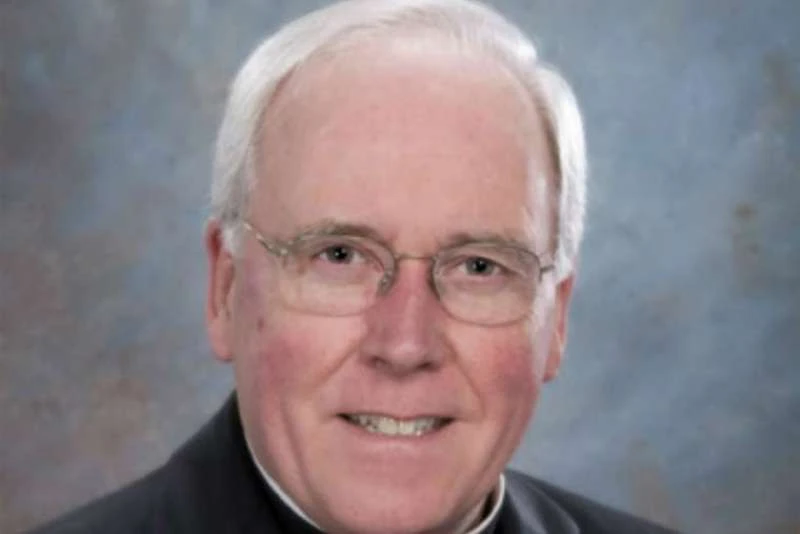
Buffalo, N.Y., Nov 2, 2018 / 05:01 pm (CNA).- The Bishop of Buffalo said Friday that although he admits he mishandled allegations of sexual abuse involving adults, he maintains that his “record handling misconduct allegations with children is good.”
Bishop Richard Malone said the diocese has never failed an annual audit determining if the diocese is in compliance with the 2002 Charter for the Protection of Young People.
“I still will say until my dying day: I have not made that mistake in dealing with allegations with children…My mistakes were when [allegations] came in involving an adult,” the bishop said.
Malone spoke Nov. 2 on local radio station WBEN, apologizing to victims and telling radio hosts that he does not plan to resign, despite the presence this morning of several protestors outside diocesan headquarters calling for his resignation. Malone is more than two years away from submitting his resignation on his 75th birthday, as required by canon law.
“There have been times through this whole horrible scenario when I’ve been embarrassed to be a bishop,” Malone said.
“The leadership of the Church has often not responded adequately to this crisis, and in response to victims, and I do get it…I just tell people of faith to focus on Jesus, and count on that.”
Questions about past cases
Malone was questioned about the case of Fr. Art Smith, who was placed on leave in 2011 after the mother of a boy at St. Mary of the Lake school complained that the priest was sending inappropriate Facebook messages to her son.
While Malone’s predecessor suspended Smith, Malone reinstated him in 2012, after the accused priest spent time in a Philadelphia treatment center, according to an investigation by local news station WKBW.
“Maybe I could have looked at it in a different way,” Malone said.
“We had decided with Art Smith— because, again, the Facebook incident did not rise technically to be sexual abuse— to keep him in some limited ministry,” Malone told WBEN.
Malone pointed out that he did not again assign Smith to a parish setting. Despite this, the WKBW investigation revealed that while working in nursing home, Smith heard confessions at a diocesan Catholic youth conference attended by hundreds of teenagers in 2013. There were also reports of inappropriate conduct with adults in the nursing home.
“That backfired, too, because even sending him to work in a nursing home…nothing happened with children, but there were some inappropriate actions with adults. So we were dealing with him, but not in a way that I would do now. I admit my failure there,” the bishop said.
He also signed off for Smith to become a chaplain on a cruise ship in 2015, and the bishop said now he is “kicking [himself] for that.”
In another case discussed up by the WBEN hosts, Father Robert Yetter was accused of misconduct during 2017-18. After an allegation surfacted, he met with Buffalo auxiliary bishop Edward Grosz, who referred him for counseling.
After another allegation was leveled against Yetter in Aug. 2018, Malone placed him on administrative leave, but reportedly wrote in an email: “We have no obligation, I believe, to report to [the media] or anyone else on adult misconduct allegations.” Neither canon law nor the state law of New York would have required Malone formally to report an allegation of sexual contact with an adult by a cleric.
Responding to a whistleblower
During the Nov. 2 interview, Malone also was asked about a recent “60 Minutes” interview with former diocesan employee Siobhan O’Connor, who leaked internal documents from the bishop’s office that purported to show that the diocese knowingly omitted some priests from a list it published in March of clergy credibly accused of sexual abuse.
Malone said he believed no laws were broken when the documents were leaked, and that he trusted O’Connor followed her conscience in doing what she did.
Malone also responded to a specific claim made in the “60 Minutes” report, saying he does not know of any priests currently in ministry in the diocese who have “allegations of any sort of assault” against children.
“I will maintain with the clearest of consciences that there are not eight or nine priests [in the diocese] with allegations of abuse of a minor. “60 Minutes” reported that, and it is false,” Malone said.
“Tell us who they are. If they’re out there and they’re guilty of abuse, tell me and I’ll pull them out.”
Recent and current investigations
Malone did not specify whether he was considering allegations against currently active priests that had not been deemed credible.
The diocese conducted an investigation in June resulting in three priests being being placed on administrative leave, but allegations against Fr. Dennis Riter were found not to be credible, according to local media, and he was returned to ministry at a parish in Dunkirk, New York.
Independent investigator Scott Riordan and the diocesan review board conducted the investigation, but reportedly did not give a public explanation as to why the allegations were not found to be credible.
In June lawyers representing Riter’s alleged victims called his reinstatement a “startling and dangerous decision” and the alleged victims filed a lawsuit against the bishop and the diocese, claiming the diocese was engaged in an effort to hide the names of accused priests from the public.
The diocese announced Oct. 31 that it had placed Fr. Michael Juran on administrative leave after receiving a credible allegation of sexual abuse against him. The current lay investigator for the diocese, Steven Halter, was an FBI special agent for more than 27 years and worked with the Buffalo FBI Evidence Response Team to investigate the 9/11 terrorist attacks.
Malone said that since 2001, all diocese have been required to report all credible allegations of sexual abuse to the Vatican, but added that before he became bishop in 2012, that didn’t always happen in the Buffalo diocese. He said he wished to ask his predecessors why that was the case.
Before Nov. 2, the diocese was not required to report by local prosecutors to civil authorities any allegation of sexual abuse made more than five years after it happened, and more than five years after the victim’s 18th birthday. The Erie County District Attorney has now changed changed a 2003 memorandum of understanding with the diocese, and it is required to report those cases.
 […]
[…]



Leave a Reply