A Rwandan man who reportedly handed himself in to police after the murder of a priest in western France on Monday met with Pope Francis in 2016, according to French Catholic media.
The suspect, identified by the media as Emmanuel Abayisenga, 40, is also the main suspect in an arson attack on the cathedral in Nantes, northwestern France, in July 2020.
The murder victim was named as Fr. Olivier Maire, 60, the French provincial superior of the Montfort Missionaries (the Company of Mary). His death was announced on Aug. 9 by French Interior Minister Gérald Darmanin.
The French bishops’ conference and the Conference of Religious of France said in a joint statement that the suspect “was staying with Fr. Olivier Maire” in Saint-Laurent-sur-Sèvre, a commune in the Vendée department, at the time of the murder.
A photograph taken on Nov. 11, 2016, first published by the French Catholic newspaper La Croix on July 15, showed a man identified as Abayisenga greeting Pope Francis during an audience with socially excluded people in the Vatican.
La Croix confirmed in its Aug. 9 report on the murder of Fr. Maire that Abayisenga “had met with Pope Francis in 2016 in Rome.”
The pope is believed to have met with Abayisenga during a gathering for the European Festival of Joy and Mercy in the Vatican’s Paul VI Hall.
The event for socially excluded people was organized by the French organization Fratello, as part of the Catholic Church’s year-long Jubilee of Mercy. Around 3,600 people attended, including many from France, Poland, and Rome.
According to La Croix, Abayisenga traveled to Rome with a group from Nantes. He had been under the protection of the local Christian community after arriving in the city in 2012, the Catholic newspaper said.
During the meeting, Pope Francis referenced a speech made by another member of the group who had traveled from Nantes.
“I was struck by the persistence of Christian’s use of the word ‘peace,’” the pope said. “And then he spoke of the peace and joy which he experienced when he started taking part in the Nantes choir.”
If you value the news and views Catholic World Report provides, please consider donating to support our efforts. Your contribution will help us continue to make CWR available to all readers worldwide for free, without a subscription. Thank you for your generosity!
Click here for more information on donating to CWR. Click here to sign up for our newsletter.
Si cela vous plaît, très Saint Père, pouvons-nous avoir notre Visite Apostolique maintenant? The US and Roman theaters of the crisis in the Catholic Church have entered a new phase of carelessness—of the reputations of […]
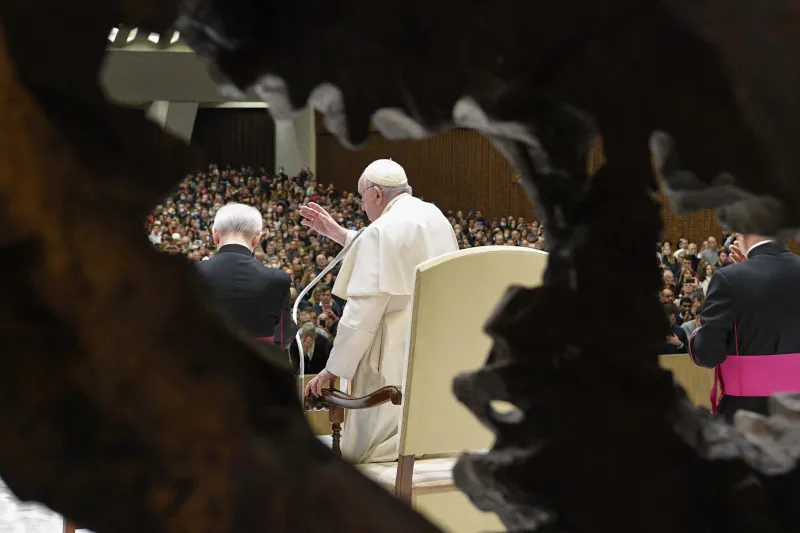
Pope Francis waves during the weekly general audience in the Vatican’s Paul VI Hall on Dec. 28, 2022. / Credit: Vatican Media.
Vatican City, Dec 28, 2022 / 10:30 am (CNA).
Pope Francis Wednesday published a message on St. Francis de Sales, a saint who teaches us that “devotion [to God] is meant for everyone, in every situation.”
The pope’s apostolic letter, titled Totum amoris est, or “Everything Pertains to Love,” was published on Dec. 28, the 400th anniversary of St. Francis de Sales’ death in 1622.
The title comes from the preface of the Swiss saint’s book “Treatise on the Love of God,” in which he wrote that “In Holy Church, everything pertains to love, lives in love, is done for love and comes from love.”
St. Francis de Sales was a priest and bishop who taught against Protestant heresies and encouraged holiness in all people, no matter their vocation. He is known for his spiritual writings, including two books that are still widely read today: “An Introduction to the Devout Life” and “Treatise on the Love of God.” In 1877, he was proclaimed a Doctor of the Church.
“On this anniversary of the fourth centenary of his death, I have given much thought to the legacy of Saint Francis de Sales for our time,” Pope Francis said in his apostolic letter. “I find that his flexibility and his far-sighted vision have much to say to us.”
“Today he bids us set aside undue concern for ourselves, for our structures and for what society thinks about us, and consider instead the real spiritual needs and expectations of our people,” the pope noted.
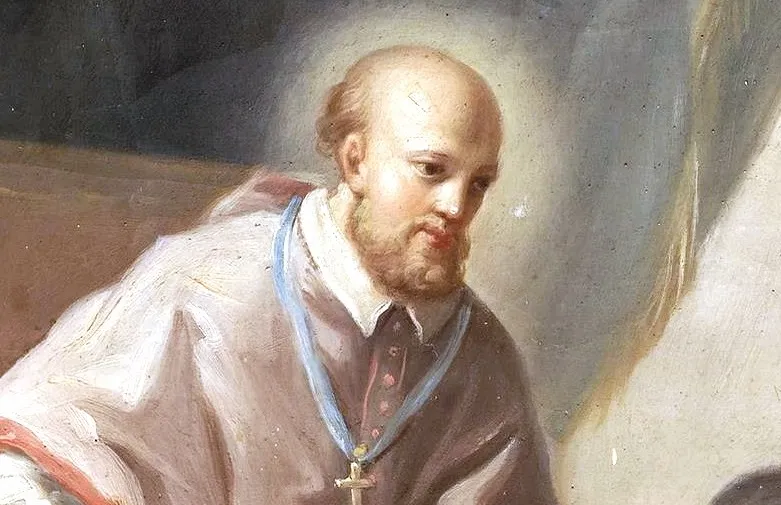
Saint Francis de Sales, painted by Francisco Bayeu y Subías. Wikimedia (CC0)
Commenting on St. Francis de Sales’ teachings, Pope Francis said “devotion is meant for everyone, in every situation, and each of us can practice it in accordance with our own vocation.”
“As Saint Paul VI wrote on the fourth centenary of the birth of Francis de Sales, ‘Holiness is not the prerogative of any one group, but an urgent summons addressed to every Christian: “Friend, come up higher” (Lk 14:10). All of us are called to ascend the mountain of God, albeit not each by the same path.’”
“Devotion,” Paul VI said, quoting St. Francis, “must be practiced differently by the gentleman, the craftsman, the chamberlain, the prince, the widow, the young woman, the wife. Moreover, the practice of devotion must be adapted to the abilities, affairs and duties of each.”
False Devotion
In his letter, Pope Francis reflected on what St. Francis de Sales called “false devotion” and its relevance for our spiritual lives today.
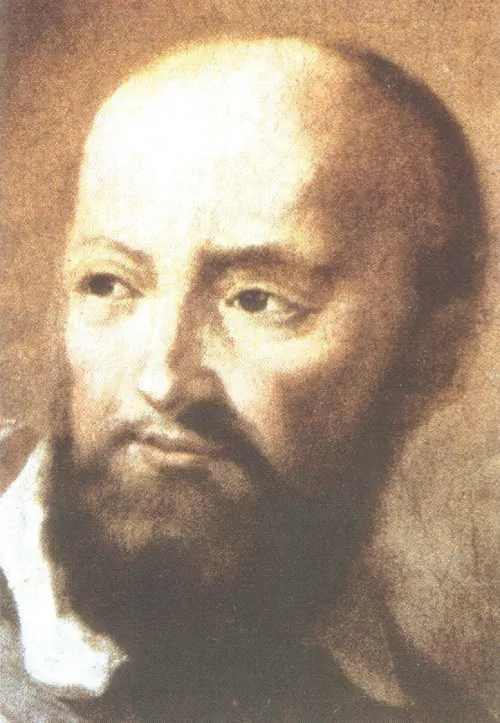
Saint Francis de Sales. Kelson / Wikimedia (CC0)
“Francis’ description of false devotion is delightful and ever timely. Everyone can relate to it, since he salts it with good humor,” the pope explained.
De Sales wrote: “Someone attached to fasting will consider himself devout because he doesn’t eat, even though his heart is filled with bitterness; and while, out of love for sobriety, he will not let a drop of wine, or even water, touch his tongue, he will not scruple to drench it in the blood of his neighbor through gossip and slander. Another will consider himself devout because all day long he mumbles a string of prayers, yet remains heedless of the evil, arrogant and hurtful words that his tongue hurls at his servants and neighbors. Yet another will readily open his purse to give alms to the poor, but cannot wring an ounce of mercy from his heart in order to forgive his enemies. Another still will pardon his enemies, yet never even think of paying his debts; it will take a lawsuit to make him do so.”
“All these,” Pope Francis said, “of course, are perennial vices and struggles, and they lead the saint to conclude that ‘all these fine people, commonly considered devout, most surely are not.’”
True Devotion
The pope explained that St. Francis de Sales taught that true devotion, instead, is found in “God’s life dwelling within our hearts.”
“True and lively devotion presupposes the love of God; indeed, it is none other than a genuine, and not generic, love of God,” the saint said.
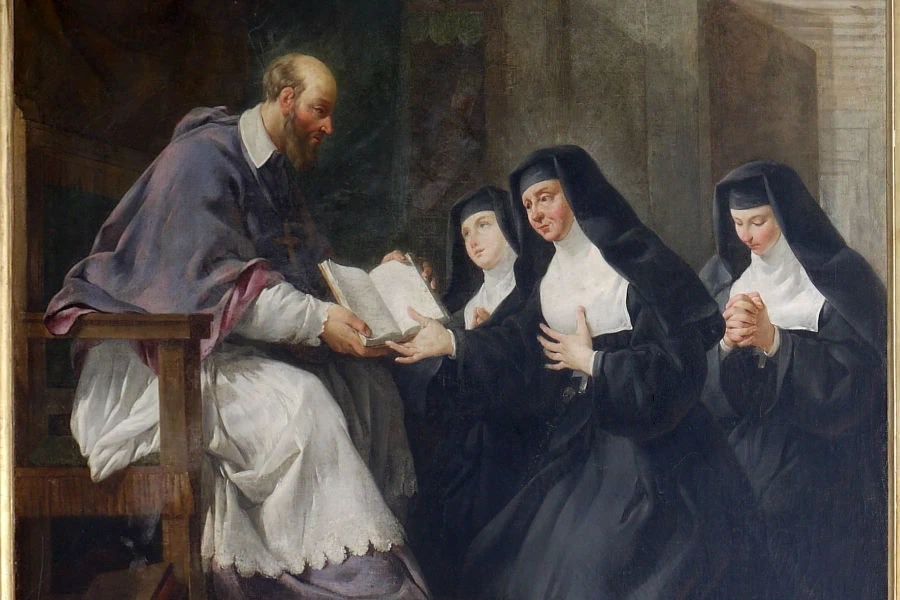
Saint Francis de Sales giving Saint Jeanne de Chantal the rule of the order of the Visitation /. null
Pope Francis said: “In Francis’ lively language, devotion is ‘a sort of spiritual alertness and energy whereby charity acts within us or, we act by means of it, with promptness and affection.’ For this reason, devotion does not exist alongside charity, but is one of its manifestations, while at the same time leading back to it.”
“Devotion is like a flame with regard to fire: it increases the intensity of charity without altering its quality,” the pope said, adding a quote from St. Francis de Sales, who said: “Charity is a spiritual fire that, when fanned into flame, is called devotion. Devotion thus adds nothing to the fire of charity but the flame that makes charity prompt, active and diligent, not only in the observance of God’s commandments but also in the exercise of his divine counsels and inspirations.”
“Understood in this way, devotion is far from something abstract,” the pope said. “Rather, it becomes a style of life, a way of living immersed in our concrete daily existence. It embraces and discovers meaning in the little things: food and dress, work and relaxation, love and parenthood, conscientiousness in the fulfillment of our duties. In a word, it sheds light on the vocation of each individual.”
Love
Pope Francis also reflected on St. Francis de Sales’ teachings on love as “the first act and principle of our devout or spiritual life.”
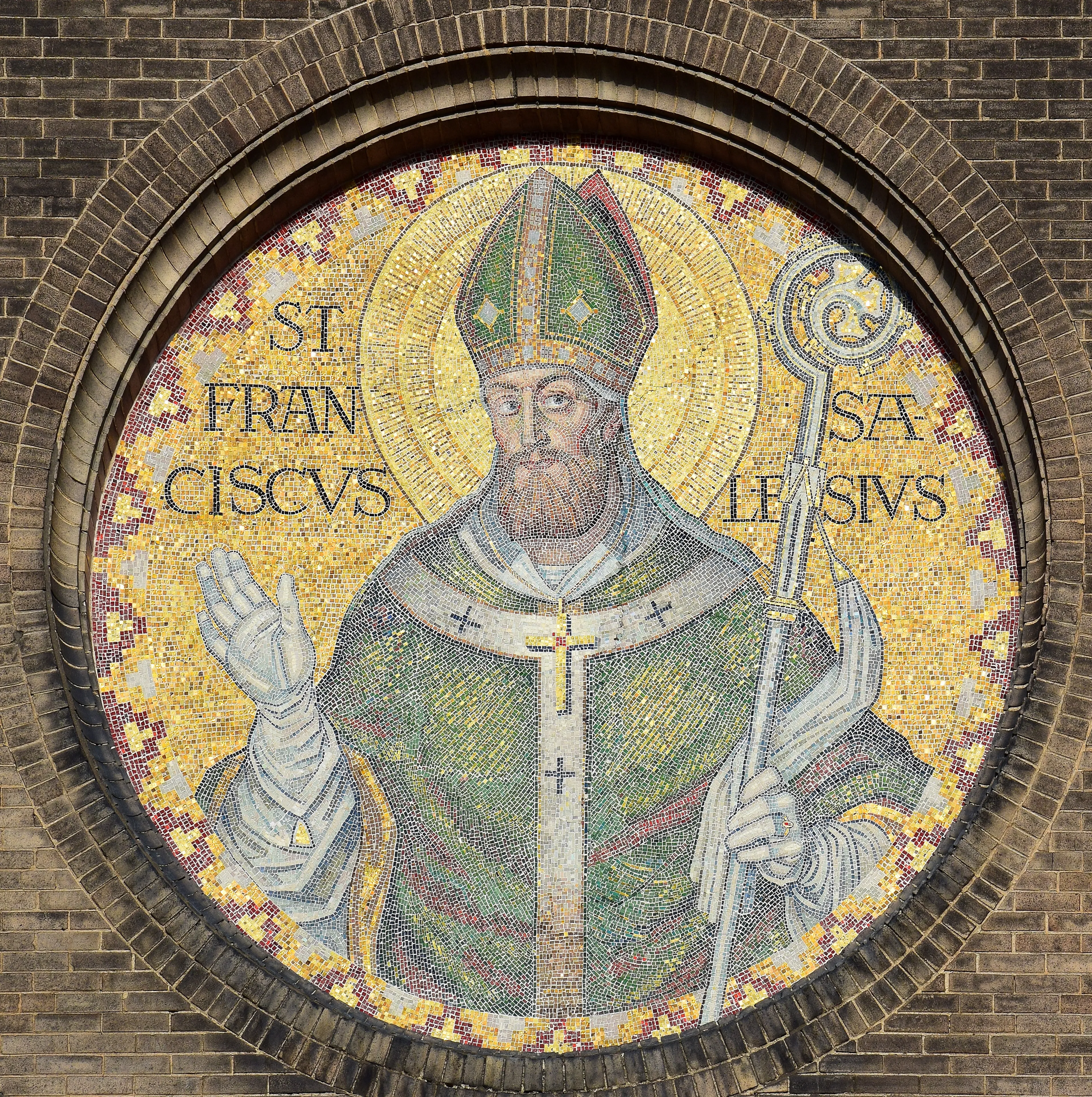
Mosaic of Sales on the exterior of St. Francis de Sales Oratory in St. Louis, Missouri. RickMorais / Wikimedia (CC BY-SA 4.0)
“The source of this love that attracts the heart is the life of Jesus Christ,” he explained. “‘Nothing sways the human heart as much as love,’ and this is most evident in the fact that ‘Jesus Christ died for us; he gave us life through his death. We live only because he died, and died for us, as ours and in us.’”
“These words are profoundly moving; they reveal not only a clear and insightful understanding of the relationship between God and humanity, but also the deep bond of affection between Francis de Sales and the Lord Jesus,” the pope said. “The ecstasy of life and action is no abstract reality, but shines forth in the charity of Christ that culminates on the cross. That love, far from mortifying our existence, makes it radiate with extraordinary brightness.”
Vienna, Austria, Apr 5, 2018 / 03:05 pm (CNA/EWTN News).- The Muslim community in Austria is calling for more dialogue surrounding the government’s recent proposal to ban headscarves, or hijabs, for young girls in schools.
The proposal, which is being dubbed a “child protection law,” will be drafted later this year and could affect girls up to the age of 10. Austria’s new coalition government has said this new measure would protect the nation’s culture from Islamic influences and the infiltration of parallel societies, according to the BBC.
“Our goal is to confront any development of parallel societies in Austria,” said Chancellor Sebastian Kurz, of the Austrian People’s Party, to the local ORF Radio.
Kurz additionally noted concern that the headscarves worn by young girls in schools was becoming a problem, calling it a “growing phenomenon,” although he did not give further details.
The Muslim community in Austria voiced concerns over the measure, calling the proposal “counterproductive.” They also remarked that “very few” girls under the age of 10 wear headscarves to school and have requested more dialogue on the issue.
A ban on wearing in public burqas or niqabs, which cover the face, was implemented last year, though hijabs are allowed.
Kurz formed last year a coalition government with the Freedom Party of Austria, following an October 2017 legislative election. The Austrian People’s Party has championed issues such as stricter immigration regulations after Austria absorbed a number of refugees, who make up around 2 percent of the nation’s 8.7 million population.
Austria is not the only European country which has considered measures to ban religious headscarves. The Court of Justice of the European Union has allowed a qualified ban on headscarves in the workplace. The ban additionally forbade other religious garb, including crucifixes, skullcaps, and turbans, from being worn while at work, depending on internal company rules.
The EU ruling came under fire from critics concerned about religious freedom, including Adina Portaru, legal counsel for Alliance Defending Freedom International in Brussels.
In a previous interview with CNA, Portaru called the measure “highly problematic,” since it “ultimately allows private businesses to implement rules which violate the fundamental right to freedom of religion.”
“Nobody should be forced to choose between their religion and their profession,” she continued.


 By
By 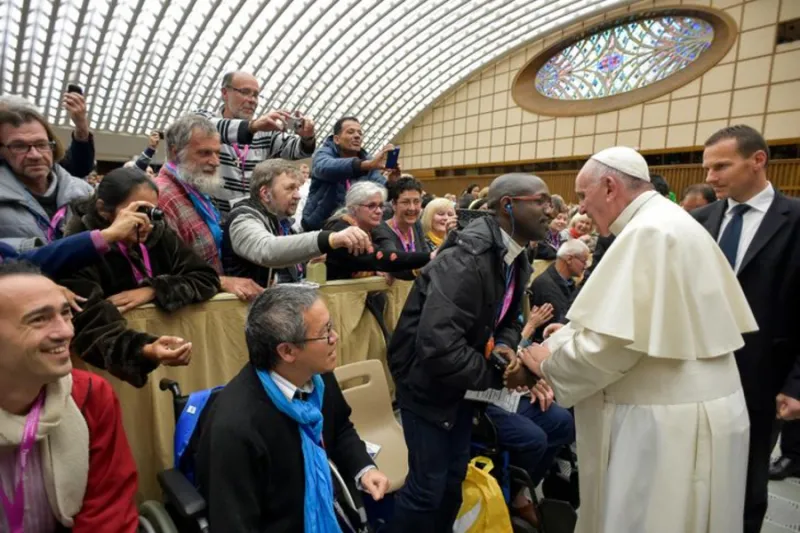




He was among “socially excluded people”??? What is that supposed to mean? If he was the main suspect in a church arson, why was he not in jail?