A bill on the burial of the bodies of aborted fetuses advanced through the Tennessee Senate and House earlier this week.
The bill, HB 1181, would require medical providers either to cremate or to bury the fetal remains following an abortion.
Republican lawmakers, such as Rep. Tim Rudd, said the bill is designed to honor the dignity of the human person.
“Tennessee code requires pets and animals to be disposed of by burial or cremation but there is no such law active in Tennessee for aborted fetal remains,” said Rudd, according to Associated Press.
“I think it’s time for Tennessee to step up and give the same level of dignity given to a dead pet to a dead human being.”
Legislative panels in the GOP-controlled General Assembly advanced the bill April 7. Before the House and Senate declare a vote, the bill has one more committee to pass through in the House.
If passed, the bill will need approval by Gov. Bill Lee.
Under the bill, medical providers would be required to cover the costs of either a burial or cremation of the fetal remains. As hospitals would be excluded under the bill, it would only affect the state’s three abortion clinics.
The measure states, the AP reported, a pregnant woman “has a right to determine” the location and the type of disposal for the fetal remains. She may also choose not to exercise this right.
The bill is based on an Indiana law which was upheld by the U.S. Supreme Court in 2019.
According to the AP, abortion advocates have decried the bill as unnecessary. Max Carwile, a community organizer with Tennessee Advocates for Planned Parenthood, called the bill an overreach.
“I do not think our government should be in the business of legislating whether to or how we should grieve,” said Carwile.
“It is pure government overreach to dictate how our patients find closure or heal.”
During the April 7 hearing of the House Health Committee, Elizabeth Matory, representing the pro-life group And Then There Were None, said it is important to provide patients with all the information about an abortion. She said discovering the connection between human dignity and the unborn changed her pro-choice opinion, according to WKNO.
“The moment that we articulate fetal remains — baby, your child … that’s when the argument stops,” she said.
Similar laws have been adopted elsewhere, including in Ohio and Texas.
If you value the news and views Catholic World Report provides, please consider donating to support our efforts. Your contribution will help us continue to make CWR available to all readers worldwide for free, without a subscription. Thank you for your generosity!
Click here for more information on donating to CWR. Click here to sign up for our newsletter.
Cathedral of the Immaculate Conception, Syracuse, New York / Mahmoud Masad/Shutterstock
Boston, Mass., Jul 28, 2023 / 06:15 am (CNA).
The Diocese of Syracuse, New York, announced on Thursday that it will pay $100 million to a victims’ trust fun… […]
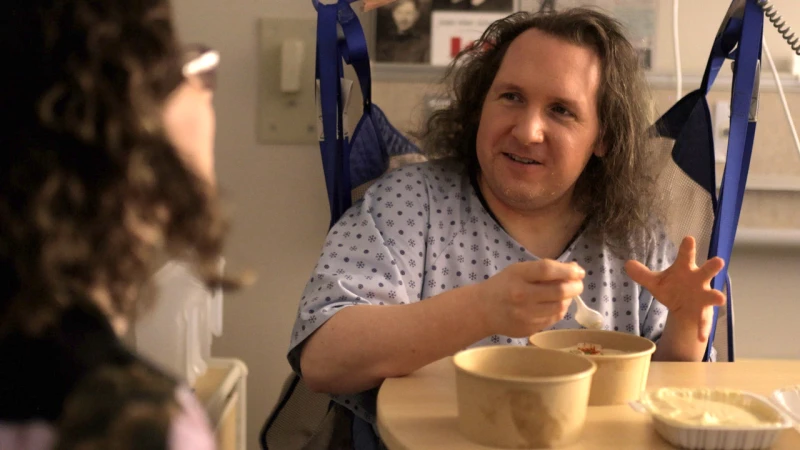
Roger Foley enjoys taste-testing three different kinds of hummus, his favourite food, on the day of a video shoot with Amanda Achtman of the Dying to Meet You project in Canada. The two spoke about Foley’s difficulty accessing quality care for his needs and being offered Medical Assistance in Dying (MAID) “several times.” / Courtesy of Amanda Achtman
CNA Staff, Jun 23, 2024 / 06:00 am (CNA).
Amid ongoing efforts to expand euthanasia in Canada under the name of “medical aid in dying” (MAID), one Ottawa man says he has been offered euthanasia “multiple times” as he struggles with lifelong disabilities and chronic pain from a disease called cerebellar ataxia.
Roger Foley, 49, shared some of his story in a recent video interview with Amanda Achtman of the Dying to Meet You project, which was created to “humanize our conversation on suffering, death, meaning, and hope.” The project seeks to “[restore] our cultural health when it comes to our experiences of death and dying” through speaking engagements and video campaigns.
Roger Foley, a Canadian man with disabilities, says he’s been offered euthanasia “multiple times.”
Listen to him speak out against being devalued as he fights for the support he needs to live. pic.twitter.com/yY8N4NILkS
In the video, the fourth of a series, Foley said he has struggled with subpar medical help in his own home, where he is supposed to be getting quality care. Canada has a nationalized health care system but Foley said that individuals with illnesses are “worked at … not worked with.” He spoke out against being devalued as he fights for the support he needs to live.
In one case, he said, a home worker helped him into his bathtub and then fell asleep in the other room; Foley was left to crawl out of the bathroom on his own. “I reported to the agency, and then he confessed, and the agency, they really didn’t care,” he said.
Asked by Achtman if he has ever been offered euthanasia, Foley said: “Yeah, multiple times.”
“One time, [a doctor] asked me, ‘Do you have any thoughts of self-harm?’ I’m honest with them and tell them I do think about ending my life because of what I’m going through, being prevented from the resources that I need to live safely back at home.”
“From out of nowhere, he just pulls out, ‘Well, if you don’t get self-directing funding, you can always apply for an assisted.’”
Foley said the offers from doctors to help end his life have “completely traumatized me.”
“Now it’s this overlying option where in my situation, when I say I’m suicidal, I’m met with, ‘Well, the hospital has a program to help you with that if you want to end your life.’”
“That didn’t exist before [MAID] was legalized, but now it’s there,” he said. “There is not going to be a second within the rest of my life that I’m not going to have flashbacks to [being offered suicide]. The devaluing of me and all that I am.”
Noting that he’s “not religious,” Foley said: “Saying that it’s just religious persons who oppose euthanasia in society is completely wrong.”
“These people who usually say it, they have an ableist mindset,” he said. “And they look at persons with disabilities and see us as just better off dead and a waste of resources.”
Achtman told CNA there is a need for euthanasia-free health care spaces, not only for protecting the integrity of Catholic institutions but also because many patients — including nonreligious patients like Foley — want to be treated in facilities that do not raise euthanasia with patients.
“Having euthanasia suggested, in a sense, already kills the person. It deflates a person’s sense of confidence that doctors and nurses are going to truly fight for them,” Achtman told CNA. “When euthanasia is suggested ostensibly as one ‘treatment’ option among others, there are all-too-frequently no other real options provided.
She continued: “This is why I always say that a request for euthanasia is not so much an expression of a desire to die as it is an expression of disappointment. Responding to such disappointment with real interventions that are adequate to the person is demanding, but that’s what people deserve. It is wrong to concede or capitulate to a person’s suicidal ideation — instead, every person deserves suicide prevention rather than suicide assistance.”
Roger Foley enjoys taste-testing three different kinds of hummus, his favorite food, on the day of a video shoot with Amanda Achtman of the Dying to Meet You project. The two spoke about Foley’s difficulty accessing quality care for his needs and being offered Medical Assistance in Dying (MAID) “several times.”. Courtesy of Amanda Achtman
Canada has become one of the most permissive countries in the world when it comes to euthanasia. The country first began allowing doctors to help kill terminally ill patients nearing death in 2016; the law was then expanded in 2021 to include patients whose death is not imminent.
In February the country paused a proposal to allow mentally ill individuals access to MAID, with the proposal set to be reconsidered in 2027. Earlier this year, Canadian health researchers alleged that MAID will “save” the Canadian health care system between $34.7 and $136.8 million per year.
A couple in British Columbia is currently suing the provincial government, as well as a Catholic health care provider, after their daughter was denied euthanasia while suffering from a terminal illness. The suit demands that the government remove the religious exemption from the Catholic hospital that protects them from having to offer MAID.
A judge in March, meanwhile, ruled that a woman with autism could be granted her request to die by MAID, overruling efforts by the woman’s father to halt the deadly procedure.
Asked what gives him hope, Foley told Achtman that he aspires one day to “be able to break through [the health care system] and get access to the resources that I need and to live at home with workers who want to work with me and I want to work with them and that we can work as a team.”
“I have a passion to live,” he said. “I don’t want to give up my life.”
“The bill, HB 1181, would require medical providers either to cremate or to bury the fetal remains following an abortion.”
.
Good start, but a better bill would be to require the parents to deal with the remains.




“The bill, HB 1181, would require medical providers either to cremate or to bury the fetal remains following an abortion.”
.
Good start, but a better bill would be to require the parents to deal with the remains.