

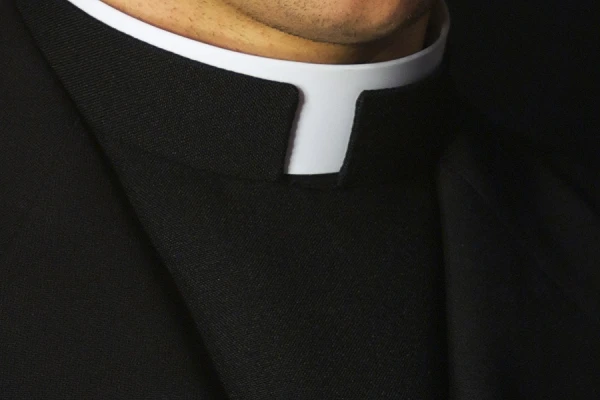
Florence, Italy, Jan 10, 2021 / 08:01 am (CNA).- The Archbishop of Florence has said no new students have entered his diocesan seminary this year, calling the low number of priestly vocations a “wound” in his episcopate.
Cardinal Giuseppe Betori, who has led the Archdiocese of Florence since 2008, said in 2009 he ordained seven men as priests for the diocese, while this year he will ordain one man, a member of the Neocatechumenal Way. In 2020 there were no ordinations.
“I consider it one of the biggest wounds of my episcopate,” Betori said in a video press conference last month. This “is a truly tragic situation.”
The 73-year-old cardinal said he believes the low number of men entering the seminary in his diocese is part of a larger vocational crisis that also includes the sacrament of marriage.
“The problem of the vocational crisis to the priesthood lies within a vocational crisis of the human person,” he stated.
The latest Statistical Yearbook of the Catholic Church, published in March 2020, indicated that the number of priests worldwide fell in 2018 to 414,065, with Europe registering the largest decrease, though Italy still has one of the higher concentrations of priests, at around one priest for every 1,500 Catholics.
Like most of Europe, Italy’s demographics have been affected by a 50-year decline in birth rate. An aging population means fewer young people, and according to national statistics, fewer young Italians than ever are choosing to marry.
According to Betori, a “provisional” culture has likely influenced young adults’ choice of a permanent state of life, such as marriage or priesthood.
“A life that wants many experiences cannot be a life that is consecrated to a finality, to a purpose. It is true for marriage, for the priesthood, for all the choices of people,” he said.
If you value the news and views Catholic World Report provides, please consider donating to support our efforts. Your contribution will help us continue to make CWR available to all readers worldwide for free, without a subscription. Thank you for your generosity!
Click here for more information on donating to CWR. Click here to sign up for our newsletter.

Why buy the cow, when the milk is free? That age old question in the continual cycle of life, in the rise and fall of every civilization.
Don’t take no rocket scientist to read Ab Chuput jabbing and ridiculing to be President Biden. That recognize anti-Catholic ways are from the top as Chuput driving away potential vocations, priests if anybody is..
No real family person would be or attempt today to be in politics, or religion, in those of bad or own self elevating ways will merely attack them..
That is proven by the martrydom of Kennedy, the good cant win…
God bless Mr. President Biden for trying, and we pray that God guides him.. That as a Catholic should have been ab Chuput only comment, rather than condemnation.
Dude, you are batting about .060. Might want to adjust your stance and grip.
That high? And you can actually figure out what he’s trying to say? Must be all those years of being an editor.
I read a lot of academic stuff, so I’ve learned to wade through repetitive, inane, and mostly incoherent writing.
Email address to the Archbishop and vocation director Catholic Archdiocese of Florentine
Perhaps Florence should reach out to the many African seminarians. Ive read additionally that numbers of young men in Africa wish to enter the seminary but economics won’t allow it.
I have heard critics of the Church many times sneer “Those old men at the Vatican banned contraception and want many children born so there will be priests” (and presumably monks and nuns).
.
Admittedly, there is something to that. If a region has a fertility rate of only 1.3 or so, there will not be children born to do any job, not just priest. Back in 1997, that rate was 1.22, so it has been many, many years Italy has lacked children.
Some bishops seem to be able to foster vocations. Some orders seem to be thriving. What are they doing right?
(Not sure if this is true in Europe. I see on Anglican Unscripted that (orthodox) Anglicans are setting up missions in Europe).
May the Lord of the harvest inspire and invite zealous laborers to toil in his vineyard.
How can I contact the vocation director if I’m inspired to join his diocese as a seminarian?
Greeting!
I am interested to join your diocese. How can i get the vocations director’s contact.
Greetings
If one is inspired to become a Priest in the Archdiocese of Florence, whow should he go about it?
Request to join your seminary
Good morning.
I am interested to join your diocese. How can get the vocations director’s contact