No Picture
News Briefs

Anti-Catholic attacks merit national media scrutiny, Irish-American group says

July 15, 2020 CNA Daily News 1

CNA Staff, Jul 16, 2020 / 12:30 am (CNA).- National news media cannot ignore intolerance against Catholics, the Ancient Order of Hibernians has said, citing recent attacks on Catholic churches and vandalism of statues of saints.

The group cited an incident at Queen of Peace Catholic Church in Ocala, Florida, where a man crashed a minivan into the church and then lit it on fire with gasoline early on Saturday, July 11 while people were inside preparing for morning Mass.

“The Hibernians are appalled at the conspicuous lack of national news coverage, particularly among the national broadcast networks, surrounding this blatant attack. The absence of national reporting concerning such an egregious attack against a Catholic church is at stark variance with past coverage of similar despicable attacks against other faiths,” the group said July 13.

“This absence of coverage is particularly glaring given that this attack is only the latest in a wave of wanton destruction targeting Catholics including the vandalism of a Catholic church in Boston, a Catholic school in New York and the ongoing investigation of a fire that destroyed the historic 249-year-old San Gabriel Mission and over the same weekend.”

The Ancient Order of Hibernians was founded in 1836, based on similar groups in Ireland. It is the oldest and largest Irish Catholic organization in the U.S. and claims membership in all 50 states.

The Hibernians’ statement cited the ancient legal principle “silence implies consent,” criticizing the national media for showing “silence on the rising tide of anti-Catholic violence.”

“The Hibernians ask why such an outrageous attack targeting Catholics is less worthy of reporting than an attack on a house of worship of another faith or a public institution? The news media needs to take accountability for its apathy and blatant double standard and the creation of a shameful ‘hierarchy of outrage’ in which hate targeting Catholics is not ‘newsworthy’,” the group said.

The story of the attack and Shields’ arrest was covered by Fox News and the Associated Press, whose account was carried by the New York Times and Washington Post websites. However, a CNA review of ABC, CBS, NBC and CNN news websites found no additional coverage.

Stephen Anthony Shields, 24, of Dunnellon, Florida was apprehended by police and charged with attempted murder, arson, burglary, and evading arrest in connection with the Florida church attack.

According to local media, Shields told police he has been diagnosed with schizophrenia but is not currently taking prescribed medication. He said that he awoke on Saturday morning with a “mission.”

Shields also quoted scripture, especially the Book of Revelation, to officers, and told them his objections to the Catholic Church.

In 2019, Shields was arrested after swinging a crowbar at a woman and saying he wanted to kill her.

Also last weekend, in the Archdiocese of Los Angeles, the church of the Mission San Gabriel was destroyed by fire. The 18th century mission was founded by St. Junipero Serra, whom Pope Francis canonized during his 2015 visit to the U.S. The cause of the fire has not yet been determined.

Several statues of Serra have been torn down in recent unrest, with some critics claiming he committed violence against Native Americans. Demonstrators toppled his statues in Sacramento and San Francisco, while some institutions with statues of Serra have removed them from the public for safekeeping.

Serra was an advocate for native people and a champion of human rights, and was often at odds with Spanish authorities over the treatment of natives, according to historians. He helped convert thousands of native Californians to Christianity, and taught them new agricultural technologies.

Many natives showed an outpouring of grief at Serra’s death in 1784.

Archbishop Jose Gomez of Los Angeles defended the saint in his June 29 column for Angelus News, published before the fire at the mission.

“The real St. Junipero fought a colonial system where natives were regarded as ‘barbarians’ and ‘savages,’ whose only value was to serve the appetites of the white man. For St. Junipero, this colonial ideology was a blasphemy against the God who has ‘created (all men and women) and redeemed them with the most precious blood of his Son’,” Archbishop Gomez said.

Other acts of vandalism have also taken place recently at Catholic institutions. Several Catholic churches and cathedrals have faced graffiti and broken windows in recent riots.

Boston police are investigating an arson attack late July 11 on a statue of the Virgin Mary outside the church of St. Peter’s Parish in the Dorchester neighborhood of Boston. An unknown individual had set fire to plastic flowers in the hands of the statue, causing smoke and flame damage to the face, head, and upper body of the statue.

In the New York City borough of Queens, early Friday morning on July 10, a vandal spray-painted the word “idol” on the statue of the Virgin Mary at Cathedral Prep School and Seminary.

In a third incident, a statue of the Blessed Virgin Mary was beheaded last weekend at St. Stephen Catholic Church in Chattanooga, Tennessee.

[…]

No Picture
News Briefs

Report: 690 million people went hungry last year

July 15, 2020 CNA Daily News 3

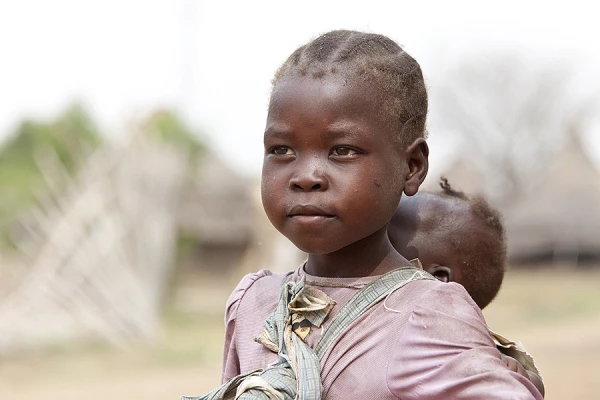
CNA Staff, Jul 15, 2020 / 04:51 pm (CNA).- Almost 690 million people around the world were undernourished last year, according to a new United Nations report, continuing what experts say is a worrying increase in global hunger.

The number of people who went hungry in 2019 was up 10 million from the previous year, and up 60 million from five years ago, said a report entitled The State of Food Security and Nutrition in the World.

The report, released this month, was authored by international groups including the UN’s Food and Agriculture Organization, the UN’s International Children’s Fund, the World Health Organization, the World Food Programme, and the International Fund for Agricultural Development.

It warned that nearly 9% of the world’s population was undernourished last year, marking an increase in hunger despite international efforts to fight it.

The majority of people who went hungry in 2019 live in Asia, followed by Africa, the report said. Undernourishment is worse among women than among men, and the gender gap is growing.

The ongoing COVID-19 pandemic has worsened projections for nutrition and food security. Estimates suggest that the pandemic could add 100 million people to those who are undernourished this year.

In May, Catholic Relief Services launched a campaign to help address global hunger.

The agency warned that many countries were already experiencing a food crisis prior to the coronavirus pandemic. Now, unemployment, lockdowns, heightened food prices, and supply disruptions have made it even more difficult for impoverished families in many areas to get food.

CRS president and CEO Sean Callahan warned of a “shadow pandemic” of worsening hunger in vulnerable parts of the world.
“Now is the time for us to lead the way forward to ensure that these communities have the support they need to make it through this crisis and beyond,” he said.

“If we don’t provide adequate food to children now, it will impact them for the rest of their lives.”

The “Lead the Way on Hunger” campaign encourages Catholics to educate themselves and help fight global hunger through prayer, donations, efforts to raise awareness, and advocacy on behalf of foreign aid legislation.

Archbishop Bernard Hebda of St. Paul and Minneapolis, a member of the CRS board, praised the campaign as an expression of solidarity, work for the common good, and promotion of human dignity.

“We believe that each life, no matter how vulnerable, is precious,” the archbishop said.

Catholic Relief Services is active in many countries to help alleviate food insecurity. In Guatemala, the agency is helping offer packages of rice, corn, beans and oil for children who are at risk of undernutrition and often receive their only meal of the day through distribution programs at their schools, which have closed due to the pandemic. In the Philippines, CRS aided a home for people with disabilities to acquire a one-month supply of food and hygiene items.

Catholic Relief Services is also helping with instructions and supplies for hand-washing and sanitization, to help prevent the spread of the coronavirus.

[…]

No Picture
News Briefs

House committees reject pro-life amendments

July 15, 2020 CNA Daily News 1

CNA Staff, Jul 15, 2020 / 04:00 pm (CNA).- Efforts to remove abortion funding in next year’s federal budget failed in the House Appropriations Committee earlier this week.

Reps. Tom Cole (R-Okla.) and Andy Harris (R-Md.) offered pro-life amendme… […]

No Picture
News Briefs

Religious sisters in Peru offer free quarantine housing for COVID carriers

July 15, 2020 CNA Daily News 1

Lima, Peru, Jul 15, 2020 / 02:25 pm (CNA).- A group of Franciscan sisters in Ica, Peru, is offering a facility free of charge as temporary quarantine housing for coronavirus patients who are asymptomatic or experiencing only mild symptoms.

The temporary shelter was dedicated July 14 in La Tinguiña, Ica Province, one of the regions still under lockdown due to the large number of COVID-19 cases.

According to local media, the mother superior of the convent, Mother Rosa Fernández, made the commitment to provide rooms at no cost to infected people who need to quarantine until they are no longer contagious.

The rooms each contain their own bed and bathroom, with everything sanitized. The facility is the first of its kind in the region.

During the opening ceremony, Fernández asked God to bless the people who have made this initiative possible, as well as all who will use the facilities, that the Lord may restore their health “as soon as possible.”

“If our humble house can be of any use, well, here it is,” she said.

Local government and health officials were on hand for the ribbon-cutting ceremony opening the housing facility, which will provide 30 beds.

The mayor of La Tinguiña, Juan Roque Hernández, stressed that Fernández is providing the housing for free.

“[She] is not charging us a dime for the room,” he said.

In previous statements to local media, Mayor Hernández stressed that the temporary housing complies with healthy and safety protocols, and its use help create “an epidemiological fence that reduces the number of cases in the region.”

The mayor stressed that this initiative also seeks to raise awareness among the people on the importance of temporary housing for people with COVID-19 in order to prevent the spread of the virus in the community.

According to the Ministry of Health, Peru has had more than 330,000 cases of the novel coronavirus with more than 12,000 deaths. The country ranks fifth worldwide in the number of COVID-19 cases, and the Ica region has more than 9,000 cases to date.

To prevent the pandemic from advancing, the country’s government declared a mandatory national lockdown from March 16 to June 30. However, some areas remain under lockdown due to the high number of new daily cases.


This article was originally published by our sister agency, ACI Prensa. It has been translated and adapted by CNA.


[…]

No Picture
News Briefs

Christians face the pandemic in Palestine

July 15, 2020 CNA Daily News 0

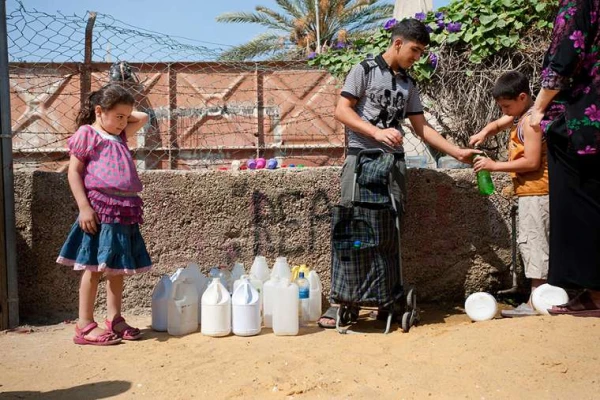
Rome Newsroom, Jul 15, 2020 / 01:25 pm (CNA).- Facing the global coronavirus pandemic, Palestine has “the special and unique challenges of being under colonialism and a touristic country,” a Palestinian Catholic from the Bethlehem area told CNA.

Rula Shomali, communications officer at the Latin Catholic Patriarchate of Jerusalem, told CNA that Palestinians, and especially Palestinians Christians, face unusual challenges while fighting the coronavirus pandemic.

“With a state of low income and poor resources, and a country that has fought colonialism for years, it is difficult to fight two colonizations at once; the Israeli occupation and COVID-19,” she said.

In recent weeks, coronavirus infections skyrocketed in the West Bank. As of July 9, there were 4,673 infected people and 22 deaths from COVID 19 in the West Bank. At the end of May, there had been only 400 infections and two fatalities. The renewed spread of the infection is jeopardizing the Palestinian Authority’s efforts to counter the epidemic.

Shomali said that “we are already living in a large open prison, having the checkpoints and the wall surrounding our area. Having to deal with its consequences everyday leaves us in the same situation that the lockdown and quarantine measures have imposed.”

She added that “as a Palestinian working in Jerusalem, I have to cross the checkpoint every day to pass from Bethlehem to Jerusalem. To be able to do so, I should have a specific and valid permit.”

“During the outbreak” – Shomali recounted – “all the permits stopped, and the checkpoint was closed. My colleagues and I weren’t able to reach our offices, and it took some time for the Patriarchate to arrange our coming to work.”

Working from home was also hard, because “our internet connection is very slow, and our laptops do not have access to everything we need. I had a three months old baby girl! (now she is six months!) which makes working from home harder than I thought. My other colleges have sisters and brothers who had exams and online classes with only one laptop at home, which made the progress of work slower.”

Three months of lockdown seemed at first to defeat the spread of the infection. But numbers in recent weeks show that the pandemic is still spreading in Palestine.

“One of Palestine’s current risk factors is the intense social mixing, us living in overcrowding urban slums and camps, inadequate sanitation, and our specific cultural and faith practices that let people interact frequently,” explained Shomali.

She stressed that “family gatherings at wedding and funerals are the major reason that prevented the Palestinian government from protecting its people from the second wave of COVID-19.”

In addition to that, “people find it difficult to change their social behaviors suddenly. Some think of it as inappropriate to meet someone and not shake hands, or congratulate someone and not to kiss, or to leave someone and not to hug. These are the things we were raised doing: social gatherings and crowding!”

The new outbreak of pandemic took place in an area in downtown Hebron, called H2, which is administered by the Israeli government. Shomali said that “the Palestinian government has no authority there, so many people held weddings and funerals uncontrollably.”

Shomali noted that Palestinian authority has taken preventive measures to counter the infection, “despite the Palestinian low-income economics, and the lack of major health facilities and tools.”

She said that “since March 2020, the Palestinian Ministry of Health and the government imposed a closure on the Bethlehem area and asked people to go under lockdown after returning a Greek group who was on tour in Bethlehem, that was found to be infected with COVID-19.”

The proclaimed state of emergency measures resulted in the closure of many organizations and institutions, and so many employees and workers lost their jobs. The government, Shomali, said, “implemented various protective measures” and at the same time “raised awareness through TV channels and social media.”

Shomali said that life in Palestine is “definitely harder. I live 10 minutes away from my parents, and I can’t visit them because of the restrictions and because of my fear of infecting them. Also, since March, I couldn’t reach my office. The business stopped in the Bethlehem area. We are facing a critical financial situation, as some of us stopped receiving salaries, and others received small percentages of it. We pay rent, have loans, bills, and other fees, besides our daily expenses of food, and other necessary needs for my toddler.”

Before the COVID pandemic, life in Palestine was “simple,” while “during the outbreak of COVID-19, we stuck at home, we worked and studied online.”

“Many families had a hard time doing so due to the lack of laptops or smartphones in the house and poor internet connection. Many lost their jobs and couldn’t afford to pay the bills, rent, and so. Our allowance for food and cleaning products increased, as we are home all the time, and it was during winter, so we needed more food! Besides all that, our anxiety increased, and we suffered sleep deprivation, it was hard to get a new routine during the pandemic.”

Shomali said that “many people couldn’t afford to buy their basic needs, as their business stopped, they lost their jobs – as Bethlehem is considered to be a tourist town and its income mainly depends on tourism.”

The coronavirus outbreak also affected the Latin Patriarchate of Jerusalem. “As well as struggling with the effects of decades of military and economic occupation, the pandemic left us with severe adverse impacts on our income, that many couldn’t pay school fees, which is one source the Latin Patriarchate of Jerusalem depends on for the salaries of its teachers and employees,” Shomali said.

Shomali also noted that “a big part of our challenge as Palestinians living in a small community is not only the social visiting and the risk of infecting each other but also misinformation and rumors spreading on social media which have generated panic and mistrust among people, who their attention was diverted from the outbreak response and prevention and the great work done by the health-care workers, to passing down rumors and false information.”

[…]