No Picture
News Briefs

Health professionals protest imminent Northern Ireland abortion laws 

October 9, 2019 CNA Daily News 0

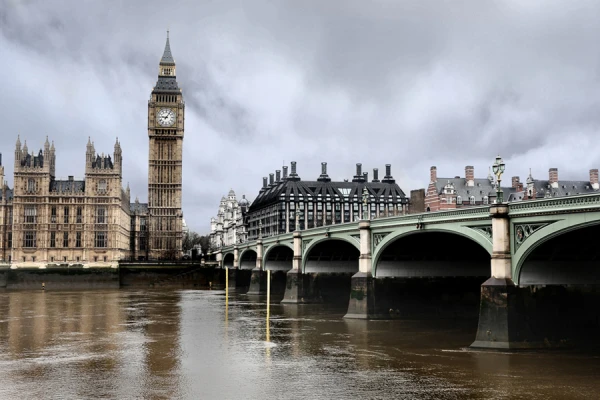
Armagh, Northern Ireland, Oct 9, 2019 / 02:51 am (CNA).- Health professionals in Northern Ireland are writing to the region’s secretary to protest a liberalization of the region’s abortion laws, which the UK parliament is set to impose on Northern Ireland this month unless Northern Ireland’s parliament reconvenes.

According to the Impartial Reporter, over 800 health professionals in Northern Ireland have written to the Secretary of State expressing concern and opposition to the potential legal change.

“As a Christian my faith in God also plays a major part of my belief in the sanctity of life,” a midwife from County Fermanagh told the Impartial Reporter.

“[God’s] word says we are ‘fearfully and wonderfully made’ and it is my personal conviction that the miracle of life is given by God. But I want to make the point that many midwives who are part of the ‘Midwives for Both Lives’ Facebook group are of non-faith backgrounds and still they believe in protecting the life of the unborn child,” she said.

The British parliament voted in July to add same-sex marriage and a loosening of abortion restrictions as amendments to the Northern Ireland (Executive Formation) Bill, which is designed to keep the region running amid a protracted deadlock in the Northern Ireland Assembly.

The Northern Ireland Catholic bishops’ conference has condemned the legislation’s “unprecedented” use of authority to legalize abortion in the region.

The Assembly has been suspended for the past two years due to a dispute between the two major governing parties. The Democratic Unionist Party, the largest, is opposed to changing the law. Sinn Féin, another prominent party in Northern Ireland, backs a liberalization of the abortion law.

If Northern Ireland Assembly is not reconvened by Oct. 21, the expansion of abortion rights and the legalization of same-sex marriage will take effect. Secretary Julian Smith would be mandated to put the laws into effect by March 31, 2020.

The UK government on Tuesday morning published guidelines for health professionals for when the abortion law tentatively goes into effect. The guidelines state that between Oct. 22, 2019 and March 31, 2020, no criminal charges can be brought against those who have an abortion, or against health care professionals who perform and assist in an abortion.

The health professionals’ letter of concern also lamented a lack of conscience protections in the bill for medical personnel who object to participating in abortions. The new guidelines instruct those health professionals with a conscientious objection to direct women to information about where to obtain an abortion elsewhere.

The guidelines go on to say that health professionals may object to participating “hands-on” in an abortion, but this does not include the “ancillary, administrative and managerial tasks” related to the procedure.

“You must not express your personal beliefs (including political, religious and moral beliefs) to patients in ways that exploit their vulnerability or are likely to cause them distress,” the guidelines state.

Last year, the Republic of Ireland held a referendum in which voters repealed the country’s pro-life protections, which had recognized the life of both mothers and their babies. Irish legislators then enacted legislation allowing legal abortion in what had long been a Catholic and pro-life stronghold.

Elective abortion is legal in the rest of the United Kingdom up to 24 weeks, while currently it is legally permitted in Northern Ireland only if the mother’s life is at risk or if there is risk of permanent, serious damage to her mental or physical health.

Northern Irish women have been able to procure free National Health Service abortions in England, Scotland, and Wales since November 2017.

Leaders of the Catholic Church, the Church of Ireland, Methodist Church in Ireland, Presbyterian Church in Ireland, and the Irish Council of Churches, have called on their congregations to lobby their locally elected representatives, and ask them to reconvene the assembly before the deadline.

“We are, along with others, gravely concerned that the imposition of this Westminster legislation,” the leaders wrote, calling for two special days of prayer over the weekend of October 12-13 for the unborn and for women facing difficult pregnancies and their families.

The religious leaders also objected that the people of Northern Ireland were not consulted about the measure, and there is no evidence that it reflects the will of the citizens.

Arlene Foster, the leader of the DUP, has reiterated her party’s stance in its opposition to abortion, and she called for the restoration of the devolved government in the region.

[…]

The Dispatch

What kind of “believers”?

October 9, 2019 George Weigel 15

This past June I was in the Munich area for four days, giving a public lecture on Evangelical Catholicism and doing a lot of media interviews. My hosts were exceptionally gracious, but it was also […]

No Picture
News Briefs

Colorado dioceses announces independent reparations program for abuse victims

October 8, 2019 CNA Daily News 0

Denver, Colo., Oct 8, 2019 / 07:01 pm (CNA).- The Catholic bishops of Colorado announced Monday an independent reparation and reconciliation program that will provide for victims of clerical abuse in the dioceses who were minors at the time the abuse occurred.

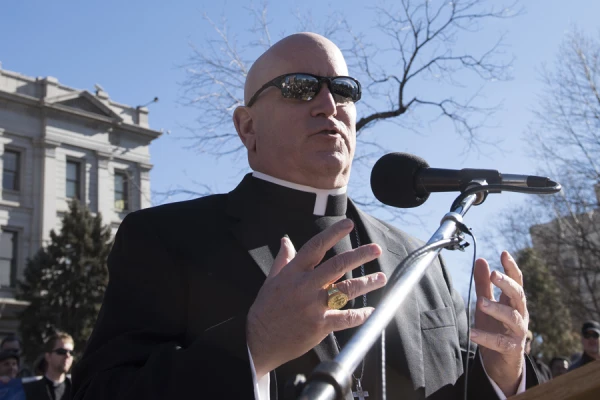
“The damage inflicted upon young people and their families by sexual abuse, especially when it’s committed by a trusted person like a priest, is profound,” Archbishop Samuel Aquila said in an Oct. 7 statement announcing the program.

“And while money can’t heal wounds, it can acknowledge the evil that was done and help restore peace and dignity to the survivors. We hope that this independent program creates a simple and non-adversarial means for survivors to have their stories heard and be provided with resources to aid in their continued healing.”

The program will be available to all victims of abuse by diocesan clergy in the dioceses of Denver, Colorado Springs, and Pueblo who were minors at the time when the abuse occurred. There is no statute of limitations in the program for the timing of the abuse.

“No matter how long ago the abuse occurred, we hope anyone who is still suffering in silence will be encouraged to come forward. If any survivor also wishes to meet personally with me, my door will be open,” Aquila said.

The Colorado Independent Reconciliation and Reparations Program, or CIRRP, was designed in collaboration with the dioceses by Kenneth Feinberg and Camille Biros, who are administering similar programs in New York, Pennsylvania, New Jersey, and California. It will be overseen by a committee of five people unaffiliated with the dioceses.

“Feinberg and Biros will have complete independence to determine the eligibility of individual claims and they alone will determine the amount of compensation offered to any survivor,” Aquila said. “The Dioceses have agreed to abide by Feinberg and Biros’ decisions and the compensation determinations are not subject to appeal by the survivor or the Dioceses.”

CIRRP is being offered as an alternative to victims in lieu of pursuing legal action against the Church in court, Aquila said, and is a voluntary program. While victims will be asked to share some personal information when filing their claims, it will be kept confidential by the program.

“Unlike civil litigation in the courts, this new program provides a process that is non-adversarial and protects victims’ privacy if they desire to remain anonymous. However, there are no restrictions if the survivor wishes to speak publicly about their abuse and participation in the program. Survivors do not need to retain a lawyer to participate and there are no fees for participating. Compensation for fully completed and documented claims can usually be paid within 90 – 120 days,” Aquila said.

To be eligible for the program, those filing claims must be reporting an incident of abuse that occurred when they were a minor by a diocesan cleric who was in active ministry at the time of the incident. Those filing claims about abuse incidents that occurred at the hands of members of a religious order, a priest of an out-of-state diocese, or a lay person will not qualify for the program. Those who have already reached a settlement with the diocese for their claim will not be eligible for the program.

“However, Claimants whose claims were dismissed or barred by a court on the grounds that the Colorado statute of limitations had expired and no other basis remain eligible to file a claim with the Program,” CIRRP protocol states.

Those who filed a claim with the diocese prior to the release of the program, but who had not reached a final settlement agreement, will be sent claim packets in the mail. Those who had not previously contacted the diocese prior to the program may register to file a claim online.

Registration for the program is open online from now until Nov. 30 while claim submission is open through Jan. 31, 2020. Claims not previously reported to the appropriate law enforcement agency will be reported to law enforcement through the program.

Claims will be considered eligible based on provided documentation and corroboration, findings by law enforcement, and credibility of the claim. Initial funding of the program will come from diocesan assets and not from donor funds designated for other ministries, schools or programs, the Archdiocese of Denver noted. The total cost of the program and total number of complaints remains to be seen.

The CIRRP program is similar to one administered in the Archdiocese of Denver for victims of abuse in 2006 by Archbishop Charles Chaput. The archdiocese states on its website that victim protection policies and protocols have been in place in Denver since 1991, and were again strengthened by the U.S. bishops’ Dallas Charter in 2002.

There have been no known incidents of sexual abuse of a minor by a clergy member in the Archdiocese of Denver for 20 years, the archdiocese noted on its website, and there are no priests currently in active ministry with known and credible accusations of sexual abuse of a minor.

“As a result, new cases of sexual misconduct by priests involving minors are rare today in the Catholic Church in Colorado,” Aquila said.

“Nonetheless, the Bishops undertake this program in their continued efforts to provide avenues for survivors of abuse to receive assistance to continue their healing.”

“The damage done to innocent young people and their families by sexual abuse in the past is profound. I realize, as you do, that no program, however well-intentioned and well-designed, can fully repair the damage done to victims and their families,” he added. “But I pray that this new program might provide another avenue toward healing and hope.”

[…]

The Dispatch

St. John Henry Newman

October 8, 2019 Bishop Robert Barron 6

As I compose these words, I am preparing to leave for Rome, where I will attend the canonization Mass for John Henry Newman, and then for Oxford, where I will give a paper on Newman’s […]

No Picture
News Briefs

Puebla legislators move to reject abortion, same-sex marriage

October 8, 2019 CNA Daily News 0

Puebla, Mexico, Oct 8, 2019 / 04:28 pm (CNA).- Last week legislators in the Mexican state of Puebla rejected any attempt to legalize abortion and same-sex marriage.

Members of the Joint Committees for the Procuration and Administration of Justice and Gender Equality of the Puebla Congress voted Oct. 4 in favor of two initiatives of the state governor, Miguel Barbosa Huerta, which seek to keep abortion as a crime and reject same-sex marriage, reiterating that marriage is solely the union between a man and a woman.

If the reforms are passed in the full session of the unicameral legislature in the coming days, the State Civil Code will read: “marriage is a civil contract by which only one man and only one woman join together in society.”

The Puebla Criminal Code will read: “a sentence of six months to one year in prison shall be imposed on the mother who voluntarily obtains an abortion or consents to another performing the abortion.”

This last reform means a significant reduction in the sentence for abortion, which currently carries up to five years in jail.

Barbosa, as well as most of the legislators who voted in favor of the initiatives, belong to the National Regeneration Movement, or Morena. The party is generally supportive of abortion rights.

Marcial Padilla, director of  ConParticipación, told ACI Prensa that the decision by the lawmakers  was at once “positive and surprising.”

“What’s surprising is that the governor, who is of the Morena party, and the legislators  introduced and passed some initiatives to maintain the protection of the life of the child, that is, they rejected the legalization of abortion.”

“They did soften the penalties, but they maintained the protection of the life of the child,” he said, and pointed out that “they also reinforced that marriage is the union of one man and one woman.”

Padilla then emphasized that this legislative decision “is encouraging for us, because we see that the politicians can listen to the citizens.”

“The causes for the right to life and the family don’t have to fall along party lines,  they don’t have to be the whim of a few politicians bent on an ideology.”

“We citizens should not be afraid, we must be constant, firm, assertive, until all political parties assume, without hesitation, an agenda in favor of the right to life and the rights of the family.”

[…]

No Picture
News Briefs

US blacklists Chinese groups over repression of Uighurs

October 8, 2019 CNA Daily News 0

Washington D.C., Oct 8, 2019 / 03:18 pm (CNA).- The US Commerce Department on Monday added 28 Chinese organizations to a blacklist barring them from buying products from US companies, saying they co-operate in the detention and repression of Uighurs in the country’s northwest.

The Oct. 7 Commerce Department filing said the groups are engaging in or enabling “activities contrary to the foreign policy interests of the United States,” specifically “human rights violations and abuses in the implementation of China’s campaign of repression, mass arbitrary detention, and high-technology surveillance against Uighurs, Kazakhs, and other members of Muslim minority groups in the [Xinjiang Uighur Autonomous Region].”

An estimated 1 million Uighurs, members of a Muslim ethnoreligious group, have been detained in re-education camps in Xinjiang.

Inside the camps they are reportedly subjected to forced labor, torture, and political indoctrination. Outside the camps, Uighurs are monitored by pervasive police forces and facial recognition technology.

The 28 groups added to the Entity List will be unable to buy from US companies without the approval of the US government. The groups are the Xinjiang public security bureau, 19 of its subordinates, and eight technology companies that produce video surveillance equipment, artificial intelligence, and voice recognition technology.

Announcing the additions, US Commerce Secretary Wilbur Ross said the US “will not tolerate the brutal suppression of ethnic minorities within China.”

Geng Shuang, a Chinese foreign ministry spokesman, said, “there is no such thing as these so-called ‘human rights issues’ as claimed by the United States. These accusations are nothing more than an excuse for the United States to deliberately interfere in China’s internal affairs.”

The Chinese government has said reports on the camps by Western governments and media are unfounded, claiming they are vocational training centers and that it is combatting extremism.

The Washington Post reported Oct. 5 that women in Kazakhstan who say they had been detained in Xinjiang said they were forced to have abortions, had contraceptive devices implanted involuntarily, or were raped.

According to an Oct. 8 article in NPR based on interviews conducted in Kazakhstan with relatives of Uighurs and Kazakhs  detained or imprisoned in Xinjiang, detainees are increasingly being sentenced and transferred to formal prisons.

In July, Xinjiang officials said the re-education camps have been successful, with most of those held having been reintegrated into Chinese society.

Xinjiang vice chairman Alken Tuniaz said detainees were allowed to “request time off” and “regularly go home,” the AP reported.

While they are not permitted to practice their religion during their “period of study”, he said, they may do so at home.

The officials did not provide figures to back up their claims, and they have been met with scepticism outside China; David Brophy, senior lecturer in modern Chinese History at the University of Sydney, said to the Wall Street Journal “How much of this employment involves forced relocation to elsewhere in China? How much of it is taking place in education camps that have now been repurposed as heavily surveilled factories?”

Uighurs can be arrested and detained under vague anti-terrorism laws. Violence in the region escalated in the 1990s and again in 2008.

In August 2014 officials in Karamay, a city of Xinjiang, banned “youths with long beards” and anyone wearing headscarves, veils, burqas, or clothes with the crescent moon and star symbol from using public transit. That May, universities across the region banned fasting during Ramadan.

Meanwhile, US officials are stepping up their criticism of China’s detention of Muslims in Xinjiang, and other religious freedom abuses.

Speaking to CNA at the Vatican last week, US Ambassador-at-Large for International Religious Freedom Sam Brownback said the State Department is particularly concerned with the Chinese government’s use of advanced technologies, like facial recognition and a social credit score system, to marginalize people of faith in the society.

“That system is starting to be exported to other places, other authoritarian repressive regimes … I think that is why [Secretary of State Mike Pompeo] talks about it, and it is certainly why I talk about it,” Brownback said.

John Sullivan, deputy US secretary of state, said at a panel held last month on the sidelines of the UN General Assembly that “the United Nations, including its member states, have a responsibility to stand up for the human rights of people everywhere, including Muslims in Xinjiang. We urge the UN to investigate and closely monitor China’s rights abuses, including the repression of religious freedom and belief.”

“We cannot be the only guardians of the truth nor the only members of the international community to call out China and demand that they stop,” Sullivan stated.

He concluded: “I would like to take the opportunity to commend those who have already joined us in standing up for the rights of the more than one million members of ethnic and religious minority groups the Chinese government is abusing. We invite others to join the international effort to demand and compel an immediate end to China’s horrific campaign of repression.”

[…]