No Picture
News Briefs

Scientists call for ‘gradually reduced’ population to fight climate change

November 5, 2019 CNA Daily News 3

Washington D.C., Nov 5, 2019 / 04:00 pm (CNA).- A letter warning of a “climate emergency” signed by more than 11,000 scientists calls for a “gradual reduction” in the world’s population.  

The “World Scientists’ Warning of a Climate Emergency” was published in the journal BioScience on Tuesday, and was signed by 11,258 scientists from 153 countries.

In the statement, the signatories listed both economic growth and a global population increase as “among the most important drivers of increases in CO2 emissions from fossil fuel combustion.” The report called for “bold and drastic transformations regarding economic and population policies.”

The statement was published on Tuesday, after the U.S. formally declared that it was withdrawing from the Paris Climate Accord, an international agreement set to go into effect in 2020 under which many UN member countries pledged to reduce their carbon emissions.

The Vatican has supported the Paris agreement, with Secretary of State Cardinal Pietro Parolin stating last year that “climate change is an issue increasingly more moral than technical.”

On Tuesday, the warning issued by the scientists noted a “rapid rise in greenhouse gas emissions” in recent decades along with other factors such as rises in air transport, economic GDP, and energy consumption and a decrease in the size of the Brazilian Amazon rainforest.

The global population is increasing by 80 million people per year, the statement claims, and is a key driver of climate change. “The world population must be stabilized—and, ideally, gradually reduced—within a framework that ensures social integrity,” the scientists said.

Tuesday’s statement calls for “proven and effective policies that strengthen human rights while lowering fertility rates and lessening the impacts of population growth on GHG emissions and biodiversity loss.”

While the global population has continued to increase, fertility rates in many Western countries have already declined to replacement level or below.

According to the U.S. Centers for Disease Control (CDC), the birth rate in the United States hit an all-time low in 2018 with the total fertility rate at 1.7—well below the replacement rate of 2.1. In South Korea in 2017, there were seven births per 1,000 people; Hungary saw its birth rate fall to 1.45 children per woman.

According to demographic prospects in the 2019 Revision of World Population Prospects, for the years 2015-2020, Western Europe was estimated at 1.68 live births per woman. Latin America and the Caribbean fell just under replacement level at 2.05 live births per woman. The African continent, by contrast, was estimated at 4.44 live births per woman.

Successful population control policies, the report noted, “make family-planning services available to all people, remove barriers to their access and achieve full gender equity, including primary and secondary education as a global norm for all, especially girls and young women.”

It cited another report by John Bongaarts and Brian C. O’Neill in Science Magazine that said efforts to slow population growth are being ignored as a legitimate solution to climate change.

Dr. Catherine Pakaluk, assistant professor of social research and economic thought at the Catholic University of America, told CNA in March that having children is a sign of optimism and that climate concerns should take a backseat to other factors.

“I think it takes a lot of courage to have a child, in any time,” Pakaluk said. “Having children in general seems to require a lot of courage and optimism.”  

Pakaluk, whose primary research area is in demographics and families, told CNA that having a child is an intimidating task, but one that is made easier with what she called “spiritual resources.”

Pakaluk also said rhetoric about overpopulation should be tempered by experience, and that while many believe vital resources are becoming more scarce, the opposite is often true.

“As the world population has grown, together with research, industry, and innovation, in fact, most of those scarce resources have actually become less scarce,” she said.

The professor noted that while the world’s population had typically ebbed and flowed before steadily rising over the last century, the “golden age” of sustained population growth is coming to an end.

Pope Francis’ 2015 encyclical on ecology, “Laudato Si,” paragraph 50 states that despite calls for population control as a solution to poverty, “demographic growth is fully compatible with an integral and shared development”.

“To blame population growth instead of extreme and selective consumerism on the part of some, is one way of refusing to face the issues,” the encyclical states of population growth as a false answer to climate change.

Developed countries may propose population control as a means by which to continue consuming resources at an unsustainable rate, while burdening developing countries with abortion, contraception, and sterilizations as well as effects of climate change, the encyclical said.

“It is an attempt to legitimize the present model of distribution, where a minority believes that it has the right to consume in a way which can never be universalized, since the planet could not even contain the waste products of such consumption,” the encyclical states.

Tuesday’s report was authored by William J. Ripple, professor of ecology at Oregon State University (OSU), and OSU associate research professor Christopher Wolf. It was signed by more than 11,000 scientists, ranging in disciplines and experience from biology professors to chemists, animal behaviorists, PhD candidates, research fellows, and heads of think tanks.

[…]

No Picture
News Briefs

When bombs fell on the Vatican

November 5, 2019 CNA Daily News 0

Vatican City, Nov 5, 2019 / 03:01 pm (CNA).- It was a dark autumn night in Rome, which was suffering under the occupation of Nazi Germany and was the target of bombing raids by Allied and Axis forces.

The Vatican City State was a neutral territory in … […]

No Picture
News Briefs

US bishops arrive in Rome for ad limina visit with Pope Francis

November 5, 2019 CNA Daily News 1

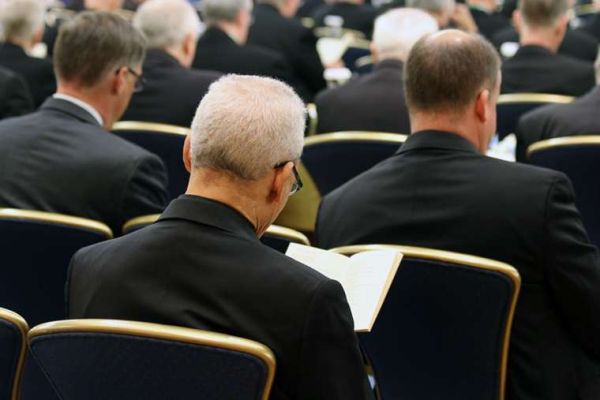
Vatican City, Nov 5, 2019 / 02:01 pm (CNA).- Every American diocesan bishop will travel to Rome over the next four months for meetings with Pope Francis assessing the state of the Church in the U.S.

The U.S. ad limina visit will be not only the first with Pope Francis, but the first since the Church in the US was shaken by a crisis of mistrust in episcopal leadership due to mishandling of sexual abuse allegations against Theodore McCarrick and others.

An “ad limina apostolorum” visit is a papal meeting required for every diocesan bishop in the world to provide an update on the state of one’s diocese. The trip to Rome, usually made together with all the bishops from a country or region, also serves as a pilgrimage to “the threshold of the apostles,” giving the bishops, who are the successors of the apostles, the opportunity to pray at the tomb of St. Peter and St. Paul.

Ad limina visits typically take place every five years, as the world’s more than 5,300 bishops rotate through Rome. However, some countries have gone 10 years without an ad limina visit, as was the case with Taiwan. During Benedict XVI’s pontificate, bishops from nearly every diocese in the world visited within seven years.

The last U.S. ad limina was with Benedict XVI in 2011-2012. Since then much has changed in the American landscape, from the Obergefell U.S. Supreme Court decision legalizing gay marriage in 2015 to the heightened tension over immigration debates under President Donald Trump.

The Catholic environment in the US has itself undergone considerable transformation since Pope Francis’ trip to the United States in the fall of 2015.

In the last two years alone, Catholics in the US have reeled from the public revelations of McCarrick’s sexual abuse, the Pennsylvania grand jury report, letters from Archbishop Carlo Vigano, Bishop Michael Bransfield’s serious financial misconduct, and the resulting crisis of mistrust in episcopal leadership.

The first rounds of U.S. bishops to come to Rome come from dioceses in the northeast U.S., the hardest hit by these scandals.

The American ad limina visits are divided into 15 regions. Pope Francis will meet with bishops from New England Nov. 4-8, New York Nov. 11-15, and New Jersey and Pennsylvania Nov. 25-29.

Bishops from New England began the first round of visits Nov. 4 with a Mass in Santa Maria Maggiore. They are also celebrating a Mass Nov. 5 in the Basilica of St. Paul Outside the Walls, and Nov. 7 in St. Peter’s Basilica.

“We feel very keenly today, all of us, the weight of human sinfulness, of infidelity, of scandal, of the sin that weighs down the Church,” Archbishop Leonard Blair of Hartford said in his homily during the Mass in Santa Maria Maggiore.

Before meeting the pope, bishops on an ad limina trip also typically visit all of the Vatican dicasteries and can schedule personal meetings with the head of each dicastery to discuss particular matters.

During such visits, bishops’ conferences deliver exhaustive reports, called Quinquennial Reports, describing the status of the Church in their country.

Previous to  Francis’ pontificate, the meeting of the bishops with the pope included an exchange of speeches from both the president of the bishops’ conference and pope, who delivered a speech providing pastoral recommendations and priorities. After the exchange of speeches, the pope then held a short conversation with each bishop individually.

Pope Francis changed the format of these visits to an open group conversation among the visiting bishops, who are allowed to ask questions of the pope for up to two hours. He also added an additional meeting presided over by himself with the bishops and the heads of some of the dicasteries. In past visits, this has included representatives from the Secretariat of State, the Congregation for Clergy, the Pontifical Council for the Promotion of the New Evangelization, and the Dicastery for Laity, Family and Life.

The American ad limina visits coincide with the U.S. Conference of Catholic Bishops’ General Assembly and election Nov. 10-13. Bishops from the state of New York will therefore be absent from the General Assembly and will vote remotely from the North American College in Rome.

Before the end of 2019, Pope Francis will meet with bishops from Washington, D.C., Delaware, Maryland, Virginia, the U.S. Virgin Islands, West Virginia, and the U.S. Military Archdiocese, in addition to New England, New York, New Jersey, and Pennsylvania.

After a short hiatus for Christmas, the Latin rite bishops of the remainder of the territory of the US, and the country’s Eastern Catholic bishops, will make their ad limina pilgrimages in 2020, from mid-January through the end of February.

[…]

No Picture
News Briefs

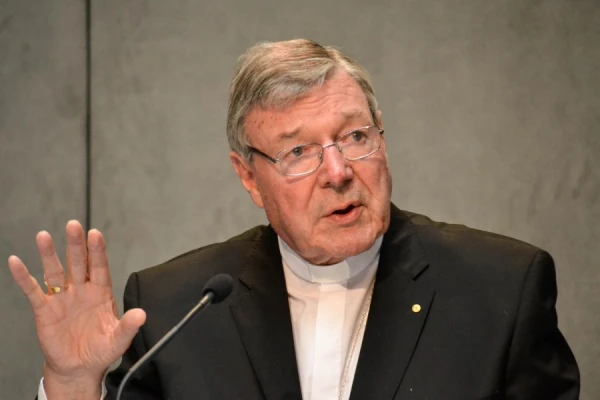
Cardinal Pell objected to Vatican hospital loan

November 5, 2019 CNA Daily News 2

Vatican City, Nov 5, 2019 / 11:12 am (CNA).- A 50 million euro loan request to secure the purchase of a bankrupt hospital was vetoed by Cardinal George Pell and financial authorities at the Institute for Works of Religion, commonly called the Vatican Bank, before it was approved by the Holy See’s central bank, APSA, where the loan breached international regulatory agreements. 

According to several Vatican officials, in late 2014 two cardinals requested that the IOR, the Vatican’s commercial bank, grant a 50 million euro loan to a for-profit partnership between the Holy See’s Secretariat of State and a religious order, which intended to purchase a bankrupt Italian hospital, then in government-administered bankruptcy.

The hospital, the Istituto Dermopatico dell’Immacolata (IDI), had been owned by the religious order, the Congregation of the Sons of the Immaculate Conception, which had formed a new organization with the Vatican Secretariat as its partner, in its complicated plan to unburden itself from the hospital’s massive debts

Cardinal Angelo Becciu, then an archbishop, and Cardinal Giuseppe Versaldi were both involved in the plan, and requested the loan from the IOR, several Vatican officials told CNA.

Their loan proposal was rejected in 2015, when the IOR board determined that the IDI would never be able to repay the loan, senior sources at two Vatican financial agencies told CNA.

Officials at APSA and the Prefecture for the Economy told CNA that Pell was vocally opposed to the loan proposal. The cardinal was at that time charged by Pope Francis with reforming Vatican finances.

It was clear the proposal would have “been a case of throwing good money after bad. There was no question of a return to stability, let alone profit,” one official told CNA.

After the proposal was rejected at the IOR, a request for a 50 million euro loan was made at APSA, the Vatican’s central bank. The loan likely violated APSA’s international regulatory agreements.

“They were desperate,” a senior source at the Prefecture for the Economy told CNA. “There was simply no other way to make it work.”

While the IDI loan was being considered at APSA, Pell’s office, which had been given oversight of the central bank’s portfolio, refused to sign off on the transaction, Vatican sources told CNA.

But Pell’s resistance was apparently not enough to stop the loan.

A senior source at APSA told CNA that “there was no taking ‘no’ for an answer,” and that the deal was “passionately” insisted on by Versaldi and Becciu. “It was never not going to happen,” the source told CNA, “the prefecture tried to block the agreement but it went ahead anyway.”

Vatican officials told CNA that Becciu, and Cardinal Versaldi, went to APSA for the loan because the central bank had already shown itself resistant to financial reforms at the Vatican. The Secretariat of State, where Becciu was the second-ranking official, was also reportedly resistant to Pell’s efforts at financial transparency and reform.  

“The was a basic, point blank, refusal to share information, to collaborate, or to open the books to the Prefecture and the Council for the Economy,” one senior source at the Prefecture for the Economy told CNA. “This has been a consistent attitude from both State and APSA.”

After conflict over the loan, Pope Francis withdrew oversight authority over APSA’s investment decisions from Pell’s office. Multiple Vatican sources told CNA that decision was strongly influenced by lobbying from Becciu.

Cardinal Becciu was also responsible for the cancellation of a proposed external audit by PricewaterhouseCooper of all Vatican finances, and opposed to Cardinal Pell’s intention to end the practice of keeping some Holy See assets and funds “off books.”

Becciu and other officials at the Secretariat of State have explained that they objected to the external audit because of the confidentiality required to conduct their work. Recent reporting has also revealed that the Secretariat was then making unauthorized real estate investments with money borrowed from Swiss banks; a fact likely to have been revealed during an external audit.

Senior sources at the Prefecture for the Economy and APSA told CNA that the cancellation of the audit was also explained, in part, by promises that an independent audit of APSA was already planned. 

But sources at both APSA and the Prefecture for the Economy said that no external or independent audit of APSA has actually been conducted, and that there has instead been a “good faith undertaking” between APSA and the Vatican’s Financial Information Authority (AIF). 

Senior sources at the Prefecture for the Economy and APSA also told CNA that efforts to enforce transparency at the Vatican’s central bank and Secretariat of State played a decisive part in the ouster of the first Auditor General, Libero Milone, in 2017. 

Milone has stated that he was forced to resign under threat of prosecution because he was pressing for information about the hundreds of millions of euros held off-books by curial bodies.

“Some people got worried that I was about to uncover something I shouldn’t see,” Milone told the Financial Times on November 2. “We were getting too close to information that they wanted to be secret, and they fabricated a situation for me to be thrown out.”

At the time of Milone’s forced departure, Cardinal Becciu defended his role in removing the auditor, saying that he had exceeded his mandate.

“He went against all the rules and was spying on the private lives of his superiors and staff, including me,” Becciu said in 2017. “If he had not agreed to resign, we would have prosecuted him.”

CNA asked Cardinal Becciu for comment on his role in seeking an IOR loan for the purchase of the IDI. The cardinal declined to comment.

[…]