No Picture
News Briefs

Be teachers of youth, Canadian bishops’ president tells plenary assembly
September 24, 2019 CNA Daily News 1

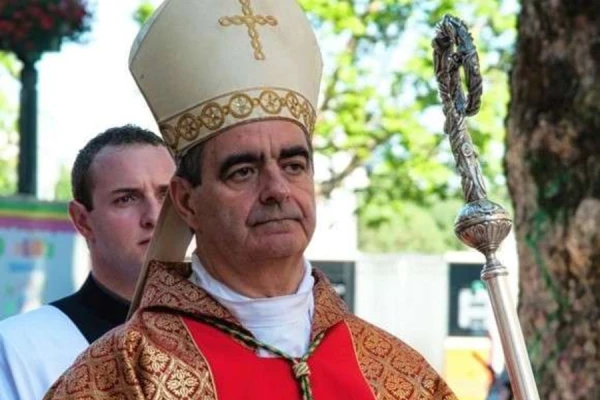
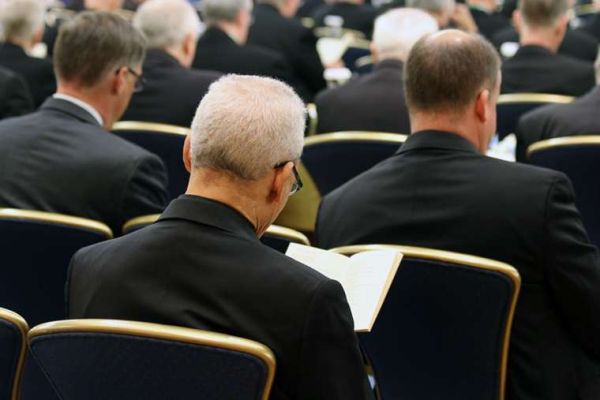
Cornwall, Canada, Sep 24, 2019 / 07:01 pm (CNA).- Beginning the plenary assembly of the Canadian Conference of Catholic Bishops on Monday, Bishop Lionel Gendron of Saint-Jean-Longueuil called his fellow bishops to embrace their role as teachers, especially of the younger generations.

“We are blessed this week with an opportunity, afforded to us only once a year, to gather as the episcopate in Canada and under the guidance of the Holy Spirit to address important questions, to shed light on emerging concerns as well as to identify and chart the course of pastoral activity which deserves special attention on the part of the Church in our country,” Bishop Gendron, president of the Canadian bishops’ conference, said Sept. 23.

“As pastors with a mandate to evangelize, we owe it not only to the current generation, but to future generations to ensure that our words and actions are imbued with the Gospel and reflect the holiness of the Church established by Christ himself,” he reflected.

The Canadian bishops’ plenary is being held in Cornwall Sept. 23-27.

The keynote address was given by Archbishop Giampietro Dal Toso, president of the Pontifical Mission Societies and adjunct secretary of the Congregation for the Evangelization of Peoples, on the missionary nature of the Church.

The plenary assembly will also address the challenges to religious freedom and freedom of conscience, particularly after the legalization of assisted suicide and euthanasia in the country; as well as the northern dioceses; youth protection; the youth synod; and pastoral care of indigenous peoples.

Regarding the prevention of sexual abuse, the assembly is emphasizing action, accompaniment, and atonement.

In his report to the assembly, Bishop Gendron said that “as Scripture insists, we must exercise special solicitude for young people. Their faith, which can be expressed with the greatest fervour, is also the most fragile.”

“We shall reflect further on the awareness that the entire community is called to evangelize the young, and the urgent need for the young to exercise greater leadership through forms of service in their local communities,” he said.

The bishop said that “legislation and policies of governments at all levels as well as recent court rulings across the country have, as of late, shown contempt for those moral beliefs of Christians which run counter the thrust of other, ostensibly more progressive, social views.”

“The moral fabric of our country is well in the process of being reshaped,” he said, noting the legalization of recreational cannabis and a court decision overriding conscientious objection to euthanasia and abortion for medical professionals.

Bishop Gendron added that “while moral setbacks, such as these, are reason for deep concern, it remains important, as faith leaders, to make our voices heard –when possible in consort with other faith leaders –for change is not beyond hope, however moderate it may be, as witnessed this past year with the Canada Summer Jobs program.”

He noted that young people’s faith is “the most fragile,” and said that technological change, social media, and gender theory “are shaping a new generation of young people,” adding that youth “remain susceptible to powerful and enticing social and ideological forces outside the Church.”

Bishop Gendron lamented the fragility of the family, for “it is within the context of the family that the seeds of a lifelong and stable commitment to Christ and to the faith are both planted and cultivated over the course of many years through the ups and downs of daily life.”

He said evangelical efforts must foster deep roots in the Church. While events such as World Youth Day and the International Youth Forum are “great celebrations of faith designed with the pastoral care of young people in mind,” they “do not always lead the young participants to make commitments to Christ and the Church which live on at the same level of intensity after the events have faded into the background of their busy lives.”

He said it is the role of the Church to educate future generations and even the parents of those children. He encouraged clerics to embrace their duty as the “teachers of the teachers of the faith.”

“In all that pertains to teaching and formation, then, we must give great priority, be it our work in revising the national programs for priestly formation or supporting lay catechists and Catholic teachers in their mission as witnesses to the faith,” he said.

“Whatever we pass on by whatever means (and anything we may fail to) has a direct bearing, above all, and sometimes more than we realize, on future generations of Catholics in Canada.”

[…]

Essay

Newman and the Grace of Simplicity

September 24, 2019 Edward Short 5

Now that the canonization of Blessed John Henry Cardinal Newman nears, we have seen a good number of articles from different quarters telling us what Newman thought and did not think. Of these, the piece […]

No Picture
News Briefs

Mexican archbishop denounces ‘shameful corruption’

September 24, 2019 CNA Daily News 1

Veracruz, Mexico, Sep 24, 2019 / 05:13 pm (CNA).- Archbishop Hipólito Reyes Larios of Xalapa in the state of Veracruz, Mexico, decried “shameful corruption” in the country and called for a deep reform that begins with conversion.

In his homily at Mass Sept. 22, Archbishop Reyes Larios said that “the climate of violence and insecurity is deeply troubling to all of us, as well as the concealed corruption and the scant solidarity in face of unemployment and [poor] public health.”

Last year, former Veracruz governor Javier Duarte was sentenced to nine years in prison for money laundering and organized crime charges. Violence is also rampant in the state, with 682 homicides and 122 kidnappings registered in just the first quarter of 2019.

“I hope that all Mexicans and especially the citizens of Veracruz open our minds and hearts to hope and solidarity in the construction of a more united and fraternal State,” Archbishop Reyes Larios said.

“I hope that we recover honesty and good administration which drives us to achieve the common good and overcome shameful corruption,” he added.

The archbishop of Xalapa denounced corruption and fraud the country, as well as the use of “social welfare benefits to buy political votes.”

He pointed to Jesus’ warning in the Gospels against trying to simultaneously serve God and money.

“Wealth has an irresistible power, and when a human being enters into the dynamic of gaining more and living better, money replaces the providence of God and demands absolute submission,” he said.

“The heart of the individual trapped by money hardens, he tends to seek only his own interests, he doesn’t think of the suffering and needs of others…there is no place for solidarity nor for a God who is a merciful Father and compassionate with all his children,” the archbishop said.


This article was originally published by our sister agency, ACI Prensa. It has been translated and adapted by CNA.


[…]

No Picture
News Briefs

Germany’s nuncio encourages attention and fidelity to Pope Francis

September 24, 2019 CNA Daily News 0

Berlin, Germany, Sep 24, 2019 / 04:00 pm (CNA).- The apostolic nuncio to Germany has written to the country’s bishops, comparing a recent letter from Pope Francis to German Catholics with a historic Nazi-era encyclical of Pius XI.

In a letter to mark the opening of the German bishops’ conference’s plenary session on Monday, Archbishop Nicola Eterovic reiterated the appeal of Pope Francis to the bishops that they focus on evangelization and maintain unity with the universal Church during their “binding synodal process.”

In June, Francis wrote to German Catholics about the state of the Church in their country, and to offer his own priorities and methodology for the syndoal path being undertaken there.

The German bishops’ plenary meeting runs from Sept. 23-25, at the end of which they will vote on draft statutes for the creation of a “Synodal Assembly.” 

“The letter of the Holy Father deserves special attention,” Archbishop Nicola Eterovic wrote in his welcoming address to the German bishops on Monday, Sept. 23.

“It is indeed the first time since the encyclical of Pius XI, Mit brennender sorge With burning concern’ — that the pope has dedicated a letter to the members of the Catholic Church in Germany in particular.”

Eterovic – originally from Croatia – pointed out that while “the encyclical of 14 March 1937 denounces the inadmissible interventions of the National Socialist regime in the affairs of the Catholic Church, the current letter deals with issues within the Church.” 

“As the representative of the Holy Father in Germany, I am pleased that the contents of the papal letter will be the subject of the study day during this assembly. I do not doubt that the pope’s letter will positively influence the so-called Synodal Path.”

In his own letter, the archbishop repeatedly stressed the need for unity with the universal Church, as expressed by the pope.

“Unity between the universal Church and particular Churches is essential for the effectiveness of evangelization,” Eterovic wrote, quoting Francis’ June letter. 

“It is especially in these times of ‘strong fragmentation and polarization to ensure that the Sensus Ecclesiae actually lives in every decision we make and that it nourishes and permeates all levels… The universal Church lives in and from the particular Churches, just as the particular Churches live and flourish in and from the universal Church; if they were separated from the universal Church, they would weaken, perish and die. Hence the need to maintain communion with the whole Body of the Church always alive and effective.”

The nuncio said the pope wanted to remind the German bishops that communion “helps us to overcome the fear which isolates us in ourselves and in our particularities, so that we can look into the eyes and listen to those who are there, or so that we can renounce needs and thus accompany those who have remained on the roadside.”

The archbishop concluded by warning the German bishops against the temptation to seek easy solutions in the face of the crisis of faith in the country. 

Citing Dietrich Bonhoeffer, the Protestant theologian murdered by the Nazis, Eterovic said that relying on the “cheap grace” cannot be the basis for renewal, and is the “mortal enemy of our Church.” Instead, he urged the bishops to “struggle” for the “expensive grace” that is found through focusing on evangelization, as called for by the pope.

Eterovic concluded his letter by underlining the essential link between people, faith, and evangelization in the communion of the Church.

“As a community of believers, as a communion of lived and preached hope, as a community of fraternal love, the Church must unceasingly hear for herself what she must believe, what are the reasons for her hope, and what the new commandment of love is.”

CNA Deutsch, CNA’s German-language partner, contributed to this story

[…]