No Picture
News Briefs

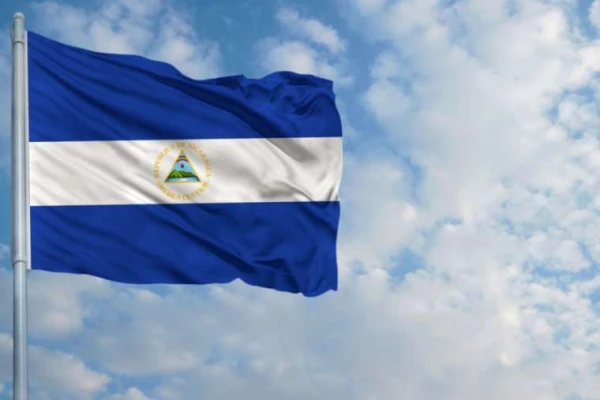
In Nicaragua, armed mob raids Catholic church hosting anti-government vigil

November 23, 2019 CNA Daily News 0

Managua, Nicaragua, Nov 23, 2019 / 02:01 pm (CNA).- Parishioners holding vigil at a church to pray for detained foes of President Daniel Ortega came under attack from supporters of the government on Thursday.
 
The attackers used clubs, machetes, and metal bars in a Nov. 21 attack at a church in Masaya, about 20 miles southeast of Nicaragua’s capital of Managua.
 
“They came with pipes and machetes, they beat the altar boys and a woman and they had us surrounded in here,” said Father Harving Madina, parish priest of Masaya’s San Juan Bautista Church, the Associated Press reports.
 
Madina and parishioners at  San Juan Bautista had planned to march a few blocks to a nearby church, San Miguel, which is surrounded by pro-government groups. The march was intended to show support for its priest and parishioners on hunger strike seeking the release of relatives they say are political prisoners.
 
Their relatives were detained during protests against Nicaragua’s President Daniel Ortega.
 
A hostile group surrounded San Juan Bautista church as Mass was being celebrated, Father Madina said. The group tried to break through the doors as priests and parishioners used pews to barricade the entrance.
 
One 50-year-old parishioner who tried to stop the assailants was beaten by several people who then handed him over to onlooking police, who did not intervene during the disturbance.
 
Anti-government protests in Nicaragua began in April 2018. The crackdown from security forces and pro-government militias resulted in more than 320 deaths last year, with 2,000 injured and tens of thousands fleeing the country as refugees.
 
Modest pension reforms triggered the unrest but protests quickly turned to objections to what critics said was Ortega’s authoritarian bent.
 
Ortega, who previously led the country for over a decade after the Sandinistas’ 1979 ouster of the Somoza dictatorship, has been president of Nicaragua since 2007, and oversaw the abolition of presidential term limits in 2014.
 
The Catholic Church had suggested that the elections scheduled for 2021 be held this year, but Ortega has ruled this out.
 
Ortega’s backers have said that a demand for the president to leave office early and to hold early elections are tantamount to a coup attempt. Some have labeled the protesters as terrorists, the Associated Press reports.
 
Ortega’s government has accused many bishops and priests of supporting the opposition.
 
Rosario Murillo, Nicaragua’s vice president and Ortega’s wife, criticized “those who claim to speak in the name of the faith,” calling them “repugnant wolves who spread hatred.”
 
The San Miguel protest vigil began Nov. 14. Authorities cut off electricity and water to the church. The National Police surrounded the building, threatening to enter by force to end the demonstration.
 
Thirteen people who tried to bring water to the demonstrators Nov. 14 were arrested. They were charged Nov. 18 with weapons transport. Police say the 13 people were carrying guns and bombs, and charged that they intended to “continue carrying out terrorist acts … against police buildings, city halls and monuments.”
 
A group of priests tried to enter San Miguel church Nov. 15, but police held them back. The health of at least three protesters there is reported to be in decline.
 
Cardinal Leopoldo José Brenes Solorzano of Managua has condemned the National Police’s “siege and intimidation” of the Masaya hunger strikers and their pastor, Fr. Edwin Román.
 
The cardinal called on the national police to respect “the free movement to demonstrate” and “the exercise of religious freedom.”
 
On Nov. 18 a different pro-government group invaded Managua’s Immaculate Conception Cathedral to pursue seven mothers of detained anti-Ortega protesters who had entered the cathedral to pray.
 
The mothers removed themselves to another part of the cathedral.
 
According to the archdiocese, a violent group “related to the government” entered and took control of the cathedral. When a priest and a nun tried to rebuke them, members of the mob beat them. The two were not seriously injured but had to leave the church to protect themselves.
 
Msgr. Carlos Avilés, vicar general of the Archdiocese of Managua, said the group was backed by the police.
 
The mothers took shelter in the cathedral overnight, and were then evacuated Nov. 19 in a Red Cross ambulance, as part of a deal negotiated by Archbishop Waldemar Sommertag, apostolic nuncio to Nicaragua. The invading group later gave up control of the cathedral.
 
The Nicaraguan bishops’ conference expressed “profound concern” Nov. 19 over the “indifference of the state for the rights of Nicaraguans who are expressing their sorrow and their needs.”
 
The bishops called on “those responsible for these sieges to change their stance.”
 
Nicaraguans have suffered too much pain,” they continued. “The besieged families suffer doubly: the lack of freedom for their incarcerated family members and, now, the state of siege that threatens their lives. We call on the government to hear their petitions which are at the same time their rights.”
 
The Managua archdiocese also asked Ortega to “take immediate action that all our Catholic churches are respected.”

[…]

No Picture
News Briefs

How Ashley Stricklin found the Catholic Church at her Baptist college

November 23, 2019 CNA Daily News 1

Washington D.C., Nov 23, 2019 / 06:50 am (CNA).- Ashley Stricklin says she had a typical Texan upbringing. She was raised a Southern Baptist in a town outside of Dallas, with a family who was active in her church. Her father was a deacon in their Baptist church, and she accepted Jesus into her heart when she was nine.

Although Stricklin lived near a Catholic church, she had never been inside it, nor did she really know any Catholics–that is, until she went off to Baylor University, one of the largest Baptist-affiliated universities in the world. There, she met faithful Catholics, and embarked on a long, and at times even secretive, journey into the Catholic Church.

The Catholics Stricklin met at Baylor were “always so joyful,” which prompted her to begin to wonder what exactly was so different between the Catholic faith and the faith she was raised in. Despite her faithful Baptist upbringing, Stricklin said that she always felt as though “something was missing,” in her life, but could not quite put her finger on it.

Her new Catholic friends invited her to Eucharistic adoration, which was the first time Stricklin had ever seen the Blessed Sacrament–and she began to see exactly what she had been missing.

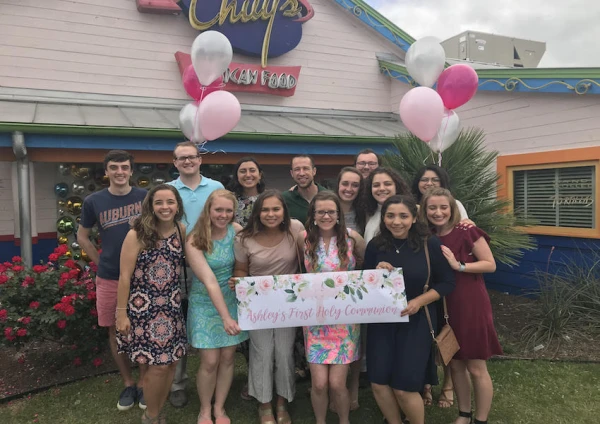
After that, everything changed, and she says she “started her journey” toward Catholicism. Three years later, that journey would reach a milestone, when she was received into the Church on April 28, 2019–Divine Mercy Sunday.

Stricklin received her first communion and confirmation at St. Peter’s Student Center, which is a campus ministry of the Diocese of Austin for students of Baylor University and nearby colleges.

Like many new Catholics, there were significant hurdles that Stricklin had to overcome before being received into the Church–both in the doctrinal sense and in the personal. For Stricklin, it was easy for her to come to accept teachings she had previously believed were wrong, such as the Immaculate Conception of Mary and Mary’s role as mediatrix of grace.

“I actually did a Marian consecration before I was confirmed,” said Stricklin. “And so it just went full circle for me.”

It was the reaction of her Baptist parents, however, that proved to be one of Stricklin’s biggest anxieties before entering the Church. Although Stricklin knew from early on in college that she wanted to become Catholic, she delayed entering the Church until her senior year, because she was afraid of how they would react.

“I definitely thought my parents were going to disown me,” Stricklin said. “That’s why I waited until I was a senior, because I didn’t think my parents would continue to pay for college.”

In the meantime, Stricklin read book after book about Catholicism, nearly exhausting the Baylor library’s section on Catholicism. She read everything from “Rome Sweet Home” to the “Summa Theologica,” eventually concentrating on conversion stories and books about the Eucharist.

Still, she kept all of her religious curiosity and plans a secret from her parents–for three years.

“I would hide my books,” she said. “I cleaned my (web) browsers, which was really not a good idea looking back now.”

Fearful still of her parents’ rejection, Stricklin waited until just two months before her First Communion and Confirmation to tell them what she was planning on doing. To her astonishment, while they were certainly taken aback, they neither abandoned her nor cut her off.

“I told my mom in February and she thought I was joking, like she just thought it was a joke,” she said, laughing. “I was like, ‘Oh no, mom, it’s not a joke.’”

Despite her fears, Stricklin’s mother attended her First Communion, and her father is supportive of her religious journey, both of which were pleasant surprises. Her grandparents, however, still do not know she has converted.

Stricklin chose St. John Paul II as her confirmation saint, something that she was hesitant to do as she thought it would reveal that she was a convert. Eventually, she realized this was silly, and went with him anyways. She said she chose St. John Paul II due to both her interest in Eastern Europe, and because she found his papacy and writings to be “truly inspiring.”

Stricklin is now a student at Creighton University School of Law, where will graduate in 2022. About seven months into her new journey as a fully-initiated Catholic, Stricklin remains intrigued and fulfilled by the Eucharist, and she continues to delve more into her faith.

After initially being intrigued by the Eucharist at her first-ever adoration, Stricklin says now that she considers the sacrament to be “such a joy” and that she eagerly looks forward to receiving it. And despite her initial troubles, fears, and everything else associated with the process of converting to Catholicism, she says things have been smooth sailing.

“It’s been an interesting journey, and each day I just continue to strive for sainthood and just keep trying to increase and my relationships with God, so, yeah, it’s been good,” she said. “It’s been a cool journey so far.”

This story is part of a CNA series profiling new converts to the Catholic faith.

[…]

No Picture
News Briefs

Bolivian bishops: ‘Enough violence! Enough death!’

November 22, 2019 CNA Daily News 0

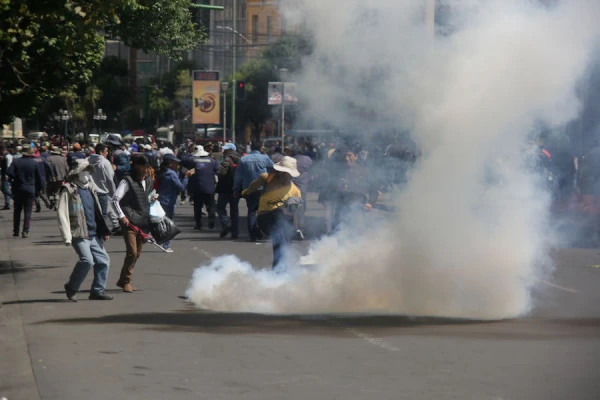
La Paz, Bolivia, Nov 22, 2019 / 06:05 pm (CNA).- The Bolivian Bishops’ Conference called for an end to violence, as protests continue in the wake of former president Evo Morales’ resignation.

“We raise our voices to call on everyone: Enough death! Enough violence! Enough suffering and pain!” the bishops said in a statement entitled “Spiral of Violence and Death.”

“We condemn the violence wherever it comes from. We once again remind that it is irrational and irresponsible, and it is not a solution for conflicts between human beings.”

The bishops warned that the “growing spiral of irrationality and violence” will continue bringing injury, death, and mourning to the country unless demonstrators can express their demands peacefully and law enforcement can refrain from the use of excessive force.

Morales resigned Nov. 10 after weeks of protest regarding a disputed Oct. 20 election. The socialist leader had been in power since 2006.

According to the electoral commission, Morales won on the election’s first round, but the opposition claimed fraud. The Organization of American States said Nov. 10 that there was “clear manipulation” in the election, and that it was statistically improbable that Morales had won by the margin needed to avoid a runoff.

Within hours of the OAS report, Morales resigned, after being encouraged to do so by the head of the Bolivian armed forces.

The deputy head of the Senate, Jeanine Anez, is serving as interim president until elections are held. Morales has been offered asylum by Mexico.

In some cities, Morales’ supporters have clashed with police, and dozens have reportedly been killed. According to reports, blockades by Morales’ supporters have cut off food and fuel in some areas. Demonstrators in El Alto blockaded a gas plant on the route to La Paz. The military broke through, in an operation that left one dead and two injured.

On Friday, the interim government filed a criminal complaint against Morales. It accuses the former president of sedition and terrorism.

Interior Minister Arturo Murillo has presented an audio recording in which he says Morales is heard directing his supporters to create blockades to destabilize the interim government, Reuters reports.

In their statement, the bishops appealed to those in power: “Don’t call for confrontation and violence, let words of peace and reconciliation come forth from your mouths.”

“Let us all be builders of peace and ask the God of life who never desires the death of the brothers to inspire our hearts and our minds to adopt the ways of peace among all Bolivians.”

The Catholic bishops are among those working to promote peace in the country. The Archdiocese of Cochabamba was part of a commission on peace with various civil organizations earlier this week.

“We citizens of Cochabamba and Bolivia reaffirm our right to peaceful coexistence, regardless of any differences,” said the Archbishop Óscar Aparicio of Cochabamba, according to Infodecom.

An 8:00 p.m. Mass was held Nov. 21 in the Sucre cathedral to pray for peace in the country.


This article was originally published by our sister agency, ACI Prensa. It has been translated and adapted by CNA.


[…]

No Picture
News Briefs

Pa. Catholic conference: Gov. Wolf failed to protect ‘humanity’s most vulnerable lives’ with Down syndrome abortion veto

November 22, 2019 CNA Daily News 1

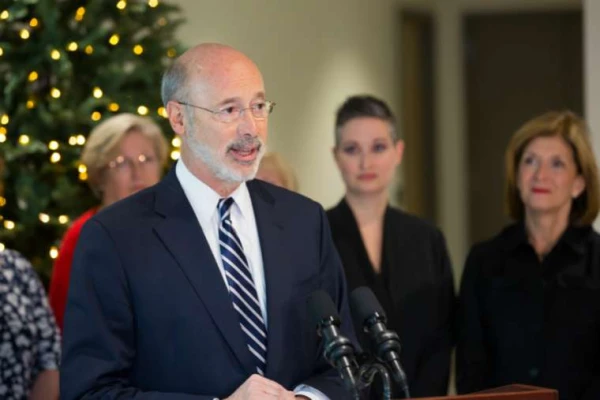
Harrisburg, Pa., Nov 22, 2019 / 04:00 pm (CNA).- Pennsylvania governor Tom Wolf this week vetoed a bill that would have banned the abortion of children prenatally diagnosed with Down syndrome. The state Catholic conference condemned the decision. 

“Gov. Wolf’s veto will prevent all children with Down’s syndrome from going on to live happy and fulfilled lives,” executive director Eric Failing said in a Nov. 21 statement.

“Had Gov. Wolf signed this legislation, he would’ve ensured the protection of humanity’s most vulnerable lives,” he said in Nov. 21 statement.

Wolf vetoed the bill on Thursday, stating that the legislation would have hindered the medical decisions between a woman and her doctor.

“This legislation is a restriction on women and medical professionals and interferes with women’s health care and the crucial decision-making between patients and their physicians,” Wolf said in an online statement.

“Physicians and their patients must be able to make choices about medical procedures based on best practices and standards of care,” he further added.

Under the current Pennsylvania law, abortion is permissible for any reason, besides gender selection, until the 24th week of pregnancy. If the bill passed this week had been signed into law, it would have prohibited abortions chosen after a diagnosis of Down syndrome, except in cases of rape, incest, and medical emergencies.

Even though the bill was vetoed, the Pennsylvania Catholic Conference applauded the efforts of Democratic and Republican lawmakers who supported the effort.

The bill had passed through the Pennsylvania Senate, 27-22, on Wednesday. It passed through the state’s House of Representatives 117-76, in May.

“We thank all legislators who came together in a bi-partisan fashion to support this common-sense legislation, and PCC looks forward to working with them again to protect the sanctity of life,” Failing said.

Up to 75% of babies diagnosed prenatally with Down syndrome in the U.S. have been aborted in recent decades, according to research conducted between 1995 and 2011.

Opponents of the bill have claimed the legislation would violate women’s reproductive rights.

According to Penn Live, Sen. Maria Collett said the bill would not help people with disabilities. She said legislators should instead focus on laws that benefit the caregivers and those already born with disabilities.

“This bill does nothing to improve the lives of people with Down syndrome,” said Collett. “Instead, it uses them to advance a political agenda.”

Sen. Scott Martin disagreed, saying abortion of children diagnosed with Down syndrome is “not health care” but an act of “eugenics.”

“These are parents who actually want to have children, who are presented as if this child will actually be a burden, who cannot live a productive life. … These children have the ability to live long, productive lives, even past the age of 60,” he said, during floor debate on the bill.


[…]

The Dispatch

The thought and work of C.S. Lewis

November 22, 2019 Carl E. Olson 1

Today marks the 56th anniversary of the deaths of three famous and intriguing men: the author and agnostic Aldous Huxley; the 35th President of the United States, John F. Kennedy; and the author and apologist, […]