No Picture
News Briefs

US blacklists Chinese groups over repression of Uighurs

October 8, 2019 CNA Daily News 0

Washington D.C., Oct 8, 2019 / 03:18 pm (CNA).- The US Commerce Department on Monday added 28 Chinese organizations to a blacklist barring them from buying products from US companies, saying they co-operate in the detention and repression of Uighurs in the country’s northwest.

The Oct. 7 Commerce Department filing said the groups are engaging in or enabling “activities contrary to the foreign policy interests of the United States,” specifically “human rights violations and abuses in the implementation of China’s campaign of repression, mass arbitrary detention, and high-technology surveillance against Uighurs, Kazakhs, and other members of Muslim minority groups in the [Xinjiang Uighur Autonomous Region].”

An estimated 1 million Uighurs, members of a Muslim ethnoreligious group, have been detained in re-education camps in Xinjiang.

Inside the camps they are reportedly subjected to forced labor, torture, and political indoctrination. Outside the camps, Uighurs are monitored by pervasive police forces and facial recognition technology.

The 28 groups added to the Entity List will be unable to buy from US companies without the approval of the US government. The groups are the Xinjiang public security bureau, 19 of its subordinates, and eight technology companies that produce video surveillance equipment, artificial intelligence, and voice recognition technology.

Announcing the additions, US Commerce Secretary Wilbur Ross said the US “will not tolerate the brutal suppression of ethnic minorities within China.”

Geng Shuang, a Chinese foreign ministry spokesman, said, “there is no such thing as these so-called ‘human rights issues’ as claimed by the United States. These accusations are nothing more than an excuse for the United States to deliberately interfere in China’s internal affairs.”

The Chinese government has said reports on the camps by Western governments and media are unfounded, claiming they are vocational training centers and that it is combatting extremism.

The Washington Post reported Oct. 5 that women in Kazakhstan who say they had been detained in Xinjiang said they were forced to have abortions, had contraceptive devices implanted involuntarily, or were raped.

According to an Oct. 8 article in NPR based on interviews conducted in Kazakhstan with relatives of Uighurs and Kazakhs  detained or imprisoned in Xinjiang, detainees are increasingly being sentenced and transferred to formal prisons.

In July, Xinjiang officials said the re-education camps have been successful, with most of those held having been reintegrated into Chinese society.

Xinjiang vice chairman Alken Tuniaz said detainees were allowed to “request time off” and “regularly go home,” the AP reported.

While they are not permitted to practice their religion during their “period of study”, he said, they may do so at home.

The officials did not provide figures to back up their claims, and they have been met with scepticism outside China; David Brophy, senior lecturer in modern Chinese History at the University of Sydney, said to the Wall Street Journal “How much of this employment involves forced relocation to elsewhere in China? How much of it is taking place in education camps that have now been repurposed as heavily surveilled factories?”

Uighurs can be arrested and detained under vague anti-terrorism laws. Violence in the region escalated in the 1990s and again in 2008.

In August 2014 officials in Karamay, a city of Xinjiang, banned “youths with long beards” and anyone wearing headscarves, veils, burqas, or clothes with the crescent moon and star symbol from using public transit. That May, universities across the region banned fasting during Ramadan.

Meanwhile, US officials are stepping up their criticism of China’s detention of Muslims in Xinjiang, and other religious freedom abuses.

Speaking to CNA at the Vatican last week, US Ambassador-at-Large for International Religious Freedom Sam Brownback said the State Department is particularly concerned with the Chinese government’s use of advanced technologies, like facial recognition and a social credit score system, to marginalize people of faith in the society.

“That system is starting to be exported to other places, other authoritarian repressive regimes … I think that is why [Secretary of State Mike Pompeo] talks about it, and it is certainly why I talk about it,” Brownback said.

John Sullivan, deputy US secretary of state, said at a panel held last month on the sidelines of the UN General Assembly that “the United Nations, including its member states, have a responsibility to stand up for the human rights of people everywhere, including Muslims in Xinjiang. We urge the UN to investigate and closely monitor China’s rights abuses, including the repression of religious freedom and belief.”

“We cannot be the only guardians of the truth nor the only members of the international community to call out China and demand that they stop,” Sullivan stated.

He concluded: “I would like to take the opportunity to commend those who have already joined us in standing up for the rights of the more than one million members of ethnic and religious minority groups the Chinese government is abusing. We invite others to join the international effort to demand and compel an immediate end to China’s horrific campaign of repression.”

[…]

No Picture
News Briefs

‘Words matter’ bishops say as Supreme Court hears LGBT cases

October 8, 2019 CNA Daily News 2

Washington D.C., Oct 8, 2019 / 02:40 pm (CNA).- The bishops of the United States have urged the Supreme Court not to “redefine a fundamental element of humanity” by reinterpreting sex descrimination laws. 

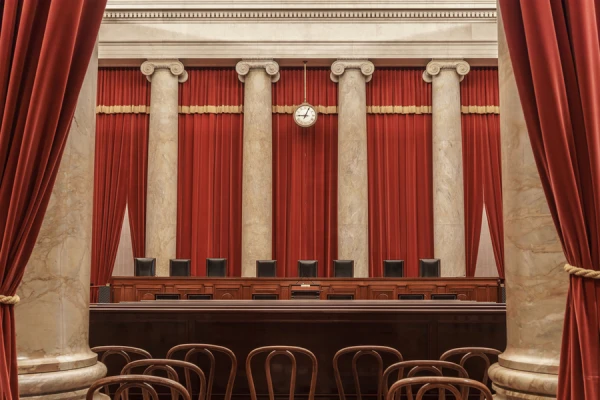
The bishops’ intervention came as the court heard oral arguments Tuesday in a trio of cases that could decide whether or not federal workplace nondiscrimination law extend to protect sexual orientation or gender identity. 

Two of the cases presented on Oct 8— Bostock v. Clayton County, Altitude Express, Inc. v. Zarda—involve employees who were fired because of their sexual orientation. A third, Harris Funeral Homes, Inc. v. EEOC,  involves a man who lost his job after announcing his intention to undergo so-called gender transition surgery.

During the session, the justices considered whether the cases constituted sex discrimination or discrimination on the basis of sexual orientation or gender identity. They also considered whether or not Title VII of the Civil Rights Act, which forbids sex discrimination in the workplace, also applies protections to sexual orientation and gender identity.

If the Court interprets that sex discrimination protections extend to sexual orientation or gender identity, the decision would have a widespread effect on cases throughout the country.

Leading U.S. bishops urged the court not to redefine “sex” to mean “sexual orientation” or “gender identity.”

In a joint statement issued on Tuesday, Bishop Robert McManus, of Worcester, who chairs the USCCB’s Religious Liberty committee, Bishop Frank Dewane, of Venice, chairman of the Domestic Justice and Human Development committee, and Bishop James Conley, of Lincoln, who chairs the Subcommittee for the Promotion and Defense of Marriage, said that the law must be interpreted in line with the meaning of the text.

“Words matter,” the bishops said. “‘Sex’ should not be redefined to include sexual inclinations or conduct, nor to promulgate the view that sexual identity is solely a social construct rather than a natural or biological fact.”

“Title VII helps ensure the dignified treatment of all persons, and we as Catholics both share and work toward that goal,” the bishops wrote. 

“Redefining ‘sex’ in law would not only be an interpretive leap away from the language and intent of Title VII, it would attempt to redefine a fundamental element of humanity that is the basis of the family, and would threaten religious liberty.”

Franciscan University of Steubenville president Fr. Dave Pivonka, TOR, also stated in an amicus brief submitted to the Court in the Harris case that, if the Court defined “sex” to mean “gender identity,” then that could open the door to the school being forced to change its sex-specific dorms, bathrooms, and locker rooms, and its medical personnel having to perform objectionable medical procedures.

Among the issues discussed was the issue of sex-specific bathrooms, and whether non-discrimination statutes could require transgender persons to be able to use the bathroom of the gender opposite their biological sex.

Justice Sonia Sotomayor said that if the Harris case was decided in favor of Stephens, that question was “inevitable.”

Justice Ruth Bader Ginsburg said multiple times during arguments that most people would consider it injurious having to share a bathroom with a person of a different biological sex.

Another topic discussed was men identifying as women being allowed to participate in women’s sports. Justice Samuel Alito said that debate would be revisited in the future.

Chief Justice John Roberts noted that several states have enacted statutes forbidding discrimination against persons based on their sexual orientation or gender identity, but many of them have also carved out religious exemptions. There are currently 23 states which have enacted such anti-discrimination laws.

Solicitor General Noel Francisco said that with the Employee Non-Discrimination Act (ENDA) and related legislation, Congress and states have found religious exemptions when forbidding discrimination on basis of sexual orientation or gender identity. However, if the Supreme Court redefines existing nondiscrimination law in Title VII, he said, they would be giving “complete victory” to one side in the debate without letting the public debate the matter and settle it—as they have done already at the state level.

During Wednesday’s arguments, Justice Stephen Breyer told John Bursch, vice president of appellate advocacy for Alliance Defending Freedom who represented Harris Funeral Home, that the “other side” would argue that the Civil Rights Act was passed as part of the civil rights movement.

This entire movement, he continued, fought for protection for those who had suffered grievous discrimination; that same protection would have been extended to others who have suffered discrimination, namely individuals identifying as LGBTQ.

The court, Breyer summarized as the position counter to Bursch’s, has moved away from that interpretation over the years, towards a strict textual interpretation of sex discrimination. Breyer asked how that would not be a departure from the meaning of Title VII that it extended civil rights protections to vulnerable individuals.

Justice Sonia Sotomayor followed by asking “at what point” the court would step in to prevent “invidious discrimination” against whole groups of people, who are fired simply because of “who they are” and “merely because they’re a suspect class to some people.”

“We can’t deny that homosexuals are being fired merely for being who they are and not because of religious reasons,” Sotomayor said.

“At what point does a court say, ‘Congress spoke about this, the original Congress who wrote this statute told us what they meant. They used clear words. And regardless of what others may have thought over time, it’s very clear that what’s happening fits those words.’ At what point do we say we have to step in?” she asked.

Justice Samuel Alito said that, although Congress enacted the Civil Rights Act in 1964 and forbade sex discrimination in the workplace, it had not updated that language to include protections for sexual orientation or gender identity. 

Congress had not yet passed the Equality Act, Alito said, which would make sexual orientation and gender identity a protected class. If the Court were to change the interpretation of Civil Rights Act to include protections for sexual orientation and gender identity, “we will be acting exactly like a legislature.”

In the Harris case, Justice Roberts asked if the funeral home’s sex-specific dress policy presented discrimination on the basis of sex, or on the basis of Mr. Stephens’ transgender status.

David Cole, representing the emplyee fired by Harris Funeral Home, said that in his case a sex-specific dress code requiring him to dress like a man when he identified as a woman was harmful. Title VII was supposed to make one’s sex “irrelevant” to their success at work, he said, but Stephens was fired for being “insufficiently masculine,” which is “sex discrimination,” he said.

Justice Neil Gorsuch acknowledged that the textual evidence of the case is “close,” and asked if a judge should consider the consequences of “massive social upheaval” of interpreting new protections in an existing law.

[…]

No Picture
News Briefs

Pope Francis appoints North Dakota priest to lead Diocese of Helena

October 8, 2019 CNA Daily News 0

Vatican City, Oct 8, 2019 / 05:17 am (CNA).- Pope Francis appointed Tuesday Fr. Austin A. Vetter as the next bishop of Helena, Montana.

Vetter, 52, is a priest from the Diocese of Bismarck, North Dakota, where he has served as rector of the city’s Cathedral of the Holy Spirit since 2018. Before that he was posted in Rome for six years as the director of spiritual formation for the Pontifical North American College.

Vetter replaces Bishop George Leo Thomas, who led the Diocese of Helena for 15 years.

Pope Francis appointed Thomas to be Bishop of Las Vegas in Feb. 2018. Monsignor Kevin O’Neill has served as diocesan administrator of Helena since Bishop Thomas’ installation in Nevada.

After receiving a B.A. in philosophy from Bismarck’s Cardinal Muench Seminary, Vetter studied sacred theology at the Angelicum in Rome, receiving his S.T.B. in 1992. He was ordained to the priesthood on June 29, 1993.

The North Dakota native has served as the director of continuing education for clergy, a high school teacher, episcopal vicar for the permanent diaconate, and as a pastor for the St. Leo, St. Patrick, and St. Martin parishes. Vetter also has taught at Creighton University’s Institute for Priestly Formation.

The Diocese of Helena was established in 1884. Stretching more than 51,900 square miles, the Montana diocese has 38 missions in addition to its 57 parishes.

The diocese has an estimated 45,400 Catholics, which is just over 7% of the area’s total population.

[…]

No Picture
News Briefs

New cardinal says he relied on Eucharist, Mary during time in Soviet prison camp

October 7, 2019 CNA Daily News 1

Kaunas, Lithuania, Oct 8, 2019 / 12:49 am (CNA).- One of the newest cardinals of the Church says he drew strength from the Mass and the Blessed Virgin during the decade he spent in a Soviet prison camp in Siberia.

Sigitas Tamkevicius, archbishop emeritus of Kaunas, Lithuania, was elevated to the rank of cardinal in the Oct. 5 consistory.

As a priest in Lithuania, Tamkevicius played an active part in resisting communist persecution of the Church. With four other priests, he founded in 1978 the Catholic Committee for the Defense of Believers’ Rights.

He also set up the Chronicle of the Catholic Church of Lithuania, a small magazine – produced on a typewriter – that reported on the situation of the Church and of Catholics in the Baltic state.

In 1983, Tamkevicius was arrested and held by the KGB. He was sentenced to 10 years of forced labor and exile. He served some of his sentence in Siberia.

In a statement to EWTN and ACI Prensa, CNA’s Spanish language sister agency, Tamkevicius explained that during his time in prison, “my stronghold was my faith, which I kept alive by praying a lot.”

“I could only celebrate Mass secretly. I celebrated the Eucharist with great care, and for me it was a great source of strength in prison,” he said.

To get the bread and wine, Tamkevicius resorted to the meal tickets the prisoners received. He was able to receive bread – and could request that it be unleavened – and a dry grape, which he would use to make the wine.

The cardinal said other prisoners would comment about his faith, and the strength that it gave him.

“They told me, ‘It’s easier for you because you have faith, because you can say Mass and that makes you stronger than us.’”

Tamkevicius also turned to the Virgin Mary as a source of strength, from the moment he was sentenced and sent on a train to the forced labor camp.

“I placed myself in the hands of the Virgin,” he said, adding when he returned from the prison camp, he immediately went from the train station to the Chapel of the Virgin of the Gate of Dawn in Vilnius.

“There I celebrated Mass, and gave thanks to the Lord and also to the Virgin,” he said.

In his statement, the new cardinal said his appointment by Pope Francis surprised him. At 80 years old, Tamkevicius will not be able to vote in the next conclave. He emphasized that he sees his appointment as the pope’s effort to draw attention “to the entire Church that suffered during the Soviet years.”

He also echoed Pope Francis’ frequent emphasis on martyrdom, saying “if a believer is not ready to suffer for his faith, then he’s a very weak believer. Our local Church can give a good example to the whole Church, because during the 50 years of Communism, we kept our faith.”


This article was originally published by our sister agency, ACI Prensa. It has been translated and adapted by CNA.


[…]