No Picture
News Briefs

Basilica confirms Nathan Phillips protest attempted Mass disruption

January 23, 2019 CNA Daily News 2

Washington D.C., Jan 23, 2019 / 04:15 pm (CNA).- The Basilica of the National Shrine of the Immaculate Conception has confirmed that protesters led by the Native American activist Nathan Phillips attempted to disrupt the celebration of Mass on the evening of Jan. 19.


On Jan. 23, a spokesperson for the Washington, DC  basilica released a statement to CNA confirming the previously reported events of Saturday night.


The statement said that while Mass was being celebrated, “a group of approximately 50 individuals attempted to gain entrance to the basilica while chanting and hitting drums.”


The statement clarified that the protesters attempted to gain entrance to the basilica during the celebration of a specially arranged Mass being celebrated at 7:00 p.m, and not, as had previously been reported, during the basilica’s regularly scheduled 5:15 p.m. Mass.


“At this time, Mass was being celebrated in the upper church where the individuals attempted to enter,” the statement said.


“In respect and reverence for the Mass, the individuals were not permitted to enter the Basilica due to the disruption it would have caused during the solemn Mass. The individuals were asked to leave the property after it was determined they did not intend to share in the celebration of Mass.”


According to video footage of the event and eye-witness accounts, the group assembled across the road from the shrine before setting off toward its main entrance, chanting and playing drums.


As the group walked towards the basilica steps, one demonstrator can be heard saying “I’ll watch the cops.” CNA previously reported that DC Metro police responded to a 6:27 p.m. call to the basilica’s address Saturday night, making it likely that the police were already in attendance by the time protesters attempted to enter the building, and intervened after members of the group attempted to enter the building.


Video of the event posted on Facebook shows one demonstrator telling the protesters they had been ordered off the shrine property by police, after some of their group were rebuffed as they attempted to enter the church.


A California seminarian present at the shrine during the demonstration told CNA that protesters could be heard “banging on the doors” of the basilica after they were locked out.

[…]

No Picture
News Briefs

Venezuelan bishops back opposition marches, after calling Maduro ‘illegitimate’

January 23, 2019 CNA Daily News 1

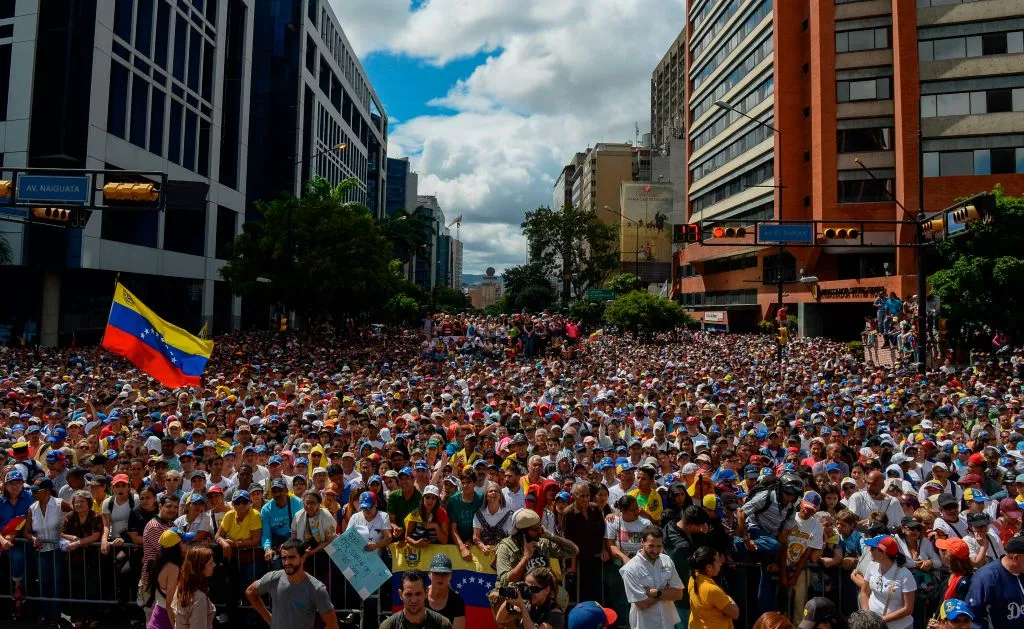
Caracas, Venezuela, Jan 23, 2019 / 04:04 pm (CNA/EWTN News).- The bishops of Venezuela have voiced support for peaceful opposition demonstrations across the country Wednesday. At one of these marches in Caracas, opposition leader Juan Guaido declared himself interim president.

Guaido is head of the National Assembly, the opposition-controlled legislature. He pledged a transitional government and free elections.

Soon afterwards US president Donald Trump said he recognized Guaido as president, saying the National Assembly is the sole “legitimate branch of government” in Venezuela and that Nicolas Maduro’s presidency is “illegitimate”. Colombia, Brazil, Peru, Ecuador, and Costa Rica have also reportedly recognized Guaido.

Since Maduro succeeded Hugo Chávez as president of Venezuela in 2013, the country has been marred by violence and social upheaval. Under the socialist government, the country has seen severe shortages and hyperinflation, and millions have emigrated.

Earlier this month, the bishops called illegitimate Maduro’s swearing in for a second term as president. Maduro won a May 2018 presidential election which was boycotted by the opposition and has been rejected by much of the international community.

The Jan. 23 marches were convoked by the National Assembly, which the Venezuelan bishops’ conference’s Justice and Peace Commission said was “elected by the free and democratic vote of the Venezuelan people” and “is currently the sole organ of public authority with the legitimacy to exercise its powers with sovereignty.”

The commission also demanded that “the diverse bodies of state security respect the citizens demonstrating today,” citing their right to be free from “violent repression, arbitrary detentions, cruel treatment, and the use of firearms and toxic substances to control peaceful demonstrations.”

In addition, the bishops’ Justice and Peace Commission urged “the Catholic people and men and women of good will to pray for Venezuela at this time, that the constitutional order is restored and we achieve a spiritually and materially prosperous nation.”

Tens of thousands of Venezuelans marched in support of the opposition today. Security forces have met some of the protesters with tear gas.

In Maturin, at least 700 opposition supporters who marched were trapped in the cathedral for several hours, besieged by the Venezuelan Army.

<blockquote class=”twitter-tweet” data-lang=”en”><p lang=”es” dir=”ltr”>Continúa la situación irregular en la Catedral de Maturin. Aproximadamente más de 700 personas permanecen encerradas dentro de la Catedral. En los alrededores existe presencia de colectivos. <a href=”https://t.co/8dSAHnybzK”>pic.twitter.com/8dSAHnybzK</a></p>&mdash; CEV (@CEVmedios) <a href=”https://twitter.com/CEVmedios/status/1088188198789046284?ref_src=twsrc%5Etfw”>January 23, 2019</a></blockquote>
<script async src=”https://platform.twitter.com/widgets.js” charset=”utf-8″></script>

Numerous bishops are participating in the opposition marches, among them Luis Enrique Rojas Ruiz, Auxiliary Bishop of Mérida; Mario del Valle Moronta Rodriguez of San Cristóbal; Víctor Hugo Basabe of San Felipe; and Ulises Antionio Gutiérrez Reyes of Ciudad Bolívar.

<blockquote class=”twitter-tweet” data-lang=”en”><p lang=”es” dir=”ltr”><a href=”https://twitter.com/hashtag/CEV?src=hash&amp;ref_src=twsrc%5Etfw”>#CEV</a> Mons. Mario Moronta , Obispo de San Cristóbal, acompañando al pueblo tachirense en la manifestación del 23 de enero <a href=”https://t.co/d7EeDgWUIW”>pic.twitter.com/d7EeDgWUIW</a></p>&mdash; CEV (@CEVmedios) <a href=”https://twitter.com/CEVmedios/status/1088123477297688576?ref_src=twsrc%5Etfw”>January 23, 2019</a></blockquote>
<script async src=”https://platform.twitter.com/widgets.js” charset=”utf-8″></script>

Supporters of the Maduro government are holding counter-protests.

The opposition marches were called by the National Assembly to mark the anniversary of the 1958 coup which overthrew dictator Marcos Perez Jimenez.

Ahead of the opposition marches, the Venezuelan bishops’ conference called them “a sign of hope, something new that is beginning to be generated in our country: necessary changes for the integral human development of each person and of all persons, but always in democracy and in accord with the National Constitution.”

“These marches are not the end of the road, but a sign of the future in process which we must construct among us all, without exception,” the bishops said in a statemented title “23 January 1958: A historic milestone for Venezuelan democracy.”

The bishops called the 1958 coup “an inspiring sign of the triumph of social rationality before the abuse of power; of the unity of the people who were weak before the dismantling of a regime of abuses, of corruption, and of repression, which concealed within itself all the evils which an authoritarian government can have.”

Since then, the Venezuelan republic developed a “democratic conscience”, which valued the separation of powers, peaceful transitions of government, and decentralization, the bishops said.

“Lamentably, the deterioration of the democratic life by factors known to all opened the doors to the introduction of a government regime in which many placed their hopes, but which, in the end, has been contrary to the principles of social ethics and to respect for human dignity.”

They said the Jan. 23 marches remember “that event which was significant in the struggle of civilization before barbarism. We do this remaining aware of the suffering to which the Venezuelan people have been subjected by government action.”

The bishops also said that “the majority of the people ask for a change of direction which passes through a period of transition until new national authorities are elected.”

On Jan. 9, the bishops had said Maduro’s claim to be initiating a new term “opens the door to the nonrecognition of the government, since it lacks democratic support in justice and law.”

A Jan. 21 rebellion by 27 members of the National Guard in Caracas was quickly suppressed.

Venezuela’s socialist government is widely blamed for the country’s crisis. Since 2003, price controls on some 160 products, including cooking oil, soap and flour, have meant that while they are affordable, they fly off store shelves only to be resold on the black market at much higher rates.

Poor economic policies, including strict price controls, coupled with high inflation rates, have resulted in a severe lack of basic necessities such as toilet paper, milk, flour, diapers and medicines.

An estimated 3 million people have fled the country since 2014.

Inflation in Venezuela in 2018 was estimated by the National Assembly at 1.3 million percent.

[…]

No Picture
News Briefs

World Youth Day kicks off with message: ‘Have the courage to be saints’

January 23, 2019 CNA Daily News 1

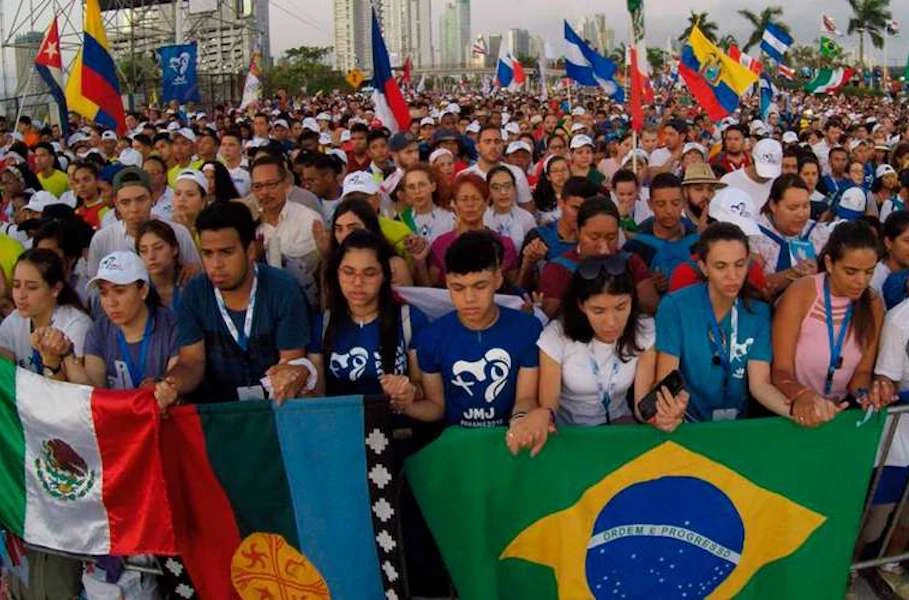
Panama City, Panama, Jan 23, 2019 / 01:59 pm (CNA).- At the opening Mass of World Youth Day 2019, Archbishop José Domingo Ulloa Mendieta of Panama told young people from across the globe that a life of holiness is really possible, with the help of God’s grace.

“The Church is looking forward to this springtime of young people. We have confidence in you, we expect a lot from you, because we are fully convinced that…the changes and transformations that humanity and the Church require are in your hands,” he said.

To prepare themselves for the responsibilities ahead of them, Archbishop Ulloa said, young people must learn their personal, familial, cultural, and faith history. He emphasized the role of grandparents in transmitting family identity.

He encouraged the youth to swim against the tide of the culture, fighting for holiness rather than simply seeking the avoidance of suffering in life.

“Being holy leads us to break out of spiritual and material corruption, of all that which causes us evil and offends God,” he said. “A saint defends the defenseless – the unborn, but also the born child who is destitute, a saint defends migrants, seeks justice, prays, lives in and loves the community, is joyful and has a sense of humor, is always striving, breaks out of mediocrity, lives the mercy of God and shares it with his neighbor.”

Hundreds of thousands of pilgrims from around the world are expected to flood Panama this week for World Youth Day, which culminates with an overnight prayer vigil and Mass with Pope Francis Jan. 26-27.

The opening Mass for the event was held at Santa María La Antigua Field in Panama City.

Archbishop Ulloa reminded those present that sainthood is “not a myth,” but a reality for their lives. He pointed to the witness of saints including Martin de Porres, Rose of Lima, Juan Diego, José Sánchez del Río, John Bosco, Oscar Romero and John Paul II.

The archbishop of Panama expressed his hope that World Youth Day would be a “balm” for the plight of many young people, especially migrants, those from homelands experiencing violence, and people suffering due to “drug trafficking, human trafficking, crime and so many other social evils.”

He encouraged young people to trust in the Virgin, not only asking for her intercession, but also striving to imitate her virtues.

“Let’s not be afraid, dear young people, have the courage to be saints in today’s world,” he said, adding that in doing so, “you’re not renouncing your youth or your joy; completely the opposite, you will show the world that it’s possible to be happy with so little, because Jesus Christ, the reason for our happiness, has already won for us eternal life with his resurrection.”


[…]

No Picture
News Briefs

‘This is progressive?’ New York bishops react to new abortion law

January 23, 2019 CNA Daily News 6

Albany, N.Y., Jan 23, 2019 / 01:30 pm (CNA).- Catholic leaders in New York have spoken out against the passage of an expansive new abortion law in the state. The Reproductive Health Act was passed on Tuesday, the anniversary of the Supreme Court decision Roe v Wade.


In a statement from the New York State Catholic Conference, the state’s bishops called the passage of the law a new “sad chapter” on a date that already carried tragic associations for supporters of life.


The New York State Senate voted 38 to 24 to bring the act into law after a 12-year legislative battle.


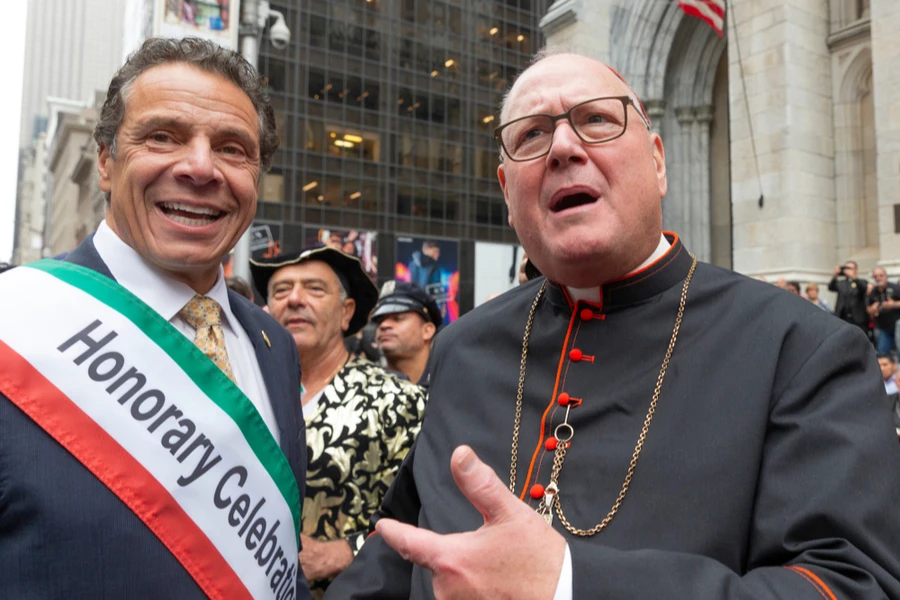
Gov. Andrew Cuomo (D), a Catholic, said earlier this month that he would sign the legislation if it were to be passed, and that he hopes to add abortion rights to the state’s constitution. This process could begin next year.


The bill was passed on the anniversary of the 1973 Roe v. Wade decision that found a woman had a legal right to receive abortion in the United States.


“Our beloved state has become a more dangerous one for women and their unborn babies,” read a statement from the NYSCC.


The act codified into law the finding of Roe v. Wade, meaning that abortion would remain legal in New York even if the case were to be overturned by the Supreme Court.


While the law officially limits abortion to the first 24 weeks gestation, abortion is permitted at a later gestational age for reasons related to the wellbeing of the mother. Additionally, the bill removes act of abortion from the criminal code, and instead places it in the public-health code, and strips most safeguards and regulations on the procedure. Non-doctors will now be permitted to perform abortions.


Writing on his official blog on the eve of the bill’s passage, Cardinal Timothy Dolan of New York said bishops are not supposed to be “politicians or culture warriors,” but said that the new law was an affront to the rights of the most vulnerable.


“If our governor, senate, and assembly has their way, abortion will be legal up to the moment of birth; those large numbers of healthcare professionals who find the termination of pre-born babies repugnant will have no conscience rights to object; trained physicians will be not be required to perform the dismemberment; and a baby who survives the scalpel, saline, or suction, and is still alive, can be left to die without any care.”


“This is ‘progressive’?” Dolan asked.


“All people have rights:  the immigrant, the poor, the pregnant woman… and her baby.  All God’s children, Reverend [Martin Luther] King would insist, are equal and have rights,” the cardinal concluded, recalling the recent observance of Dr. Martin Luther King Day.


In a statement published on the state website, Gov. Cuomo called the signing a “historic victory for New Yorkers,” and that “in the face of a federal government intent on rolling back Roe v. Wade and women’s reproductive rights, I promised that we would enact this critical legislation within the first 30 days of the new session – and we got it done.”


Cuomo said that he hopes other states will follow in New York’s lead and pass similar legislation.


Bishop of Albany Edward B. Scharfenberger, questioned if supporting and signing this law could impact Cuomo’s standing in the Catholic Church and ability to receive communion.  “This legislation threatens to rupture the communion between the Catholic faith and those who support the RHA even while professing to follow the Church, something that troubles me greatly as a pastor,” wrote Scharfenberger.


In an open letter to the governor, Scharfenberger highlighted Cuomo’s apparent inconsistencies when referencing his Catholic faith.


“Although in your recent State of the State address you cited your Catholic faith and said we should ‘stand with Pope Francis,’ your advocacy of extreme abortion legislation is completely contrary to the teachings of our pope and our Church,” Scharfenberger wrote.


New York was the first state to legalize abortion, and did so in 1970. It currently has the highest abortion rate in the country. In 2019, the organization Americans United for Life ranked New York 43rd on its annual ranking of pro-life states.


The bishops also requested prayers not only “for the conversion of heart for those who celebrate this tragic moment in the history of our state,” but also for “the lives that will be lost, and for the women of our state who are made less safe under this law.”


There were many “celebrations” throughout the state after the law was passed. In addition to the loud cheering in the Senate chamber after the vote, One World Trade Center and other landmarks around the state were lit up in bright pink to “celebrate” the law.


In Albany, meanwhile, next to the Executive Mansion where the bill was signed, the Cathedral of the Immaculate Conception tolled its bells in preemptive mourning for the unborn lives that will be lost.


“As a society, we can and must do better,” Scharfenberger said.


“The teaching and intuition of our common faith readies us to help. It is an essential part of our mission to support the lives of all, especially the voiceless, the most vulnerable and marginalized, as Pope Francis always reminds us to do.”

[…]

No Picture
News Briefs

Appeals court upholds La. law regulating abortion clinics

January 23, 2019 CNA Daily News 0

New Orleans, La., Jan 23, 2019 / 11:41 am (CNA/EWTN News).- The Fifth Circuit Court of Appeals on Friday rejected a request from abortion rights’ advocates to rehear a case challenging a Louisiana law that requires abortion doctors to have admitting privileges at nearby hospitals.

The Jan. 18 decision effectively upholds its earlier ruling in favor of the bipartisan law, known as the Unsafe Abortion Protection Act, or Act 620. Unless an appeal to the US Supreme Court is filed, it will take effect Jan. 28.

A three judge panel of the Fifth Circuit had upheld Act 620 in September by a 2-1 vote. Abortion rights’ advocates were asking the court to rehear the case en banc – by a greater share of the court’s judges.

“I applaud the Fifth Circuit’s decision to reject the abortion providers’ latest legal challenge to Louisiana’s pro-life and pro-woman admitting privileges law,” said Louisiana Attorney General Jeff Landry. “Act 620 is common-sense measure that ensures women will receive proper care if they have complications.”

The Fifth Circuit voted 9-6 to reject the petition for rehearing en banc.

Act 620 was authored by Democratic State Rep. Katrina Jackson, who authored the legislation and is chair of the Louisiana Legislative Black Caucus. She has said the law is about “the safety of women.”

It was passed in 2014 by an 88-5 vote in the Louisiana House, and a 34-3 vote in the Senate.

The Unsafe Abortion Protection Act requires that abortion doctors have admitting privileges at a hospital within 30 miles of their clinic.

The law also clarifies that informed consent protections also apply to chemical abortions, procured by ingesting mifepristone, and that chemical abortions must be reported anonymously to the Department of Health and Hospitals, which already tracks surgical abortions. Doctors who perform more than five abortions per year must also maintain proper licensing.

When the Fifth Circuit upheld Act 620 in September, it found that the law does not impose a substantial burden on women seeking to procure abortion.

Act 620 was challenged in the wake of the Supreme Court’s 2016 Whole Women’s Health v. Hellerstedt decision.

In that case, the high court struck down a Texas law that required doctors performing abortions to have admitting privileges at a nearby hospital, and abortion clinics to meet the standards for ambulatory surgical centers. In the 5-3 vote, the majority found that the law put an “undue burden” on a women’s right to an abortion, posing a “substantial obstacle” to that right without showing the necessary benefits of its regulations to women’s health.

Considering Louisiana’s law in light of Whole Women’s Health v. Hellerstedt, the Fifth Circuit wrote that “the facts in the instant case are remarkably different from those that occasioned the invalidation of the Texas statute in WWH.”

“Here, unlike in Texas, the Act does not impose a substantial burden on a large fraction of women under WWH and other controlling Supreme Court authority. Careful review of the record reveals stark differences between the record before us and that which the Court considered in WWH.”

“The Louisiana Act passes muster even under the stringent requirements of WWH,” wrote Circuit Judge Jerry E. Smith.

Similarly, the Eighth Circuit Court of Appeals in September ruled that Missouri may enforce its own law mandating that doctors who perform abortions have hospital privileges and that abortion clinics to have the same standards as similar outpatient surgical centers.

The Eighth Circuit also cited the Hellerstedt case, saying that decision analyzed purported benefits of the law at issue related to abortion in Texas, not Missouri, and that it found courts should consider the asserted benefits of a law.

Fifth Circuit Judge James L. Dennis dissented from the court’s decision not to rehear the challenge to Act 620, asserting it is “in clear conflict” with the Hellerstedt decision and that “the panel majority’s attempt to distinguish WWH is meritless because it is based on an erroneous and distorted version of the undue burden test required by WWH and Planned Parenthood of Southeastern Pa. v. Casey.”

Landry welcomed the majority’s decision not to rehear the challenge to Act 620, saying: “The Fifth Circuit once again affirmed what we have repeatedly said: our law is both factually and legally different from the Texas law that the Supreme Court ruled against.”

“I once again thank Representative Katrina Jackson for authoring this public safety legislation and Solicitor General Liz Murrill for preserving the Legislature’s intent,” he added.

When the Unsafe Abortion Protection Act was passed in 2014, there were five abortion clinics in Louisiana. By the time the Fifth Circuit upheld the law in September 2018, there were three, in New Orleans, Baton Rouge, and Shreveport.

The day before it declined to rehear the challenge to Act 620, the Fifth Circuit vacated a previous injunction barring Texas from stripping Planned Parenthood affiliates of Medicaid funding.

Circuit Judge Edith Jones affirmed that Texas has the right to exclude a healthcare provider from Medicaid funds, and criticized the Planned Parenthood affiliates’ argument that the Office of Inspector General has insufficient expertise to determine the qualifications of abortion providers.

[…]