No Picture
News Briefs

Colombian diocese donates 250,000 hosts to alleviate shortage in Venezuela

April 2, 2018 CNA Daily News 1

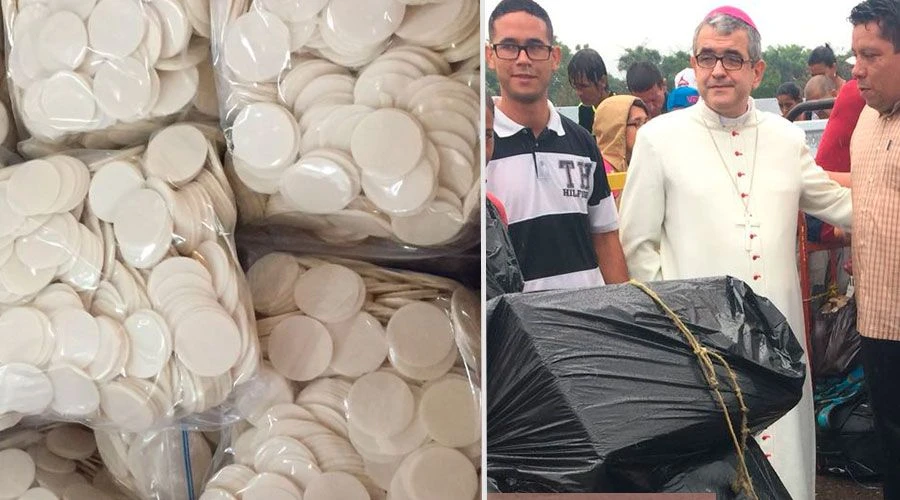
Cucuta, Colombia, Apr 2, 2018 / 01:56 pm (ACI Prensa).- With a flour shortage leading to a lack of hosts in Venezuela, the neighboring diocese of Cúcuta, Colombia donated 250,000 hosts for border dioceses to celebrate liturgies during Triduum.

Bishop Victor Manuel Ochoa of Cúcuta donated the hosts to dioceses along the Colombian-Venezuelan border in their area, saying that he hoped to convey “the charity of Christ.”

The delivery was made early March 30 on the Simon Bolivar International Bridge, which connects the two countries.

Venezuela is facing severe food and medicine shortages amid the economic crisis under President Nicolas Maduro. Thousands have fled the country as necessities become increasingly scarce.

This is not the first time that the Diocese of Cúcuta has donated components for the Eucharist to the nearby Venezuelan Church.

The Diocese of Cúcuta, which provides thousands of meals daily to refugees fleeing from Venezuela into Colombia, noted in a statement that “it is also important to take care of the needs that afflict the Faith as a consequence of this time of crisis in the border region.”

The grave crisis facing Venezuela has also affected the life of the local Church.

As early as August 2015, it had been reported that the economic crisis had caused the production of hosts in three Venezuelan states to drop by 60 percent.

In a March 28 RCN Radio broadcast, Sister Pilar Rivas of the Servants of Jesus Mother House, which makes hosts for parishes in Caracas and Venezuela’s interior, said that in the last two years, they have had to short-fill orders due to the lack of raw material.

“With orders placed in advance, if they ask for 10,000 hosts we give them 2,000 because we can’t meet a very big demand for orders…Sometimes we have to stop making hosts due to the shortage of flour, we have gone for entire weeks without being able to make hosts,” she said.

In some areas, priests have had to divide hosts into numerous pieces in order to provide for the faithful.

Sister Pilar voiced hope that “with the mercy of God and the help of the Blessed Virgin Mary,” circumstances in the country will improve.


This article was originally published by our sister agency, ACI Prensa. It has been translated and adapted by CNA.

[…]

The Dispatch

Hell and Pope Francis

April 2, 2018 Mark Brumley 83

Let’s hope the lesson regarding Mr Scalfari has finally been learned so we don’t see further international headlines recounting this or that alleged contradiction by […]

No Picture
News Briefs

Retreat fosters healing for adult children of divorce

April 2, 2018 CNA Daily News 0

Washington D.C., Apr 2, 2018 / 03:39 am (CNA).- According to the Pew Research Center, only 46 percent of Americans under the age of 18 live in a traditional family with two parents in their first marriage.

For those who are now adults and grew up in a divorced family, the Saint John Paul II National Shrine in Washington, D.C. is seeking to help heal wounds that remain after parents divorce.

Many suffer silently from their parents’ divorce, according to Daniel Meola, who leads the ‘Recovering Origins” healing retreats for the shrine.

“Regardless of the amount of individual love our parents give us, what we’ve lost is the love of our parents together,” Meola explained to CNA, drawing on his own experience of his parents’ divorce. “We have to recognize that we have something to grieve.”

“Children of divorce are not, as a rule, asked how they feel about their parents’ divorce — not as a child and not in the decades that follow,” Catholic writer, Leila Miller, wrote in her 2017 book, “Primal Loss: The Now-Adult Children of Divorce Speak.”

“Our society says that the kids should be alright. There should be no problem. There’s a lot of happy divorce talk … so that can kind of silence us,” explained Meola.

Although many children of divorce learn to silence their feelings, their wounds really begin to show themselves in young adulthood and in the ability to form and maintain relationships, according to Meola.

There can be “this deeper anxiety that many of us have that any good thing can turn bad at the drop of the hat or always expecting the piano to fall,” said Meola, who added that trust issues, anger, and depression are other common struggles.

Many participants in past retreats have expressed fear of repeating their parents’ mistakes. The key to addressing this concern is practicing the Church’s teaching of merciful love, Meola said.

“The form of marriage is merciful love … I think that if we can forgive our parents or even just start to forgive them that we will be starting a really good foundation for our own love and our own marriages,” he commented.

“You can love your parents and still hate the divorce,” explained Meola. “We have this beautiful distinction in the Church, at least I found very comforting, between the person and his acts. I found this very comforting actually for grieving that ‘Ok, I can hate this act my parents did, but I can still love this person deeply and profoundly.’”

“I’ve always found it really beautiful and fascinating that Christ’s strongest words on marriage in Matthew 19, saying it is indissoluble, are preceded by his strongest words on forgiveness in Matthew 18 where he tells people to forgive 77 times 7 times,” he continued. “I think that what the Scripture is suggesting there is that the form of indissolubility is merciful love.”

The Church’s teaching on self-giving love in marriage can also seem counterintuitive to adult children of divorce. “I think that one of the temptations when you are wounded is you just want to self-protect rather than give, even though giving is what is key for happiness, especially in love,” explained Meola. “Another sign of self-protecting is leaving at the first sign of problems and not addressing conflicts.”

“Cohabitation can also be a form of self-protecting,” he added.

The goal of the retreats is for the participants to bring these wounds and anxieties to Christ’s healing love. “As John Paul II said in Salvifici Doloris, if we have eyes of faith and we encounter Christ in the wound, then it can awaken love. That is the deepest level of healing that we are looking for.”

At the heart of each retreat is a detailed meditation on the Our Father. Small group discussions focus on more practical aspects of navigating healthy boundaries with one’s parents and in relationships after divorce.

“When your parents divorce, they are in survival mode and so are you, and what often happens is that you feel like you need to be the parent to the parent, rather than the child. And what I mean by that is that they often turn to you as their emotional confidant because they do not have their spouse any longer, so what happens is you don’t feel the permission to share your feelings with them because they are dumping so much on you and you feel the need to help them figure out their emotional life. But in a healthy marriage, it is flipped — the child is supposed to be getting direction about their emotional life from the parent … when you are married, you need to be each other’s emotional confidant… We do have to draw a boundary,” explained Meola.

“We tend to think of boundaries as pushing the other person away, but they are actually at the service of reconciliation and having a good relationship. Because what is going to push you away is if you have an unhealthy relationship. You are going to collapse and get really angry. Boundaries are actually at the service of a good relationship with your parents,” he continued.

“Verbal abuse can be very prolific. Because we are a child of both parents, when one parent bashes the other parent, that really hurts us, because we are a fruit of that, we have qualities of that parent that they might be bashing,” continued Meola who said that the retreat can empower young people to speak up when this occurs.

“Each parent is half of who the child is. When the parents reject each other, they are rejecting half of the child. They may tell the child, ‘We still love you; we just don’t love each other.’ The child cannot make sense of this impossible contradiction. In my opinion, this is the underlying reason for the well-documented psychological, physiological, and spiritual risks that children of divorce face,” wrote Dr. Jennifer Roback Morse, the founder and president of the Ruth Institute, in the introduction to Miller’s book on adult children of divorce.

The “Recovering Origins” healing retreat was born out of an earlier symposium hosted by the Pontifical John Paul II Institute for Studies on Marriage and Family in 2012 that brought together scholars who have studied the impact divorce has had on children, including Elizabeth Marquardt, whose groundbreaking book, “Between Two Worlds: The Inner Lives of Children of Divorce,” was one of the first studies on the impact of divorce on young people.

Carl Anderson, Supreme Knight of the Knights of Columbus, saw how fruitful the symposium was, and decided that the Church should offer more opportunities for healing. The Knights of Columbus and the John Paul II Institute developed the retreat, which was first held in 2016.

Each retreat is usually capped at 25 participants to encourage discussion. Speakers at the last retreat at the Saint John Paul II National Shrine on March 23-25 included Fr. Jim McCormick, MIC and Dr. Jill Verschaetse, both of whom are adult children of divorce.

The next retreat is scheduled for September 7-9 in Arlington, Virginia.


[…]

No Picture
News Briefs

Death doesn’t have the final word, Pope Francis says on Easter

April 1, 2018 CNA Daily News 1

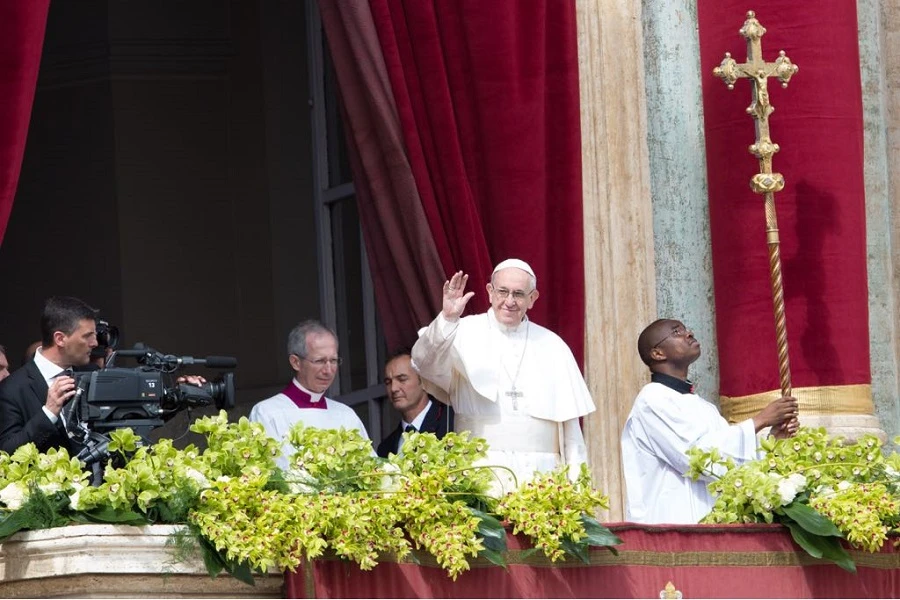
Vatican City, Apr 1, 2018 / 04:25 am (CNA/EWTN News).- During his Urbi et Orbi Easter blessing, Pope Francis said Jesus’ death and resurrection provide hope to a world marred by conflict, proving that modern tragedies such as war and violence won’t have the final say.

“We Christians believe and know that Christ’s resurrection is the true hope of the world, the hope that does not disappoint,” the Pope said April 1, Easter morning.

Like the parable Jesus told of the grain of wheat which has to die before bearing fruit, Francis said that “it is the power of the grain of wheat, the power of that love which humbles itself and gives itself to the very end, and thus truly renews the world.”

“This power continues to bear fruit today in the furrows of our history, marked by so many acts of injustice and violence,” he said, and pointed to the plight of migrants and refugees, and victims of the drug trade, human trafficking and other forms of modern slavery.

He asked for peace throughout the world, especially in the “long-suffering” nation of Syria, “whose people are worn down by an apparently endless war.”

“This Easter, may the light of the risen Christ illumine the consciences of all political and military leaders, so that a swift end may be brought to the carnage in course, that humanitarian law may be respected” in order to facilitate access to aid, and to allow those who have been displaced to return to their homes.

Pope Francis also prayed for the Holy Land, which in recent days has seen an increase in violence, for Yemen and for the entire Middle East, “that dialogue and mutual respect may prevail over division and violence.”

“May our brothers and sisters in Christ, who not infrequently put up with injustices and persecution, be radiant witnesses of the risen Lord and of the victory of good over evil.”

He also prayed for those who yearn for “a more dignified life,” specifically children and those from areas in Africa that suffer from hunger, violence and terrorism, such as the Democratic Republic of the Congo and South Sudan.

Francis also prayed for the process of peace and dialogue on the Korean peninsula, and for Ukraine, that humanitarian aid would be able to reach the people and that recent steps to promote peace and harmony in the nation would be “consolidated.”

Turning to Venezuela, Pope Francis said citizens are living “in a kind of foreign land within their own country,” and prayed that with the grace of the resurrection, the nation would be able to find “a just, peaceful and humane way to surmount quickly the political and humanitarian crises that grip it.”

Prayers were also offered for children who lack education as a result of war, for elderly who have been “cast off by a selfish culture that ostracizes those who are not productive,” and for world leaders, that they “may always respect human dignity, devote themselves actively to the pursuit of the common good, and ensure the development and security of their own citizens.”

Pope Francis closed his address repeating the question the angel posed to the women who came to the tomb and found it empty, asking: “Why do you seek the living among the dead? He is not here, but has risen.”

“Death, solitude and fear are not the last word.” he said. “There is a word that transcends them, a word that only God can speak: it is the word of the resurrection.”And by the power of God’s love, “it dispels wickedness, washes faults away, restores innocence to the fallen, and joy to mourners, drives out hatred, fosters concord and brings down the mighty.”

[…]

No Picture
News Briefs

On Easter, Pope asks: How will you respond to the resurrection?

April 1, 2018 CNA Daily News 0

Vatican City, Apr 1, 2018 / 03:30 am (CNA/EWTN News).- On Easter morning Pope Francis said God’s announcement to his people always comes as a surprise, like the shock of the disciples who found Jesus’ tomb empty after his resurrection, and told Christians not to waste time responding to the good news they’ve been given.

“The announcements of God are always a surprise, because ours is a God of surprises,” the Pope said April 1, on Easter morning. “From the beginning of the history of salvation, from Abraham, who God tells to ‘go, get up and go to the land I send you to,’ there’s always one surprise after another.”

“God doesn’t know how to make an announcement, a proclamation without surprising us,” he said, “and that surprise moves your heart, it touches you. It happens when you don’t expect it.”

Francis also spoke of the haste with which the women and the disciples in John’s Gospel responded when they heard news of the empty tomb and Jesus’ resurrection, and he posed a question to those present for the Mass, asking “what about you?”

“What about me? Is my heart open to God’s surprises?” he said, urging Christians to ask themselves: “Am I able to go with great haste, or do I stay back and say, ‘I’ll go tomorrow’?”

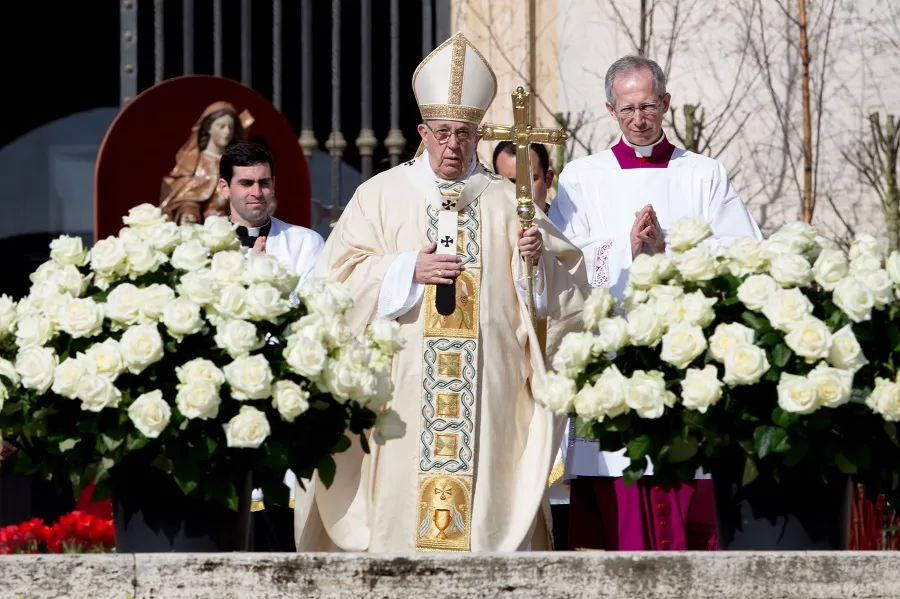
Pope Francis celebrated Easter Mass in St. Peter’s Square after presiding over the Easter Vigil inside the basilica the night before, bringing a close to the Easter Triduum and the events of Holy Week.

The altar during Mass was bedecked with some 50,000 flowers of different varieties, which were a gift from florists in Holland.

Though he usually sticks to his text during formal liturgies, Francis did not prepare a homily for Easter morning, and spoke to pilgrims in brief, off-the-cuff remarks. He did the same thing last year, meaning a spontaneous reflection Easter morning could be a new trend for the Argentine pope.

In his short homily, the pope focused on three aspects of the day’s Gospel passage from John, in which Peter and John run to the tomb after Mary Magdalene tells them she found it empty earlier that morning.

The three aspects Pope Francis focused on are the surprise of the announcement, the haste with which the women and the disciples ran to the tomb, and the personal response of each

Please see below for the full text of Pope Francis’ homily:

After having listened to the word of God, this passage from the Gospel, I want to say three things. First, the announcement: the Lord is Risen. That proclamation, that from the tine of the early Christians they would greet each other this way: the Lord is risen! And the women that were there to anoint the Lord’s body, they found themselves in front of a surprise. The surprise. The announcements of God are always a surprise, because ours is a God of surprises. So from the beginning of the history of salvation, from Abraham, who God tells to ‘go, get up and go to the land I send you to,’ there’s always one surprise after another. God doesn’t know how to make an announcement, a proclamation without surprising us. And that surprise moves you heart, it touches you. It happens when you don’t expect it. It’s a surprise from ‘down low’, it takes you off guard. God’s announcement was a surprise.

The rush, the women ran, they went in a hurry to get to the tomb, to say ‘we found this!’ The surprises of God put us on the path, on the journey right away, without waiting. So they run to see, and Peter and John, they run. The shepherds, the night of Christmas when Jesus was born in Bethlehem, ran…the Samaritan woman runs to tell her people, ‘this is new, I met a man who told me everything I have ever done!’ These people run, they leave what they’re doing. The housewife leaves the potatoes in the pot, and they’ll be burned, but it’s important to run, to see that surprise that announcement. Today this also happens to us in our neighborhoods, when something happens and people go to see it. People go with great haste. Andrew didn’t waste time and he went to Peter to say: ‘we found the Messiah!’ The surprises, the good news, are always given like this, with great haste. But in the Gospel there is a person who takes their time, who doesn’t want to take a risk, but the Lord is good, and he waits for him with great love. This is Thomas, who said ‘I’ll believe when I see his wounds.’ The Lord is patient with those people who do not get up and leave with great haste.

Thirdly, is a question: and me, what? What about me? Is my heart open to God’s surprises? Am I able to go with great haste, or with that chant, do I stay back and say ‘I’ll go tomorrow’? What is the surprise saying to me? John and Peter, they ran to the tomb. John in his Gospel, tells us to believe. Even Peter, believed, but in his own way, with that faith that is a bit mixed with remorse for having denied the Lord. The announcement that has made a surprise, to run and go with great haste, and the question: what about me, today, in this Easter in 2018? What about me? What about you?

[…]

No Picture
News Briefs

Prisoners in Rome thank Francis for ‘making sure we’re not forgotten’

March 31, 2018 CNA Daily News 1

Rome, Italy, Mar 31, 2018 / 01:40 pm (CNA/EWTN News).- Pope Francis’ Holy Thursday Mass at a prison in Rome was more than just another event for the inmates who participated – it was a sign that while invisible to the world outside, they had not been forgotten.

“Yesterday is a moment that I think is going to resonate through the prison for at least the whole next entire year. I think it’s a moment that touched every single guard and every single prisoner who was there,” seminarian Alex Nevitt told CNA March 30.

A seminarian in his third year of theology studying at the Pontifical North American College, Nevitt does prison ministry at Rome’s Regina Coeli prison, where Pope Francis celebrated yesterday’s Mass of the Lord’s Supper for Holy Thursday.

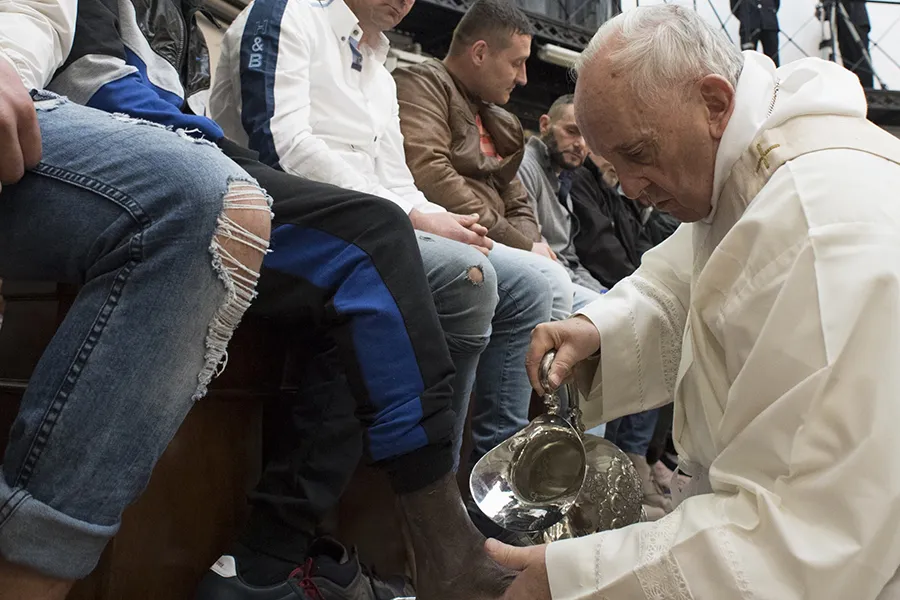
The pope washed the feet of 12 inmates and visited the infirmary, as well as “Section VIII” of the facility, where prisoners who have committed serious crimes or who have certain mental illness live.

After the pope’s Mass, which commemorated the night Jesus himself was arrested, Nevitt said many of the inmates were moved, because “this is their lived experience that they know.”

“These are men that are easily forgotten,” he said, noting that at one point a representative from the prison spoke to the pope and thanked him “for making sure we’re not forgotten.”

“Sometimes it’s very easy to forget those who are in prison because we don’t see them,” Nevitt said, explaining that as seminarians, “it’s a privilege” to serve the inmates because it helps them to better understand “where the fringes of society are.”

Nevitt, who is from the Diocese of Patterson, NJ, has been working in the prison apostolate for two and a half years. He is in charge of the other eight seminarians who are involved in the ministry, five of whom are currently working inside the prison, and three of whom will start in September when they finish training.

As part of their ministry, the seminarians lead bible studies and catechesis. They work most directly with English-speaking inmates, the majority of whom are migrants from Africa. Since the prison does not provide a list of English-speakers, the seminarians will often walk around looking for people.

The people they work with, Nevitt said, are there for a variety of reasons – anything from illegal immigration to petty street crimes, such as selling merchandise like toys or purses on the street illegally.

Although there are not many life sentences, they actual time a person has to spend in prison is not well-defined, Nevitt said, explaining that some people are from Europe or have gained Italian citizenship legally, but have no family, making it harder to access bail or be released without a support system.

“You hear some backstories of prisoners who don’t want to write back home because they’re ashamed of being in prison,” he said. “So I think the pope’s message of forgiveness probably spoke very much to those types of prisoners, to not be ashamed, and they can be forgiven and move forward.”

A total of three popes have visited Regina Coeli, the most recent being St. John Paul II in 2000. Pope Francis’ visit meant a lot, Nevitt said.

When people heard that the pope was coming, they “were extremely excited…Regardless of whatever religion they were from, [they] were excited that the pope was coming, so there was a huge amount of energy in the prison for it.”

During the Mass, the pope washed the feet of 12 prisoners from different religions – including Catholics, Muslims, an Orthodox Christian and a Buddhist. The inmates were from various countries, including the Philippines, Nigeria, Colombia, Sierra Leone, Morocco, Moldova, and Italy.

Nevitt said they work with a many non-Catholics, Protestants and Muslims, in their bible studies. At one point they had prepared a man for baptism, and after being transferred to another prison, he came into the Catholic Church.

Another of these non-Catholics is a Nigerian man named Oladipupo, who has been in their bible study for two years and whose feet the pope washed on Holy Thursday.

Oladipupo is a Pentecostal Christian, but has come to the bible study regularly, and even wrote a letter to Cardinal Robert Sarah, prefect of the Congregation for Divine Liturgy and the Discipline of the Sacraments, after reading Sarah’s recent book “God or Nothing.” And he got a response back.

“We’re hoping that Oladipupo will soon be called to the Catholic faith once he’s ready for it,” Nevitt said, explaining that after yesterday’s liturgy, he spoke to Oladipupo, who was amazed to see “the humanity of the pope, to see this man who is the leader of the Catholic Church in such a human way.”

Similarly, Nevitt said he also spoke with a Muslim man after the Holy Thursday Mass, though he didn’t know the man was a Muslim at the time. The man had been so moved by the liturgy that he had wanted to receive communion, and is now going to start coming to the bible study led by the seminarians.

Many people were moved by the pope’s homily Mass, Nevitt said, during which Francis emphasized forgiveness, condemned the death penalty, and told prisoners that Jesus would never abandon them, but would “take a chance” on them.

“Throughout the whole homily everyone was quite captivated at every word the pope was saying, and you could see even from a couple of the guards who were standing around me, there were a lot of head nods,” Nevitt said.

The space itself was very intimate, he said, noting that the rotunda where the Mass took place was small and only a limited number of guards and prisoners were able to sit inside the area, while the rest watched from different wings.

“There were certain moments, especially when the pope was kneeling down to wash the prisoners’ feet, you could see people crying,” Nevitt said. “There was a very humanness to seeing the pope kneeling down at his age, sometimes he would have difficulty…getting back up, and people [were] just crying at his example of humble leadership.”


[…]