No Picture
News Briefs

What a CUA symposium said about “Humanae Vitae”

April 10, 2018 CNA Daily News 2

Washington D.C., Apr 10, 2018 / 05:00 am (CNA/EWTN News).- The Catholic University of America played host last week to a symposium celebrating the 50th anniversary of Blessed Paul VI’s encyclical Humanae vitae, reflecting on the prophetic nature of the document, and on the lessons it still offers.

“In 1968, our university was at the center of a controversy regarding the document in the church in the United States,” said Catholic University of America President John Garvey during the symposium. “The fact that 50 years later, we’re hosting a conference to draw attention to what we now see as the wisdom Paul VI might be seen as a sign of the times.”

Humanae vitae took the world by storm when it was published in 1968. In the height of the sexual revolution, then-Pope Paul VI wrote that the use of prophylactics and hormonal birth control – which had only been on the market in the United States for less than a decade, and wasn’t legal for unmarried women until just three years prior – was morally unacceptable in the marital act.

“Consequently,” wrote Paul VI, “it is a serious error to think that a whole married life of otherwise normal relations can justify sexual intercourse which is deliberately contraceptive and so intrinsically wrong.”

The encyclical was not universally well-received, and former CUA professor Fr. Charles Curran led a dissent of nearly 100 theologians who were opposed to the content of Humanae vitae. Cardinal Donald Wuerl of the Archdiocese of Washington described the nation’s capital as one of the “largest flashpoints of opposition” to the document.

The majority of the speakers at the symposium argued that in retrospect, Pope Paul VI was a man ahead of his time, and was able to accurately discern the negative effects that widespread contraceptive use would have on society.

Despite its rather unique history with the encyclical, CUA Dean of Theology and Religious Studies Fr. Mark Morozowich told CNA he considers it a “natural thing” for the college to have played host to the symposium.

“We view ourselves as a theologate–that is, working in lock step with USCCB and under, certainly, the direction of our own shepherd, Cardinal Donald Wuerl,” he explained. The university in the past has played host to similar conferences concerning other encyclicals, as well as one on the anniversary of the Protestant reformation.

Planning for the conference took about a year and a half, said Fr. Morozowich. He was part of the team who selected the speakers and the topics for the symposium.

“I think it is an important thing to understand the historical milieu out of which that document came, and out of which the very sort of reactions with all the tumult and society that was going on, explained Morozowich.

One of the major themes touched on by the speakers at the symposium was the prophetic nature of the encyclical, particularly in light of last year’s viral “#MeToo” movement, through which people shared stories of being sexually assaulted and harassed. Morozowich told CNA that he believes #MeToo is a sign of larger problems concerning the sexual revolution.

“It was a document that many are hailing today as being prophetic,” he said. “I think the #MeToo movement is a real symbol of the failure of the sexual revolution. It was a failure of liberation for feminists, because it wasn’t the real, concrete entering in to a dignified relationship. So when we look at Humanae vitae, it’s calling for clarity about what human sexuality is.”

One conference attendee said that she believed that the encyclical had an important message for modern women: that they don’t need to change themselves with hormones or implants in order to suppress their fertility. What’s more, she said, Humanae Vitae is a message of hope.

Humanae vitae has a critical message today for all women, because Humanae vitae affirms that women are good as they are,” said Kat Talalas, communications director at Women Speak for Themselves.

“At a time where men and women increasingly feel alienated from each other, Humanae vitae affirms the good of married love. It shares the hopeful message that the romance of total unity open to new life is what we are made for, and can help provide the love, creativity, and connectedness human beings crave.”

[…]

No Picture
News Briefs

As Palestinian Christians flee Gaza, priest expresses grave concern

April 9, 2018 CNA Daily News 0

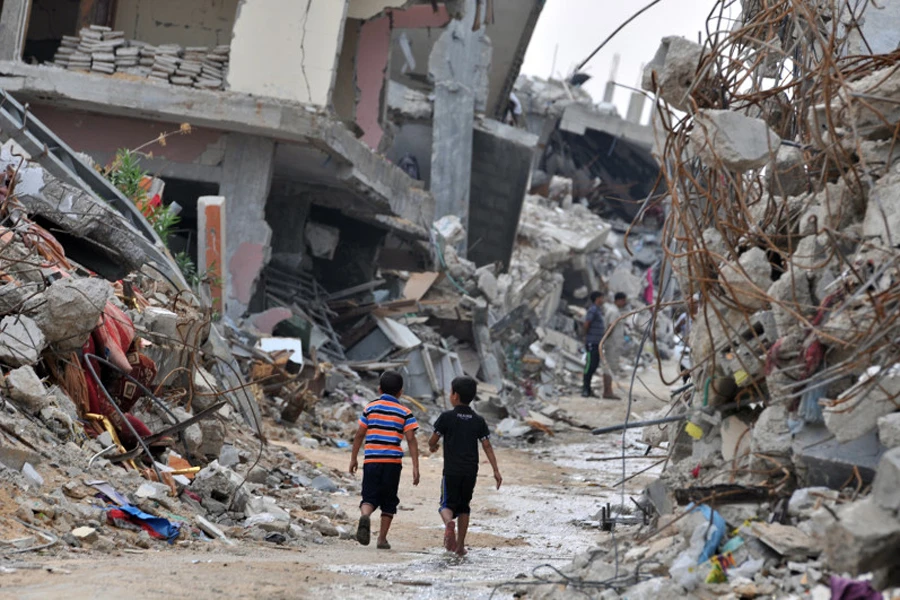
Gaza City, Apr 10, 2018 / 12:02 am (ACI Prensa).- In the past six years the number of Christians in the Gaza Strip has plummeted from 4,500 to just 1,000, due to the harsh conditions under which they are living, according to the pastor of the territory’s sole Catholic church.

Gazans “live like it’s an open air prison since we can’t leave. We can’t visit relatives, look for work, medicine or good hospitals on the outside,” Fr. Mario da Silva told ACI Prensa.

The Gaza Strip is a 141 square mile area, part of Palestine, located to the west of Israel and home to 1.8 million persons. Since 2007, it has been ruled by the Islamist movement Hamas.

Since Hamas came to power there, Israel and Egypt have conducted an economic blockade of the Gaza Strip, restricting the flow of persons and goods in an effort to limit rocket attacks on Israel launched from the territory.

Fr. da Silva, a priest of the Institute of the Incarnate Word, recalled that when he arrived in Gaza in 2012 “the situation was already very difficult. Over time, you would hope the situation would get better, but it’s only gotten worse.”

He related that inhabitants have only three hours of electricity a day, and there is a shortage of drinking water.

Most Gazans are unemployed, he said, and those who do work live on “about $150-200 a month.”

“It’s really a prison. People don’t have any money and the situation is terrible. There is widespread poverty.”

The harsh conditions imposed on Gaza has led to the exodus of Palestinian Christians.

“Every year Christians have one permit to leave and visit the holy places on Easter and Christmas,” and a many of them never return, explained Fr. da Silva.

In order to stem the tide, the priest’s Holy Family parish is working with 12 religious sisters, of the Servants of the Lord and the Virgin of Matará, the Missionaries of Charity, and the Sisters of the Rosary congregations.

“We’re doing two things: first, preaching Christ and the importance of Christians in the Holy Land; preaching the importance of forgiveness and of carrying the cross is what we most try to do.”

The second form of aid is material assistance projects, he said: “For example, with the help of institutions such as the Pontifical Mission or the Latin Patriarchate of Jerusalem, the Church tries to give work to more that 30 young people so they won’t leave, because they are mainly the ones who leave.”

He noted that the parish also cares for adherents of other religions: “The Christian community is very small and there are 2 million Muslims. They are also in great need. We have always opened the doors of our schools or our church during times of war to take in those seeking refuge.”
 

“There is not a very great persecution of Christians,” the priest said. “Though there is now a lot of fear with the news that the Islamic State has arrived, coming from the Sinai Peninsula, in Egypt … There have already been threats. There is also fear of the Salafist groups who are coming in from the south,” he said.

“In fact, when we have problems with Muslims who want to do something against the church, we’ve asked the government to protect us and they have done so,” he added.

The joy of Easter was tinged this year by a decrease in the permits given by Israel for Palestinian Christians to visit holy places in its territory, Fr. da Silva said.

“It was also very sad because Israel always gives permission for Christians so they can visit the holy places for Christmas and Easter,” but this year they only gave 300 permits instead of the 700 they usually grant. These permits were “for children and the elderly, who are really the people who can’t go out by themselves. Very few people actually went,” he lamented.

Nevertheless, “there was joy because Christ has risen and because our salvation comes from that, which is much more important than our material life; but on the human level it was a very sad Easter,” he said.

“Pray much for this, which is what we mainly ask for, because only God can change the situation we’re going through in these countries here in the Middle East,” he concluded.


This article was originally published by our sister agency, ACI Prensa. It has been translated and adapted by CNA.

[…]

No Picture
News Briefs

Priest killed in the Democratic Republic of the Congo, another freed

April 9, 2018 CNA Daily News 1

Goma, Democratic Republic of the Congo, Apr 9, 2018 / 07:00 pm (CNA/EWTN News).- Armed men burst into a church meeting room in the North Kivu region April 8 in the Democratic Republic of the Congo and killed 38-year-old Fr. Étienne Sengiyumva, the parish pastor.

Bishop Théophile Kaboy Ruboneka of Goma, in North Kivu Province announced the news to the Vatican’s Fides News Agency

“After celebrating the Mass at Kyahemba, a district in his parish, around 3pm, Fr. Étienne was meeting with his parish staff, when an armed man, accompanied by others, entered the meeting room and shot the priest point blank in the head, killing him instantly, ” the bishop recounted.

“The murder happened so quickly that those present couldn’t take note of how many people had entered the room to kill Fr. Étienne,” he lamented.

The bishop also told Fides that ”it’s hard to know who is responsible. Our region is infested with armed groups, at least 15, that fail to be dismantled despite the constant presence of the army and the blue-helmeted UN soldiers.”

Bishop Ruboneka explained that “Fr. Étienne  is the third priest killed in the region” and that “the investigations to find those responsible for these deaths go nowhere. On our part, we are doing everything we can to identify Fr.  Étienne’s killers, even though we have no illusions.”

“In these cases the witnesses fear for their own lives and the lives of their loved ones and it would be hard for them to offer any information useful for the investigation,” he pointed out.

The bishop also stated that Fr. Célestin Ngango was kidnapped from the diocese after celebrating Easter Mass. He was later released, blindfolded, at around 3 am following heavy pressure from the local inhabitants. The Congolese bishops’ conference told Fides “the freed priest was not mistreated and he appears to be in good health. However, he will undergo a medical examination.”

Bishop Ruboneka does not think there is any connection between the two incidents.

“I repeat, in our region there are so many armed groups that it is hard to know who committed this act or another. Here in North Kivu we are living in total chaos,” Bishop Ruboneka said.

In conclusion the prelate stressed that “the situation of the Diocese of Goma, as well as Butembo-Beni, is unbelievable. We are completely abandoned by everyone and we live thanks to the grace of Providence. I ask the faithful of the Universal Church to pray for our region so we can again find peace.”

This article was originally published by our sister agency, ACI Prensa. It has been translated and adapted by CNA.

[…]

No Picture
News Briefs

Africans stand for life in UN battles over reproductive health

April 9, 2018 CNA Daily News 1

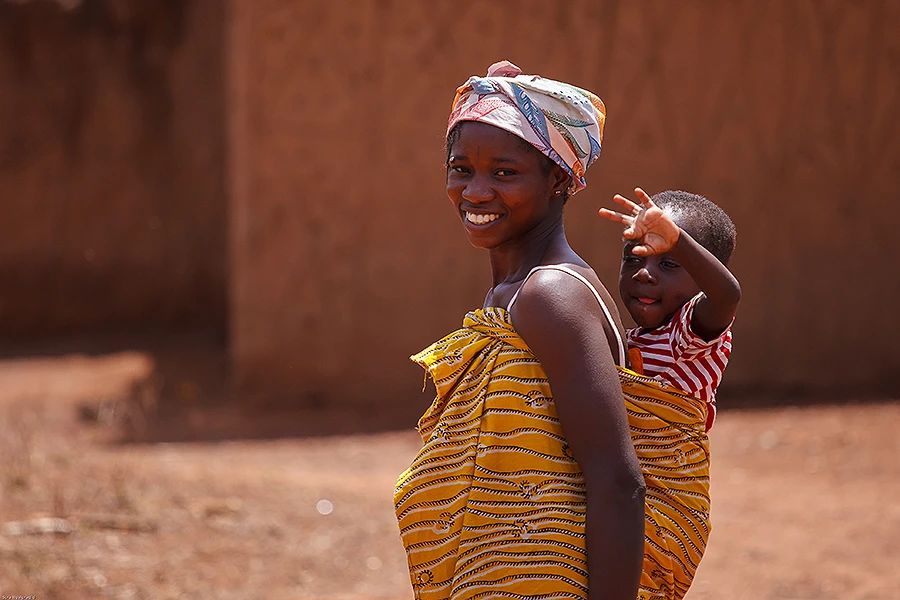
Washington D.C., Apr 9, 2018 / 04:27 pm (CNA/EWTN News).- African Catholics remained concerned about a push from Western leaders to promote abortion and contraception in Africa in the name of economic development, especially as the United Nations Commission on Population and Development began its annual meeting Monday.

Pope Francis has repeatedly warned against Western “ideological colonization” of developing countries in which aid money comes tied to contraceptives, abortion, sterilization, and gender ideologies.

“‘Reproductive health’ is the phrase that is the battleground of every UN Commission meeting we attend,” said law professor Teresa Collett, who will be attending the 51st session of the UN Commission on Population and Development, from April 9 to 13.

“Now ‘reproductive health’ as a phrase doesn’t sound that bad,” continued Collett, “The problem is that is diplomat speak for abortion on demand. It’s diplomat speak for contraception” Collett explained last week at a conference at the Catholic University of America marking the 50th anniversary of Humanae vitae.

At last year’s UN population and development meeting in New York,  the debate over reproductive health was “so heated that we had no outcome document,” Collett explained. She partly accredits this to the fact that “African nations stood strong.”

The UN preparatory document implicitly recommends policies to reduce the birth rates in Africa:

“In much of Africa and parts of Asia, numbers of children and youth are rising rapidly. Policies … to ensure universal access to sexual and reproductive health-care services are critical to achieve further reductions in maternal and child mortality. Typically, such policies lead also to a reduction in the birth rate.”

The document continued: “In countries where growth in the number of children and youth has slowed recently, there is an historic opportunity for more rapid economic growth. With a sustained reduction in the birth rate, the working-age population (ages 25-64) may continue to grow for a few more decades, temporarily raising the ratio of workers to dependents.”

Underlying  these UN debates are ‘neocolonialist’ Western assumptions about what African women want, according to Nigerian Catholic Obianuju Ekeocha, the author of a new book, “Target Africa.”

“For world leaders, the plan of action is very clear — a dedicated effort in population control in developing countries. But in their single-minded obsession to reduce the fertility rate of women in sub-Saharan Africa, the one important consideration the experts have omitted is the desired fertility rate of the women in question,” Ekeocha wrote.

Ekeocha cites a 2010 USAID report on the number of children desired by people in various parts of the world, which showed that “the desired number of children is highest among people in western and middle Africa, ranging from 4.8 in Ghana to 9.1 in Niger and 9.2 in Chad, with an average of 6.1 children for the region.”

“Unlike what we see in the developed Western world, there is actually very high compliance with Pope Paul VI’s Humanae vitae. For these African women, in all humility have heard, understood, and accepted the precious words of the prophetic pope,” Ekeocha wrote in a 2012 open letter to Melinda Gates.

Despite widespread moral opposition to birth control in many African countries, 77,225,741 units of unspecified birth control pills were donated to African countries in 2014 by Western governments and organizations, according to Ekeocha’s research.

“Populations-program donations to Africa used to be the lowest portion of social-sector foreign aid, much lower than aid for education, health, water, sanitation, and so on. But since 2009, population control funding has surged ahead of funding for everything else. In 2014, the United States and the United Kingdom targeted 31 percent and 43 percent respectively of their African aid to population control,” Ekeocha wrote.

Mary Eberstadt, senior research fellow at the Faith and Reason Institute, affirmed those findings at last week’s Humanae vitae conference.  

“In Africa, both Protestants and Catholics lean toward traditionalism in moral teaching … .It is in tradition-minded Africa that Christianity has grown explosively in the years since Humanae vitae,” Eberstadt said.

“As the Pew Research Center put it a few years ago, Africans are among the most morally opposed to contraception. Substantial numbers of people in Kenya, Uganda, and other Sub-Saharan countries, Catholic and otherwise agree with the proposition that contraception is unacceptable. In Ghana and Nigeria, it is more than half of the population,” continued Eberstadt.

In a paper presented at the same conference, Collet wrote that “during much of the past sixty years, Western intellectuals and philanthropists have aggressively promoted birth control as a moral response to a variety of real or perceived global problems. The West, and more particularly the United States, United Kingdom, and Scandinavian countries, have actively engaged in what might fairly be called “ideological colonization” through their worldwide promotion of a contraceptive mentality.”

In 1968, the same year that Humanae vitae was promulugated, “USAID began purchasing contraceptives to distribute in developing countries” and “Robert McNamara, as president of World Bank, announces that population control will be an element of review of loans,” Collett reported.

In the years that followed, governments began implementing mandatory population control policies, just as Pope Paul VI had predicted in his encyclical.

In India, 10 million sterilizations were performed within 20 months of a National Population Policy that went into effect in 1976. “All public employees were told that there jobs would be cut or their salaries eliminated if they would not be sterilized,” said Collett.

Two years later, China implemented its “Family Planning Policy,” better known as the “One Child Policy.”  

“This policy allowed (and incentivized) local government officials to monitor women’s menstrual periods and forcibly abort and sterilize women who were not compliant.  In 1983 the Chinese Ministry of Health reported 21 million births, 14.4 million abortions, 20.7 million (predominantly female) sterilizations, and 17.8 million IUD insertions were performed,” Collett explained.

“Not withstanding these horrific practices permitted under the Indian and Chinese Policies, in 1984 the first UN Population Award was given to Indira Gandhi, Prime Minister of India, and Qian Xinzhong, Minister-in-Charge of the State Family Planning Commission of the People’s Republic of China.”

At the next Population World Conference, President Ronald Reagan announced the Mexico City Policy, which states that the U.S. would not fund any international program involving coerced abortion, or abortion in general.

“Under every Republican President we have made the determination, consistent with federal law that the United Nations FPA is involved in programs that involve coercive abortion and therefore we will not fund UNFPA. Every Democrat president has restored that funding. This is the topic in part of the UN Population Commission annual meeting …next week,” Collett said at CUA on April 5.

In 2017, President Donald Trump expanded the Mexico City Policy and directed money that would go to the United Nations Population Fund (UNFPA) to the Department of State Global Health Initiative to “assist in helping African nations … training helping birth attendants … to ensure healthy pregnancy deliveries, to ensure the availability of clean blood supplies and clean water supplies are available to women in labor,” she added.

In “Target Africa,” Ekeocha wrote that “when President Trump reinstated the Mexico City Policy in 2017, a number of Western leaders scrambled to make up for the $600 million that America was going to withhold from pro-abortion organizations. They raised about $190 million through the She Decides campaign launched in Brussels, where Sweden, Finland, and Canada each pledged $20 million for abortion provider.”

“An anonymous donor in the United States committed $50 million, the Bill and Melinda Gates Foundation promised $20 million, and hedge-fund manager and philanthropist Chris Hohn promised $10 million. On top of Canada’s commitment to She Decides, a few days after the Brussels fundraiser Canadian Prime Minister Justin Trudeau pledged $650 million toward worldwide women’s reproductive health programs, including abortion services,” Ekeocha continued.

Ekeocha’s research indicates that the countries most aggressively promoting worldwide abortion are the same countries facing low fertility rates. Canada, Finland, and Belgium all have fertility rates below the replacement rate.

“Without exceptions, these nations are facing the real and imminent threat of a demographic winter, yet they join forces to ensure that the unborn babies of Africa can be aborted without any impediments,” she wrote.

“In their attempts to legalize abortion across Africa, abortion advocates say that legalized abortion is a way to reduce high maternal mortality rates.”

“There is no telling how many lives could be saved if even a fraction of the billions of dollars being spent by Western donors on contraception and abortion in Africa were directed toward improving the quality of obstetric care.”


[…]

No Picture
News Briefs

Legalizing assisted suicide harms those with depression, Hawaii bishop says

April 9, 2018 CNA Daily News 1

Honolulu, Hawaii, Apr 9, 2018 / 04:24 pm (CNA/EWTN News).- Hawaii became last week the most recent US state to legalize assisted suicide, and the islands’ bishop has written about the shortsightedness of permitting some residents to end their lives.

“I find it ironic that the act of taking one’s life, which people have been doing quite autonomously for thousands of years, is now only to be sanctioned if one has the permission of one’s ‘health’ care provider, the State legislature and the governor,” Bishop Larry Silva of Honolulu wrote in a March 28 editorial as the bill was being considered.

“My wonder at this apparent contradiction is compounded when I think of how, until now, we have prided ourselves on helping people not take their own lives. We have suicide prevention programs and hotlines, and have always considered suicide a tragedy that wreaks havoc on so many survivors who feel grief and frustration that they were not able to prevent this ‘autonomous’ decision from being made.”

The “Our Care, Our Choice Act” was signed into law by Governor David Ige April 5. Hawaii’s Senate passed the bill 23-3 March 29, and the House of Representatives had approved the bill earlier this year by 39-12.

A similar bill has passed the Hawaii state Senate in 2017, but failed in the House.

The law allows a terminally ill person to receive a prescription for a lethal medication if two doctors find that the person has fewer than six months to live and is mentally competent. The patient must undergo a mental health evaluation to determine that they are not “suffering from conditions that may interfere with decision-making, such as a lack of treatment of depression,” according to the AP.

The patient must make two requests for the life-ending medication, with a 20-day waiting period between requests, and sign a written request witnessed by two people, one of whom cannot be related to the patient.

A doctor may dispense the medication, but it may only be self-administered.

The law includes criminal penalties for tampering with a request for lethal medication or coercing such a prescription.

Ige emphasized the freedom of choice the law will provide for terminally ill patients.

“It is time for terminally ill, mentally competent Hawaii residents who are suffering to make their own end-of-life choices with dignity, grace and peace,” he said. “It does make sense to give the patient a choice to request the medication, obtain it and take it, or ultimately change their mind.”

Bishop Silva pointed out that under the law, the death certificate of one who commits assisted suicide will list as the immediate cause of death their terminal disease.

“In other words, it will lie about the real immediate cause of death, which is freely and deliberately ingesting a poison into one’s system,” he wrote. “If we call it another name besides suicide, then it may become respectable. Under no circumstances should we call it what it is, since certain insurance benefits may not be available to one’s estate if one commits suicide. So let’s also lie to the insurance company by calling it ‘death with dignity’ or some other title that will make it sound more respectable.”

The bishop also wrote that “As a spiritual leader, I also must raise the question of whether someone who deliberately, with documentable soundness of mind and determination of will, violates God’s basic commandment ‘Thou shalt not kill’ may be flirting with a fate worse than a debilitating terminal illness … God does allow us the autonomy to make such decisions, but he warns us of the dire consequences – and relentlessly attempts to turn us away from such self-destructive decisions.”

Bishop Silva said, “While our State Legislature may not base its decisions on eternal consequences, it should still think beyond the individual terminally ill person. What of family members who will have to live with the weight of their own consciences regarding this very unnatural process?”

He also questioned the law’s effects on those suffering depression: “Won’t this suggest to them that if life becomes too burdensome, checking oneself out of it sooner than later is a legitimate option?”

“If this door to choosing death is opened, will insurance companies and health care facilities continue to provide very expensive but ingenious treatments, developed over generations by scientists, technicians, and medical personnel? Or will the ‘bottom line’ lead them to refuse these expensive treatments because the patient has the choice of a much quicker and less expensive death?”

The bishop also raised the question of conscience protections for medical personnel and pharmacists who consider suicide to be gravely immoral.

Bishop Silva’s editorial echoed concerns about assisted suicide which have been raised by Pope Francis.

In June 2016, the Pope called assisted suicide a feature of the “throwaway culture” which offers a “false compassion” and treats a human person as a problem.

“True compassion does not marginalize anyone, nor does it humiliate and exclude – much less considers the disappearance of a person as a good thing,” the Pope told the directors of the orders of physicians of Spain and Latin America. He criticized “those who hide behind an alleged compassion to justify and approve the death of a patient.”

In addition to Hawaii, physician-assisted suicide is legal by law in the District of Columbia, Washington, Oregon, California, Vermont, and Colorado; and in Montana through a state supreme court ruling.  A bill to legalize assisted suicide is under consideration in Indiana.

In September the New York State Court of Appeals upheld the state’s ban on assisted suicide.

[…]

No Picture
News Briefs

Commentary: Reading Pope Francis in love

April 9, 2018 CNA Daily News 13

Denver, Colo., Apr 9, 2018 / 11:43 am (CNA).- In his first homily as pope, Francis quoted Leon Bloy, the French convert, author, and mystic who has influenced some of modernity’s most significant literary voices. Gaudete et exsultate, the pope’s newly released apostolic exhortation, again turns to Bloy, invoking the writer’s famous observation that “the only great tragedy in life is not to become a saint.”

Bloy was right, of course, and most of the pope’s readers are likely disposed to agree with him. But there is another Bloy quote that readers of Gaudete et exsultate would do well to keep in mind: “Love does not make you weak, because it is the source of all strength.”

Gaudete et exsultate was certainly written with love: whatever one thinks of Pope Francis, there is ample evidence that he loves the Church, and he loves her members. It ought to be read in love as well. But before the document was even released, a predictable fractioning of the Lord’s body foretold the way the exhortation would likely be read: through the lenses of suspicion and criticism that have characterized much of the debate about Pope Francis.

Unsurprisingly, early responses to the exhortation have followed a familiar pattern.

Those who are sometimes critical of the pope have noted that the text lacks any mention of chastity, and complained that it seems to have an antinomian or anti-intellectual bent: criticizing those with “a punctilious concern for the Church’s liturgy, doctrine and prestige,” and taking special pains to condemn intellectual arrogance. Their response, in a few lamentable cases, has been the established refrain of Francis-bashing, which colors and discredits the legitimate questions being asked about many of the pope’s initiatives.   

Some of the pope’s progressive defenders have snapped up those same passages, seeming to revel in certitude that the pope must be talking about their “conservative” counterparts, and brandishing his words like weapons. They’ve also found consolation, and claimed bragging rights, in the passages of the pope’s exhortation that call for solidarity with migrants, claiming penumbras of endorsement for the “seamless garment” approach to the Catholic social teaching.

Doubtless, on Twitter, Facebook, and in some blogs and journals, these two camps will volley fire with newfound ammunition in their battle over Francis, and their war for the Church.

But all of that misses the point. In fact, all of that defies the point. Francis’ exhortation proposes that charity is the heart of holiness- a proposal that echoes his recent predecessors, and more important, echoes the words of Jesus. If Catholic leaders and pundits can’t receive an exhortation in charity, and discuss it in charity, then the need for the document is more profound than most of us care to admit.

As with all of Francis’ documents, Gaudete et exsultate contains ambiguous passages, which lend themselves to misinterpretation and misappropriation. It paints with a broad brush, and it is not systematic. This is frustrating. And sometimes, it stings.

But the document is an exhortation. It is written to exhort us.

“What follows is not meant to be a treatise on holiness, containing definitions and distinctions helpful for understanding this important subject, or a discussion of the various means of sanctification,” Francis wrote. “My modest goal is to repropose the call to holiness in a practical way for our own time, with all its risks, challenges and opportunities. For the Lord has chosen each one of us ‘to be holy and blameless before him in love.’”

The document is meant to call us sinners to repentance and conversion. To call the lukewarm- most of us- to holiness. Not all parts are relevant to all Catholics; it fails to mention some patterns of sinfulness altogether. It is written by a fellow sinner, and the author’s humanity, foibles and all, show through the text. But it’s written in love. Which means that we should receive it by examining our own hearts, to find the places where the exhortation exhorts us.

An exhortation like this should be received in quiet and penitential humility. If we’re second-guessing it, armchair-quarterbacking the things it should have said, we’ve missed the point. If we’re using it to smite our enemies, we’ve missed the point. If it leads us away from love, the biggest problem is with us, and not with the text.

“Let us ask the Holy Spirit to pour out upon us a fervent longing to be saints for God’s greater glory, and let us encourage one another in this effort,” Francis writes.

Let’s receive Gaudete et exsultate as it’s written. Let’s be strengthened by love- from the pontiff, from one another, and from the Lord. Let’s put aside the arguments for the moment, and ask the Lord to help us be the saints he calls us to become.  

[…]