No Picture
News Briefs

Runaway slave-turned-priest moves closer to beatification
May 12, 2018 CNA Daily News 0

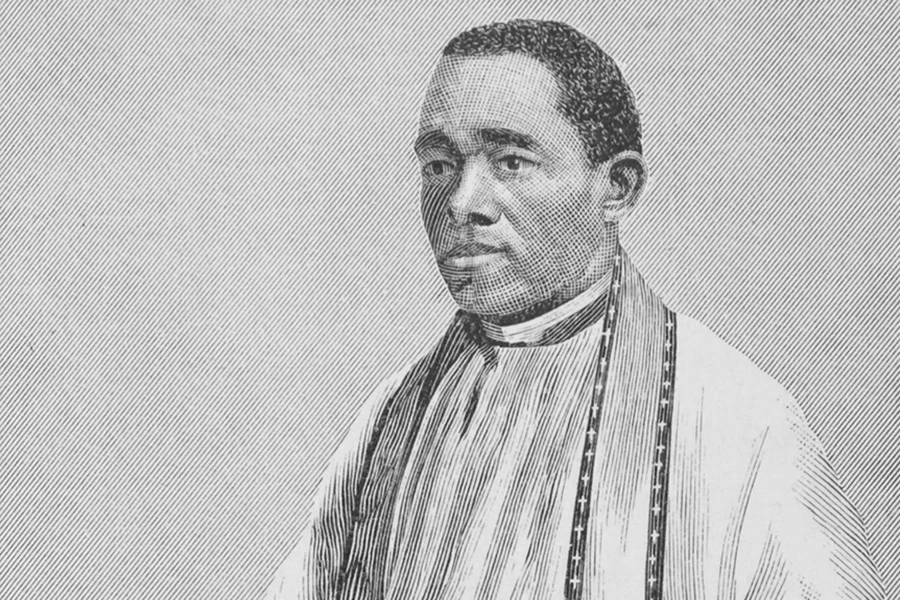
Chicago, Ill., May 12, 2018 / 03:23 pm (CNA/EWTN News).- The first African American priest in the U.S. could become the country’s first African American saint as his cause took another step forward this week.

A document summarizing the life, virtue, and alleged miracles of Servant of God Fr. Augustus Tolton, known as the positio, was unanimously approved as historically correct by a committee of six Vatican officials this week, clearing the way for the priest’s cause for canonization to continue moving forward.

Bishop Joseph N. Perry, auxiliary bishop of Chicago and diocesan postulator for the Tolton cause, called the approval a “very positive sign going forward” and noted its significance for the African American Catholic Community.

“Fr. Tolton lived during a particularly tumultuous time in American history especially for race relations,” Perry said in a statement.

“He was a pioneer of his era for inclusiveness drawing both blacks and whites to his parish in Quincy. However, due to his race, he suffered discrimination and condemnation. The beatification and canonization of Fr. Tolton will signal a significant milestone in the history of black Catholicism in the United States.”

Born in Missouri on April 1, 1854, John Augustine Tolton fled slavery with his mother and two siblings in 1862 by crossing the Mississippi River into Illinois.

“John, boy, you’re free. Never forget the goodness of the Lord,” Tolton’s mother told him after the crossing, according to the website of St. Elizabeth’s Church in Chicago.

The young Tolton entered St. Peter’s Catholic School with the help of the school’s pastor, Fr. Peter McGirr. Fr. McGirr would later baptize him and instruct him for his first Holy Communion. Tolton was serving as an altar boy by the next summer.

The priest asked Tolton if he would like to become a priest, saying it would take 12 years of hard study. The excited boy then said they should go to church and pray for his success.

After graduating from high school and Quincy College, he began his ecclesiastical studies in Rome, because no American seminary would accept him on account of his race.

On April 24, 1886 he was ordained in Rome by Cardinal Lucido Maria Parocchi, who was then the vicar general of Rome. Newspapers throughout the U.S. carried the story.

Fr. Tolton was ordained for the southern Illinois Diocese of Quincy. Upon his return in July 1886, he was greeted at the train station “like a conquering hero,” the website of St. Elizabeth’s Parish says.

“Thousands were there to greet him, led by Father McGirr. A brass band played church songs and Negro Spirituals. Thousands of blacks and whites lined the streets to catch a glimpse of the new priest wearing a black Prince Albert and a silk hat. People marched and cheered his flower-draped four-horse carriage. Children, priests and sisters left the school joining the procession heading towards the church.”

Hundreds waited at the local church where people of all races knelt at the communion rail.

Fr. Tolton served in Quincy before going to Chicago to start a parish for black Catholics. The new church was named for St. Monica and opened in 1893.

On July 9, 1897, Fr. Tolton collapsed during a hot day and died from sunstroke at the age of 43.

His cause for canonization was officially launched in 2010, and he was given the title “Servant of God” by the Vatican in February 2011. The research phase of his cause concluded on September 29, 2014.

The next step in his cause for canonization will be in February 2019, when a theological commission with the Congregation for Causes of Saints will further investigate his life and virtue, and consider granting him the title of “Venerable,” which must receive papal approval.

After that step, Tolton’s cause would move forward toward beatification, for which a miracle through his intercession must be approved.  

More information about Fr. Tolton can be found on the website for his cause: www.toltoncanonization.org

[…]

No Picture
News Briefs

Pope to meet Chilean bishops, discuss ‘devastating’ impact of abuse crisis

May 12, 2018 CNA Daily News 0

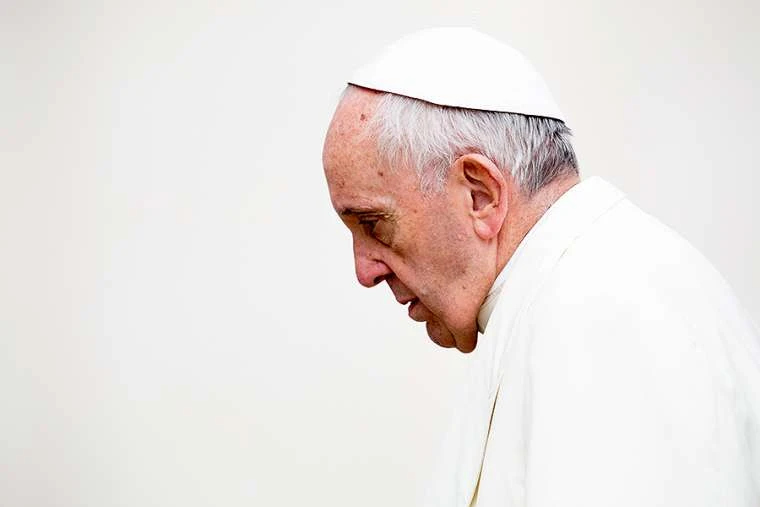
Vatican City, May 12, 2018 / 05:42 am (CNA/EWTN News).- From May 15-17 Pope Francis will meet with 33 Chilean bishops to share his personal take on the country’s massive clerical abuse crisis and help the local Church to find a way forward implementing processes of healing and prevention.

During the discussion, Francis will share his reflections on the results of an investigation into abuse cover-up by Church hierarchy in Chile conducted by Maltese Archbishop Charles Scicluna earlier this year, and the subsequent 2,300 page report he drafted on conclusions of the investigation.

According to a May 12 Vatican communique, Pope Francis, “questioned by the circumstances and the extraordinary challenges that the sexual abuse and abuses of power and conscience planted in Chile in recent decades, considers it necessary to profoundly examine their causes and consequences, as well as the mechanisms which in some cases have led to the cover-up and serious omissions from the victims.”

The objective of the 3-day “synodal process,” the Vatican said, is for the pope and Chilean bishops to place themselves in the presence of God and discern together the culpability of both individuals and of the local Church as a whole “in these devastating wounds.”

They will also study “the adequate and lasting changes” which ought to be implemented in order to prevent the repetition “of these always reprehensible acts.”

Set to take place in the Vatican’s Paul VI Hall, the meeting will also be attended by Cardinal Marc Ouellet, prefect of the Congregation for Bishops.

The meeting with Chilean bishops falls just two weeks after he held individual meetings with three survivors of clerical sexual abuse from Chile: Juan Carlos Cruz, James Hamilton and Andres Murillo.

After their meetings with the pope, Cruz, Hamilton and Murillo said they believed Francis was largely misinformed by people around him, and called out Archbishop Ivo Scapolo, nuncio to Chile since 2011, and Chilean Cardinal Francisco Javier Errazuriz, Archbishop Emeritus of Santiago and a member of Pope Francis’ council of cardinal advisors, as main agents in the cover-up.

Notably, Errazuriz will not be present for the meeting with Pope Francis this week, saying he would be skipping the event due to “personal reasons.”

Pope Francis invited the survivors to meet with him and at the same time summoned Chilean bishops to Rome April 8 after reading the concluding report of Scicluna’s investigation, assisted by Spanish Fr. Jordi Bertomeu of the Congregation for the Doctrine of the Faith, and admitting to having made “serious mistakes” in judgment of the situation given a lack of “truthful and balanced” information.

Initially the investigation was centered around Bishop Juan Barros of Osorno, who was appointed to the diocese in 2015 and who has been accused by Cruz and several others of not only covering up Karadima’s abuses, but at times also participating.

Allegations were also made against three other bishops – Andrés Arteaga, Tomislav Koljatic and Horacio Valenzuela – who Karadima’s victims accuse of also covering the abuser’s crimes.

While on the ground Scicluna interviewed some 64 people, most of whom were victims, but the scale of the investigation went beyond Barros. It is said to be much more extensive, including details from other cases, such as the Marist Brothers, who are currently under canonical investigation after allegations of sexual abuse by some of the members surfaced in August 2017.

Pope Francis had previous defended Barros, saying he had received no evidence of the bishop’s guilt, and called accusations against him “calumny” during a trip to Chile in January.

However, after receiving Scicluna’s report, Francis issued his major “mea culpa” and asked to meet the bishops and more outspoken survivors in person.

In the May 12 communique, the Vatican said Pope Francis is grateful to his brother bishops in Chile for “being attentive to the docile and humble listening to the Holy Spirit,” and he renews his appeal to Catholics in Chile “to continue in a state of prayer so that the conversion of all might take place.”

No public statement or press release is expected after the encounter in order to ensure confidentiality.

[…]

No Picture
News Briefs

Francis: Catholics and Eastern Orthodox have a common ‘heritage of holiness’

May 11, 2018 CNA Daily News 2

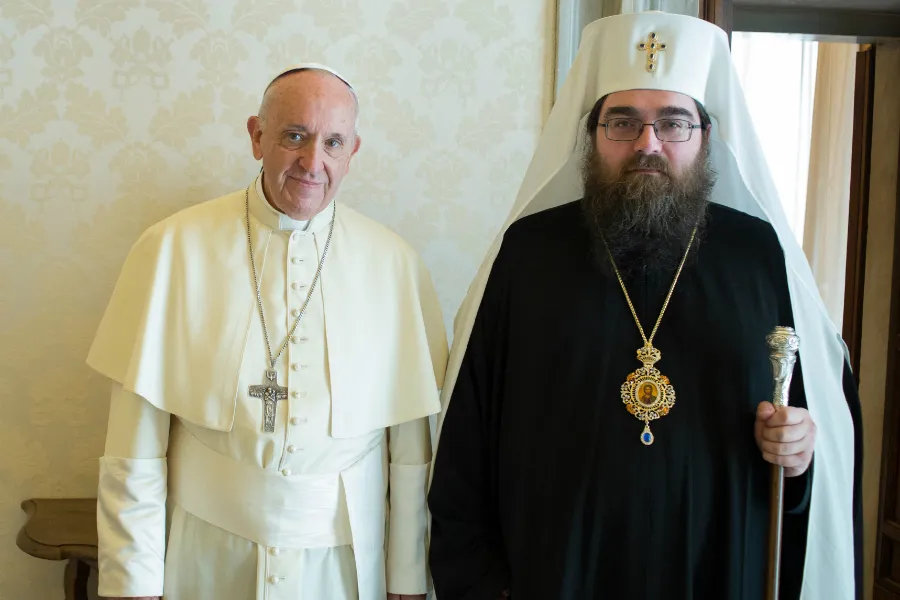
Vatican City, May 11, 2018 / 12:08 pm (CNA/EWTN News).- In a meeting with the leader of the Czech and Slovak Orthodox Church Friday, Pope Francis recalled two of the saints the Eastern Orthodox and Catholic Churches have in common – Sts. Cyril and Methodius – remarking on the holiness both Churches have inherited.

The Bishop of Rome noted that according to tradition, Sts. Cyril and Methodius, the great evangelists of eastern Europe in the ninth century, brought relics of St. Clement, one of the first successors of St. Peter, to Adrian II.

This gesture “reminds us Christians that we have inherited – and we continually need to share – an immense common heritage of holiness,” Francis said in a May 11 meeting with Metropolitan Rastislav, the Eastern Orthodox Archbishop of Prešov.

The Orthodox bishop celebrated Divine Liturgy at the tomb of St. Cyril in the Basilica of San Clemente al Laterno before his visit with Francis.

There have been many witnesses and countless martyrs who have “professed fidelity to Jesus,” over the centuries, including St. Clement, the Bishop of Rome said. But even in recent times, there have been martyrs, such as when atheistic persecution affected Czechoslovakia.

“Even today the sufferings of many brothers and sisters, persecuted because of the Gospel, are an urgent appeal, which challenges us to seek greater unity,” he continued, asking that the example of Sts. Cyril and Methodius would help Christians “to enhance this heritage of holiness that already unites us!”

Francis noted how the two saints, sometimes called the “Apostles of the Slavs,” also succeeded in overcoming divisions between Christian communities of different cultures and traditions, acting as, in the words of St. John Paul II, “authentic precursors of ecumenism.”

“May the witness of Saints Cyril and Methodius accompany us on the journey towards full unity, encouraging us to live this diversity in communion and to never be discouraged in our journey, which we are called to do by the Lord’s will and with joy,” the Bishop of Rome said.

In translating the Gospel message into the Slavic language of the Moravian people, Francis noted, the brothers were incarnating the Gospel in a particular culture, “thereby giving development to that culture itself.”

The Spirit will similarly inspire “new and courageous ways to evangelize our contemporaries,” he added, “even in traditionally Christian countries marked now by secularization and indifference.”

During the meeting, Metropolitan Rastislav said that he appreciates the work of the Joint International Commission for Theological Dialogue Between the Roman Catholic Church and the Orthodox Church, which Francis invited his Church to take part in actively.

Rastislav also spoke about the “heroic missionary work of the Saint brothers Cyril and Methodius” and reflected on the story of the two disciples on the Road to Emmaus in Luke’s Gospel.

“As Orthodox and Roman Catholics, due to historical reasons, we are not able to break the Bread of Life together at the present moment,” he said. “However, we still remain fellow disciples who walk together as fellow pilgrims on the way.”

And though we may not realize it clearly, we have “our Lord and Master walking with us, comforting us, expounding the Scriptures to us and giving us new hope, courage, and renewing our trust,” he continued.

“We may still have a long walk before us, Your Holiness, to reach Emmaus and break the Bread of Life together. Yet we walk together and, moreover, we are not alone. He, our Lord Jesus, walks with us, and we should not be afraid.”

During the visit, Metropolitan Ratislav gave Francis an icon of Sts. Cyril and Methodius along with St. Rastislav, the prince of Great Moravia who invited the missionaries to evangelize his territory. The metropolitan said that he hoped the gift could be a token of friendship and good will and “a sign of hope for the future.”

[…]