Vatican City, Oct 21, 2018 / 01:00 pm (CNA).- A bishop from Lebanon shared at the 2018 Synod of Bishops how his online catechesis program in Arabic has helped him to unite young Catholics across the Middle East.
“Thanks to the web I am able to connect many young people from the Middle East. We’ve also had conversions of young people who have recognized Jesus through our social presence,” Bishop Joseph Naffah said at the a Vatican press conference Oct. 19.
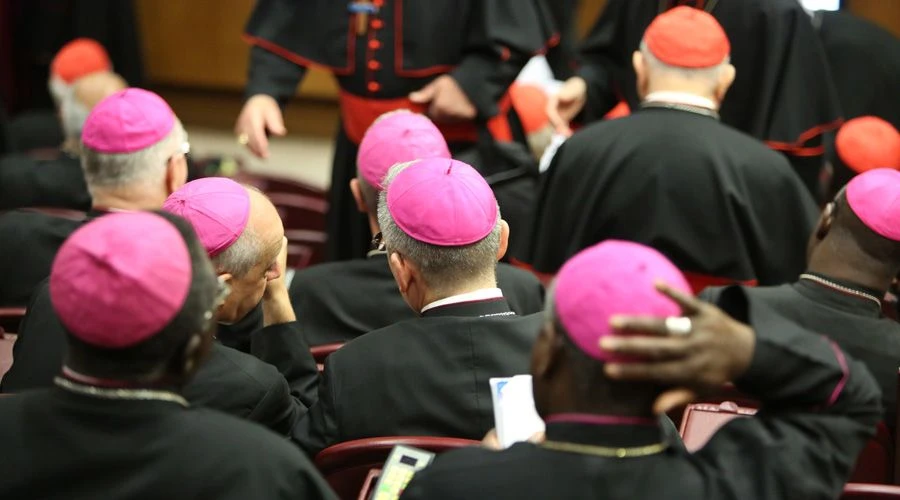
Synod fathers from Africa, South America, and the Middle East spoke Friday about their hopes for the future of evangelization and catechesis in a digital age.
Bishop Naffah is the auxiliary bishop of the Maronite Catholic eparchy of Joubbé, Sarba, and Jounieh in Lebanon.
For five years Naffah has been running an online catechetical program that connects over 500 Arabic-speaking Catholic students in conversations about the faith.
Students in the online program include youth in prison, as well as young people with disabilities.
“I’ve been moved in particular by one person who is totally paralyzed,” Bishop Naffah said.
While positive about the potential of online catechesis, the Maronite bishop also expressed concern that there are websites that contain false Catholic teaching online.
Naffah sees a need for a mechanism for Vatican approval of catechesis and teaching shared online, such as a special office to monitor Catholic webpages and then certify sites that accurately reflect the teachings of the Catholic Church.
Bishop Kofi Fianu of Ho, Ghana has also found success connecting with young people in Africa through the daily online Bible reflections that he shares with them.
“From this apostolate of digital reflections I have been in contact with many of the youth,” said Bishop Fianu. “They interact with me. They ask questions about what I have written in the reflection.”
“All of us, first of all, we the bishops, clergy need to be real ministers of the word. When we are able to drink deeply into the word of God, when we are on fire for this word, we can transmit it faithfully and more actively to the youth and the rest of the members of the Church,” Fianu continued.
Father Valdir Jose Castro from Brazil said that young people know the language and the grammar of the world of social media and are crucial in assisting the Church to reach out and open the doors.
“The Church needs to study in depth and improve its understanding of technology and the internet in particular so as to discern how she should live there and where fertile soil can be found,” Father Castro said.
The internet is a venue where the Church can encourage young people to be “protagonists in evangelization, not just the beneficiaries.”
If you value the news and views Catholic World Report provides, please consider donating to support our efforts. Your contribution will help us continue to make CWR available to all readers worldwide for free, without a subscription. Thank you for your generosity!
Click here for more information on donating to CWR. Click here to sign up for our newsletter.
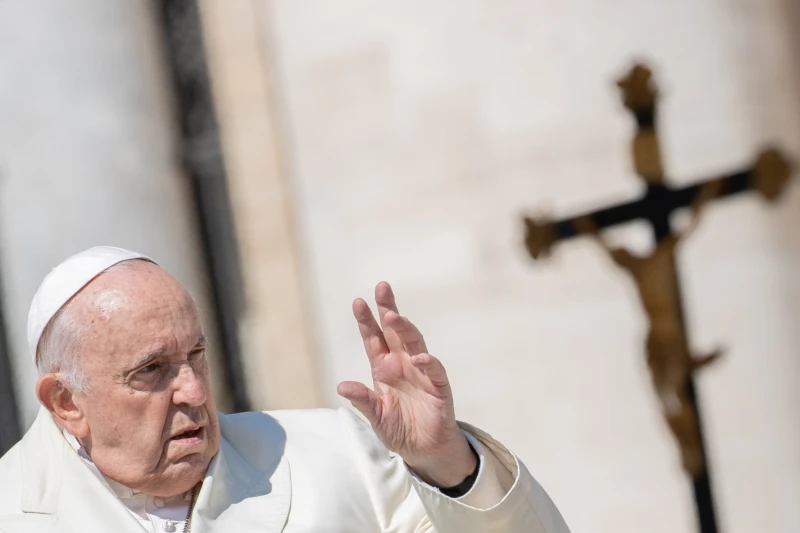
Pope Francis’ general audience of April 19, 2023. / Daniel Ibanez/CNA
Vatican City, Nov 21, 2023 / 04:55 am (CNA).
Pope Francis has expressed deep reservations about the direction of the Catholic Church in Germany, warning that concrete steps currently being taken “threaten” to undermine unity with the universal Church.
In a striking personal intervention, the pope wrote a letter to four German Catholic laywomen that was published in the German newspaper Welt on Nov. 21.
“I, too, share concerns about the numerous concrete steps that large parts of this local church are now taking that threaten to move further and further away from the common path of the universal Church,” the pope wrote in his letter, which was written in German and signed “Francis.”
Chief among the pope’s concerns is a push to establish a permanent “Synodal Council,” a mixed body of laity and bishops that would govern the Catholic Church in Germany. The pope underscored that this kind of “advisory and decision-making body … cannot be reconciled with the sacramental structure of the Catholic Church,” and referenced a previous prohibition the Vatican had issued on the topic.
Leadership of the controversial German Synodal Way recently met in Essen on November 10. They aim to establish a Synodal Council in Germany no later than 2026.
The pope proposed a different path forward for the Church in Germany.
“Instead of looking for ‘salvation’ in ever new committees and always discussing the same topic with a certain self-absorption,” the pope urged the Catholic Church in Germany to “open up and go out to meet our brothers and sisters, especially those who are … on the thresholds of our church doors, on the streets, in the prisons, in the hospitals, in the squares and in the cities.”
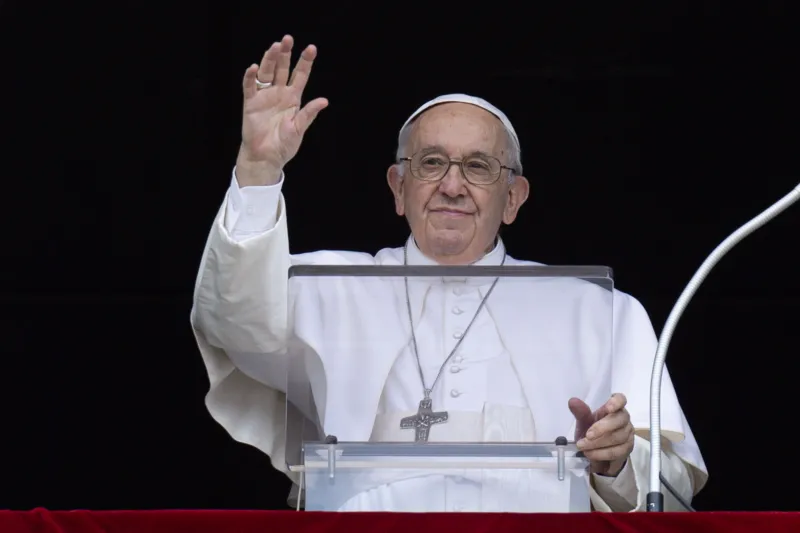
Pope Francis waves to crowds gathered in St. Peter’s Square on June 19, 2022, on Corpus Christi Sunday. / Vatican Media
Denver Newsroom, Jun 19, 2022 / 09:56 am (CNA).
The Feast of Corpus Christi is a time for Christians to remember that God will meet their basic needs to eat and to be filled with the joy and amazement of receiving loving nourishment from Jesus Christ, Pope Francis said Sunday.
At the same time, the pope emphasized, the Eucharist must also move Christians to action.
“We can evaluate our Eucharistic Adoration when we take care of our neighbor like Jesus does,” the pope said Sunday before the recitation of the Angelus at St. Peter’s Square in Rome.
“There is hunger for food around us, but also for companionship; there is hunger for consolation, friendship, good humor; there is hunger for attention, there is hunger to be evangelized. We find this in the Eucharistic Bread — the attention of Christ to our needs and the invitation to do the same toward those who are beside us. We need to eat and feed others.”
The pope’s remarks reflected on Sunday’s Gospel reading, the miracle of the multiplication of the loaves and fishes from the Gospel of Luke.
The pope linked the reading to the institution of the Eucharist at the Last Supper. The Eucharist was like “the destination of a journey along which Jesus had prefigured through several signs, above all the multiplication of the loaves narrated in the Gospel of today’s liturgy.”
The pontiff reflected on the manner of the miracle when Jesus fed so many who lacked food.
“The miracle of the loaves and fishes does not happen in a spectacular way, but almost secretly, like the wedding at Cana — the bread increases as it passes from hand to hand. And as the crowd eats, they realize that Jesus is taking care of everything,” said Pope Francis.
“This is the Lord present in the Eucharist. He calls us to be citizens of Heaven, but at the same time he takes into account the journey we have to face here on earth,” he said. “If I have hardly any bread in my sack, he knows and takes care of it himself.”
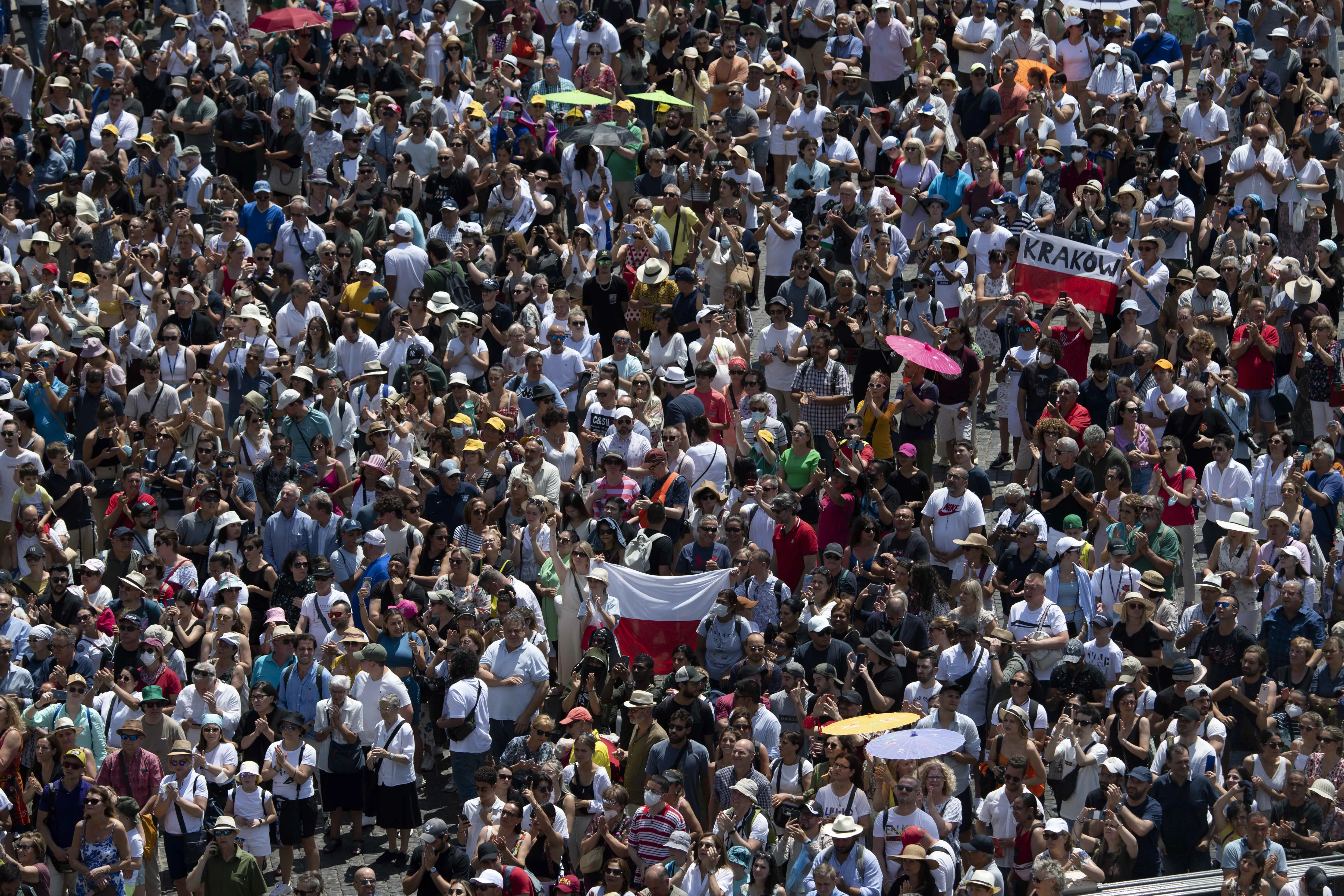
Thousands gather in St. Peter’s Square in Rome on June 19, 2022, to hear Pope Francis’ Angelus reflections. Vatican Media
The pope connected the tangible needs of food with the intangible needs of humankind.
“Sometimes there is the risk of confining the Eucharist to a vague, distant dimension, perhaps bright and perfumed with incense, but rather distant from the straits of everyday life. In reality, the Lord takes all our needs to heart, beginning with the most basic,” he said.
“In the Eucharist, everyone can experience this loving and concrete attention of the Lord. Those who receive the Body and Blood of Christ with faith not only eat, but are satisfied. To eat and to be satisfied: These are two basic necessities that are satisfied in the Eucharist,” he added. “The crowd is satisfied because of the abundance of food and also because of the joy and amazement of having received it from Jesus!”
Jesus Christ’s self-giving presence is key to understanding the Eucharist, the pope said.
“We certainly need to nourish ourselves, but we also need to be satisfied, to know that the nourishment is given to us out of love. In the Body and Blood of Christ, we find his presence, his life given for each of us. He not only gives us help to go forward, but he gives us himself — he makes himself our traveling companion, he enters into our affairs, he visits us when we are lonely, giving us back a sense of enthusiasm.”
“This satisfies us, when the Lord gives meaning to our life, our obscurities, our doubts; he sees the meaning, and this meaning that the Lord gives satisfies us,” the pope explained. Everyone is looking for the presence of the Lord, because “in the warmth of his presence, our lives change,” the pope added.
“Without him, everything would truly be gray,” he said. “Adoring the Body and Blood of Christ, let us ask him with our heart: ‘Lord, give me that daily bread to go forward, Lord, satisfy me with your presence!’”
The pope also prayed that the Virgin Mary may teach us “how to adore Jesus, living in the Eucharist and to share him with our brothers and sisters.”
Statements on Spanish martyrs, Ukraine war
After the Angelus, the pope discussed the Saturday beatification of Dominican religious who were killed in the Spanish Civil War.
“They were all killed in hatred of the faith in the religious persecution that took place in Spain in the context of the civil war of the last century,” the pope said, calling for applause for them. “Their witness of adherence to Christ and forgiveness for their killers show us the way to holiness and encourage us to make their lives an offering of love to God and their brothers and sisters.”
The conflict of Ukraine after the Russian invasion also was a point for prayer, the pope said: “Let us not forget the suffering of the Ukrainian people in this moment, a people who are suffering.”
“I would like you all to keep in mind a question: What am I doing today for the Ukrainian people? Do I pray? Am I doing something? Am I trying to understand? What am I doing today for the Ukrainian people? Each one of you, answer in your own heart,” he asked.
Prayers for Myanmar, World Meeting of Families
Pope Francis also lamented the violence in Myanmar, which has forced many to flee their homes and blocked them from meeting basic needs.
“I join the appeal of the bishops of that beloved land, that the international community does not forget the Burmese people, that human dignity and the right to life be respected, as well as places of worship, hospitals, and schools. And I bless the Burmese community in Italy, represented here today,” he said.
In early 2021 the Myanmar military seized power in the country. Its crackdown on opponents provoked a violent backlash. The U.N. High Commissioner for Refugees has said the conflict has displaced more than 800,000 people from their homes. Of these, 250,000 are children.
Pope Francis also noted that the 10th World Meeting of Families will begin June 22 in Rome and throughout the world. Around 2,000 Catholic families will gather in Rome this week to meet Pope Francis and hear talks on marriage and the faith.
“I thank the bishops, parish priests, and family pastoral workers who have called families to moments of reflection, celebration and festivity,” he said. “Above all, I thank the married couples and families who will bear witness to family love as a vocation and way to holiness. Have a good meeting!”
Pope Francis and St. Teresa of Avila / Public domain/ACI Prensa.
Rome Newsroom, Apr 13, 2021 / 11:00 am (CNA).
Pope Francis has hailed St. Teresa of Ávila as exemplar of courage and spiritual motherhood in a letter marking fift… […]



Leave a Reply