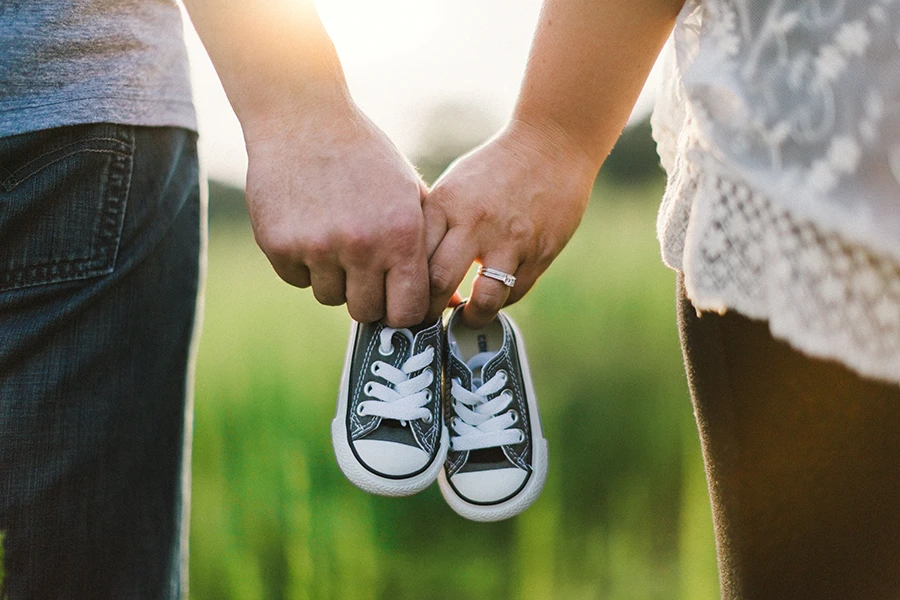
Denver, Colo., Jul 24, 2018 / 01:00 pm (CNA/EWTN News).- Ramping up to the 50th anniversary of Humanae vitae, a Catholic professor analyzed the encyclical’s guidance on responsible parenthood- discussing when a couple might be open to more children, and when they might choose to delay openness to new life.
Pope Paul VI’s 1968 encyclical explained that “with regard to physical, economic, psychological and social conditions, responsible parenthood is exercised by those who prudently and generously decide to have more children, and by those who, for serious reasons and with due respect to moral precepts, decide not to have additional children for either a certain or an indefinite period of time.”
The encyclical said that couples may never licitly use artificial contraception, though couples may use their awareness of a woman’s natural fertility cycle to determine whether to engage in potentially procreative acts; this is ordinarily referred to as “natural family planning,” or NFP.
But what is a “serious reason?” How should couples discern when to be open to children, and when it might be prudent to wait?
Dr. Kevin Miller, a professor of Franciscan University of Steubenville and a bioethics consultant for the online NFP program of Marquette University College of Nursing Institute for Natural Family Planning, discussed Pope Paul VI’s encyclical with CNA.
Miller said that he has very rarely witnessed examples of practicing Catholics- those using natural family planning methods- abstaining selfishly from procreation. More often, he said, he has seen couples struggle with scrupulosity about openness to new life.
“I sometimes run into this idea that there is this crisis in the Church today of couples using NFP for bad reasons, for selfish reasons, or for inadequate reasons to avoid procreation. Honestly, I’m not seeing that.”
“When I’m dealing with people who are using NFP, I actually witness more cases in which there is a significant underestimation of the seriousness of a situation than I do situations in which there is a problem of overestimating the seriousness of the situation.”
“Serious reasons” for using NFP to avoid conception, Miller said, are not limited to life-and-death situations.
The professor said that years before Humanae vitae’s publication, Pope Pius XII issued two addresses: one to Italian midwives and one to an Italian family association. He said the statements, both released in 1951, further clarify the Church’s use of the word “serious” in this context.
“Humanae vitae uses that language- ‘serious reasons.’ I think it ought to be interpreted in continuity with what Pope Pius XII had said 17 years earlier.”
Pius “referred to ‘serious reasons that not rarely occur,’” said Miller.
Reasons can be “serious in the sense of not just a trivial reason…[but Pope Pius XII] indicates that that can happen commonly,” he said.
Miller also pointed to the language used by John Paul II regarding family planning. He said the late pope’s word choice leaned towards “unselfish reasons.”
“In other words, you get the idea that if a reason is an unselfish one, if it doesn’t have to do with hedonistic wishes or something like that, then it’s probably a serious reason.”
In his encyclical, Pope Paul VI gave four broad categories that qualify as serious reasons to avoid potentially procreative acts – medical, psychological, economic, and social reasons.
Miller said if the medical or psychological risks of pregnancy are more than trivial, they qualify as serious reasons. This could mean a physical or mental strain on the mother, he said, but also health issues for other members of the family.
Using NFP to attempt avoiding or delaying pregnancy is acceptable “if having another child, at least for a time, is going to impose significant health risks on typically the mother, but possibly on some other family member,” he said.
“Maybe there is already a child in the family who has health problems who would be harder to afford to care for that child if you have another child,” he added.
Miller also pointed to the economic factors that could qualify as serious reasons to delay pregnancy through natural family planning, among them the likelihood that additional children would restrict a family’s basic necessities, including food, shelter, clothing, and education.
“One way I like to look at it would be to say if having another child would put the family in the sort of economic situation that if it were the result of, let’s say, a low wage would be called an unjust situation by the Church. I would say that counts as a serious economic reason for using natural family planning.”
He said the last category, social reasons, is not as clearly defined by the Church, but he said it might include those situations in which a family could better serve the common good by having a “somewhat of a smaller family.”
“Some families, in response to the teachings of the Church in places like Familaris consortio, wish to serve society in some special way, maybe like reach out to the needy in society,” said Miller.
These reasons, he said, certainly do not require couples to refrain from procreation, he said, noting there is no flowchart or algorithm for decision-making.
Rather, he said the decision should be made with honesty and prayer, using moral reasoning over moral rationalizing.
“First of all a couple has to make sure they are being honest with themselves, make sure they are reasoning honestly about their situation and not rationalizing,” he said. “Secondly, I would also say…do your moral reasoning in light of your relationship with God. It should be a prayerful as well as an intellectually honest discernment.”
Miller cautioned that couples ought “not to be scrupulous in these matters” if prayer and honesty accompany their decision. He said that unlike artificial contraception, NFP calls couples naturally to be sacrificial.
“I would also even say that, if a couple used natural family planning, the self-mastery and the discipline, that the Church has said comes with use of natural family planning, the more it is likely that as time goes by they will develop even more the virtues of generosity and selflessness.”
 […]
[…]


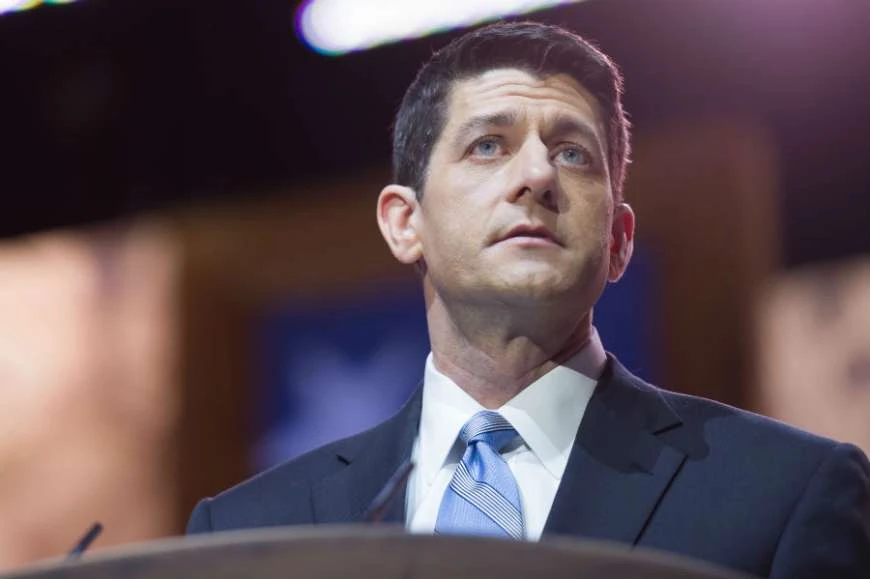

How DARE Paul Ryan call himself a Catholic. This is the Catholic Church that I remember.
I remember my outrage when the Catholic Church transferred Cardinal Bernard Laws to the Vatican after he was exposed for transferring pedophile priests in his diocese. I was even more infuriated when the Cardinal could participate in Pope John Paul’s funeral. For the first time in fifty years I questioned my devotion to the Church.
AND THEN I REMEMBERED:
A young black child attending and receiving communion without any fear or hesitation in all-white Catholic Churches in North Carolina and Virginia in the 40’s and 50’s.
Four Catholic nuns who traveled ten miles every Sunday on dirt roads to transport three young black children to Mass who had no other way to get to church.
I remember an elderly Catholic priest who brought communion EVERY Sunday for ten years to my disabled paternal grandmother even though she had nothing to contribute to the Church as she lived on $85.00 a month after my grandfather died.
I remember a big Irish Catholic priest who chose to work with the African-American community in the south in the 1950’s and organized a youth group among a handful of young black Catholics. That priest led this group of “rag tag” students down the main streets of a small southern city to protest segregation. One of those students, Joseph McNeil, went on to A&T State University where he organized and began the sit-down demonstrations at lunch counters in the Woolworth Stores. His actions initiated the integration of public facilities in this country. That lunch counter is enshrined in a museum in Greensboro, North Carolina.
I remember that same priest procured full scholarships for several young African-American women to attend the prestigious St. Mary College in South Bend, Indiana in 1959.
I remember requesting from the Josephites (priest’s community) a photo of Father Richard Swift to include in a book that I am writing and being astounded at a short bio included with the photo that chronicled his remarkable life of service.
I remember a wonderful Catholic priest who counseled and consoled me during my years of life with an alcoholic husband and severely asthmatic son.
I remember a jovial, happy priest who provided a full scholarship for my son to attend the local Catholic school when I couldn’t afford the tuition
I remember contacting a quiet Catholic priest, whom I had never met, and asking him to visit my son away in college in the hospital with a broken jaw that he sustained playing college football. Father Thomas Hadden went to visit my son without any hesitation and reported back to me. We became lifelong friends.
I remember a kind and gentle priest who helped me get the diocese to accept my divorces from two unhealthy marriages without any criticism or judgment.
During my second marriage, I had a daughter and I remember a very elderly Monsignor who held my hand, prayed with me, and counseled me when my husband walked out and left me with an eighteen-month-old daughter.
I remember two priests and two nuns who traveled with me to Wake Forest University to see that young lady graduate from college.
I remember a kindly Catholic priest, the son of a Methodist minister, who encouraged and supported a community clinic, food bank, dental clinic, and an unbelievable social outreach that turned no one away: all run by the Sisters of St Ursula and volunteers.
I remember all the Catholic clinics, food banks, and outreach programs sponsored by the Catholic Church throughout this country and the world that are supported by local priests and staffed by dedicated Catholic nuns and lay people.
I remember my years of involvement in all Catholic ministries, from training and assigning lectors to starting the first ever youth program at the St. Mary Cathedral in Wilmington, NC.
I remember a jolly, happy-go-lucky Irish priest obsessed with Notre Dame Football and a quiet, stern, holy priest with a wicked sense of humor; they changed my life forever. Their presence makes heaven a better place!
Pedophile priests should be excommunicated and so should those who continue to protect them. The behavior is unconscionable as young lives are destroyed. I weep when I learn of priests who continue to commit these horrendous acts and, I again, ask myself if I can continue to support the Roman Catholic Church ? THEN I REMEMBER:
“How DARE Paul Ryan call himself a Catholic.”
Huh. Is Paul Ryan a pedophile or a disgraced prelate? Did I miss something? Good grief.