No Picture
News Briefs

Consistory announced to approve Fatima children’s canonization

April 11, 2017 CNA Daily News 0

Vatican City, Apr 11, 2017 / 10:59 am (CNA/EWTN News).- Pope Francis will hold an ordinary public consistory on April 20, where the cardinals of the Church are expected to pave the way for the canonization of the Fatima visionaries.

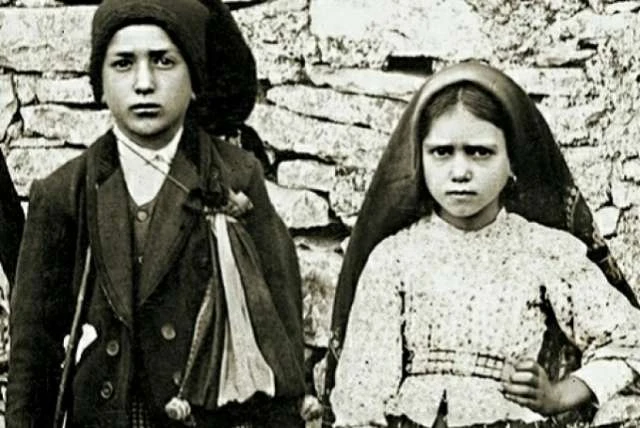
There are five causes of canonization waiting for approval by the cardinals. Most prominent is the cause of Francesco and Jacinto Marto, two of the shepherd children who witnessed the 1917 Marian apparitions at Fatima.

The cardinals’ approval at the consistory is the final step in the process leading up to canonization. Pope Francis has already given approval for the causes to move forward. Following the consistory, canonization dates will be set.

It has been widely speculated that Pope Francis will canonize the Fatima visionaries during his trip to Fatima for the 100th anniversary of the Marian apparitions there. That trip will take place May 12-13.

Francisco, 11, and Jacinta, 10, were the youngest non-martyrs to be beatified in the history of the Church.

The brother and sister, who tended to their family’s sheep with their cousin Lucia Santo in the fields of Fatima, Portugal, witnessed the apparitions of Mary, now commonly known as Our Lady of Fatima.

During the first apparition, which took place May 13, 1917, Our Lady asked the three children to say the Rosary and to make sacrifices, offering them for the conversion of sinners. The children did, praying often, giving their lunch to beggars and going without food themselves. They offered up their daily crosses and even refrained from drinking water on hot days.

In October 1918, Francisco and Jacinta became seriously ill with the Spanish flu. Our Lady appeared to them and said she would to take them to heaven soon.

Francisco died April 4, 1919. Jacinta died the following year, Feb. 20, 1920.

Pope John Paul II beatified Francisco and Jacinta May 13, 2000, on the 83rd anniversary of the first apparition of Our Lady at Fatima.

The canonization cause for Sister Lucia Santo – the third Fatima visionary – is currently underway. Sr. Lucia lived to the age of 97, much longer than the other two visionaries, and the Vatican is currently examining information about her life that has been collected over the past eight years since her cause was officially opened.

In addition to the Fatima children, other causes of canonization set for approval at next week’s consistory are Cristóbal, Antonio, and Juan, young martyrs of Mexico in 1529; Fr. Faustino Míguez, the Spanish priest who founded the Calasanzian Institute of the Daughters of the Divine Shepherdess; Fr. Angelo da Acri, an Italian Capuchin priest who died in October 1739; and Fr. Andrea de Soveral, Fr. Ambrogio Francesco Ferro, Matteo Moreira, and their 27 companions, martyrs of Natal, Brazil in 1645.


[…]

No Picture
News Briefs

Love is the best medicine, Pope Francis tells pediatric patients

April 11, 2017 CNA Daily News 0

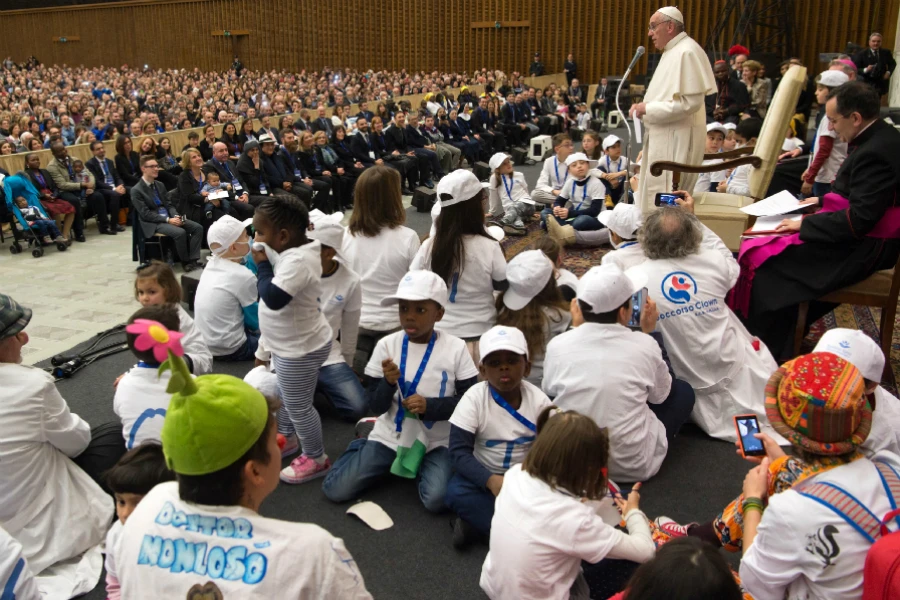
Vatican City, Apr 11, 2017 / 10:56 am (CNA/EWTN News).- The caresses born of love are the most important medicine, Pope Francis told a group of patients, families, and doctors from Rome’s Bambino Gesu Pediatric Hospital on Monday.

“There is the danger, the risk of forgetting the most important medicine that only a family can give: caresses! It is a form of medicine that is too costly, because to have it, to be able to do this, you must give everything, you must give all your heart, all your love,” Pope Francis said April 10. “And you give them this affection, the caresses of the doctors, the nurses, the director, everyone.”

The patients, ages 5-18, met with Pope Francis at the Vatican, where he told them that “Each of you is a story. Not only the sick children, but also the doctors, the nurses, those who visit, the families.”

He recalled his Dec. 15, 2016 meeting with the group, saying that on that occasion the physicians “introduced the people to me. They all knew everyone’s names: ‘This one is fighting this disease…’.”

“They also knew what was happening in their lives. And I perceived … that more than a hospital this is a family, that is one of the words you said. The most important thing was the name, the person, and only at the end was the disease mentioned, but almost incidentally, a secondary matter. It is a family, isn’t it?”

The Pope also recalled that “you were a bit ashamed of getting up and not looking good in front of the camera, and the director, who is a bit like a mother, came up to you and said, ‘Come’, and she encouraged you. This is the beauty of a family, this is beautiful.”

“Entering in a hospital always makes us afraid, and I see this when I come up to some children, not all, but some very little ones, and they see me in white, and they begin to cry; they think it is a doctor who has come to give them a vaccine, and they cry and are afraid. I stroke them a few times and they calm down. Because there is always the function of the hospital … one must do this …”

He said Bambino Jesu “has grown a lot lately, and has become a family. … The child, the patient finds a family there. Family and community, two words that you have said and repeated, and I wish to thank you for this, because Bambin Gesù offers witness, human witness. Human.”

“It is a Catholic hospital, and to be Catholic, first you must be human, and you give human witness today. Please, continue always on this path, grow in this way.”

Bambino Gesu (which translates to the child Jesus) is the largest pediatric hospital and research center in Europe. Owned by the Holy See and known as the Pope’s hospital, Bambino Gesu also serves children from all over the world.

The Holy Father is a popular figure at the hospital, where children write him letters and know many details of his life, including words from his homilies and facts about his home country and favorite soccer team.

Pope Francis has visited the facility several times, as did Blessed Paul VI, St. John Paul II, and Benedict XVI.

[…]

No Picture
News Briefs

German family continues to fight for right to homeschool

April 11, 2017 CNA Daily News 0

Mainz, Germany, Apr 11, 2017 / 06:02 am (CNA/EWTN News).- In August 2013, a group of 20 police officers and social workers stormed the home of Petra and Dirk Wunderlich and took away their children.

Their offense: homeschooling.

The Wunderlich’s children were returned to them, but their legal situation remains precarious, as the German government continues to criminally punish families who homeschool with fines or even imprisonment.

Homeschooling has been illegal in Germany since 1918, though in recent years the policy has raised questions and concerns with human rights groups who say it is an infringement on the right to family life.

The European Court of Human Rights has agreed to review the Wunderlichs’ case and to look at whether Germany’s actions breached the right to family life, which is protected under Article 8 of the European Convention on Human Rights. The court ruled in 2006 that there is no right to homeschooling.

“I sincerely hope the European Court of Human Rights will reaffirm that the state has no right to abduct children from their family just because they are being home-schooled,” Dirk Wunderlich, the father of the family, told legal group Alliance Defending Freedom.

“Our youngest daughter was only four years old when the authorities broke into our home and took our children without warning. She couldn’t stop crying for 11 days. Her older sister hasn’t laughed since this incident. We chose to educate our children at home, because we believe this to be the best environment for them to learn and thrive,” he said.

Alliance Defending Freedom International, an Arizona-based legal group, finalized written submissions to the European Court of Human Rights last week on behalf of the Wunderlich family, asking the high court to protect the freedom of parents to homeschool their children.

“The eventual judgment in the case will have wide implications regarding parental rights for the 800 million Europeans who are subject to the rulings of the court,” the group said in a statement.

“Children deserve the loving care and protection of their parents. It is a serious thing for a country to interfere with the parent-child bond, so it should only do so where there is a real risk of serious harm,” said ADF International Director of European Advocacy Robert Clarke, lead counsel for the family in Wunderlich v. Germany.

“Petra and Dirk Wunderlich simply exercised their parental right to raise their children in line with their philosophical and religious convictions – something they believe they can do better in the home environment. The right of parents to direct the upbringing of their children is a fundamental right protected in all of the major human rights treaties. Germany has signed on to these treaties and yet continues to ignore its obligations with devastating consequences.”

Several German families who wish to homeschool – many of them Christian – have sought refuge in the United States, transplanting their lives in order to have the right to educate their children at home. Others have fled to countries like France or Austria, which have more lax policies.

In 2014, Germany’s Constitutional Court ruled that restrictions on homeschooling were justified, because the government has a compelling interest in preventing the formation of religious or ideological parallel societies. The court also argued that requiring children to attend school allows them the good of interacting with other children who may think differently than themselves.

[…]

No Picture
News Briefs

South Sudanese bishop: It takes unity to achieve peace

April 11, 2017 CNA Daily News 0

Juba, South Sudan, Apr 11, 2017 / 12:29 am (CNA/EWTN News).- The president of the Sudanese Catholic Bishops’ Conference called on leaders in South Sudan’s Bahr El Ghazal region to fight segregation and division, uniting to work for peace in the violence-ridden country.

Achieving peace, said Bishop Barani Eduardo Hiiboro Kussala of Tombura-Yambio, “demands of all of us that we act with real respect for human life. It demands that those who still sponsor anger, hate, segregation and violence against one another end such meaningless projects or ideas.”

On April 6, Bishop Kussala published “An Open Letter of Hope and Peace to the Elders of Greater Bahr El Ghazal.”

His letter marked one month since the death of Bishop Rudolf Deng Majak of the Catholic diocese of Wau, which is part of the Bahr El Ghazal region of South Sudan. The 76-year-old bishop died March 6 at a relative’s house in Siegburg, Germany, where he was awaiting an operation that had been scheduled for the following week.

“The wound inflicted by his death remains deep and raw and so, as we pray for him, we carry in prayer those for whom his death has left a painful void,” Bishop Kussala said.

He appealed to the elders of the greater Bahr El Ghazal area to work for peace and alleviate suffering in Bishop Deng’s memory.

“The best gift we can give him forever is being part of the reconstruction, reconciliation, and reintegration, regeneration of our country, ravaged by the war waged by us and against ourselves.”

Working to change the spiral of suffering, revenge killings, hatred and displacement is a difficult task, Bishop Kussala acknowledged.

“It demands new initiatives to move Greater Bahr El Ghazal and our country forward to freedom as quickly as possible. With this letter I am indeed consulting leaders of civil society, religious leaders, community organizations, business, cultural and other leaders in Greater Bahr El Ghazal to seize an opportunity on such initiatives.”

South Sudan has been embroiled in civil war since December 2013, when South Sudan’s President Salva Kiir accused his former deputy, Riek Machar, of attempting a coup. The war has been fought between their supporters, largely along ethnic lines, and peace agreements have been short-lived.

The conflict has created more than 2.5 million refugees. At present some 4.5 million people face severe food insecurity, a number expected to rise one million by July.

“At the core of the crisis within South Sudan’s war-affected communities and regions is the desire to acquire power and secure resources for one group of elites or one ethno-national group at the expense of others,” Bishop Kussala said.

This has created tension and division, and “has undermined the social fabric of our society or nation,” even affecting neighboring countries as refugees seeking the escape the conflict flee to other nations.

“In all of these cases, violence has led to the breakdown of our beloved homes,” Bishop Kussala continued. “Human lives have been lost. Infrastructure has been destroyed, education and health services have suffered, and the environment has been damaged. The ties that link people together…have been broken, social solidarity has collapsed and political tension has been highly generated.”

These conflicts arise from self-interested elites who take advantage of past divisions, the bishop said. However, peace is possible, as evidence by the “relative peace, development and economic growth after our national independence shortly in 2011.”

In an efforts to restore this stability, Bishop Kussala called on the elders of Greater Bahr El Ghazal to “engage all stakeholders” in seeking peace, allowing for dialogue and supporting genuine efforts aimed at reconciliation and healing.

He urged the elders to publically and unequivocally condemn revenge killings, violence against civilians and the use of hate speech which fosters tribal division.

In addition, he said, they should “call urgently for immediate robust humanitarian intervention for the starving people in and outside Wau,” pushing for roads to be opened to aid workers delivering food for the hungry population.

Efforts are needed both to prevent further killings and to foster reconciliation and healing in society, the bishop said. He also recommended an independent investigation into atrocities against the community, in order to hold perpetrators accountable.

In solving these problems, it is important to remember the role of culture, Bishop Kussala said.

“People derive their sense of meaning from their culture…Cultural attitudes and values…provide the foundation for the social norms by which you as a people exist and live,” he noted. “Through internalizing and sharing these cultural attitudes and values with fellow community members, and by handing them down to future generations, societies can – and do – re-construct themselves on the basis of a particular cultural image.”

Achieving peace in Wau State will require an acknowledgement of wrongdoing, repentance and an offering of forgiveness, the bishop said. It will also require “a way for members of these communities to ‘re-inform’ themselves of their rich history of co-existence with a cultural logic that emphasizes sharing and equitable resource distribution.”

“The people of Greater Bahr El Ghazal should draw their strength from each other as one people,” he emphasized. “You have common humanity, heritage, history and you are socially interwoven.”

“For Wau State to live and prosper, we must come together!”


[…]

No Picture
News Briefs

With united voice, thousands of Catholics visit Texas capitol

April 10, 2017 CNA Daily News 0

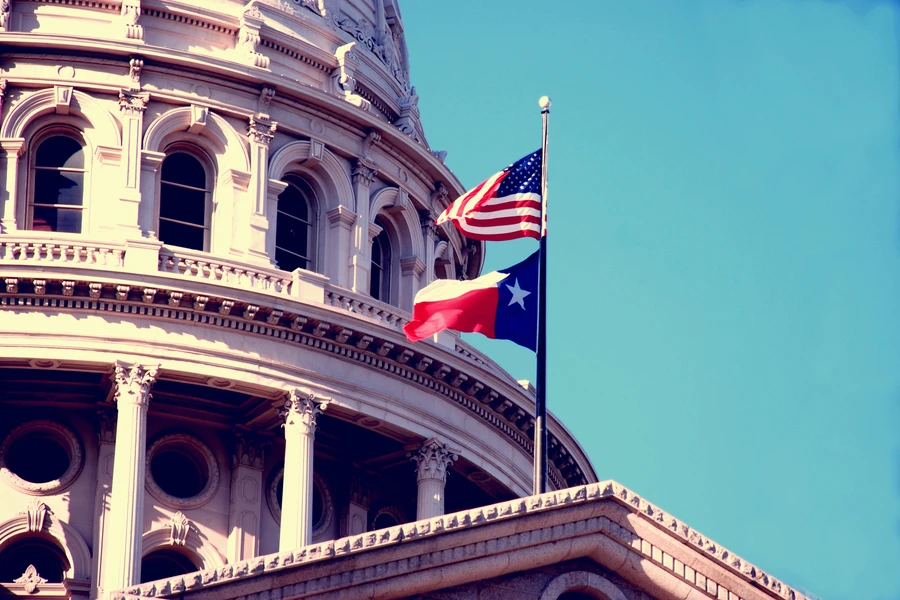
Austin, Texas, Apr 10, 2017 / 04:58 pm (CNA/EWTN News).- Over 4,000 Catholics visited Texas’ capitol in Austin, including  bishops from the state’s 15 dioceses, to meet with legislators and discuss legislation under consideration.

“It’s important that we present a united voice,” Helen Osman, communications consultant for the Texas Catholic Conference of Bishops, told CNA April 10.

“It took many hours of coordination, but the Texas legislators knew that the Church was present in the Capitol on April 4 – and we were there not in self-interest, but for the good of all citizens in the state of Texas,” she added.

“Our motivation – to speak on behalf of the vulnerable and the poor, for human life and dignity – gives our voice a gravitas that many special interest groups lack.”

For Catholic Advocacy Day, each of Texas’ 181 legislators received a visit from a team of “Catholic advocates” who live in his or her district.

They focused on issues grouped under the topics of protecting human life; children and families; health and human services; justice for immigrants; protecting the poor and vulnerable; and criminal justice.

“The team had a list of bills that were prioritized by the Texas Conference of Catholic Bishops since they were relevant to the bishops’ agenda, had been reviewed by the Catholic conference, and were active in the legislative process,” Osman said.

“We also held a rally outside the Capitol, where the bishops addressed all participants,” she added.

Osman said the group was among the more favorably received groups of capitol visitors.

“We bring a spirit of joy and generosity to our conversations, and the legislators appreciate that!” she said.

“These events can persuade a legislator to consider changing his or her position on important legislation. Catholics can effectively exercise their call to be faithful citizens by working with their bishops through their state Catholic conferences. “

Pro-life bills under consideration address partial-birth abortion, “wrongful birth” lawsuits, mandatory reporting for abortion complications, and efforts to increase penalties for abortions coerced by human traffickers. There is a bill concerning parental choice in education and several bills concerning foster care. The Texas bishops oppose a bill that targets sanctuary cities for immigrants, while they support a “targeted, proportional and humane” bill that would increase punishment for unlawful immigrants who commit violent crimes and also guarantee their deportation by authorities.

Some criminal justice bills concern accurate instructions to jurors in death penalty cases and the establishment of a special anti-human trafficking unit in the state’s Department of Public Safety. The Texas Catholic conference backs a bill that would provide better access to mental heath and substance abuse treatment, as well as a bill to establish a state grant to match donations to organizations that provide mental health programs.

On environmental issues, the conference opposes a bill that would limit a local community’s ability to control the export of its groundwater, on the grounds it violates subsidiarity. It also opposes a bill that would repeal the contested case process for environmental quality permits, on the grounds that it “limits the community’s ability to protect health considering potential environmental hazards.”

Osman encouraged Catholics to look to their bishops for guidance.

“The bishops use their state Catholic conferences to research and monitor active legislation, and to convey the Church’s moral guidance.”

Ahead of the event, Bishop Edward Burns of the Diocese of Dallas said it was an exciting opportunity to visit legislators.

“We are able to stand in solidarity as people of faith to meet with our local legislative leaders in order to work together for the common good,” he said, according to the Dallas diocese’s website.

Jennifer Carr Allmon, executive director of the Texas Catholic Conference of Bishops, said the event was an “exciting opportunity” for Catholic constituents.

“They are able to stand in solidarity with their bishops, and meet their local legislators who are interested in hearing their point of view on these important issues,” she told the Fort Worth Star-Telegram.

[…]

No Picture
News Briefs

San Bernardino bishop prays for school community after deadly shooting

April 10, 2017 CNA Daily News 0

San Bernardino, Calif., Apr 10, 2017 / 03:16 pm (CNA/EWTN News).- After two people were killed in a shooting at a classroom in a San Bernardino elementary school on Monday, the city’s bishop is praying for the victims and the school community.

“I’m praying for the victims&entire school community after today’s tragic shooting@NorthPark Elem.May God console us in this time of sorrow,” Bishop Gerald Barnes of San Bernardino tweeted April 10.

A gunman opened fire this morning in a classroom of North Park Elementary School. Police have said the two victims are adults, a woman and the suspected shooter, and that two students are in critical condition.

The police chief Jarrod Burguan said the incident is suspected to be a “murder-suicide” attempt, the BBC reports.

There have been several shootings at schools in the United States in recent years.

In December 2013 an individual opened fire at Arapahoe High School in the Denver suburb of Centennial, and in December 2012 a gunman killed 20 children and six adult staff members at Sandy Hook Elementary School in Newtown, Conn., as well as his mother and himself.

San Bernardino is also the site of a December 2015 mass shooting in which a couple killed 14 and wounded 21 others at a social services facility.

[…]