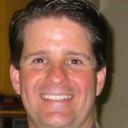
Bishop Samuel Aquila of Fargo, North Dakota, 61, was born and raised in Southern California. One of three children, he was the son of a physician, and the Catholic faith was important in his home. Aquila attended Catholic schools and learned the basics of his faith from the religious sisters who taught him the Baltimore Catechism. In high school, he was taught by the Carmelite Fathers.
Aquila’s Sicilian grandmother, who spoke only Italian, was an important model of piety for him growing up. She frequently stayed with his family, and Aquila recalls waking up early in the morning as a child and seeing his grandmother seated in her favorite chair, quietly praying and meditating.
He had an interest in the priesthood while he was in elementary school, but upon graduating from high school chose to pursue a career in medicine instead. He entered the University of Colorado as a pre-med student. However, in his third year of college, Aquila again began to think about the priesthood. He decided, “I really need to go test this out.”
Upon graduation, he entered St. Thomas Seminary in Denver, Colorado. After six months, “It became really clear to me that the Lord was calling me to the priesthood,” he said.
Aquila was ordained a priest in 1976, and served in a variety of positions in the Archdiocese of Denver before being named coadjutor bishop of Fargo, which is the eastern half of North Dakota. He was ordained a bishop in Fargo in 2001, and this year he celebrates the 10th anniversary of his arrival.
Fargo is home to 85,000 Catholics in 133 parishes. For a diocese of its size, Fargo does well for vocations, with 85 diocesan and 15 religious priests, and 17 seminarians. Bishop Aquila is known for his orthodoxy, piety and public defense of Church teaching on a variety of issues, especially the right to life. He recently spoke to CWR.
CWR: Why do you feel compelled to frequently speak out in opposition to abortion?
Bishop Aquila: My concern about the dignity of human life began when I was attending college in Colorado, one of the first states to liberalize its abortion laws. I was working as an orderly in a Boulder emergency room in the early 1970s, and a woman who had had an incomplete abortion was brought in. Those of us working in the emergency room were pro-life and had had nothing to do with the abortion, but were trying to help the woman afterward.
It was there I first saw the remains of an unborn child, about three and a half months along. It really impacted me. It was impressed in my mind and my heart and that this was a human life. It had now been forever destroyed. Ever since then I’ve been outspoken on human-life issues, and tried to help people to understand the dignity of human life.
As a priest and a bishop, I’ve spoken with women who have had abortions but later have a deep regret when they realize what they have done. There are tremendous lies out there in society, saying that the unborn child is not a unique human life, forever destroyed. The media has been deceptive about the issue, and many politicians have bought into idea that abortion is a right, which it isn’t. No one has the right to take innocent human life.
My commitment to the Church’s teachings on life issues has been reinforced by my study of theology, Blessed John Paul II’s encyclical Evangelium Vitae, and all that science can show us about the development of human beings. Each one of us started out helpless in the womb. From the moment of conception, we were living human beings. It is important to remind people of that truth.
Watching the process of abortion being legalized must have been distressing to you.
Bishop Aquila: It was very disappointing. Many people are misguided on the issue. When it was first legalized, there were many limitations. When the Roe v. Wade decision by the US Supreme Court striking down the nation’s abortion laws was announced in 1973, it opened up the floodgates and we’ve had millions of abortions since. Some, as in the case of partial-birth abortions, are, in fact, infanticide.
North Dakota has only one abortion clinic in Fargo, and you yourself go there to pray for the end of abortion.
Bishop Aquila: I’ve gone there two or three times a year to pray ever since I arrived in Fargo. Other people I know go there every week. When the 40 Days for Life campaign [a nationwide campaign involving prayer, fasting, and public vigils at abortion clinics for the end of abortion] began here five years ago, I myself became involved and promoted it to our priests and people. I encouraged each of our priests to go out at least once during the 40 days to pray in front of the clinic.
We pray in reparation for the sin of abortion, for the conversion of those providing abortions, and for women who have had abortions, that they may come to repentance. We also hope to save lives through our witness; many women who went to the clinic said they decided not to have an abortion after they saw us out there praying.
Sometimes we see the fruits of our efforts later, such as when women participate in our Project Rachel program to recover from the abortion experience. These women experience forgiveness and the healing presence of our Lord through prayer and the sacramental life of the Church, including reconciliation and the Eucharist. They come to know the mercy of God. Not only is the aborted child a victim of abortion, but often the mother herself [is a victim]. Many post-abortive women tell us they were not told the truth about abortion, and that they didn’t fully understand what was happening.
That, incidentally, is the great benefit of abortion-minded women seeing ultrasound images of their children. Once they see it, many change their minds.
How should the Church respond to Catholic politicians who support legalized abortion?
Bishop Aquila: Their particular bishops can use the process of correction that is given to us in sacred Scripture, especially in Matthew’s Gospel. Our Lord tells us to speak to the person, and then take two or three others with us if he does not change.
If he still does not change, the Church can speak to him, which is done through the bishop. [The bishop] exercises the authority of Christ. Christ then says that if that person is still obstinate and will not change, treat them as a tax collector or Gentile. Expel him.
We do this out of love for the person, seeking his conversion. He needs to understand that the salvation of his soul is in jeopardy because of the positions he is taking.
Catholics are called to defend human life, particularly that of the unborn. The Church’s teaching is clear. If we don’t challenge public officials who reject this teaching, we leave them in their sins and confuse the faithful.
In some Catholic marriage preparation programs, natural family planning (NFP) is only mentioned in passing. You have mandated that couples preparing for marriage in the Church in Fargo take a course on NFP. Why did you do this?
Bishop Aquila: Blessed John Paul II’s teachings on the theology of the body tell us that couples must be both fruitful and responsible. NFP is a great tool couples have for the regulation of child-bearing.
Also, in speaking to married couples who use NFP, I’ve learned what a great blessing it is to their marriages. The divorce rate, for example, is very low for couples using NFP, versus couples who practice artificial birth control.
I really wanted people to understand the benefits of this teaching, but if it was only superficially mentioned in marriage preparation classes, couples would tend to bypass it. So I asked them to take a full course, studying whatever method of NFP they wished. They take four classes, one-on-one with an experienced NFP couple, rather than in a group setting. They learn to chart the woman’s cycle, and the science behind NFP. We have found that when couples understand the science behind it and the communication it entails, many decide to use NFP.
NFP is a great way to enhance the love of the couple, and to help them be faithful to the teaching of the Church. They understand that child-bearing is the responsibility of both, not just one partner or the other.
When couples preparing for marriage first learn they have to take an NFP course, some cross their arms and complain, “Why do I have to do this?” But as the course progresses, many begin to see the beauty of NFP and are open to it. By the time the sessions are completed, many are grateful.
It’s been a great way to educate the faithful on an important issue, bring them the truth of our faith, and help them to understand the dignity and meaning of human sexuality.
About which other cultural issues do you think clergy should speak out?
Bishop Aquila: There are many to consider, and most are related to what Blessed John Paul II called the “culture of death.” The whole rationalization of same-sex unions and the debate about the redefinition of marriage, for example, is something we need to speak out on. The Church has been clear that marriage can only be between a man and a woman, and we need to continue to speak clearly to society on the truth, dignity, and meaning of marriage.
You arrived in Fargo 10 years ago. How has the diocese changed since then?
Bishop Aquila: We’ve had great changes in demographics. I’ve had to merge and close parishes in the rural areas due to the decline in population in there. At least one of our counties, for example, has few young people and a median age above 65. Many elementary schools have closed in these areas, too.
Meanwhile, the Fargo metro area is booming. West Fargo is the fastest growing city in North Dakota. It has doubled in size in the past 10 years. We have a great need there for more parishes.
And that is why you’ve initiated a re-organization in the metro area, which includes a plan to build two new churches and one school.
Bishop Aquila: Yes. Two of our parishes have been re-located to new, larger properties, which will allow them to accommodate more people and space to build Catholic schools.
All of Fargo is growing. We have one parish, for example, that was established with 200 households in the southern part of the city in 1995. Today, just over 15 years later, it has 1,600 households.
And many are upset when you have to close or merge a parish.
Bishop Aquila: Yes, but we’ve had to do it. One parish we closed, for example, had only five households. Of the 133 parishes that we have, about 70 of them have 75 households or less. They are scattered in the rural areas. It can be tough on children living in these areas, as they may have to spend an hour or more on a bus going to school.
What are some spiritual practices you recommend to the faithful?
Bishop Aquila: I encourage them to have a deep love for sacred Scripture. I encourage them to participate in Lectio Divina [“divine reading,” prayer with the Scriptures], particularly using the Gospels. I encourage them to read the four Gospels throughout the year. [The Gospels] bring readers into contact with the word of God and let Christ speak to their own hearts. It should be our goal to enter into a heart-to-heart conversation with Christ through the prayerful reading of sacred Scripture.
I certainly recommend the regular practice of going to Mass each weekend, and regular confession. I preach on the importance of receiving the sacrament of reconciliation at a minimum of once a month, and not just twice a year during Advent and Lent.
I like to challenge the faithful to grow in holiness and become saints. When I give a confirmation homily to children, I ask them, “Are you called to be saints?” It is amazing that a number of them say no. The adults in attendance look stunned by the question. I then tell them we are all called to holiness, and we are all called to be saints. Vatican II teaches this; Christ tells us this in the Gospels.
And, speaking of confirmation, unlike other dioceses, in Fargo children receive the sacrament in the third grade.
Bishop Aquila: Yes, it is the proper ordering of the sacraments of initiation: baptism, confirmation, and first Eucharist. It has helped our young people see that confirmation is ordered to the Eucharist and not vice versa. Additionally, young people need the strengthening and outpouring of the Holy Spirit before they get into junior high school with everything that they face today. It highlights the role and importance of the Holy Spirit, reminds them that we are all called to holiness and gets them excited about growing in their intimacy with Christ.
Many of the faithful admire you for the leadership with which you’ve provided the Church in Fargo. Who are some Catholics you admire?
Bishop Aquila: Pope John Paul II was certainly influential in my life as a young priest, and even as I became bishop. He was pope during the majority of my priesthood. He told us, “Be not afraid,” and constantly called us into deeper intimacy and communion with the Father, Son, and Holy Spirit. I had the privilege of meeting him a number of times. I recall, for example, his visit to World Youth Day in Denver in 1993. It had a tremendous impact on me.
One of my favorite saints is St. Ignatius of Loyola. I have benefitted from Ignatian spirituality and did a 30-day retreat in 2004. It was life-changing. It helped me better understand the importance of the discernment of spirits and challenged me to pursue holiness in a whole new way. It also opened the door for me to contemplative prayer.
I very much enjoy the writings of St. Augustine; I can remember the first time I read his Confessions. I also love reading St. Thérèse of Lisieux’s Story of a Soul. There is much to learn and emulate in her simplicity and openness to the love of Christ.
If you value the news and views Catholic World Report provides, please consider donating to support our efforts. Your contribution will help us continue to make CWR available to all readers worldwide for free, without a subscription. Thank you for your generosity!
Click here for more information on donating to CWR. Click here to sign up for our newsletter.