No Picture
News Briefs

If a bishop doesn’t pray, he’s not doing his job, Pope Francis says

March 19, 2018 CNA Daily News 1

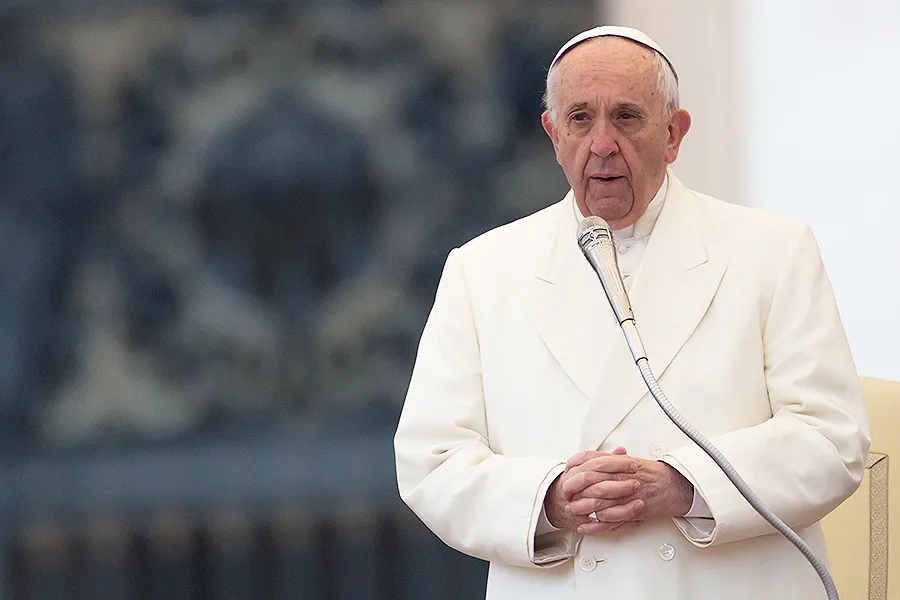
Vatican City, Mar 19, 2018 / 01:17 pm (CNA/EWTN News).- Pope Francis marked Monday’s Solemnity of St. Joseph by ordaining three new bishops, telling them prayer is a primary ecclesial duty, and if they do not maintain a strong spiritual life, they are not fulfilling their vocation.

“Announce the Word in every occasion: opportune and inopportune. Admonish, rebuke, exhort with all magnanimity and doctrine. And through the prayer and sacrificial offering of your people, draw from the fullness of the holiness of Christ the manifold richness of divine grace,” the Pope said March 19.

Prayer, he said, “is the first task of a bishop. A bishop who doesn’t pray does not fulfill his duty, he does not fulfill his vocation.”

Francis celebrated Mass in St. Peter’s Basilica on the March 19 feast of St. Joseph, which also marks the fifth anniversary of the inauguration of his papacy.

During the ceremony, he ordained as archbishops three recently appointed nuncios, including Archbishop Waldermar Sommertag, apostolic nuncio to Nicaragua; Archbishop Alfred Xuereb, papal envoy to Korea and Mongolia; and Archbishop Josè Avelino Bettencourt, the Pope’s new ambassador to Georgia and Armenia.

The pope’s brief homily for the day was taken from the section for the ordination of bishops of the Roman Pontifical.

In the homily, he said that while the three men were ordained bishops, “it is Christ who in the ministry of the bishop continues to preach the Gospel of salvation and sanctify believers through the sacraments of faith.”

“It is Christ who in the paternity of the bishop increases his body, which is the Church. It is Christ who in the wisdom and prudence of the bishop guides the people of God in the earthly pilgrimage until eternal happiness,” he said.

Francis reminded the bishops in off-the-cuff comments that they were “chosen among men and for men. You are not called for business, worldliness, or politics: the episcopate is the name of a service, not an honor, as the bishop is more competent for serving than for dominating.”

He told them to love their flock with the love of both a father and a brother, especially priests and deacons.

“Closeness to the priests, please!” he said, and encouraged them to also be close to the poor and defenseless.

“Keep vigil with love on the whole flock in which the Holy Spirit places you to govern the Church of God,” he said, and told them to do this “in the name of the Father, whose image you make present; in the name of Jesus Christ, his Son, by whom you are made masters, priests and pastors. In the name of the Holy Spirit, who gives life to the Church and with its power sustains our weakness.”


[…]

No Picture
News Briefs

Pope encourages young people to ask tough questions at pre-synod launch

March 19, 2018 CNA Daily News 2

Vatican City, Mar 19, 2018 / 10:43 am (CNA/EWTN News).- Pope Francis opened this week’s pre-synod meeting telling youth to hold nothing back and to have the courage to ask the “raw” and direct questions about life, love, and vocation.

In the March 19 opening session for the event, Francis told youth to let their questions come “without anesthetizing” them.

“The strong questions of ours can have a process of being played down in tone,” or asked in a “polite way,” he said, but urged the young attendees to “be courageous” and to “say the raw truth, to ask the raw questions.”

He spoke to French youth Maxime Rassion, who is not baptized. Rassion said he was facing doubts about his career and struggles to find a deeper meaning in life, asked what he can do to figure out where to start.

In his answer, Pope Francis noted how many youth have fears about similar questions, and said there is a need for discernment. However, “at this point, many ecclesial communities don’t know how to do it or they lack the ability to discern.”

“It’s one of the problems we have,” Francis said, and urged those in positions of pastoral authority not to be afraid to let youth “take everything out” that they are thinking or feeling, and to listen to the blunt questions that young people may pose.

“Accompany them so they don’t err,” he said; and on the other hand, he encouraged youth to find someone they can talk to about their experiences.

Talking is important, but “you can’t talk to everyone about everything,” he said, and told them to find someone “who is wise, who isn’t scared and who knows how to listen” to help them sort through the questions they have.

“It’s important to open everything, to open everything, not to put make up on your feelings,” he said, and cautioned against closing in on oneself, which “weighs you down and takes your freedom.”

“Let your feelings come up, don’t anesthetize them, don’t downplay them; look for someone wise [to talk to] and discern.”

Pope Francis spoke at the opening session of the March 19-24 pre-synod meeting, which has drawn some 300 youth from around the world to talk about major themes for the upcoming Synod of Bishops on “Young People, Faith and the Discernment of Vocation.”

Youth in different states in life are in Rome to participate in the event. Priests, seminarians, and consecrated persons will also participate. Special attention will also be given to youth from both global and existential “peripheries,” including people with disabilities, and some who have struggled with drug use or who have been in prison.

At the end of the gathering, notes of the various discussions throughout the week will be gathered into a comprehensive concluding document, which will be presented to Pope Francis and used as part of the “Instrumentum Laboris,” or “working document,” of the October synod.

In his opening speech for the March 19 session, Pope Francis told youth that “your contribution is indispensable” for the preparation of the October synod gathering.

Too often young people are talked about without being spoken to, he said, stressing the importance of having a “face to face” meeting where they can share their thoughts and desires.

“It’s not enough to exchange some messages or share some nice photos,” he said, adding that “youth must be taken seriously!” Too often youth are left alone, he said, and cautioned that in the Church, “it must never be like this.”

“We need to regain the enthusiasm of the faith and of the flavor of the search. We need to find again in the Lord the strength to recover from failures, to go forward, to strengthen confidence in the future.”

“We need to dare [to take] new paths, even if it involves risks,” he said, adding that risk is necessary because “love knows how to risk; without risk a young person grows old, and it also makes the Church grow old.”

Because of this, “we need you young people, living stones of a Church with a young face, but not using makeup: not artificially rejuvenated, but revived from within,” he said, explaining that the purpose of the synod is to accompany youth.

“Be assured: God trusts you, he loves you and he calls you,” Francis said, saying the Church, in the synod, must learn to have “new ways of presence and closeness.”

After his opening address, Francis heard testimonies from five young people: Tendai Karombo from Zimbabwe, Nicholas Lopez from the US, Cao Huu Minh Tri from Vietnam, Annelien Boon from Belgium, and Angela Markas from Australia.

The Pope was then asked questions from five youth, one of whom was a young Nigerian woman named Blessing Okoedion who was brought to Italy four years ago as a victim of human trafficking.

After suffering the “hell” of forced prostitution, she was finally able to escape and find healing with an order of religious sisters. In her question to the Pope, Okoedion said many of her clients were Catholics, and asked how youth can be made aware of the problem of trafficking, and how to fight the “sick” mentality that reduces women to being the property of men.

In his response, the pope said human trafficking is “a crime against humanity” which is ultimately “born from a sick mentality.”

“The woman is exploited,” he said, noting that “today there is no feminism that has been able to take this out of the unconsciousness” in societal thought. “It’s a sickness of mentality, it’s a sickness of social action, it’s a crime against humanity.”

Pope Francis then asked forgiveness “for all the Catholics who commit this criminal act.”

“I think of the disgust these young women must feel when these men make them do anything,” he said. What women endure is “unbelievable,” he said, and called the practice a form of “slavery.”

In response to a question posed by Argentine youth Maria de la Macarena Segui, who asked about education initiatives and what youth can do to make their encounter with the Lord last over time, the pope stressed the need for an integral education.

Francis said there is need for educational initiatives that follow a “head, heart, hands” model, and which “harmonize” these three aspects into a solid foundation for the person that takes intellectual and charitable formation and turns them into action.

He also responded to a question posed by Ukrainian seminarian Ylian Vendzilovych, who asked how young priests should act amid the “complex realities” of modern society, and questioned how someone preparing for ordination can differentiate between what is good and what is wrong in society.

Francis stressed the importance of community in the life of a priest, and pointed to the many priests who serve their parishes alone or in remote areas. In these cases, it’s important for both the priest and the parishioners to make an effort to build a communal relationship, he said.

“A priest is a testimony of Christ to the extent that he is a member of that community,” he said, adding that if there is not community in a parish, “the bishop needs to intervene.”

He also spoke out against the “terrorism” of gossip and clericalism, which he called a “sick mentality” that confuses the people and drives them away. “Attitudes that are not paternal, not fraternal, also worry me,” he said, explaining that when a priest becomes too rigid or worldly, “there is no witness of the mercy of Christ.”

“I prefer that a young person loses their vocation rather than being a bad religious,” he said.

Sr. Teresina Chaohing Cheng, a religious sister from China, asked how young consecrated people can balance their cultural formation and spiritual lives while fighting against a materialistic society.

In his answer, Pope Francis said good formation for a consecrated person is built on four pillars: the spiritual, intellectual, communal, and apostolic.

This means making sure religious are aware of cultural habits and trends, even those that are bad, while also having a solid foundation to help distinguish and discern what is harmful, he said.

Francis cautioned against keeping religious too sheltered and in the dark about what’s happening in culture and society, saying to “overprotect” them is not formation, but “annuls” their understanding and does them a disservice.

He said to do this “castrates” a person and takes away their freedom, and told Cheng to fight against this in her community. “Don’t overprotect,” he said, because doing so prevents people “from maturing psychologically” and from responding to people in need.

[…]

No Picture
News Briefs

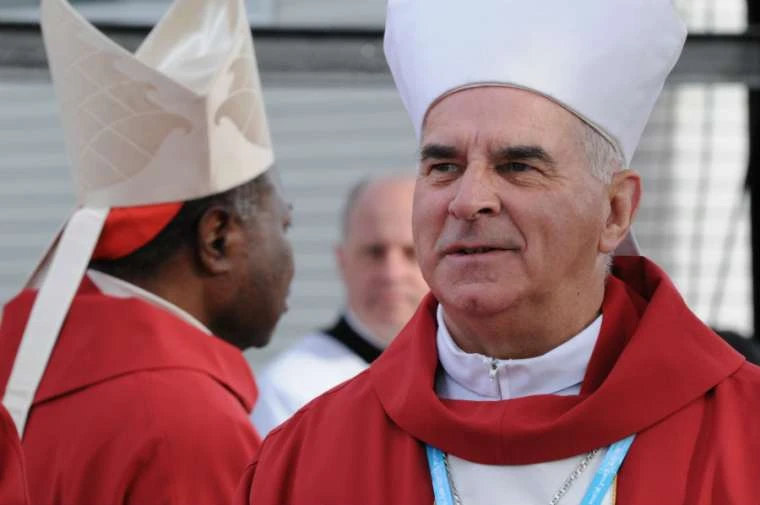
Cardinal Keith O’Brien, disgraced Scottish prelate, dies at 80

March 19, 2018 CNA Daily News 2

Vatican City, Mar 19, 2018 / 07:49 am (CNA/EWTN News).- Ex-cardinal Keith Patrick O’Brien, who stepped down as Archbishop of Edinburgh in 2013 after admitting to inappropriate sexual conduct throughout his ministry, died Monday at the age of 80.

In a brief statement marking the prelate’s March 19 passing, the current head of the St. Andrews & Edinburgh diocese, Archbishop Leo William Cushley, offered prayer for the repose of O’Brien’s soul, for his family and for all those affected by the scandal.

“In life, Cardinal O’Brien may have divided opinion,” Cushley said. “In death, however, I think all can be united in praying for the repose of his soul, for comfort for his grieving family and that support and solace be given to those whom he offended, hurt and let down. May he rest in peace.”

Born in Ballycastle, County Antrim, Northern Ireland in 1938, O’Brien was named Archbishop of St. Andrews & Edinburgh by St. John Paul II in 1985.

Ordained a priest in 1965, he had a bachelors degree in chemistry and mathematics, and served as a spiritual director of St Andrew’s College in Drygrange and rector of St Mary’s College in Blairs before being named archbishop.

From 2002-2012, O’Brien served as President of the Bishops’ Conference of Scotland. He was made a cardinal by John Paul II in 2003, and participated in the 2005 conclave that elected Benedict XVI.

He stepped down as Archbishop of St. Andrews & Edinburgh in 2013 at the age of 74 after allegations went public that he had participated in inappropriate sexual behavior with other men 1980s.

After the claims surfaced that February, the cardinal’s request for retirement – originally submitted to Benedict XVI in November 2012 for reasons due to age and health – was accepted immediately by Benedict, going into effect Feb. 25, 2013.

O’Brien subsequently admitted that “there have been times that my sexual conduct has fallen below the standards expected of me as a priest, archbishop and cardinal,” and did not participate in the March 2013 conclave that elected Pope Francis.

In May 2013, after speaking with the newly-elected Pope, O’Brien left Scotland for a time of prayer, penance and reflection. In March 2015, Francis in a rare move accepted his resignation of the rights and privileges of cardinal.

Only a Pope can approve a cardinal resigning his official status, and today’s announcement is extremely rare in Church history.

The closest parallel to the 2015 event took place in 1927 when French  Cardinal Louis Billot resigned from the Sacred College of Cardinals following a stormy meeting with Pope Pius XI. His resignation was accepted by the Pope eight days later.

The ruling by Pope Francis stems from his decision in 2014 to send Maltese Archbishop Charles Scicluna as his personal envoy on a fact-finding mission to Scotland. It was after that investigation – the content of which is fully known only to the Pope and Archbishop Scicluna – Francis reached his canonical conclusion.

In wake of O’Brien’s resignation, Pope Francis in July 2013 named Archbishop Cushley as the next leader of the Saint Andrews and Edinburgh Archdiocese.

According to a March 19 press release from the Archdiocese of St. Andrews & Edinburgh, the former prelate died at the Royal Victoria Hospital in Newcastle-upon-Tyne after receiving last rights, and was surrounded by his family and friends.

[…]

No Picture
News Briefs

Letter reveals Benedict’s praise for Francis booklets came with previously unmentioned caveats

March 17, 2018 CNA Daily News 2

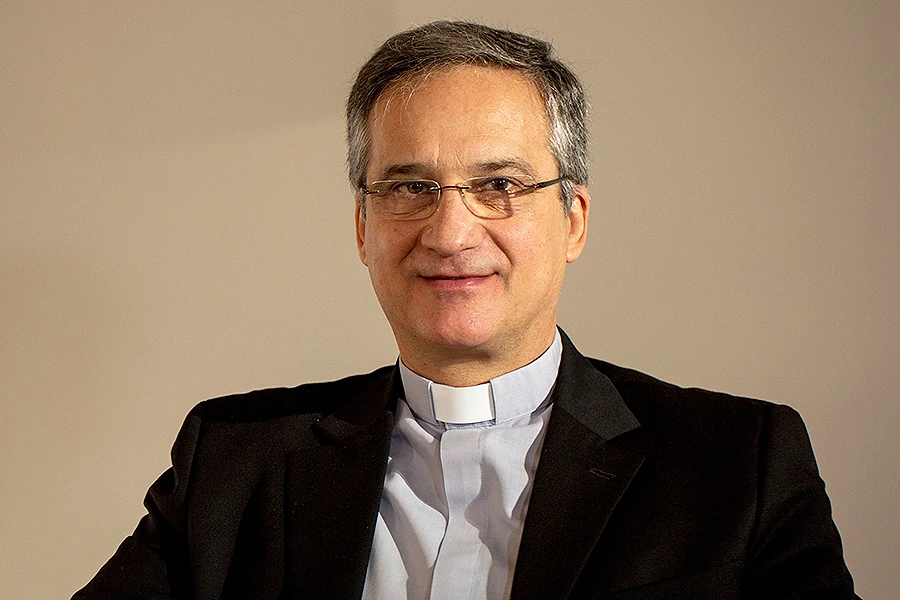
Vatican City, Mar 17, 2018 / 12:36 pm (CNA/EWTN News).- Amid accusations of concealment, the Vatican’s communications department has released the entirety of a letter written by Benedict XVI, revealing a previously unpublished paragraph which contains Benedict’s comments about a theologian known for his “anti-papal initiatives.”
 
The Secretariat for Communications published the full letter March 17, after questions were raised following the letter’s presentation during a press event March 12 for the release of a newly-published series of booklets on the theological formation of Pope Francis.
 
The series is published by Libreria Editrice Vaticana, the Vatican publishing house overseen by the secretariat.


#Vatican has now released the full contents of Benedict XVI’s letter to +Vigano, saying there was no intention to censor but parts were left out as it was confidential. Earlier today it emerged that more had been omitted from the letter (see end here: https://t.co/aXlyXH71Sg) pic.twitter.com/P6fld8eA21

— Edward Pentin (@EdwardPentin) March 17, 2018


The secretariat’s press release on the letter quoted portions of the letter praising the booklets, but included neither Benedict’s admission that he has not read them in full, nor the final paragraph published today.
 
In the paragraph, Benedict notes his “surprise” that an author of one of the new booklets is the German theologian Peter Hünermann, who, Benedict notes, “was highlighted for leading anti-papal initiatives” during the two preceding papacies.
 
In the letter, dated Feb. 7 and addressed to the prefect of the Secretariat for Communications, Msgr. Dario Vigano, Benedict also notes Hünermann’s involvement in the release of the 1989 Cologne Declaration, which “virulently attacked the magisterial authority of the Pope, especially on matters of moral theology.”
 
The previously undisclosed paragraph reads, as translated by Ed Pentin of the National Catholic Register, in full: “Only as an aside, I would like to note my surprise at the fact that among the authors is also Professor Hünermann, who during my pontificate had been shown to have led anti-papal initiatives. He played a major part in the release of the ‘Kölner Erklärung’, which, in relation to the encyclical ‘Veritatis splendor’, virulently attacked the magisterial authority of the Pope, especially on questions of moral theology. Also the ‘Europaische Theologengesellschaft’, which he founded, initially came to be thought of as an organization in opposition to the papal magisterium. Later, the ecclesial sentiment of many theologians prevented this orientation, making that organization a normal instrument of encounter among theologians.”
 
“I am sure that you will understand me for my denial and I greet you cordially,” the letter concludes. Earlier in the letter, Benedict acknowledged that he could not write a requested reflection on the booklets because he had not read them and had other, more pressing, commitments.
 
A March 17 press release from the Secretariat for Communications said there had been “much polemics” around its “alleged censorial manipulation of photography.”

“What was read out from the letter, which was confidential, was considered appropriate and related to the sole initiative, and in particular to what the Pope Emeritus says about the philosophical and theological formation of the present Pontiff and the inner union between the two pontificates, leaving out some notes regarding contributors to the series.”

“The choice was motivated by confidentiality and not by any intent of censorship,” the secretariat added.

The Vatican office wrote that it had now chosen to publish the letter in its entirety “in order to dispel any doubts.”
 
The National Catholic Register requested March 14 a copy of the letter Vigano sent to Benedict, but the request has not been answered.
 
Controversy about the letter heightened March 14 when the Associated Press reported that the Vatican had acknowledged obscuring two lines of the letter in a photo released to the press.
 
The AP’s Nicole Winfield wrote that the Vatican has admitted “that it altered a photo sent to the media of a letter from retired Pope Benedict XVI about Pope Francis. The manipulation changed the meaning of the image in a way that violated photojournalist industry standards.”

[…]

No Picture
News Briefs

Guilty verdict for Guam archbishop

March 16, 2018 CNA Daily News 0

Vatican City, Mar 16, 2018 / 06:13 am (CNA/EWTN News).- On Friday the Vatican’s tribunal announced the conclusion of a year-long trial against an archbishop in Guam, stating that he has been found guilty of some charges stemming from allegations … […]